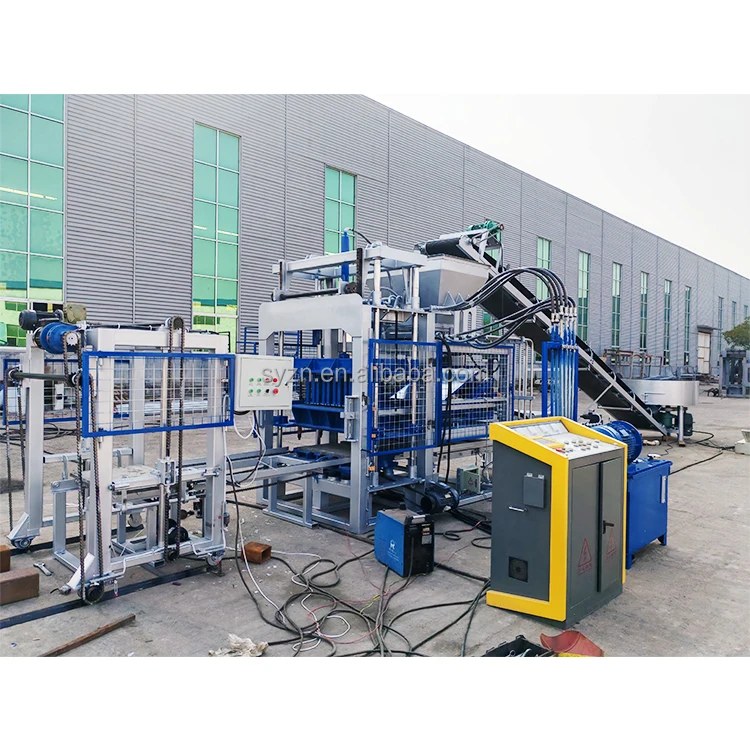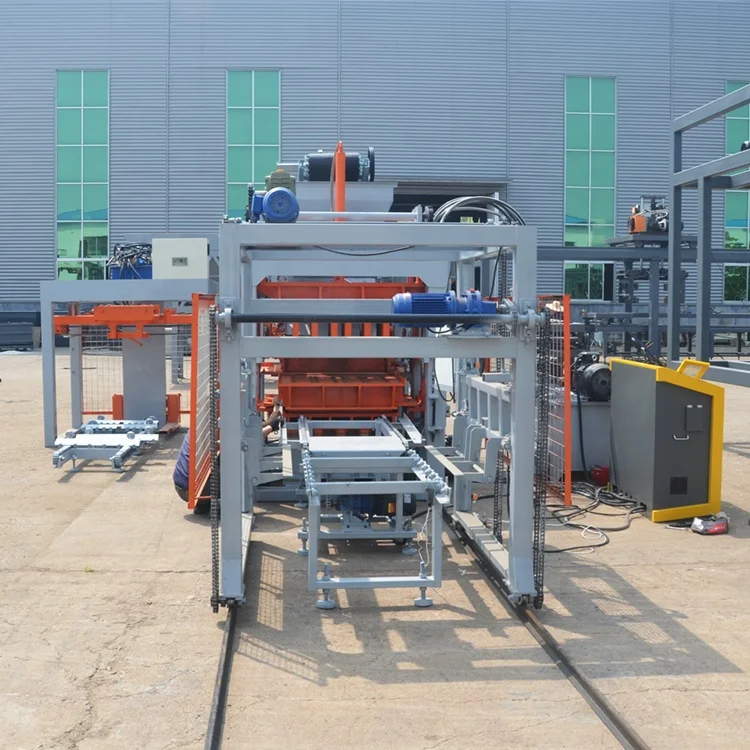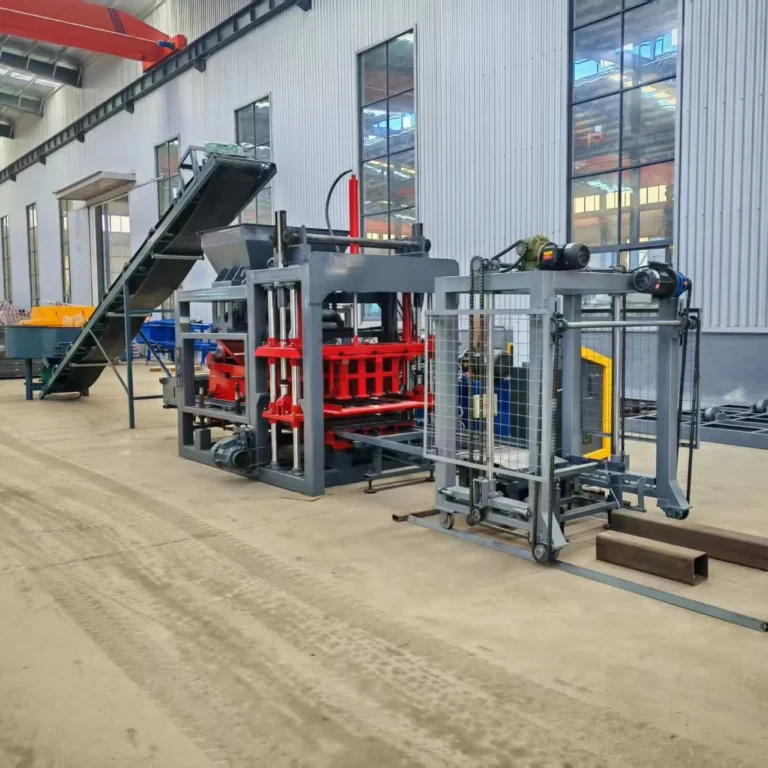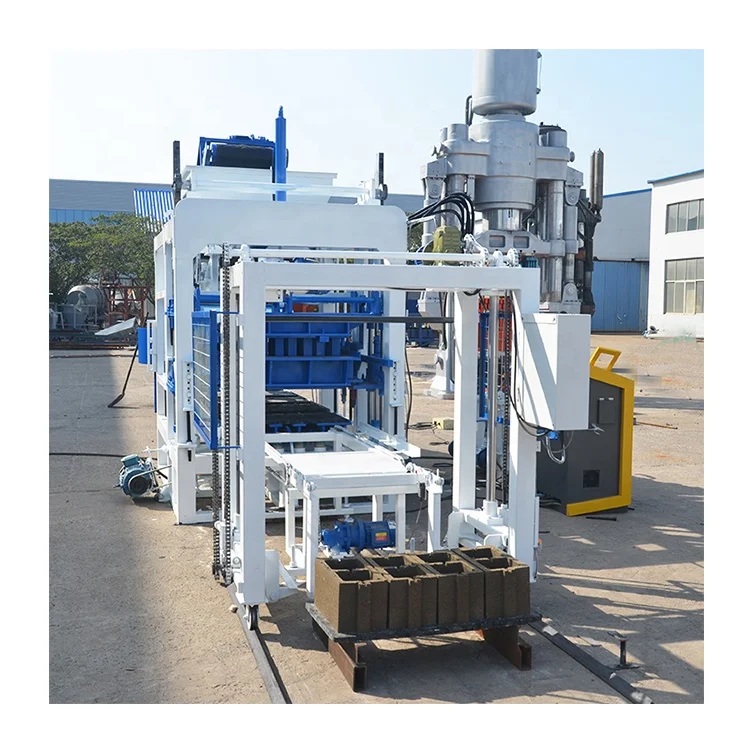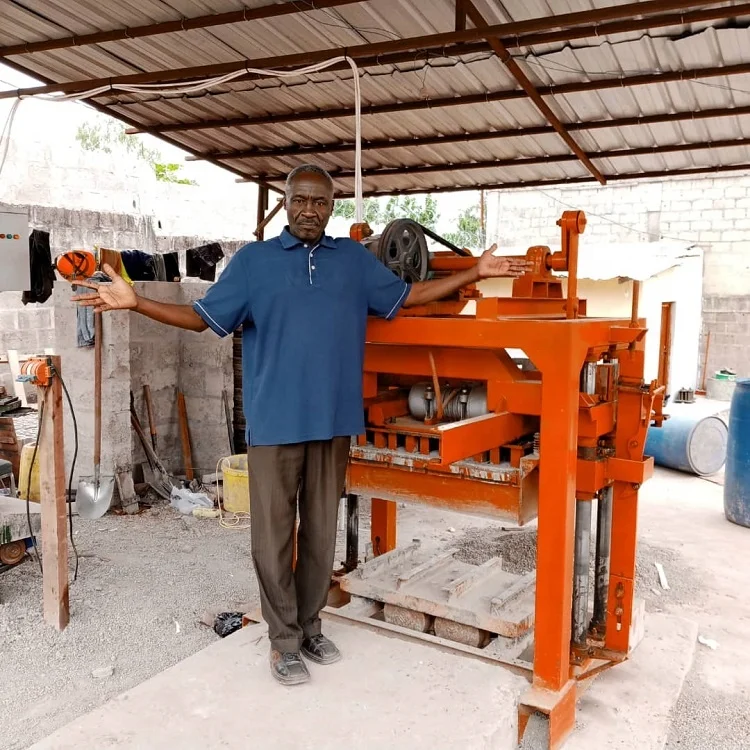
Description
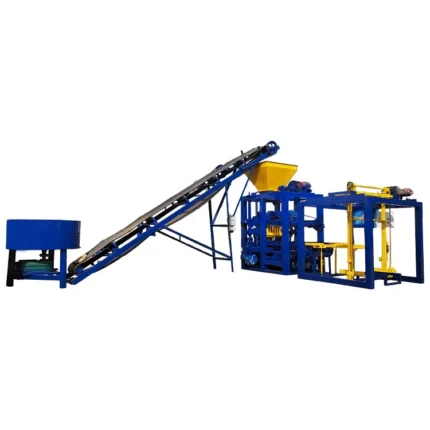
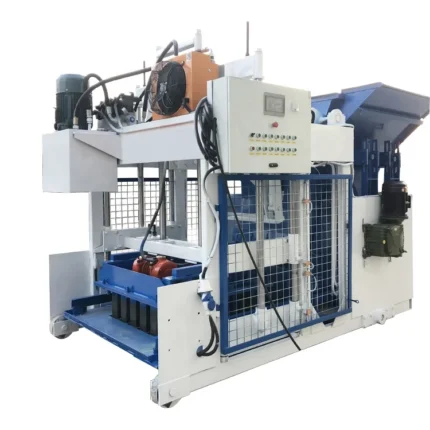
Control Language Verification — every PLC screen and alarm code is confirmed in the buyer’s operating language before the automatic QTJ4-40 block machine enters production, preventing the on-site commissioning stalls I have personally debugged from a workshop in Linyi.
Technical Specifications
| Parameter | Value |
|---|---|
| Model | QTJ4-40 |
| Product Type | Semi-Automatic Concrete Block Making Machine |
| Rated Power | 9.5 kW |
| Voltage & Frequency | Configurable to buyer’s local supply (basis to be confirmed) |
| Control System | Semi-automatic with top die push-pull and automatic scraper |
| Overall Dimensions (L×W×H) | 1350 × 1460 × 1800 mm |
| Moulding Cycle | 40 s |
| Theoretical Output — 400×200×200 mm Hollow Block (4 pcs/mould) | 360 pcs/h, 2800 pcs/day (basis: stated block format) |
| Theoretical Output — 400×150×200 mm Hollow Block (5 pcs/mould) | 450 pcs/h, 3600 pcs/day (basis: stated block format) |
| Theoretical Output — 225×112.5×60 mm Solid Brick (9 pcs/mould) | 800 pcs/h, 6400 pcs/day (basis: stated block format) |
| General Output Range | 2000–2500 pcs / 8 hours (basis not stated in source — confirm block format) |
| Pallet Size | 850 × 450 mm |
| Vibration Method | Bed mould vertical vibration + upper mould compression vibration |
| Raw Materials | Concrete, sand, cement, fly ash, lime, gypsum |
| Automation Level | Semi-automatic, manual pallet handling |
| Assembly State | Fully assembled |
Application Suitability
| Application | Material or Output |
|---|---|
| Small-scale hollow block production | Crushed stone, sand, cement, fly ash blends |
| Solid brick manufacturing for masonry walls | Cement, sand, lime, gypsum mixes |
| Paving brick runs for walkways and yards | Concrete with coarse aggregate grading |
| On-site block production for housing projects | Locally sourced sand and cement |
| First-plant entrepreneur starter runs | Low-investment concrete mixes with regional aggregate |
What the Cycle Time Figure Hides About Real Shift Output
A 40-second moulding cycle only translates to catalogue output when pallet handling, mix feeding and block curing keep pace — otherwise the press sits idle between cycles.
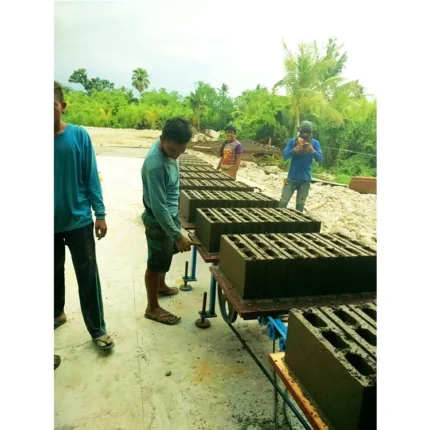
When a buyer reads "360 pieces per hour" they picture continuous running. In practice, the PLC controlled semi-automatic block machine completes its press cycle in 40 seconds, but an operator must pull the loaded pallet, place a fresh one, and clear the finished block before the next stroke. On a tight site with one worker managing all three tasks, actual throughput drifts well below the theoretical figure. I have watched commissioning visits stall because nobody mapped the manual pallet loop against the press rhythm [NEED_CITE: shift-level output planning for semi-automatic block lines].
Where the Automatic QTJ4-40 Block Machine Sits on the Automation Ladder
The automatic QTJ4-40 block machine occupies a deliberate middle ground. The top die push-pull mechanism and automatic scraper remove two of the most variable manual steps from each cycle, leaving pallet exchange as the operator’s primary task. This configuration keeps the capital outlay below a full automatic line while still delivering repeatable compaction from stroke to stroke. For a plant owner currently running purely manual egg-laying equipment, the jump to this semi-automatic tier is where batch-to-batch density first becomes controllable.
Reading the Control Panel Before the Crate Arrives
Voltage, frequency, and PLC display language are three variables that must be locked before production starts. I once shipped a unit to West Africa with the HMI still in Chinese — the operator could not interpret a single alarm code, and the line sat idle for two days while I re-flashed the firmware remotely from Linyi. That incident changed how every automatic QTJ4-40 block machine leaving our workshop is handled: the buyer confirms supply voltage, grid frequency, and preferred interface language in writing, and we verify the loaded program against those values during the factory acceptance test [NEED_CITE: PLC programming and HMI language options for export machinery].
Vibration, Pressure, and the Density Question
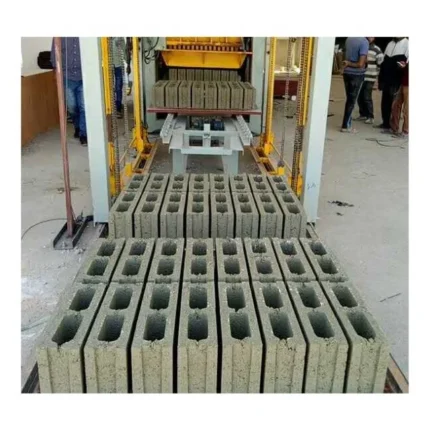
Block strength is not a function of cement content alone — it depends on how thoroughly the vibration system consolidates the mix inside the mould cavity. The QTJ4-40 pairs bed mould vertical vibration with upper mould compression vibration, meaning the aggregate settles under two directional forces simultaneously. On a 400×200×200 mm hollow block with four cavities per mould, this dual action reduces the void pockets that weaken the web sections. The 9.5 kW rated power drives both the vibration motor and the hydraulic scraper circuit, so the electrical supply must sustain continuous draw without voltage sag that would soften compaction force mid-cycle. The 850 × 450 mm pallet size dictates how many blocks cure per rack tier, which in turn governs the floor area the buyer must allocate for the curing zone.
The Cost of Skipping the Configuration Conversation
A semi-automatic press ordered on catalogue defaults often arrives with a pallet size that mismatches the buyer’s existing curing racks and forklift tines. The pallets then need custom adapters or an entirely new rack investment before the first block is made. Control language left unconfirmed means the commissioning technician spends billable hours translating alarm screens instead of tuning cycle parameters [NEED_CITE: common commissioning delays caused by undocumented configuration assumptions]. These are not machine defects — they are procurement gaps that surface only after the container is unpacked.
Why Buyers Route Their Inquiries Through This Workshop
Block machinery is the single focus here, so the press, mould, pallet, and handling equipment are specified as one matched system rather than assembled from unrelated suppliers. Configuration is set against the buyer’s actual mix design and local aggregate, not pulled from a default table. Mould design covers the formats the buyer’s market actually sells, with custom drawings available when standard catalogues fall short. The automation level is selectable — a buyer can start with the semi-automatic QTJ4-40 base and add pallet feeding or stacking modules as volumes justify the investment. Installation support includes operator training on the specific control language and alarm codes loaded into that machine.
Documentation & Verification
- Capacity calculation sheet stating the exact block format behind each output row
- Mould drawing and format list matched to buyer’s confirmed product range
- Voltage, frequency, and PLC display language confirmation record before build
- Factory test record run on buyer’s specified pallet size and cycle settings
- Hydraulic and electrical schematic for local maintenance team reference
Installation, Commissioning & Support
- Level concrete pad required to suit 1350 × 1460 mm footprint and vibration load
- Dedicated circuit sized for 9.5 kW continuous draw at confirmed voltage and frequency
- Machine ships fully assembled — position, level, and connect power on arrival day
- PLC alarm codes and HMI text verified in buyer’s language during on-site startup
- Mould change walkthrough and cycle timing calibration included in commissioning visit
- Wear parts list with hydraulic seal and vibration motor bearing intervals provided
What to Include With Your Inquiry
Send the block dimensions you intend to produce, the daily output you are targeting per format, and the raw materials available locally — sand grading, cement type, and any fly ash or lime you plan to use. Confirm your site voltage, frequency, and the language your operators will need on the PLC screen. If you already have curing racks or a forklift in place, share the pallet dimensions they accommodate so the pallet specification is aligned before the build begins.
Frequently Asked Questions
Q: How is daily output verified for each block format?
A: Every capacity figure in the specification table is tied to a stated block dimension and piece count per mould. We provide a written capacity calculation that names the format, the moulding cycle, and the shift hours assumed, so the buyer can cross-check against their own production plan rather than relying on a single headline number.
Q: What automation upgrades are available beyond the semi-automatic base?
A: The QTJ4-40 base can accept an automatic pallet feeder and a stacking module as separate additions. Each upgrade reduces one manual task from the cycle loop. We scope the upgrade against the buyer’s existing floor layout and curing rack system before quoting the additional modules.
Q: How are voltage, frequency, and control language confirmed before shipment?
A: The buyer supplies written confirmation of local grid voltage, frequency, and preferred PLC display language. We load the program, run a factory acceptance test with those settings active, and include a signed configuration record in the shipping documentation.
Q: How does the vibration system adapt to different local aggregates?
A: The dual vibration system — bed vertical and upper compression — applies force from two directions to consolidate whatever mix the buyer sources locally. During commissioning we adjust vibration duration and amplitude to match the specific aggregate grading and cement ratio the plant will run.
Q: What is the mould change procedure and how long does it take?
A: Mould change involves unbolting the current mould box, lifting it clear, setting the replacement mould onto the vibration bed, and re-securing the clamp bolts. A trained two-person team can complete the swap within a single shift break, keeping format changeover from consuming productive running time.