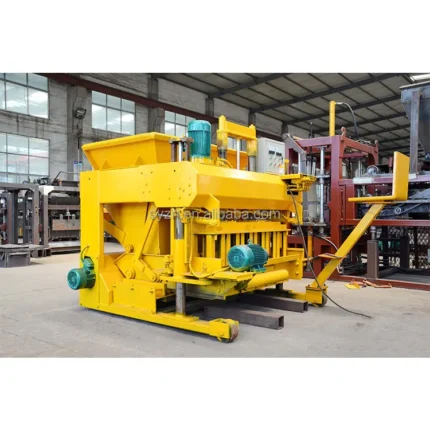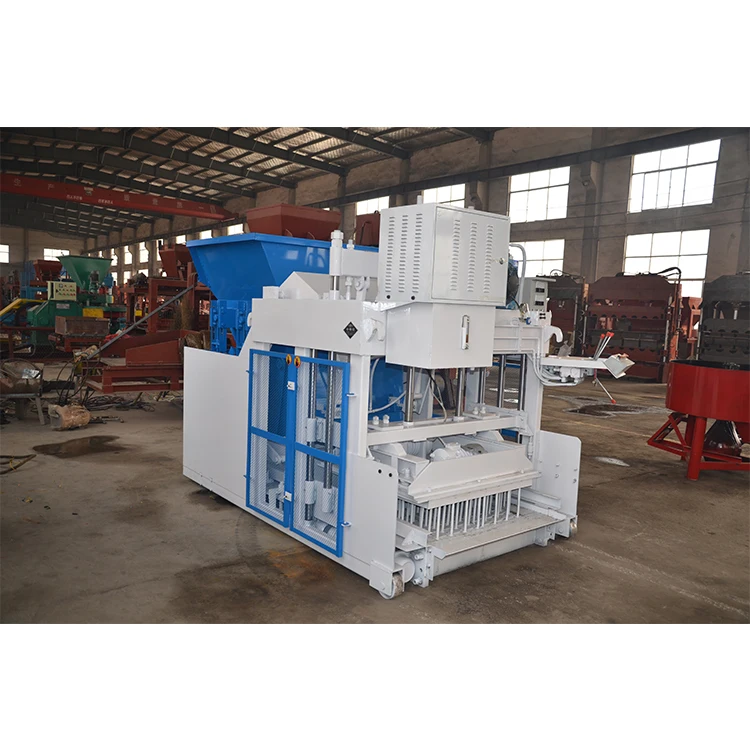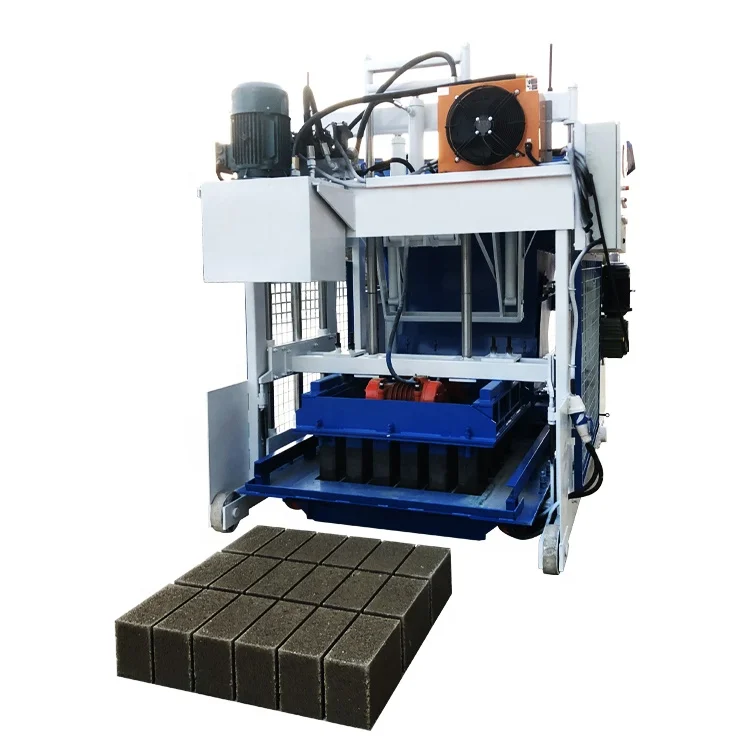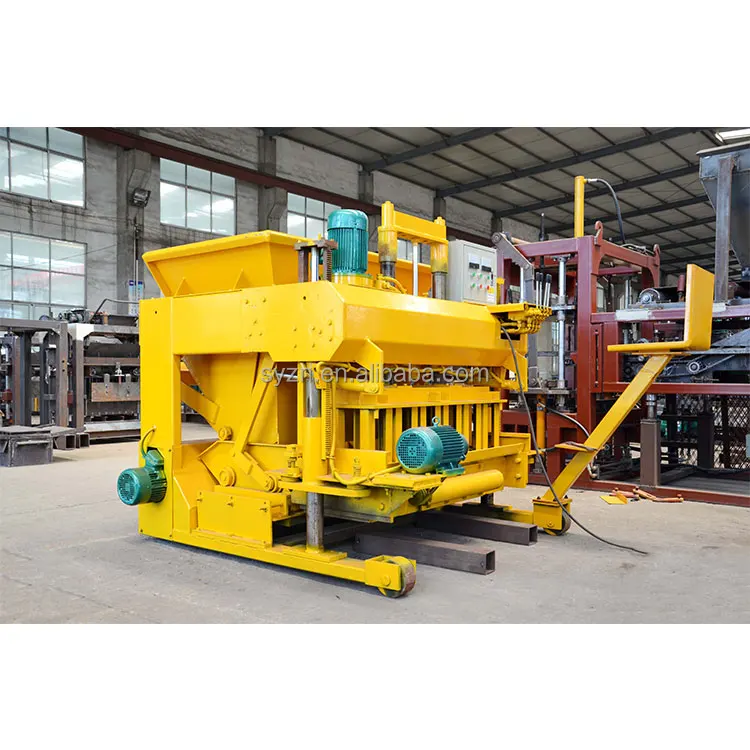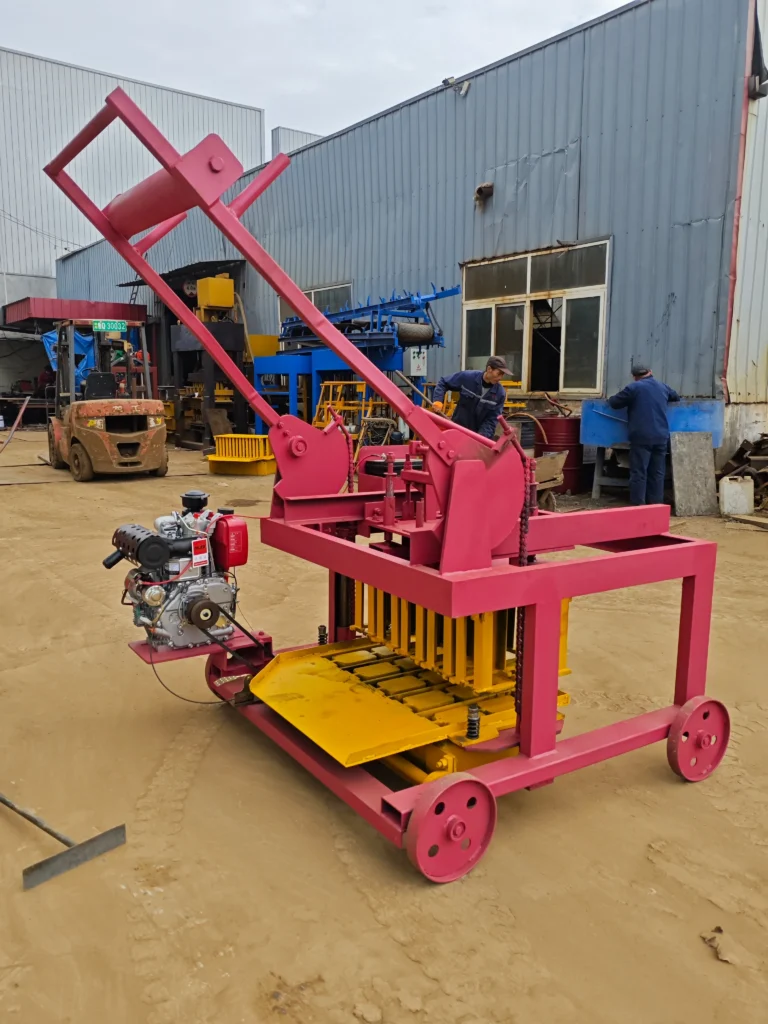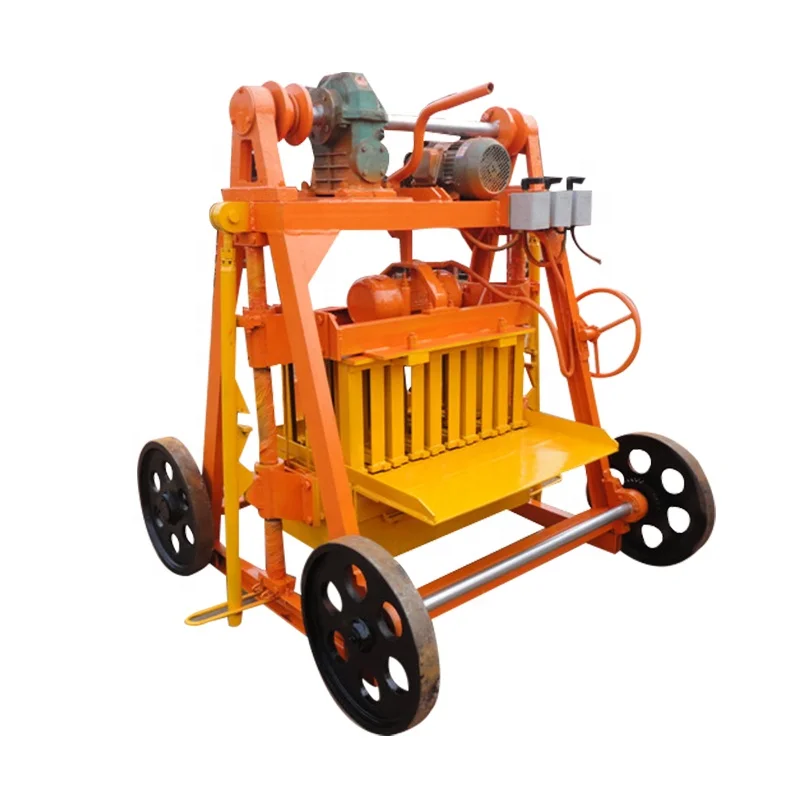
Description
Upgrade-Ready Configuration — Engine-driven compaction paired with a defined automation pathway keeps the QMJ4-45 relevant as a buyer scales from manual egg-laying to PLC-controlled batching.
Technical Specifications
| Parameter | Value |
|---|---|
| Model | QMJ4-45 |
| Product Type | Mobile Egg Laying Block Making Machine |
| Molding Capacity | 4 pcs/mould (basis not stated in source — confirm block format) |
| Vibration Frequency | 2400 r/min |
| Productivity | 2600-4000 pcs/day (basis not stated in source — confirm format & mix) |
| Compaction Method | Mould vibration (twice-vibration of molding core) |
| Molding Cycle | 45 s |
| Demold Method | Manual |
| Turning / Travel Method | Manual |
| Total Power | 6 kW |
| Power Source | Diesel / Petrol engine |
| Pallet Requirement | None (produces directly on ground) |
| Automation Level | Manual (egg-laying type) |
| Control System | Not stated in source (basis to be confirmed) |
| Voltage & Frequency | N/A (engine-driven) |
| Certification | CE (verify applicability to this model) |
| Warranty | One year (whole machine) |
Application Suitability
| Application | Material or Output |
|---|---|
| On-site hollow block production at existing cement working sites | Concrete mix from local sand, gravel and cement without a fixed batching plant |
| Small-scale production where grid electricity is unavailable | Diesel or petrol engine operation replacing electric motor dependency |
| Hollow block formats 400×200×200, 400×150×200, 400×120×200 mm | Standard concrete masonry units for residential and commercial wall construction |
| First block plant setup with minimal infrastructure | Entrepreneurs and contractors producing directly on compacted ground |
Why the Mix Design Must Come Before the Vibration Setting
The 2400 r/min vibration frequency only delivers consistent density when it is matched to the actual aggregate and cement ratio in use.
I have watched contractors order an automatic mobile block machine based on a headline daily output figure, then discover their local red soil or crushed coral aggregate responds completely differently from the river sand used during factory testing. The vibration that compacts clean graded sand into a dense block will simply churn a sticky clay-rich mix without achieving target strength. Before any PLC controlled egg laying block machine leaves the workshop, the buyer needs to supply a representative sample of local aggregate so the vibration force and cycle timing can be adjusted [NEED_CITE: aggregate grading and its effect on concrete block compaction]. Skipping this step turns the machine into an expensive guessing game.
What Automation Actually Removes from the Operator
At the manual tier, the QMJ4-45 depends entirely on the operator to control cycle start, mould vibration duration, and machine repositioning. This works when production volumes are modest and labour is available, but every manual intervention introduces variation between blocks. Moving toward a PLC controlled egg laying block machine configuration removes the timing guesswork — the controller holds each vibration phase to a set duration, so block density stays consistent whether it is the first unit of the shift or the five-hundredth. For buyers planning to scale, specifying the control upgrade path at the quotation stage means the electrical panel and sensor mounting points can be pre-wired, avoiding a full rewiring project later.
Engine Drive and Control Consistency
Diesel or petrol engine operation frees the QMJ4-45 from grid voltage and frequency constraints, which eliminates one of the most common commissioning delays buyers face when importing electric machines. However, engine speed fluctuation under varying load means the vibration frequency is less stable than a fixed-speed electric motor driving the same eccentric weights [NEED_CITE: engine governor response under cyclic vibration load]. Buyers evaluating an automatic mobile block machine for remote sites should understand that consistent engine maintenance — clean fuel filters, correct governor calibration — directly affects block-to-block density variation across a production run.
Reading the Specs That Matter for Daily Output
The twice-vibration of the molding core applies two distinct compaction phases per cycle rather than a single sustained shake, which improves inter-particle locking in the concrete mix and produces a denser block wall. At a 45-second molding cycle, the theoretical maximum is roughly 80 cycles per hour, but actual throughput depends on the time the operator spends repositioning the machine and refilling the mould. The 6 kW total power figure covers the vibration motor and any auxiliary drives; confirming that the engine can sustain this load continuously without overheating is essential for uninterrupted production [NEED_CITE: continuous duty rating for small diesel engines in industrial applications]. Because the machine lays blocks directly on the ground with no pallet system, curing area layout and ground preparation become the real constraints on daily output, not the press cycle itself.
The Hidden Cost of Skipping the Control Upgrade Conversation
Buyers who purchase a manual egg-laying unit without discussing future automation often discover that adding PLC batching control later requires replacing the entire electrical panel, re-routing sensor cables, and recalibrating the vibration timing from scratch. The downtime during this retrofit can stretch into weeks, and the cost frequently exceeds what a factory-installed upgrade path would have added to the original quotation [NEED_CITE: cost comparison of factory-installed versus field-retrofit PLC systems]. Worse, the blocks produced during the transition period often show inconsistent strength as operators adjust to new control logic while still managing manual steps, leading to rejected batches and strained customer relationships.
Why Buyers Source This Configuration Here
Block machinery remains our single focus, so the QMJ4-45 is specified as a matched system of mould, vibration assembly and engine rather than assembled from unrelated components. We configure the machine against the buyer’s actual mix design and local aggregate, not a catalogue default, which means the 2400 r/min vibration frequency is validated before shipment. Custom mould design is available to buyer drawings, so the hollow block format produced matches what the local market actually purchases. The automation level is selectable — a buyer can start with full manual operation and specify the PLC upgrade points at the same time, keeping future conversion straightforward. Installation and commissioning support includes operator training on the specific mix and format in use, not a generic machine handover.
Documentation & Verification
- Machine specification sheet listing QMJ4-45 vibration frequency, engine rating and mould dimensions
- Line layout showing ground curing area and machine travel path for the buyer’s site conditions
- Factory test record on buyer-confirmed block format and local aggregate sample before dispatch
- Voltage and control language confirmation document for any future PLC batching upgrade
- Operation and maintenance manual covering engine service intervals and mould change procedure
- Packing photographs and customs documentation support for destination port clearance
Installation, Commissioning & Support
- Compacted and level ground area prepared to match the curing footprint for 400×200×200 mm hollow blocks
- Diesel or petrol engine commissioning with fuel system bleeding and governor calibration at site
- First production run supervised to validate 45-second cycle timing against the buyer’s actual mix
- Operator training on manual demould technique and machine repositioning sequence
- Mould and hydraulic wear parts list supplied with recommended local sourcing alternatives
- Scheduled maintenance intervals for the 6 kW vibration motor and eccentric weight bearings
Preparing a Useful Enquiry
Send a representative sample or lab analysis of your local aggregate — sand type, maximum particle size and moisture range — so we can validate the vibration settings before build. Specify the hollow block format your market demands and the daily volume you need to sustain, so the curing area and machine travel layout can be designed around real output. If you anticipate moving to PLC-controlled batching within the next few years, mention this so the electrical architecture can accommodate the upgrade without a panel replacement.
Frequently Asked Questions
Q: How is the stated daily output of 2600-4000 pieces calculated?
A: That range assumes specific hollow block formats — typically 400×200×200, 400×150×200 or 400×120×200 mm — under ideal conditions with an experienced operator. Actual output depends on your mix design, ground conditions, curing area size and how quickly the operator can reposition the machine between cycles. We calculate a realistic figure for your exact format once you confirm these variables.
Q: Can batching, vibration timing or stacking automation be added later?
A: Yes, provided the upgrade path is discussed at the quotation stage. We can pre-wire sensor mounting points and allocate space in the electrical enclosure for a future PLC module. Retrofitting these features after delivery without prior planning typically requires a full panel replacement and extended downtime, so flagging your automation intentions early keeps the conversion straightforward.
Q: What mix design details must I provide before the machine ships?
A: We need to know your local aggregate type, maximum particle size, cement grade and the water-to-cement ratio you plan to use. This information lets us adjust the vibration frequency and cycle timing so the compaction force matches your material. Running a factory test on your actual mix sample before dispatch is the most reliable way to confirm block strength.
Q: How does engine-driven operation affect block consistency?
A: Diesel and petrol engines introduce slight speed fluctuation under cyclic load, which means the vibration frequency is less perfectly stable than a grid-connected electric motor. Proper engine maintenance — clean fuel filters, correct governor calibration and regular servicing — minimises this variation. For buyers who later gain access to reliable grid power, an electric motor conversion can be planned as part of the automation upgrade.
Q: What PLC options exist if I scale up from this manual unit?
A: When you move to a semi-automatic or automatic line, we supply PLC-controlled batching with configurable recipes, automatic pallet feeding, vibration timing control and stacking logic. The control language and display are confirmed to match your operators before shipment. Starting with the QMJ4-45 gives you a low-capital entry point while the PLC upgrade path keeps the control architecture consistent as volume grows.