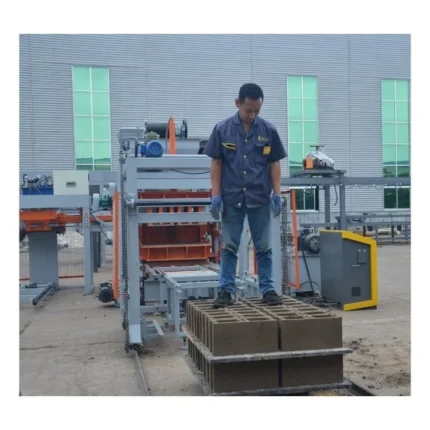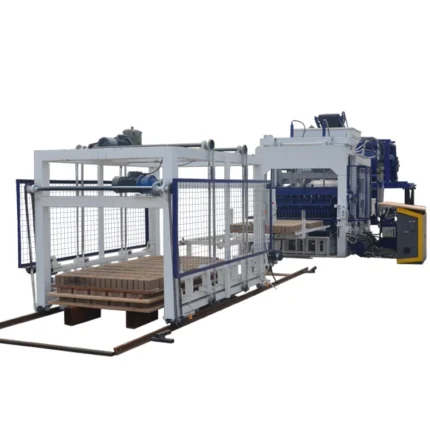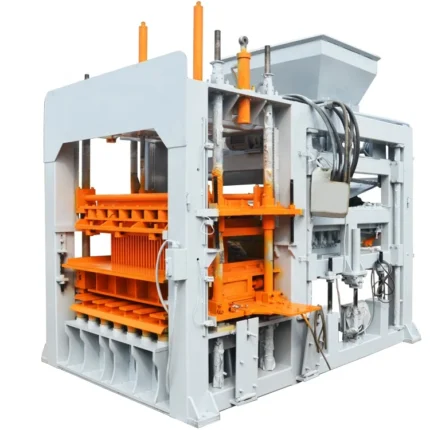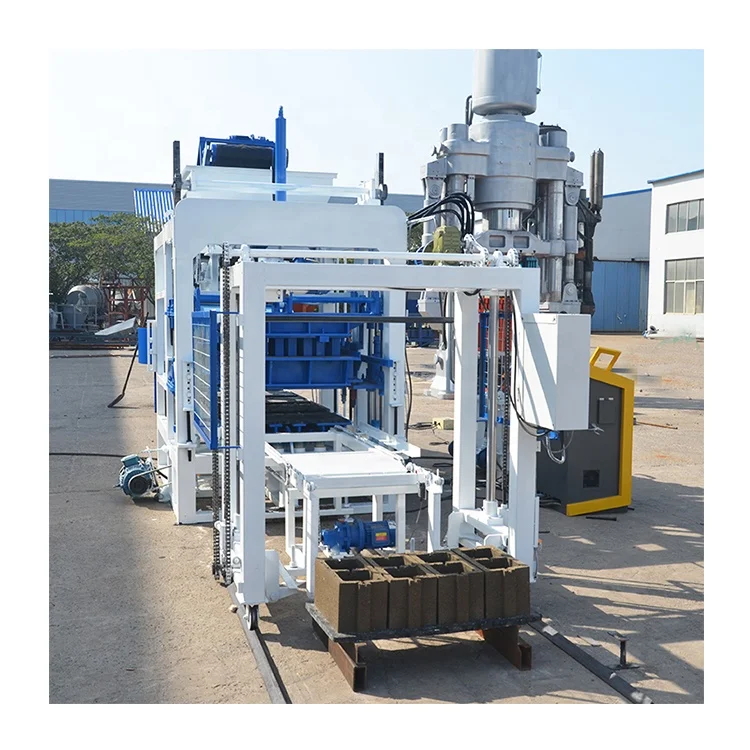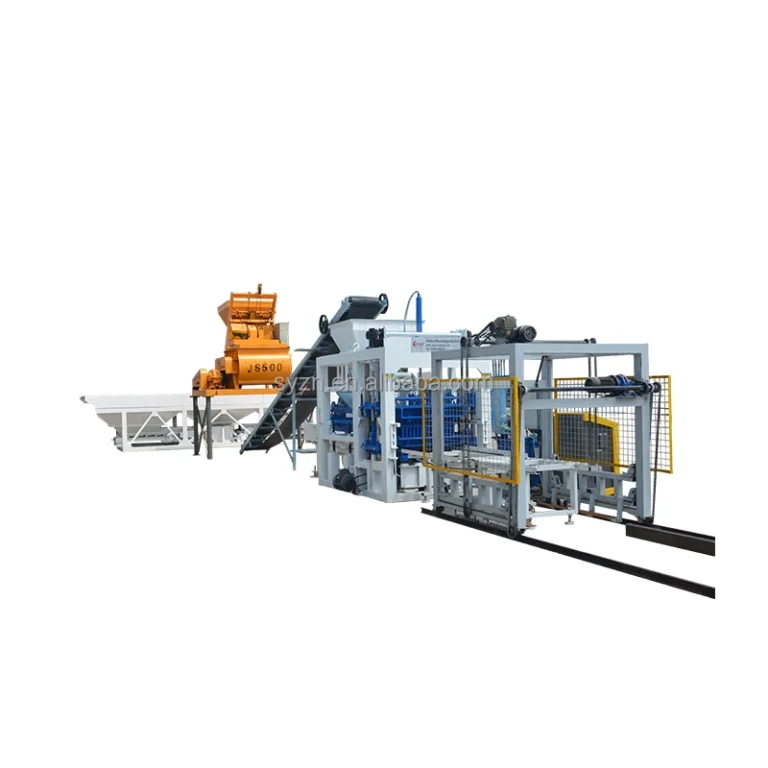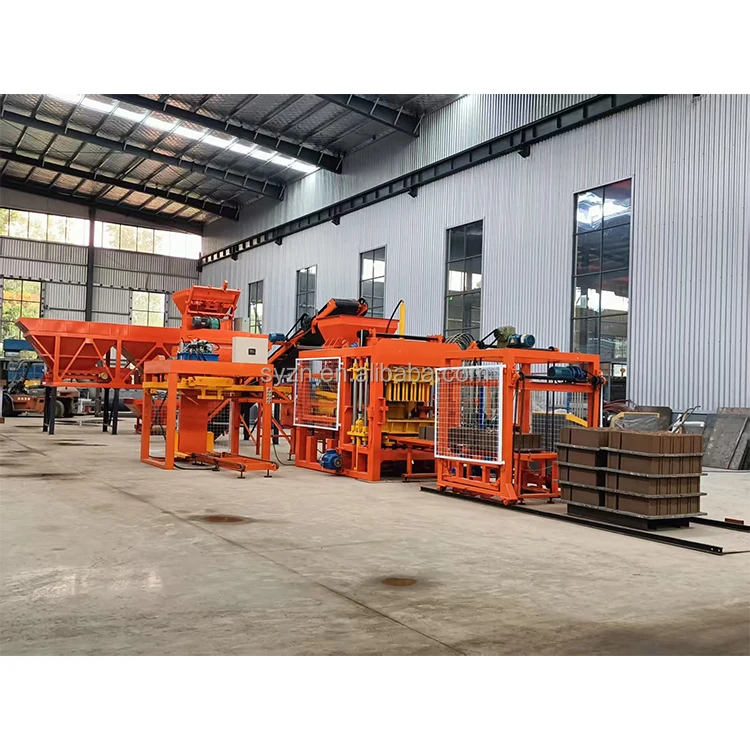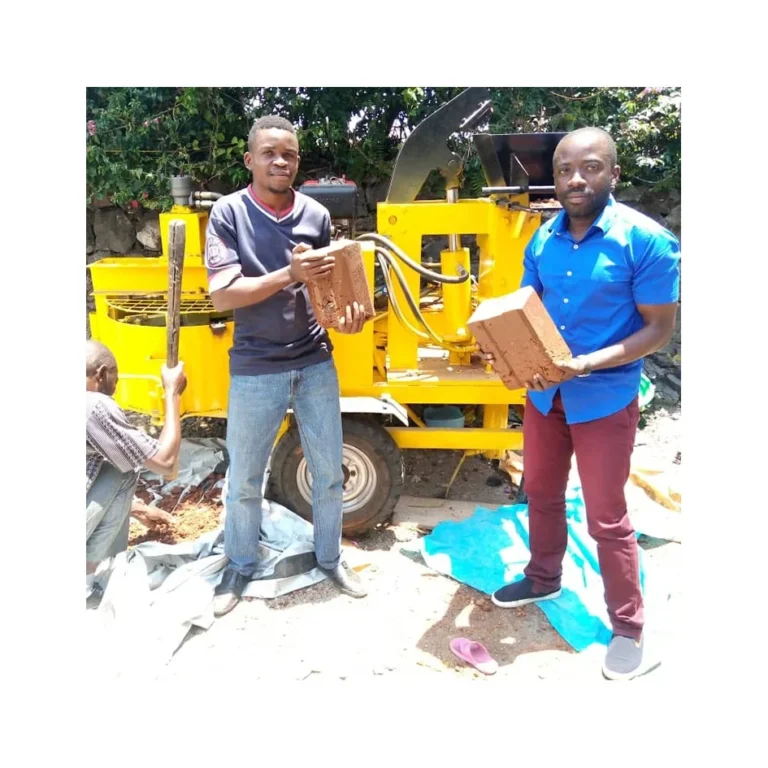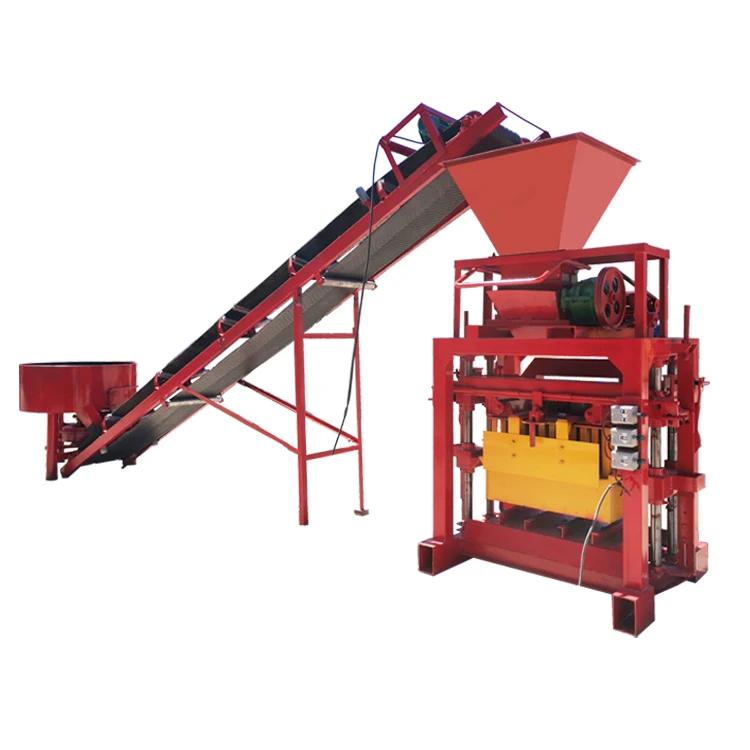


Description
Automation clarity from day one — every control parameter on the QTJ4-35 is locked to your local voltage, frequency and operator language before the frame is welded, so commissioning starts with production, not troubleshooting.
Technical Specifications
| Parameter | Value |
|---|---|
| Model | QTJ4-35 |
| Product Type | Semi-Automatic Concrete Block Making Machine |
| Overall Dimensions (L×W×H) | 1350×1460×1800 mm |
| Molding Cycle | 35 s (basis not stated in source — confirm block format / material / thickness) |
| Vibration Frequency | 2800 r/min |
| Vibration Force (Exciting Power) | 30 kN |
| Total Power | 11.15 kW |
| Mixer Model | JQ350 |
| Pallet Size | 850×450×20 mm |
| Net Weight | 1500 kg |
| Frame Construction | Four-lead channel steel stand |
| Applied Products | Hollow block (8 inch, 6 inch), solid brick |
| Raw Materials | Crushed stones, sand, cement, dust, fly ash |
| Automation Level | Semi-automatic (manual pallet handling) |
| Output — 400×200×200 mm hollow block | 408 pcs/h, 4 pcs/mould (basis to be confirmed) |
| Output — 400×150×200 mm hollow block | 510 pcs/h, 5 pcs/mould (basis to be confirmed) |
| Output — 240×115×53 mm solid brick | 2100 pcs/h, 18 pcs/mould (basis to be confirmed) |
Application Suitability
| Application | Material or Output |
|---|---|
| Small-scale hollow block plant | 8 inch and 6 inch hollow blocks from crushed stone, sand and cement |
| On-site contractor block production | Hollow blocks and solid bricks produced locally with fly ash and dust |
| First block plant for entrepreneurs | Semi-automatic output in hollow block and solid brick formats |
| Upgrade from manual egg-laying machines | Fixed-press cycle consistency with controlled vibration and compression |
What the "35-Second Cycle" Actually Means for Your Output
A cycle number without a block format is just a stopwatch reading.
Buyers regularly see "35 seconds" on a spec sheet and multiply it into a daily total, only to find the real output falls short once the press runs on a different block size or a denser mix. The QTJ4-35 semi-automatic block machine cycle is measured under conditions that must match your target format — a 400×200×200 mm hollow block behaves very differently under vibration than a 240×115×53 mm solid brick. When the format changes, the effective cycle changes too [NEED_CITE: block cycle time variability by format and mix design]. I have watched operators in Latin American plants wait for a full shift to finish a mould change because the procedure was never documented for their specific format set. Locking the format list and cycle assumption before the machine leaves the factory removes that uncertainty.
Control Language and Voltage — Fixed Before the PLC Is Powered
The automatic QTJ4-35 block machine configuration starts with your site’s electrical standard and the language your operators actually read. A PLC screen defaulting to the wrong language on arrival means the machine sits idle until a remote session re-flashes the interface, burning through project timelines. Voltage and frequency are confirmed during the quotation stage, not after the container is loaded. The control panel is then built and labelled around that confirmed standard, so the first power-on at your site matches what the operator expects to see.
Mould Change Procedure and Format Flexibility
Every format the QTJ4-35 produces — from 8 inch hollow blocks to standard solid bricks — relies on a dedicated mould that must be swapped on the four-lead channel steel frame. The PLC controlled block machine upgrade path is designed so that semi-automatic operators can handle mould changes without specialist tooling, but the procedure still requires a documented sequence [NEED_CITE: mould change best practices for vibration press equipment]. When the mould list and change instructions are agreed before production, you know exactly how many formats you can rotate through in a single shift and which ones require a full stop versus a quick swap.
Vibration Force, Compression and Block Density
The 30 kN vibration force at 2800 r/min works together with upper and bottom mould compression to consolidate the mix inside the cavity. For hollow blocks made with crushed stone and fly ash, the vibration frequency must be high enough to settle fine particles around the coarse aggregate without segregating them. The four-lead channel steel stand keeps the press stable during this high-frequency vibration, preventing frame deflection that would otherwise cause uneven block faces. Pallet size at 850×450×20 mm is specified upfront so the curing racks and forklifts you already have on site can handle the output without modification. Mix design must be matched to local aggregate gradation — a mix that works in one region may produce weak blocks in another if the vibration force and compression are not adjusted accordingly [NEED_CITE: aggregate gradation and vibration matching for concrete block strength].
The Cost of Skipping the Configuration Step
When voltage is assumed rather than confirmed, a 380 V machine arrives at a 440 V site and the motor burns out within the first week. When pallet dimensions are guessed, the curing area cannot accommodate the output and blocks are stacked by hand on the floor, cracking before they reach strength. When the control language is left on a factory default, the operator cannot navigate fault codes and every alarm requires a phone call across time zones [NEED_CITE: commissioning delays caused by unconfirmed electrical and control specifications]. These are not theoretical risks — they repeat on every container shipped without a locked configuration sheet.
Why Source the QTJ4-35 Through a Single-System Supplier
Block machinery is the only product category here, which means the QTJ4-35 press, its moulds, pallets and the JQ350 mixer are specified as one matched set rather than assembled from unrelated vendors. The vibration force and hydraulic parameters are set against your actual mix design and local aggregate, not pulled from a catalogue default. Mould design covers the formats your market actually sells, with custom drawings available when standard options do not match. The automation level is selectable — you can start with semi-automatic manual pallet handling and add automatic stacking or PLC batching as volume grows. Installation support includes operator training so the crew running the QTJ4-35 on day one understands the cycle sequence and mould change procedure.
Documentation & Verification
- Line layout showing QTJ4-35 footprint with pallet flow and curing area dimensions
- Capacity calculation sheet stating the exact block format for each output figure
- Mould drawing and format list matching your target product range
- Voltage, frequency and control language confirmation signed before production
- Factory test record with actual cycle times run on your specified mix design
- Operation and maintenance manual with mould change procedure per format
Installation, Commissioning & Support
- Foundation pad sized to the 1350×1460 mm footprint with vibration isolation
- Dedicated electrical circuit matched to confirmed voltage and 11.15 kW total power draw
- Machine arrives as a single assembly with mixer, ready for pallet and power connection
- First-run commissioning includes cycle timing verification against your block format
- Operator training covers mould change sequence and fault code navigation in your language
- Wear parts list provided with first replacement intervals for vibration components
What to Prepare Before Requesting a Quote
Send the exact block formats your market requires, including dimensions and target daily volume per format. Confirm your site voltage, frequency and the language your operators need on the PLC display. Share your local aggregate type and any existing mix design so the vibration force can be matched before the machine is built. If you already have curing racks and forklifts, provide the pallet dimensions they accept so the 850×450 mm pallet specification can be verified or adjusted.
Frequently Asked Questions
Q: How is the output capacity of the QTJ4-35 calculated and which block format does each figure assume?
A: Each output figure is tied to a specific block format and mould cavity count. The 408 pieces per hour figure assumes a 400×200×200 mm hollow block with 4 cavities per mould. Different formats change the cycle and cavity count, so always request a capacity sheet that states the exact format behind every number.
Q: What automation level does the QTJ4-35 ship with and what can be added later?
A: The QTJ4-35 ships as a semi-automatic machine with manual pallet handling. Automatic pallet feeding, stacking and PLC batching can be added as your production volume grows, using the same frame and control architecture without replacing the press.
Q: How do I confirm voltage, frequency and control language before the machine is built?
A: These parameters are confirmed during the quotation stage and written into the specification sheet before production starts. The PLC display language and electrical components are then sourced to match your site standard, avoiding commissioning delays on arrival.
Q: What is the mould change procedure and how long does it take on site?
A: The mould change involves releasing the mould from the four-lead frame and fitting the replacement unit for the target format. The documented procedure is provided per format so operators can plan swap times into their shift schedule without unplanned downtime.
Q: How does vibration force need to be matched to my local aggregate for consistent block strength?
A: The 30 kN vibration force at 2800 r/min must be paired with a mix design that suits your local crushed stone or fly ash gradation. A test run with your actual materials before shipment confirms that block density and strength meet your market standard.