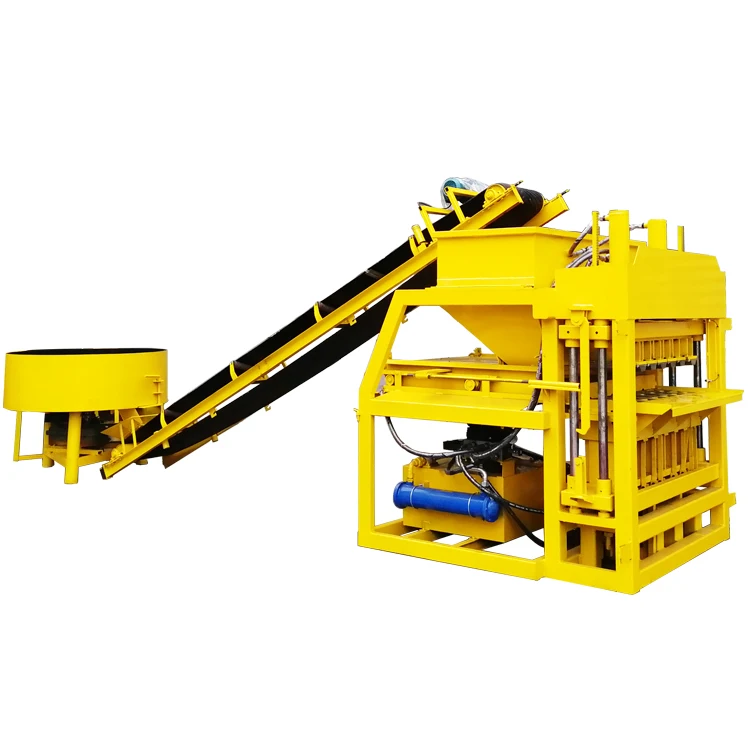
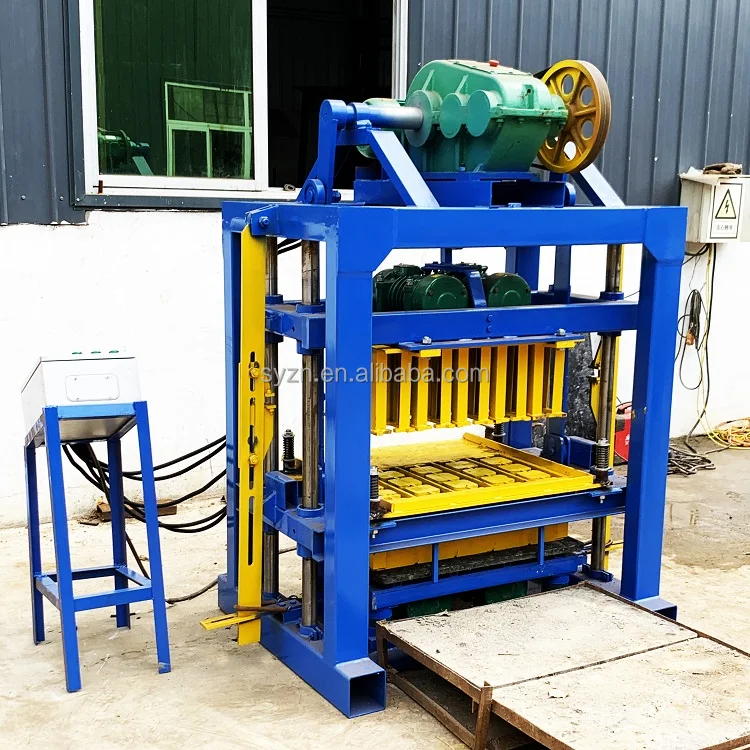
Description
Configuration matched to the buyer’s actual mix design and target block format — the QTJ4-24 control logic is set against your local aggregate and output goal, not a default factory preset.
Technical Specifications
| Parameter | Value |
|---|---|
| Model | QTJ4-24 |
| Product Type | Semi-Automatic Concrete Block Making Machine |
| Molding Type | Platform Vibration |
| Overall Dimensions (L×W×H) | 3600mm × 1700mm × 2560mm (working state) |
| Total Mass | 1750 kg |
| Pallet Size | 850mm × 450mm |
| Overall Power | 14.25 kW |
| Vibration System | Lower platform (2 × 3 kW) + Upper (1.5 kW) |
| Elevating System | Cone-shape motor with JZQ250 reducer, V-belt drive |
| Delivery Device | Cycloidal pin wheel reducer, chain and V-belt drive |
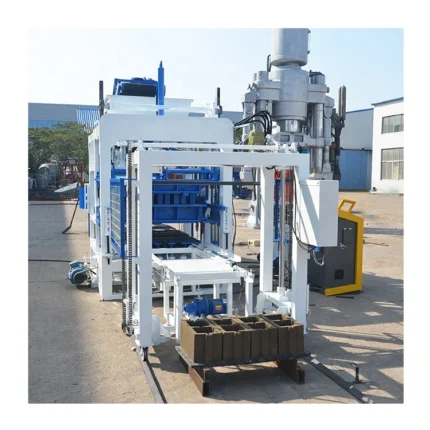
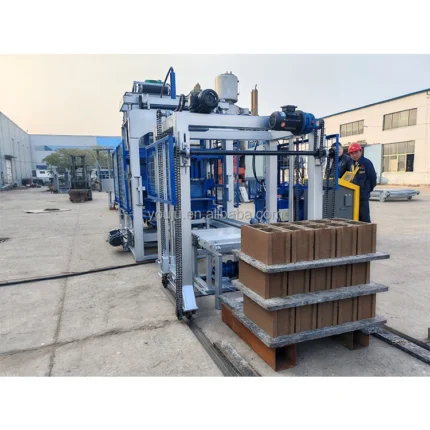
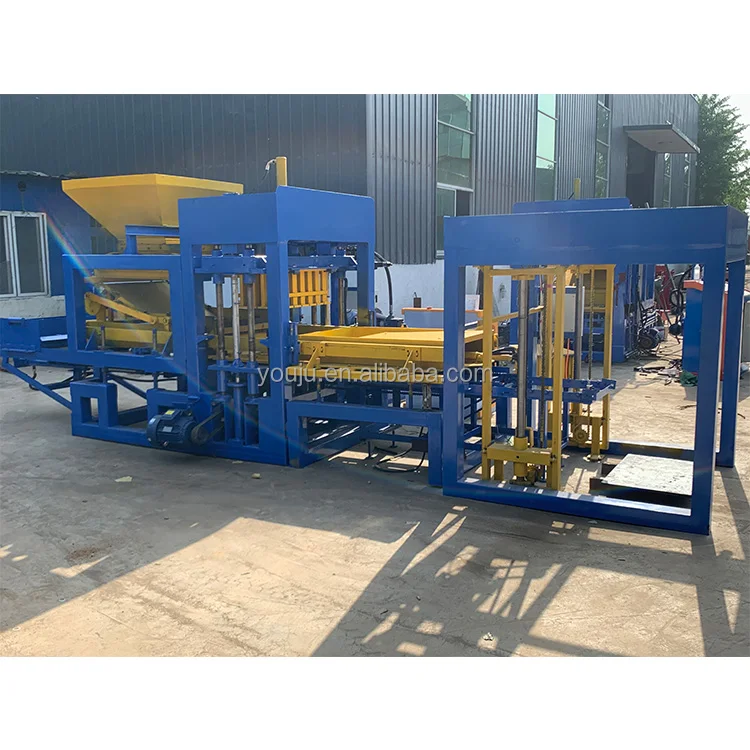
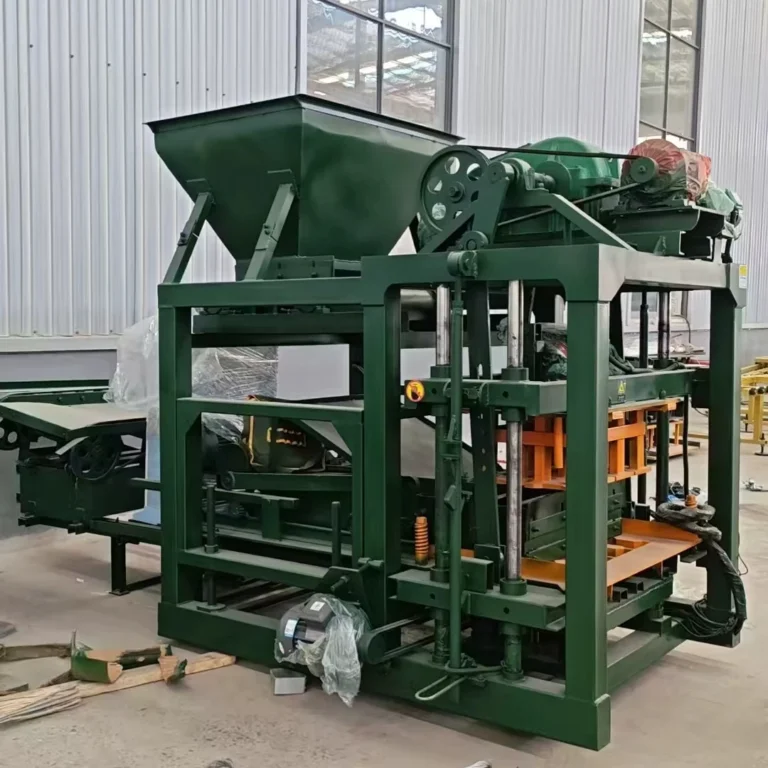
| Frame Construction | Dragon gate style, super steel, four vertical guide shafts |
| Automation Level | Semi-automatic (mechanical + electronic control) |
| Output Capacity | (basis not stated in source — confirm format & mix) |
| Voltage & Frequency | (basis to be confirmed before commissioning) |
| Mould Format (Hollow) | 390×190×190mm, 4 pcs/mould |
| Mould Format (Solid) | 240×115×53mm, 21 pcs/mould |
| Support Equipment | JQ350 pan mixer, 6m belt conveyor, trolley |
Application Suitability
| Application | Material or Output |
|---|---|
| Small-scale hollow block plant | Crushed stone, sand, cement, and fly ash blends |
| Solid brick production for local masonry | Natural sand and cement mixes |
| On-site block production for contractors | Locally sourced aggregate with variable gradation |
| Format addition to existing range | Interlocking or paving formats via mould swap |
Why the Control Voltage Question Should Come Before the Price
Confirming the control voltage and PLC language before the automatic QTJ4-24 block machine ships prevents a three-week site delay.
When I first supported a 4-24 hollow block line in East Africa, the local grid ran a different frequency than the factory default. The control panel powered up, but the vibration timers drifted and the elevator motor stalled on every third cycle. Three technicians sat on the site waiting for a replacement transformer while the curing racks stood empty [NEED_CITE: voltage and frequency standards by export market]. The PLC controlled semi-automatic block machine now leaves the electrical specification open in the quotation stage so the buyer locks in the correct voltage, frequency, and display language before the control cabinet is wired.
How the Control Sequence Reduces Operator Guesswork
The electronic control panel sequences the vibration, material release, and elevator cycle so the operator does not time each step by feel. On the automatic QTJ4-24 block machine, the lower platform motors and upper vibrator engage together, compacting the mix across the full 850mm × 450mm pallet before the mould lifts. This consistent timing removes the variation that comes from manual lever operation.
Where Automation Stops and the Upgrade Path Begins
The semi-automatic sequence handles the press cycle, but pallet handling and stacking remain manual unless the optional auto stacker is specified. A buyer starting with hand-stacked output can add the stacker later without replacing the press frame. This is the practical value of the PLC controlled semi-automatic block machine: it removes the heaviest steps first and leaves room to add pallet feeding when daily volume justifies the investment. [NEED_CITE: automation upgrade paths for stationary block presses]
Vibration, Pressure, and the Density That Holds the Block Together
The dual 3 kW lower motors push vibration through the pallet into the full mould area, while the 1.5 kW upper vibrator settles the top surface. Without both, hollow block walls show dense bases and loose crowns. The four wear-resisting guide shafts keep the mould aligned through thousands of cycles, so block dimensions stay within tolerance. The JZQ250 speed reducer on the elevator controls the mould lift speed, preventing the fresh block from cracking as the mould withdraws.
The Hidden Cost of Skipping the Electrical Confirmation
A control panel wired for the wrong frequency will run, but timers and motor speeds will drift. The vibration cycle finishes too early or too late, and block strength varies pallet by pallet. The buyer notices only when cured blocks fail a crush test weeks later, and by then the press has produced thousands of inconsistent units [NEED_CITE: common causes of inconsistent block density in semi-automatic lines]. Specifying the exact voltage, frequency, and control language before the automatic QTJ4-24 block machine enters assembly avoids this silent failure mode entirely.
What Makes This Source Different for a Semi-Auto Press
The machine, mould, pallet, and handling equipment are specified as one system, so the 850mm × 450mm pallet matches the trolley and curing rack dimensions the buyer already plans. The mould is chosen against the block format the local market actually buys, not a catalogue default. The QTJ4-24 frame supports a future stacker addition, so the automation level can grow with the plant. Voltage, frequency, and PLC language are confirmed in writing before the cabinet is assembled. Operator training covers both the press cycle and the mixer feed sequence, so the line runs as a single cell from day one. [NEED_CITE: matched-system approach to stationary block line specification]
Documentation & Verification
- Capacity calculation stating which block format the output figure assumes
- Electrical schematic with confirmed voltage, frequency, and PLC language
- Mould drawing and format list matching buyer’s target products
- Factory test record on buyer’s specified mix before dispatch
- Operation and maintenance manual with wear parts list
Installation, Commissioning & Support
- Fixed platform foundation required, matching 3600mm × 1700mm working footprint
- Dedicated 14.25 kW circuit with confirmed voltage and frequency
- Arrives partially dismantled; reassembly includes frame, hopper, and control cabinet
- First-cycle commissioning sets vibration timing and elevator speed to mix design
- Operator training covers control sequence, mould change, and daily lubrication points
- Wear parts list and mould spares identified before shipment
What to Include in Your First Inquiry
Share your target block format, the aggregate and cement available locally, and the daily output you need to cover your market. Confirm the site voltage, frequency, and the language your operators read on a control display. If you have an existing mixer or conveyor, note its dimensions so the line layout connects without gaps.
Frequently Asked Questions
Q: How is the output capacity of the QTJ4-24 verified, and which block format does it assume?
A: The supplier provides a capacity calculation that names the exact block format—hollow 390×190×190 or solid 240×115×53—and the mix design assumed. Without that format stated, the figure is meaningless. Request the calculation before accepting a quoted daily output so your production plan matches reality.
Q: What voltage, frequency, and control language options are confirmed before shipping?
A: The buyer confirms site voltage, grid frequency, and the language for the control display during the quotation stage. The control cabinet is then wired and labelled to that specification. This step is written into the sales process so the machine powers up correctly on arrival.
Q: How does the semi-automatic control sequence work, and what still requires the operator?
A: The electronic panel times vibration, material release, and mould elevation. The operator still loads the pallet, triggers the cycle start, and moves the pressed block to the curing area unless an auto stacker is added. This balance keeps maintenance simple while removing timing errors.
Q: Can the QTJ4-24 be upgraded later to automatic pallet feeding and stacking?
A: Yes. The press frame accepts an optional auto stacker that handles three to six layers depending on block height. Pallet feeding automation can be added as a separate station. The upgrade does not require replacing the press, only adding the handling modules.
Q: What is the mould change procedure and how long does a format swap take?
A: The mould bolts to the vibration platform and connects to the elevator arms. A format swap involves unbolting the current mould, lowering the new one into position, and adjusting the guide shaft stops. The exact time depends on operator familiarity and should be confirmed during training.