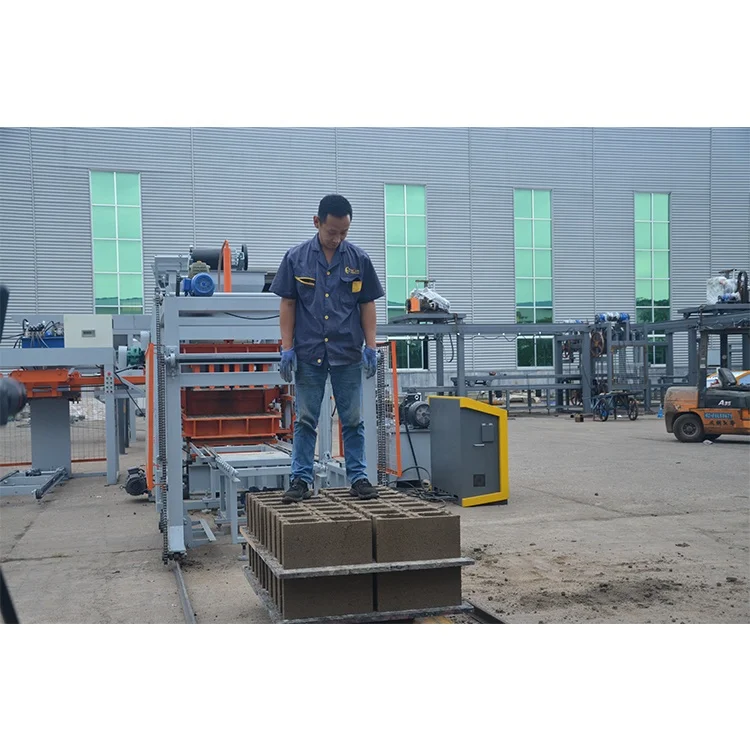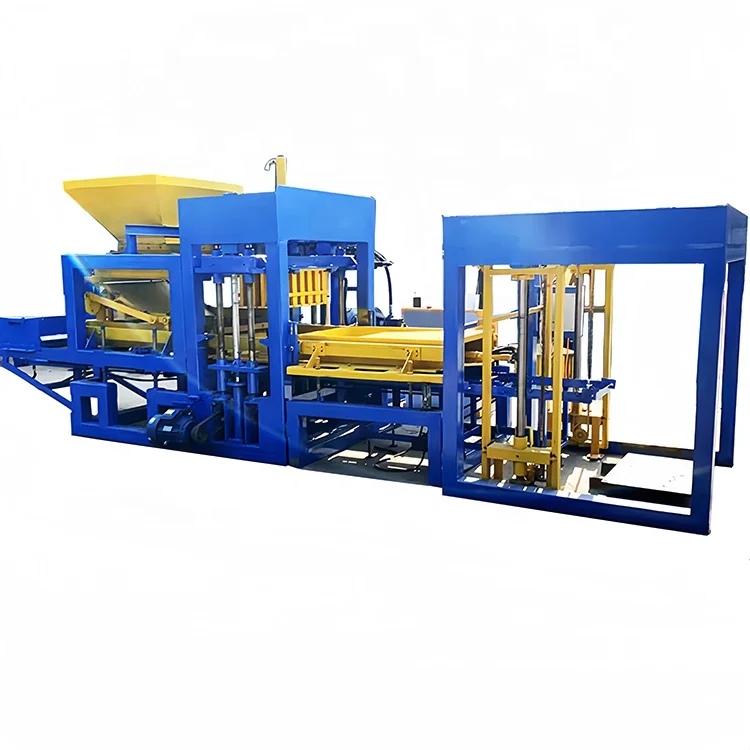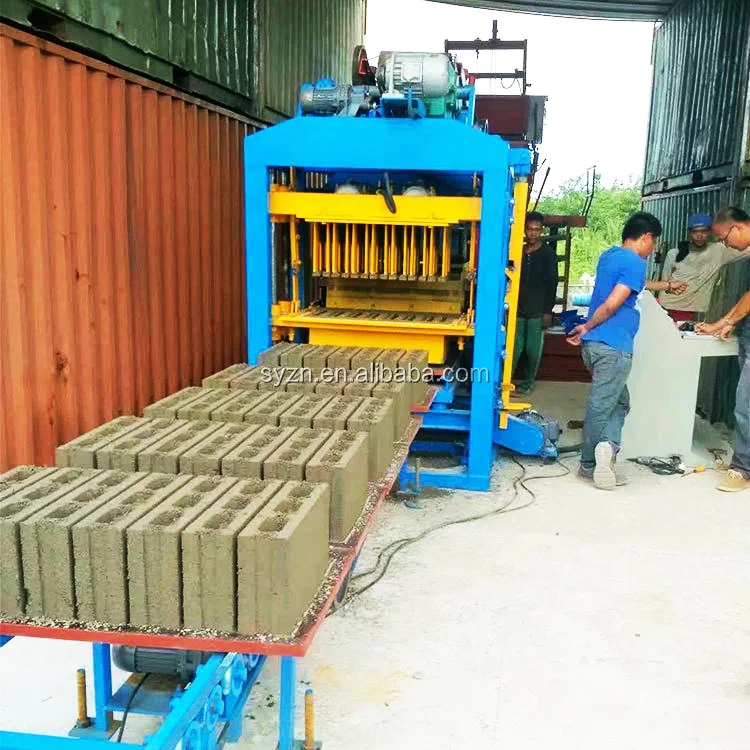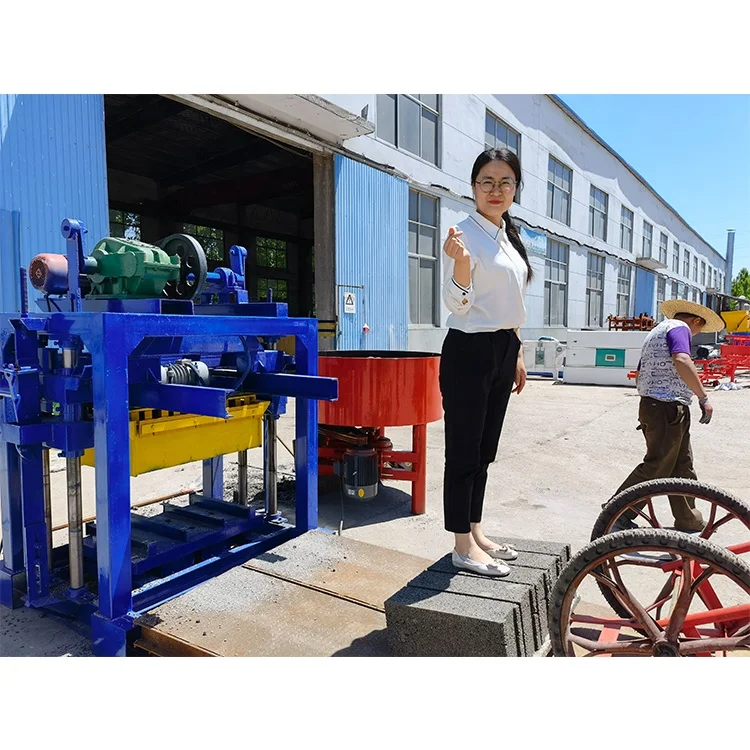


Description
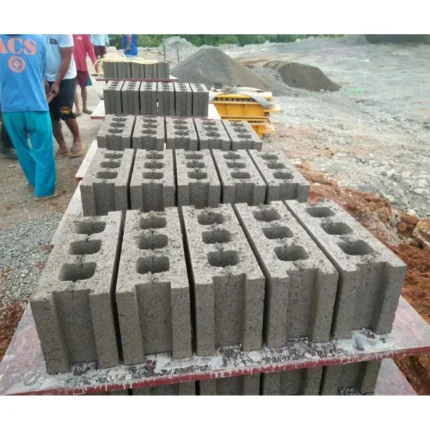
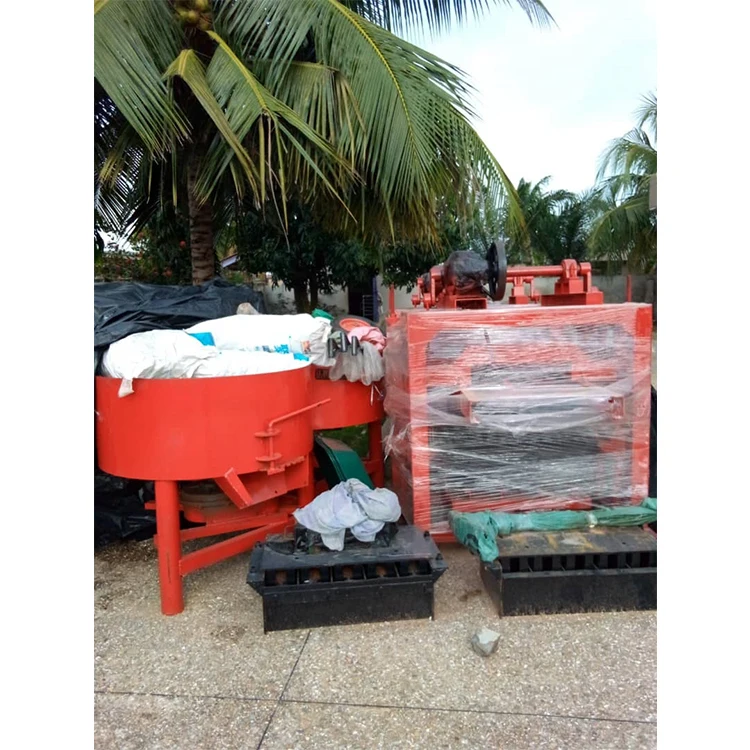
Dual-Vibration Compaction — The QTJ4-40 pairs bed mould vertical vibration with upper mould compression, a matched system that prevents the low-density core and soft edges I once had to fix on a West African site running volcanic aggregate.
Technical Specifications
| Parameter | Value |
|---|---|
| Model | QTJ4-40 |
| Product Type | Semi-Automatic Concrete Block Making Machine |
| Rated Power | 10.4 kW |
| Molding Cycle | 40 s |
| Vibration System | Bed mould vertical vibration + upper mould compression vibration |
| Pallet Size | 850 × 450 mm |
| Overall Dimensions (L×W×H) | 1350 × 1460 × 1800 mm |
| Net Weight | 1 T |
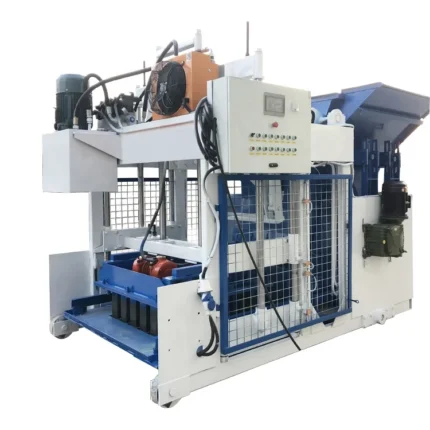
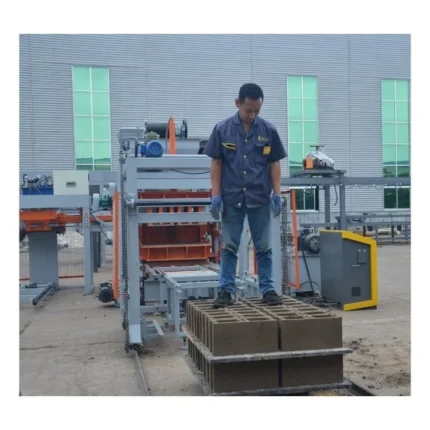
| Automation Level | Semi-automatic (top die push-pull, automatic scraper, manual pallet handling) |
| Raw Materials | Concrete, sand, cement, fly ash, lime, gypsum |
| Theoretical Output (400×200×200 mm) | 4 pcs/mould, 360 pcs/h, 2800 pcs/day (basis: 8-hour shift, standard mix) |
| Theoretical Output (400×150×200 mm) | 5 pcs/mould, 450 pcs/h, 3600 pcs/day (basis: 8-hour shift, standard mix) |
| Theoretical Output (225×112.5×60 mm) | 9 pcs/mould, 800 pcs/h, 6400 pcs/day (basis: 8-hour shift, standard mix) |
| Voltage & Frequency | Configurable to buyer’s local supply |
Application Suitability
| Application | Material or Output |
|---|---|
| First plant setup for entrepreneurs | Hollow and solid blocks from local sand and cement at entry-level investment |
| On-site production for contractors | Concrete blocks and pavers mixed with available aggregate at a construction location |
| Secondary press for existing producers | Specific format runs (e.g., interlocking pavers) without a full automatic line commitment |
Why the Voltage Question Must Precede the Shipment Date
An unconfirmed voltage and frequency spec is the single most common cause of commissioning delays for the automatic QTJ4-40 block making machine.
I have seen 10.4 kW motors sit idle for weeks on a job site because the local grid was 220V/60Hz while the control panel was wired for 380V/50Hz. The transformer workaround costs time the contractor cannot afford, and the PLC display language was still locked in the factory default [NEED_CITE: common export voltage and frequency standards by region]. That is why we treat electrical confirmation as a production-gate step, not a shipping-gate afterthought.
From Manual Pallets to a Fully Automated Line
The automatic QTJ4-40 block making machine starts as a semi-automatic press with manual pallet feeding and hand stacking. This configuration suits a first plant where capital is limited but the owner plans to scale. The 40-second molding cycle and the automatic scraper remove the heaviest operator intervention at the press itself, while pallet handling remains manual until budget allows the next step.
Defining the Upgrade Path Before the First Pallet Is Laid
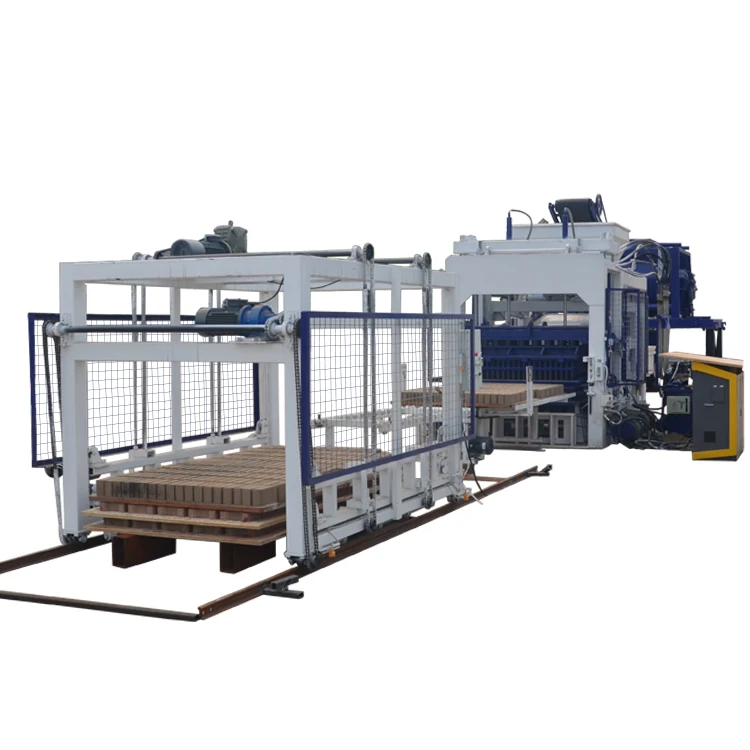
Automation is not a single switch but a sequence of stations: automatic pallet feeder, stacker, and cubing system. Each station must be mechanically prepared during the initial build so that adding a pallet magazine later does not require cutting and re-welding the frame [NEED_CITE: mechanical pre-fit requirements for future automation modules]. We confirm the upgrade plan at the inquiry stage, even if the buyer is not ready to pay for it today.
How Vibration Force and Pallet Size Shape Block Density
The 10.4 kW rated power drives a dual-vibration system that compacts the mix from below while the upper mould compresses from above, producing uniform density across the block face. The 850 × 450 mm pallet size dictates how many blocks sit on a single board during curing. If the buyer already owns a forklift with a 1000 mm fork width, the pallet must clear that dimension with room for operator error, otherwise the curing rack layout must be redesigned.
The Cost of Skipping Mix Design Validation
When a block machine is configured for a catalogue-default mix but the buyer can only source high-clay sand or crushed coral, the vibration force fails to compact the material properly. Blocks emerge soft at the core and crack during curing [NEED_CITE: aggregate variability impact on vibration compaction]. The daily output then collapses because the operator must slow the cycle to avoid breakage, and the entire capacity calculation becomes meaningless.
Why Buyers Source the QTJ4-40 From Here
- Single-focus engineering: The press, mould, pallet, and handling equipment are specified as one matched system, not assembled from separate suppliers.
- Format-driven capacity calculation: Every output figure we quote states the exact block size, mould cavity count, and shift assumption.
- Local aggregate validation: We request a sample of the buyer’s sand or crushed stone before finalizing the vibration frequency and hydraulic pressure settings.
- Automation pre-fit: The frame is drilled and the control panel is wired for future pallet feeding and stacking modules, even if the buyer starts semi-automatic.
- Voltage and language lock: Electrical specifications and PLC display language are confirmed in writing before the machine enters the assembly bay.
Documentation & Verification
- Line layout drawing showing the 1350 × 1460 × 1800 mm footprint with curing area clearance
- Capacity calculation sheet tied to your selected block format and mould cavity count
- Pallet specification confirming 850 × 450 mm dimensions and material compatibility with your curing method
- Voltage and frequency confirmation record before production begins
- Factory test video run on your specified mix design and block format
Installation, Commissioning & Support
- Foundation pad leveled to within 5 mm over the 1350 × 1460 mm footprint
- Dedicated 10.4 kW circuit with the confirmed voltage and frequency
- Vibration frequency tuned on-site to match your local aggregate sample
- PLC display language verified and locked during commissioning
- Operator training on the 40-second cycle, mould change, and scraper adjustment
- Wear parts list and first replacement schedule for vibration springs and scraper blades
Starting the Technical Conversation
Provide your target block format (length × width × height in mm), the daily volume you need to sell, and a description of the sand or aggregate available locally. Tell us your site voltage, frequency, and the language your operators read. If you already run a curing yard, share the pallet size and forklift capacity so we can confirm the 850 × 450 mm board will fit.
Frequently Asked Questions
Q: How is the QTJ4-40 output capacity verified per block format, and what is the realistic daily throughput?
A: We state output per format: 2800 pcs/day for 400×200×200 mm hollow blocks, 3600 pcs/day for 400×150×200 mm, and 6400 pcs/day for 225×112.5×60 mm pavers. These figures assume an 8-hour shift, standard mix, and 40-second cycle. Realistic throughput depends on pallet handling speed and curing area layout.
Q: What automation upgrades are available for this semi-automatic press?
A: The frame is pre-drilled for an automatic pallet feeder, stacker, and cubing system. Buyers can start with manual pallet handling and add stations later without structural modification. We document the upgrade path in the initial proposal so the control panel is wired for future modules.
Q: How do you confirm voltage, frequency, and control language before shipment?
A: We request the buyer’s local electrical standard and preferred PLC display language at the inquiry stage. These are written into the production order and verified during the factory test. A confirmation record is issued before the machine is packed.
Q: What is the expected mould changeover time between block formats?
A: The top die push-pull and automatic scraper design allows a trained operator to swap moulds within a single shift, though exact time depends on format complexity and crane availability on site. We supply a mould change procedure in the manual and train operators during commissioning.