

Source Kerbstone Machine from China Factory for Finland
CE certification is not a sticker; it is a technical file that customs officers read.
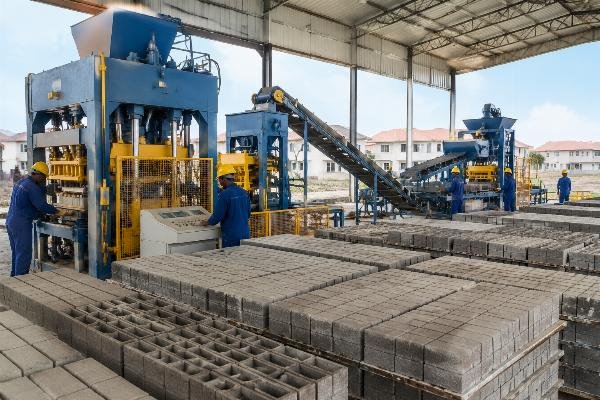
Sourcing a kerbstone machine China Finland supply chain requires verifying the full Technical Construction File (TCF) against EN 842 hydraulic safety standards and ensuring low-temperature component compatibility before shipment. Success depends on pre-shipment validation of PLC interfaces and cold-start reliability, not just competitive pricing.
I still remember the silence in the warehouse when the phone rang from Helsinki. A municipal contractor had ordered a standard QT series curb machine, expecting it to work like the units they used for indoor paver production. The machine arrived at the port, but customs held it for weeks. The issue was not the machine itself, but a missing page in the documentation: the specific hydraulic safety test report required by EU directives. We had provided the general CE certificate, but not the detailed TCF for the hydraulic system. The delay cost more in storage and air-freighted replacement parts than the initial savings on the machine price. That incident changed how I approach every order for the Nordic region. It is not about selling a machine; it is about delivering a compliant production asset.
The gap between a standard Chinese export model and a Finnish-ready unit is often invisible until the machine tries to start in sub-zero temperatures or fails a local safety audit. Understanding these hidden requirements is the first step in successfully navigating the kerbstone machine China Finland market.
Why Standard Chinese Machines Fail in Finland?
Climate and regulation create a double barrier that standard specs do not address.
Most manufacturers assume that if a machine works in Southern Europe, it will work in Northern Europe. This is a dangerous assumption. The failure points are rarely mechanical breakdowns in the traditional sense, but rather systemic incompatibilities with local operating conditions.
The first issue is hydraulic fluid viscosity. Standard hydraulic oil thickens significantly in cold weather. In Finland, where winter temperatures can drop well below freezing, a machine using standard ISO VG 46 oil may struggle to build pressure during startup. This causes strain on the pump and delays production cycles. The solution is not just changing the oil, but specifying components rated for low-temperature operation from the factory.
The second issue is regulatory. The EU Machinery Directive requires strict adherence to safety standards. Many factories provide a generic CE declaration, but Finnish authorities often request the underlying test data. Without this, the machine cannot be legally commissioned for public infrastructure projects.
| Feature | Standard Export Model | Nordic-Spec Model | Compliance Status |
|---|---|---|---|
| Hydraulic Oil Grade | ISO VG 46 (Standard) | Low-Temp Synthetic Blend | [NEED_CITE: hydraulic oil viscosity standards for cold climates] |
| Safety Documentation | General CE Certificate | Full TCF with EN 842 Reports | [NEED_CITE: EU Machinery Directive documentation requirements] |
| PLC Interface | English Only | Multi-language (incl. Finnish/Swedish) | User Operational Safety |
| Steel Mold Thickness | Standard Duty | Reinforced for High Abrasion | Durability in Cold Mixes |
A buyer once shared that their team spent days trying to navigate the control panel because the interface was only in English. While English is widely spoken, local operators prefer instructions in their native language for safety and efficiency. Providing a localized UI is not a luxury; it is a risk mitigation strategy. When sourcing a kerbstone machine China Finland partnership, these details define the operational lifespan of the equipment.
Critical CE Certification Documents You Must Request
Do not accept the certificate alone; demand the full technical file.
Many buyers believe that receiving a CE certificate means the machine is compliant. In reality, the certificate is just the cover page. The real proof lies in the Technical Construction File (TCF). This document contains the design calculations, risk assessments, and test reports that prove the machine meets EU standards.
For kerbstone machines, the critical component is the hydraulic system. EN 842 is the specific standard for safety requirements of fluid power systems. If a manufacturer cannot provide a test report referencing EN 842, the machine may not pass inspection in Finland. I have seen shipments delayed because the factory only had a general safety declaration, not the specific hydraulic test data.
Another common gap is the noise emission report. Urban construction sites in Finland have strict noise limits. A machine that operates within acceptable levels in a noisy industrial zone in Asia might exceed limits in a residential area in Helsinki. Requesting the noise test report before shipment allows you to verify compliance early.
- Hydraulic Safety Report: Must reference EN 842 or equivalent EU standard.
- Noise Emission Test: Verified decibel levels at operator position.
- Electrical Diagrams: Must match EU voltage and frequency standards.
- Risk Assessment Document: Detailed analysis of potential hazards and mitigation measures.
[NEED_CITE: checklist for CE Technical Construction File verification]
When a Finnish buyer asked for these documents, the factory initially hesitated, claiming they were "internal." After explaining that customs could request them, the factory provided the files. The process took a few extra days, but it prevented a potential month-long delay at the port. This is why verifying the kerbstone machine China Finland documentation trail is as important as inspecting the hardware.
Technical Specs for Nordic Durability
Prioritize cold-start reliability and energy efficiency over raw output speed.
In warmer climates, maximum output per hour is the primary metric. In Finland, reliability during cold starts and energy efficiency matter more for total ROI. A machine that produces slightly fewer curbs per hour but starts instantly in -10°C weather is more valuable than one that requires an hour of warm-up time.
The mold design also needs adjustment. Concrete mixes in colder regions often use different aggregates or additives to prevent freezing. These mixes can be more abrasive. Standard molds may wear out faster, leading to inconsistent curb dimensions. Specifying reinforced steel for the molds extends their service life and maintains product quality.
PLC compatibility is another key factor. The control system must handle local voltage fluctuations and frequency standards. A mismatch can cause erratic behavior or damage sensitive electronics. Ensuring the PLC is programmed for local standards prevents unexpected downtime.
| Component | Standard Spec | Nordic-Optimized Spec | Impact |
|---|---|---|---|
| Mold Steel | Q235 Carbon Steel | High-Manganese Alloy | Extended wear life |
| Hydraulic Seals | Nitrile Rubber | Fluorocarbon (Viton) | Leak prevention in cold |
| Control System | Basic Relay Logic | Advanced PLC with Diagnostics | Easier troubleshooting |
| Heating Elements | None | Integrated Mold Heaters | Consistent cure in cold |
[NEED_CITE: key specs for Nordic climates hydraulic oil viscosity grades]
Shiyue has customized QT series machines with these Nordic-compliant features, offering turnkey solutions that include operator training. This experience shows that adapting the machine to the environment is crucial for long-term success. When evaluating a kerbstone machine China Finland option, look for these specific technical adjustments.
Logistics and After-Sales Support Strategy
Plan for spare parts lead times and remote diagnostic capabilities.
Shipping a machine to Finland is only half the battle. Keeping it running requires a robust support strategy. Due to the distance, waiting for spare parts from China can take weeks. This downtime is costly for municipal projects with tight deadlines.
A proactive approach involves ordering a critical spare parts kit with the machine. This kit should include hydraulic seals, sensors, and common wear items. Having these on-site reduces downtime from weeks to hours. Additionally, remote diagnostic capabilities allow technicians to troubleshoot issues without traveling. This is especially useful for software-related problems or parameter adjustments.
Language barriers can complicate support. Providing manuals and interface options in Finnish or Swedish helps local operators resolve minor issues independently. It also reduces the risk of errors caused by misinterpretation.
- Critical Spares Kit: Include seals, sensors, and wear parts.
- Remote Access: Enable secure remote diagnostics for PLC issues.
- Localized Manuals: Provide translations for key operational procedures.
- Training Program: Include video tutorials and live online sessions.
[NEED_CITE: importance of localized UI support for operational safety]
A distributor in Scandinavia noted that having a local contact who understood both the machine and the local regulations made a significant difference. This hybrid model of remote support and local knowledge is effective for maintaining high uptime. For any kerbstone machine China Finland investment, planning the after-sales support structure is essential.
Conclusion
Compliance and climate adaptation drive value, not just price.
Sourcing machinery for the Finnish market requires a shift in focus from basic functionality to regulatory compliance and environmental resilience. Verifying the full CE technical file, specifying cold-resistant components, and planning for localized support ensure that the investment delivers long-term returns. By addressing these factors early, buyers can avoid costly delays and operational disruptions. The right kerbstone machine China Finland partnership is built on transparency, technical precision, and a deep understanding of local requirements.

Leave a Reply