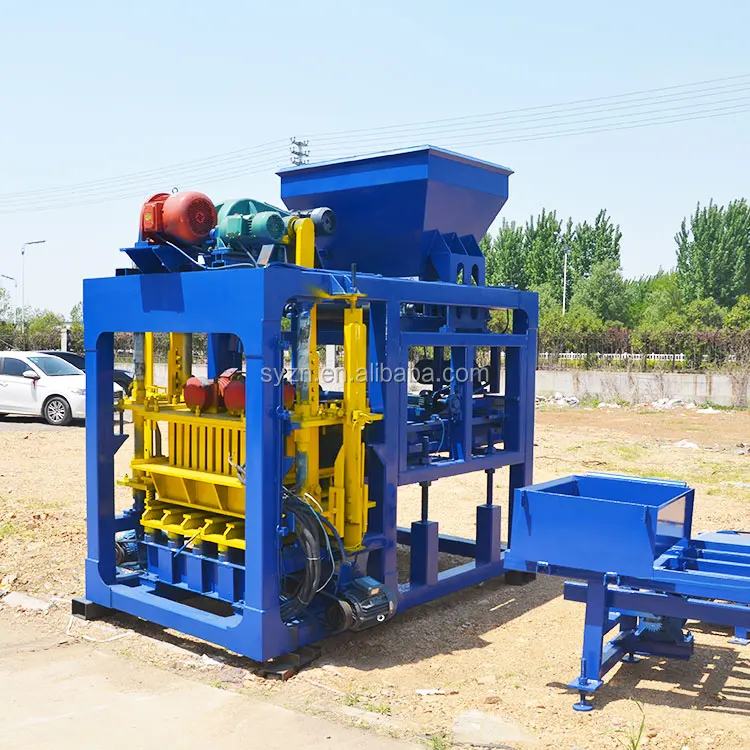
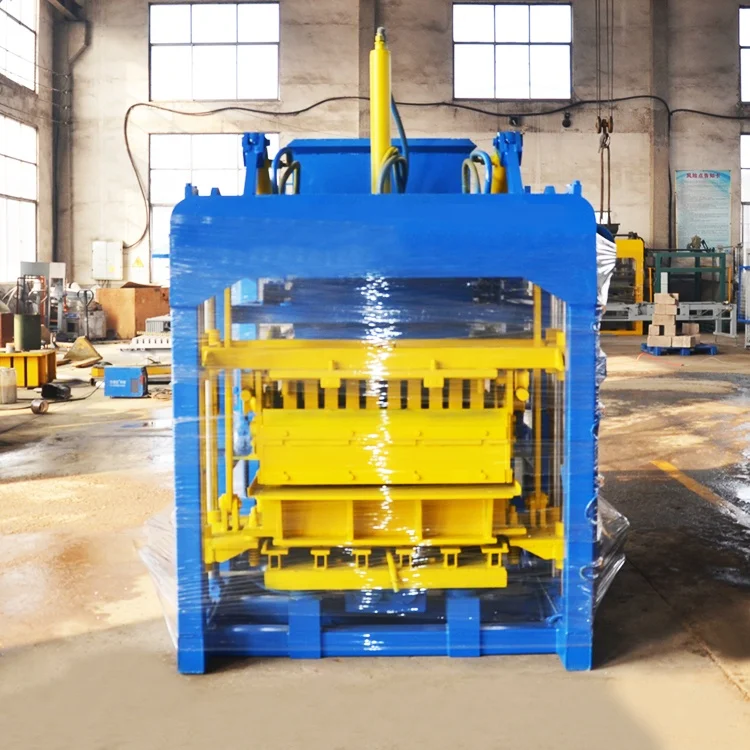
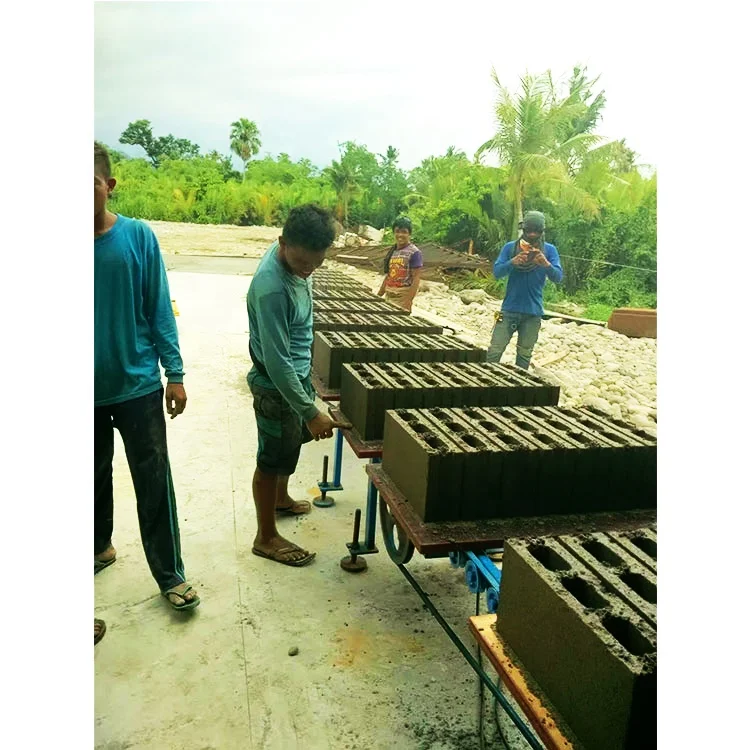
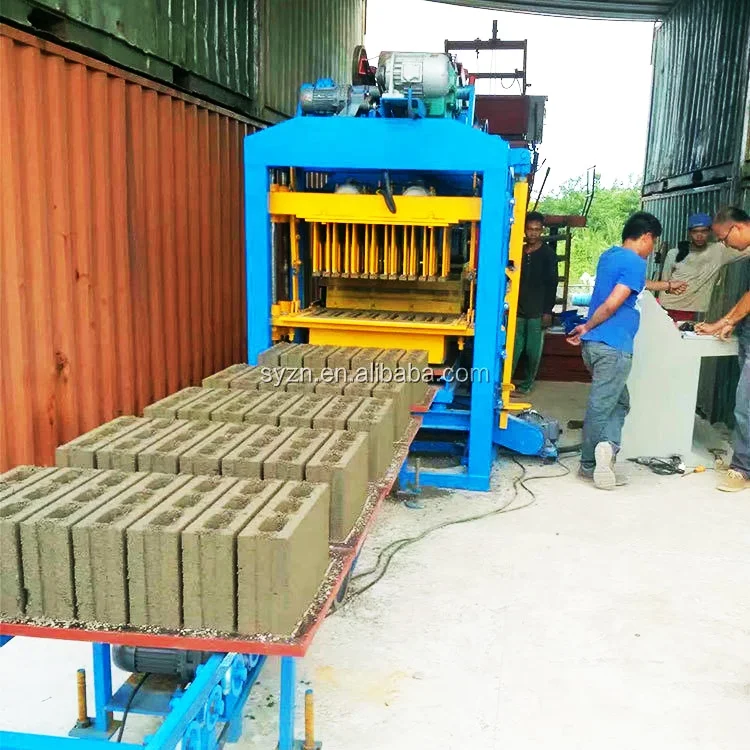
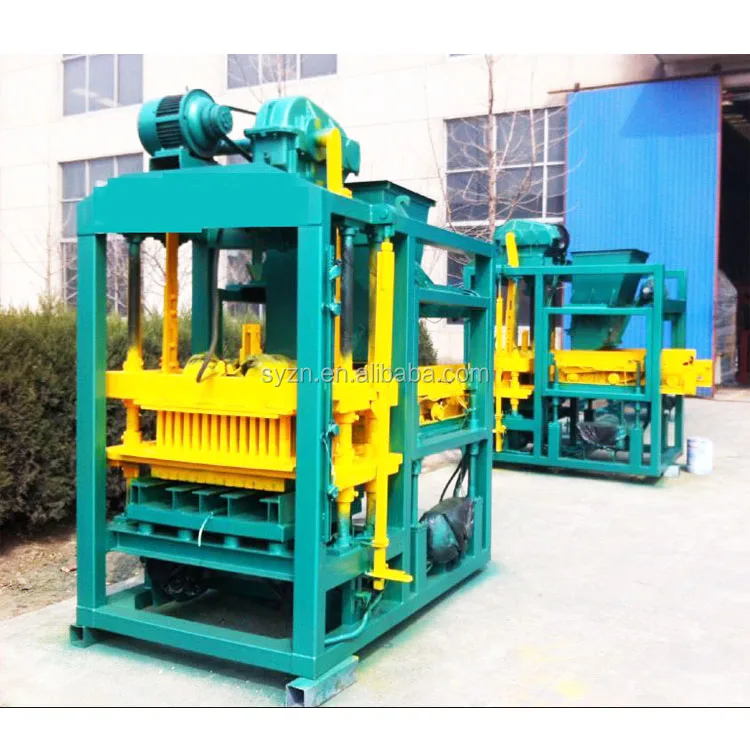
Description
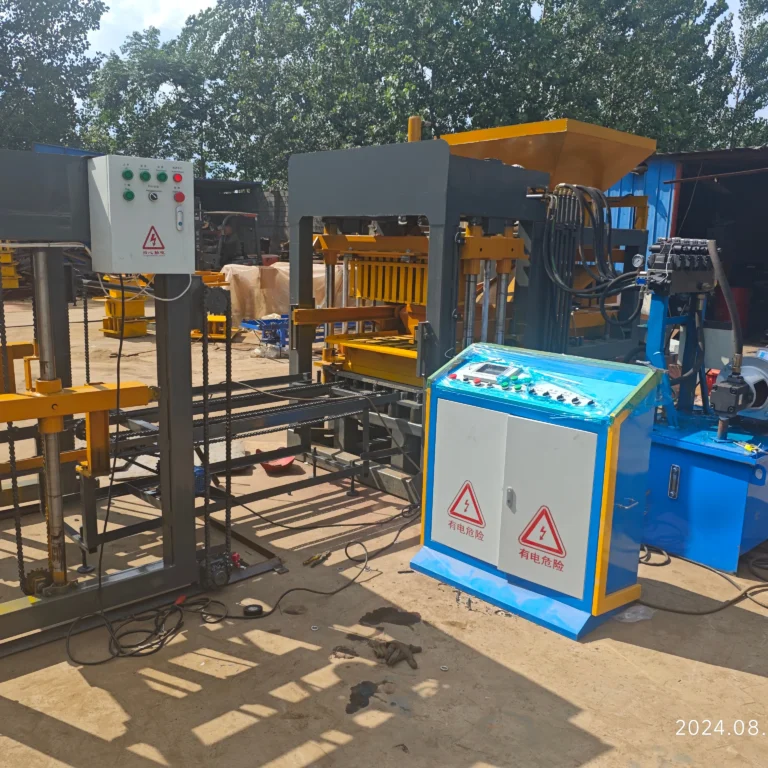
Upgradeable Control Platform — The QTJ4-25 lets you specify PLC language and voltage before shipping, then add automatic pallet feeding or stacking later without swapping the press.
Technical Specifications
| Parameter | Value |
|---|---|
| Model | QTJ4-25 |
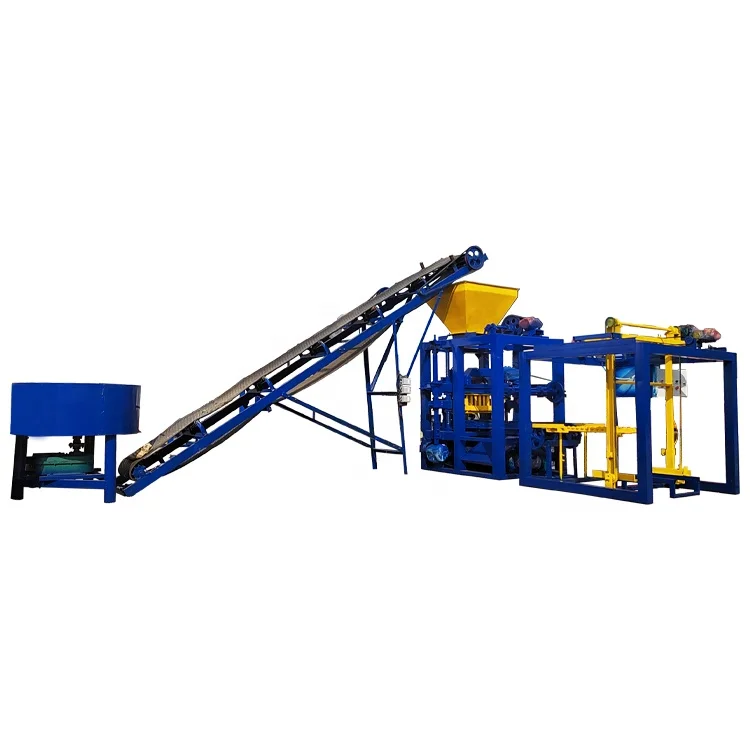
| Product Type | Semi-Automatic Concrete Block Making Machine |
| Overall Dimensions | 6400×1500×2700 mm |
| Molding Cycle | 25 s |
| Vibration Frequency Range | 2800–5100 r/min |
| Vibration Force | 60 kN |
| Total Installed Power | 17.9 kW |
| Mixer Model | JQ350 |
| Pallet Size | 850×550×20 mm |
| Total Weight | 2500 kg |
| Hydraulic Station | Equipped |
| Control System | Available with PLC or manual panel control |
| Voltage & Frequency | Configurable to target market requirements |
| Output Capacity | 480 pcs/h (basis: 390×190×190 mm hollow block, 4 pcs/mould) |
| Output Capacity | 600 pcs/h (basis: 400×150×200 mm hollow block, 5 pcs/mould) |
| Output Capacity | 2100 pcs/h (basis: 240×115×53 mm solid brick, 18 pcs/mould) |
Application Suitability
| Application | Material or Output |
|---|---|
| 8-inch and 6-inch hollow block production | Crushed stone, sand, cement, fly ash blends |
| Solid brick manufacturing | Cement and fine aggregate mixes |
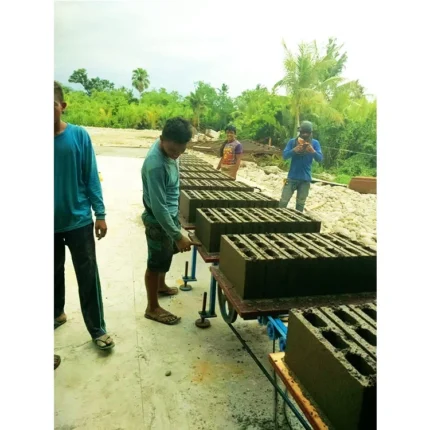
| On-site block production for housing projects | Locally sourced aggregate and dust |
| Small to medium plant start-ups | Semi-automatic operation with manual pallet trolley |
Why the Control Language Question Matters More Than the Cycle Time
A 25-second molding cycle means nothing if the operator cannot read the HMI screen on day one.
I spent years running test benches before moving into field sales across European and North American trade shows, and the most expensive hour I ever wasted on a commissioning visit was caused by a PLC defaulting to a language the local crew could not read. The machine ran perfectly; the people could not interact with it. When you source an automatic QTJ4-25 block machine from a catalogue without locking the display language, you inherit that exact risk [NEED_CITE: operator interface language requirements for industrial machinery exports].
From Manual Trolley to Automated Pallet Flow
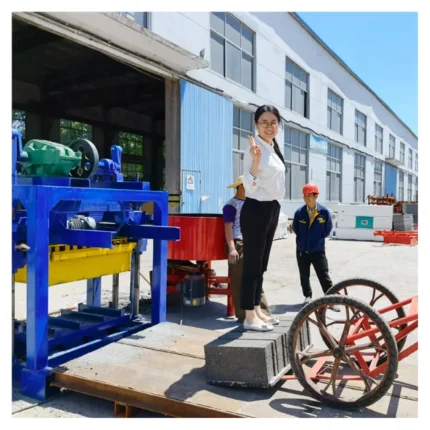
The QTJ4-25 ships as a semi-automatic press with a manual pallet trolley, meaning an operator physically moves each pallet from the curing rack to the feed position. That configuration keeps initial capital low and suits plants where daily volume does not yet justify a stacking robot. The mechanical interface and electrical reserves on the frame, however, are designed so that an automatic pallet feeder and a simple stacker can be bolted on later without structural modification. You are buying a machine platform, not a dead-end configuration.
Tuning Vibration to Your Actual Mix Design
Concrete density depends on how well the vibration energy propagates through the specific aggregate gradation sitting in the hopper. A mix heavy in fine fly ash dampens vibration differently than one loaded with coarse crushed stone. The QTJ4-25 offers a vibration frequency range from 2800 to 5100 r/min, giving the operator a usable window to adjust compaction intensity format by format. Combined with the equipped hydraulic station, this means block strength becomes a setting you dial in rather than a lottery you accept [NEED_CITE: relationship between vibration frequency and concrete block compressive strength].
Reading the Specs That Actually Govern Block Quality
The 60 kN vibration force and the hydraulic pressure work as a pair: vibration liquefies the mix so particles settle, while hydraulic pressure squeezes out trapped air and locks them in place. If either value is too low for the mould cavity depth, the bottom of an 8-inch hollow block will be softer than the top. The 850×550×20 mm pallet size dictates how many blocks sit in one cycle, and it also determines whether your existing curing racks and forklift can handle the load without new tooling. The 25-second cycle is achievable across formats only when the mixer — here a JQ350 — delivers a consistent batch in time, so the press never idles waiting for material.
The Hidden Cost of Skipping Voltage Confirmation
A control cabinet built for 380 V / 50 Hz arrives dead on a 440 V / 60 Hz site. Rewinding transformers, swapping contactors, and rewriting PLC timing parameters because the motor speeds no longer match the 25-second cycle can consume an entire week before the first block is produced [NEED_CITE: voltage and frequency mismatch consequences in exported industrial machinery]. Confirming the exact supply standard at the inquiry stage costs nothing; fixing it after the crate is open costs real production days.
What a Single-Focus Machinery Supplier Does Differently
Because block machinery is the only product line, the QTJ4-25 is not assembled from unrelated press, mixer, and pallet sources. The mould, pallet, hydraulic circuit, and control logic are specified together so the vibration table and the JQ350 mixer share matched timing. Configuration is set against your local aggregate sample and target block format, not a default catalogue sheet. Custom mould drawings are produced in-house for the formats your market actually sells. You can start semi-automatic today and add stacking or PLC batching later on the same frame. Installation includes operator training that covers mould change procedure, frequency tuning, and daily maintenance checkpoints.
Documentation & Verification
- Machine specification sheet listing confirmed voltage, frequency, and PLC display language
- Capacity calculation per block format with mould cavity count stated
- Factory test record run on the buyer’s specified pallet size
- Hydraulic and electrical schematic matching the as-built configuration
- Mould drawing and format list covering all ordered block types
- Operation and maintenance manual in the confirmed operator language
Installation, Commissioning & Support
- Foundation plan sized for the 2500 kg machine weight and 6400 mm length
- Dedicated circuit matching the confirmed 17.9 kW total power draw
- Vibration frequency calibrated on-site against the buyer’s actual aggregate
- PLC HMI language verified at first power-up before production begins
- Mould change procedure trained with the operator using production tooling
- Wear parts list provided with hydraulic seal and vibration motor bearing intervals
What to Prepare Before You Request a Quote
Tell us which block formats your market sells, the daily volume you need to hit, and the local aggregate you will run. Share your site voltage, frequency, and the language your operators read. If you already own curing racks or a forklift, send the pallet dimensions so we can match or adapt the 850×550 mm standard.
Frequently Asked Questions
Q: How is output capacity verified per block format on the QTJ4-25?
A: Each capacity figure is tied to a specific block dimension and mould cavity count. For example, 480 pieces per hour applies to a 390×190×190 mm hollow block produced at four per mould within the 25-second cycle. We provide a written calculation showing the format, cavity count, and cycle assumption so you can compare against your actual product mix.
Q: What automation level does the machine ship with, and what can be added later?
A: The QTJ4-25 leaves the factory as a semi-automatic press with manual pallet handling via trolley. The frame and electrical system carry reserved capacity so that automatic pallet feeding, stacking, or PLC batching modules can be installed later without replacing the main press structure.
Q: Can the PLC display language be set before the machine ships?
A: Yes. We confirm the operator’s reading language during the order stage and flash the HMI firmware accordingly. This step is locked into the pre-shipment checklist so the control cabinet arrives with the correct interface already loaded.
Q: How do vibration settings match different local aggregates?
A: The variable frequency drive covers 2800 to 5100 r/min, letting the operator tune compaction energy to the specific aggregate gradation. Coarser crushed stone generally needs higher frequency, while fly-ash-heavy mixes respond better at the lower end of the range.