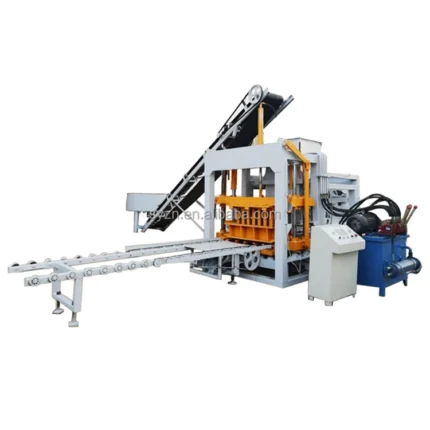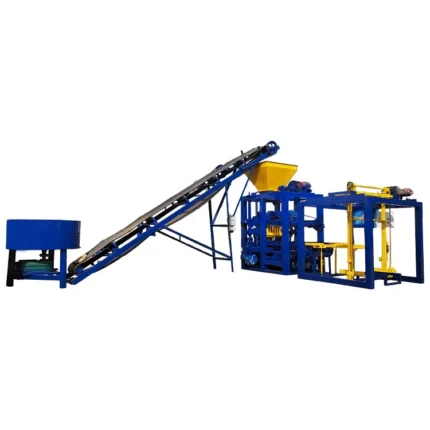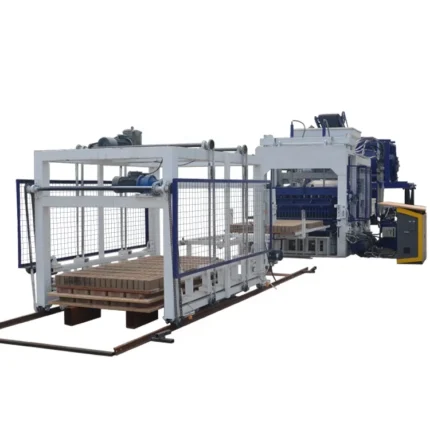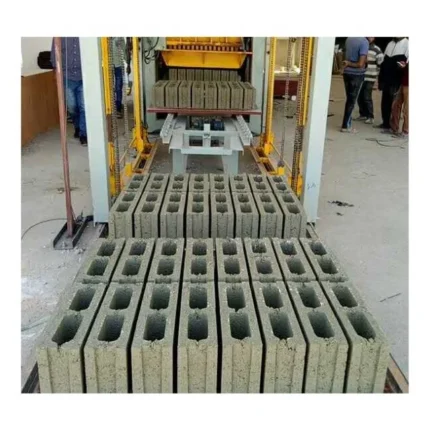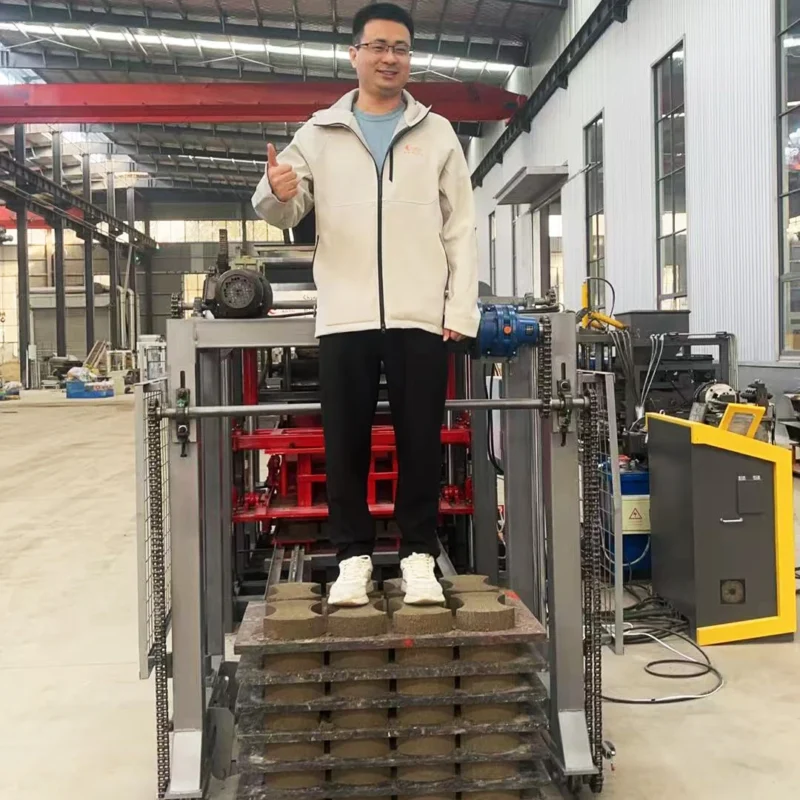
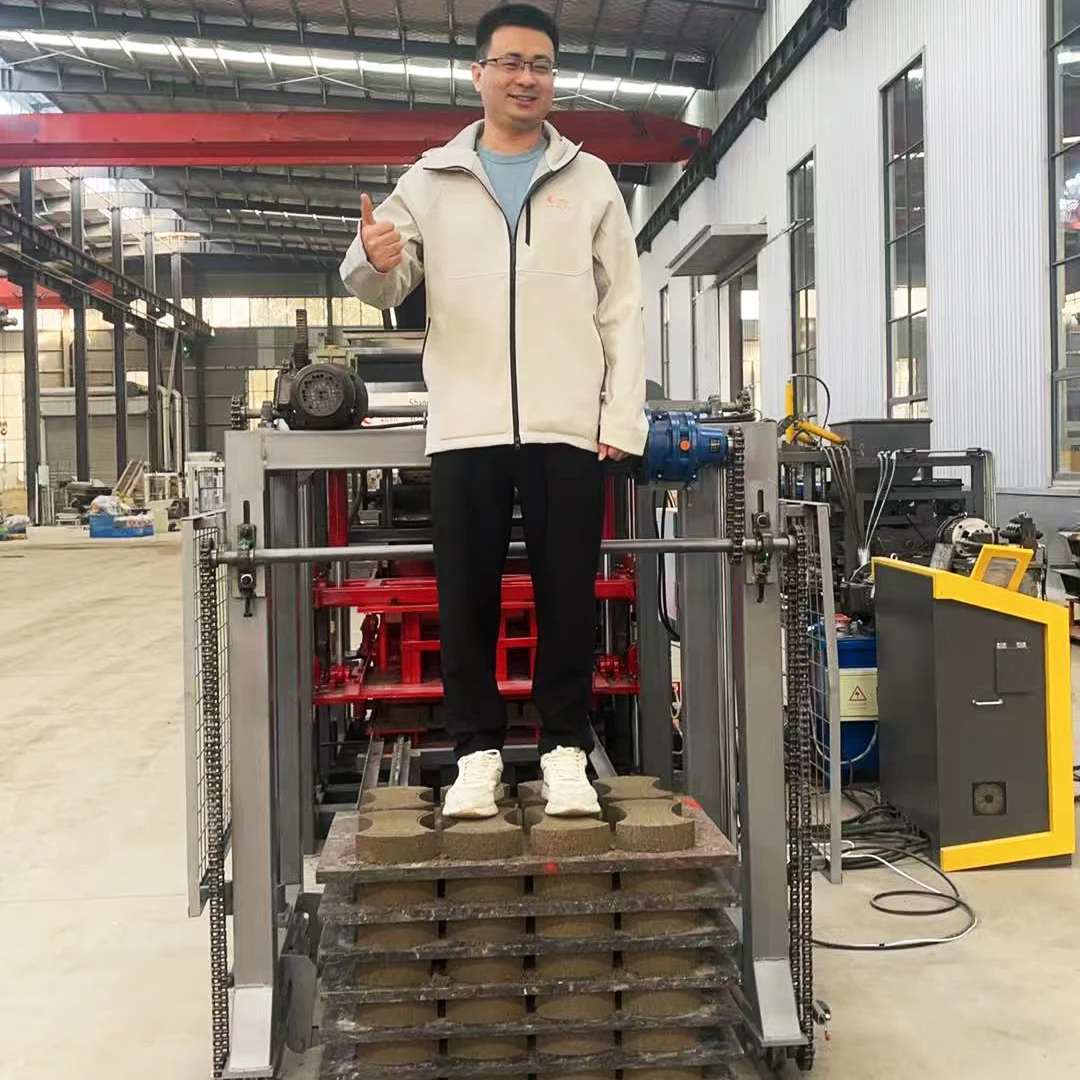
Description
Matched control logic — the QT4-15 automation sequence is specified against your actual block format and pallet size, not a catalogue default, so the PLC cycle timing aligns with your press output.
Technical Specifications
| Parameter | Value |
|---|---|
| Model | QT4-15A |
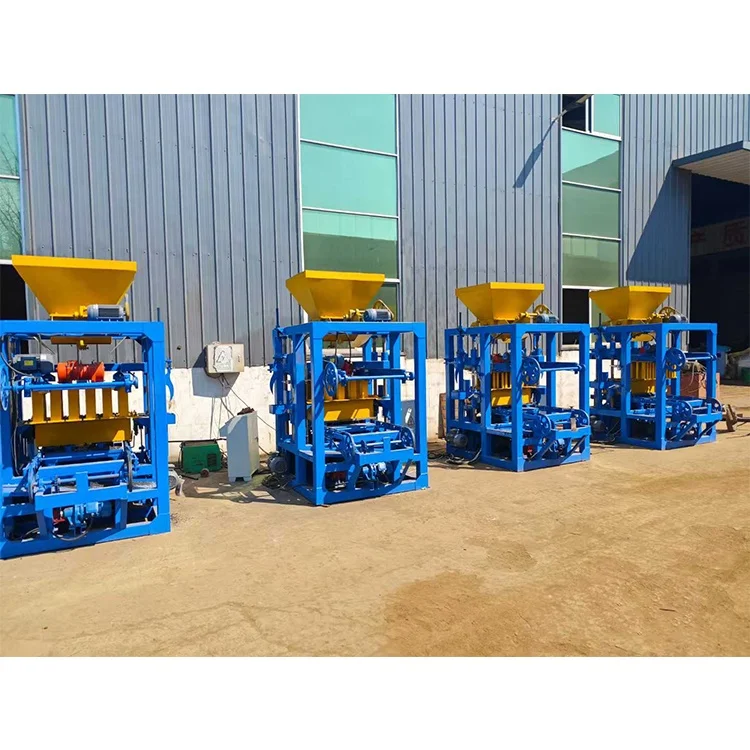
| Product Type | Fully Automatic Concrete Block Making Machine |
| Overall Dimensions | 4100×1600×2600 mm |
| Rated Pressure | 16-21 MPa |
| Vibration Form | Platform Vibration |
| Vibration Frequency | 4200 r/min |
| Vibration Force | 55 kN |
| Pallet Size | 880×550 mm |
| Molding Cycle | 25-30 s (basis to be confirmed per block format) |
| Overall Power | 18.45 kW |
| Demolding Method | Hydraulic |
| Total Mass | 4 T |
| Factory Area Required | 300 m² |
| Control System | PLC controlled |
| Automation Level | Fully automatic |
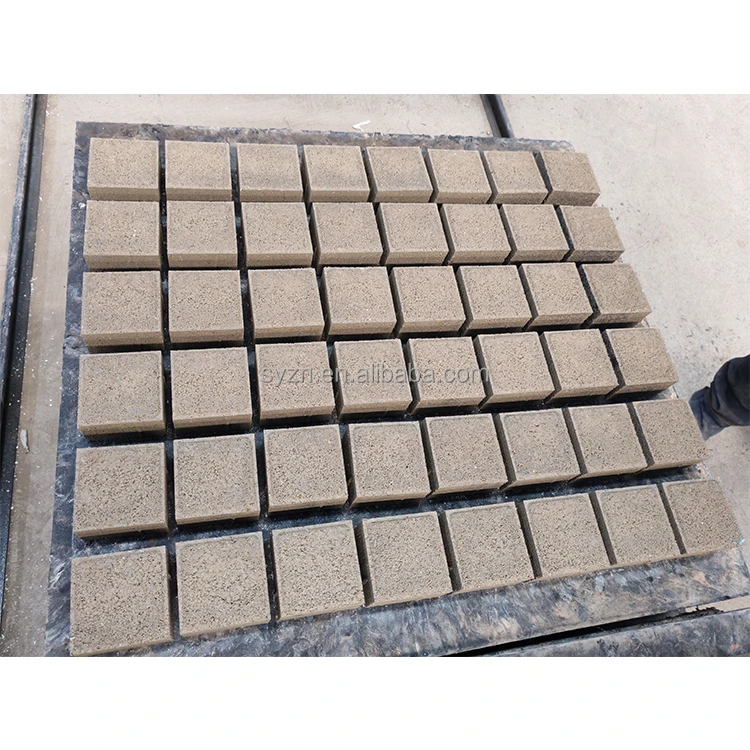
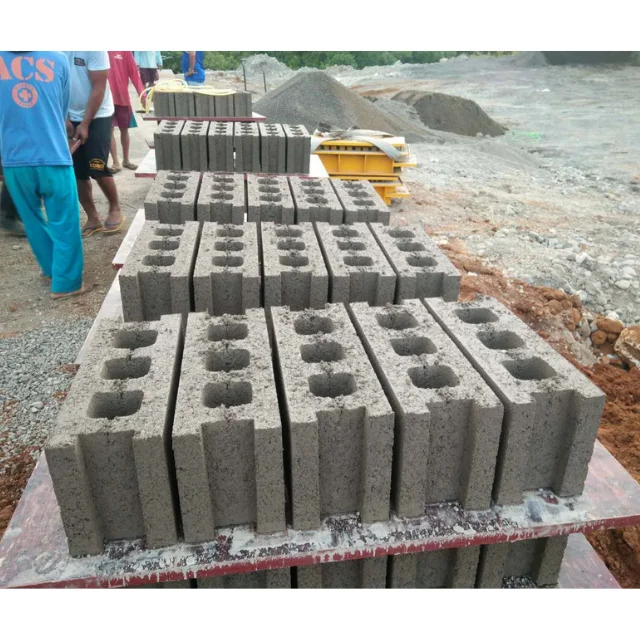
| Applied Products | Hollow blocks, solid blocks, pavers, interlocking blocks, curbstone, colored pavers |
| Raw Materials | Crushed stone, sand, cement, fly ash, gravel, slag, dust |
| Voltage & Frequency | Configurable to site supply (to be confirmed before production) |
| Warranty | 1 year (whole machine, excluding spare parts) |
Application Suitability
| Application | Material or Output |
|---|---|
| Hollow block production for building walls | Crushed stone, sand, cement, fly ash blends |
| Solid block manufacturing for load-bearing structures | Gravel, cement, sand mixes |
| Paving block and colored paver runs | Fine aggregate with cement and pigment |
| Interlocking block production for retaining walls | Crushed stone and cement with controlled moisture |
| Curbstone forming for road and sidewalk projects | Coarse aggregate with high cement content |
| On-site block production for housing developments | Locally sourced sand, dust, slag, and cement |
Why the Control Language Must Be Confirmed Before the Machine Ships
A PLC-controlled automatic concrete block making machine only works if the operator can read the screen on day one.
I once watched a block plant in West Africa sit idle for three days because the QT4-15 interface arrived in Chinese. The local crew could not navigate the menus, and remote troubleshooting over a poor connection stretched the delay further. Voltage mismatches cause similar standoffs — a motor wired for 380V/50Hz on a 440V/60Hz supply burns out within the first shift. [NEED_CITE: voltage and frequency standards by export market]
These are not edge cases. Commissioning delays traceable to unconfirmed electrical specs or display language account for a noticeable share of on-site downtime reports in export machinery. The fix takes minutes at the quotation stage and costs nothing compared to a three-day plant shutdown.
What the PLC Manages and What It Removes from the Operator
The QT4-15 is a fully automatic concrete block making machine with PLC control that sequences the entire press cycle: pallet feed, material dosing, vibration, hydraulic compression, demolding, and product discharge. The operator’s role shifts from timing each step manually to monitoring the process and responding to fault alarms. Batch-to-batch consistency improves because the cycle parameters stay locked regardless of shift changes or operator fatigue.
Mould changeover is where automation pays off across a multi-format production day. When the PLC stores separate recipes for hollow blocks, pavers, and interlocking bricks, switching formats means selecting the programme rather than recalibrating pressure and timing by hand. This compresses the changeover window and keeps the press running through a full shift of mixed-format orders.
Automation Density and the Line Around the Press
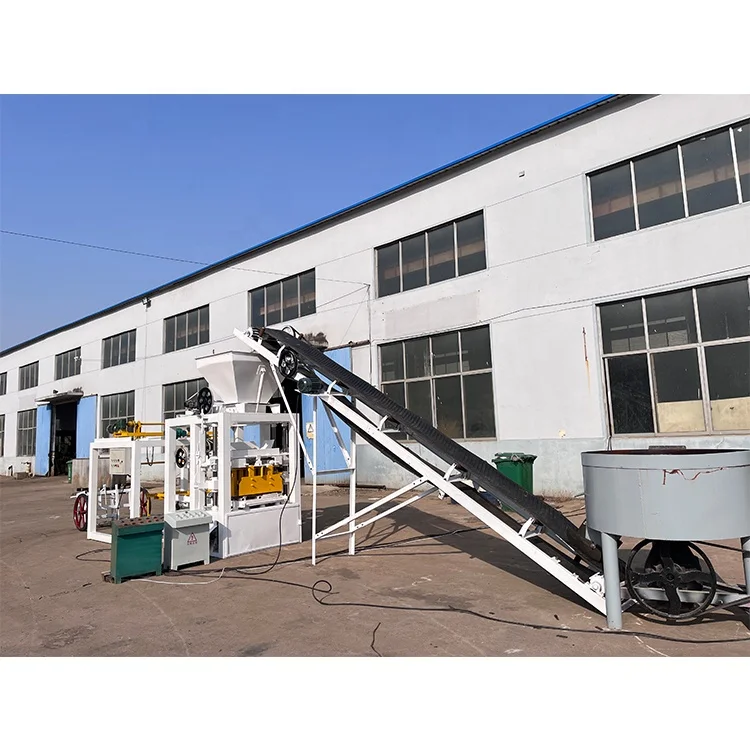
An automatic concrete block making machine PLC controlled at the press still depends on the upstream and downstream stations keeping pace. If the pallet feeder stalls or the stacking station falls behind, the press waits — and cycle time figures on paper never translate to actual daily output. The QT4-15 is designed to integrate with matching pallet feed, stacking, and curing rack handling equipment so the automation extends beyond the press itself. [NEED_CITE: CE machinery directive requirements for industrial equipment]
Remote diagnostics capability allows the control system to surface fault codes that can be read off-site, cutting the time between a stoppage and a corrective action. For plants running the QT4-15 across multiple formats, this means a mould-position sensor fault or a hydraulic pressure deviation triggers an alarm with enough detail for the maintenance team to act before the line backs up.
Pressure, Vibration, and Cycle Time: What the Numbers Mean on the Shop Floor
The rated pressure of 16-21 MPa and the platform vibration at 4200 r/min with 55 kN force work together to compact the concrete mix. Pressure alone pushes the material into the mould corners; vibration alone settles the aggregate. Combined at the right ratio, they produce blocks with consistent density and dimensional accuracy across formats. If the vibration force is too low for a coarse aggregate mix, hollow blocks come out with weak webs and crumble during handling.
The 880×550 mm pallet size determines how many blocks form per cycle and must match the curing racks and forklifts already on your floor. A pallet that does not fit your existing racking system forces a capital spend you did not budget for. The 25-30 s molding cycle is a general range — actual cycle time varies with block height, mould complexity, and mix workability, so realistic daily output should be calculated per specific format before the order is placed.
The overall power draw of 18.45 kW across the hydraulic pump, vibration motor, and conveyor drives means the machine requires a dedicated circuit with adequate breaker capacity. The 300 m² factory area requirement covers the press, mixer, pallet return system, and a minimal curing buffer — but plan for additional space if you intend to run multiple mould formats with separate curing zones.
The Hidden Cost of Skipping Configuration Confirmation
Buying a fully automatic line without confirming the mix design against your local aggregate leads to blocks that fail strength tests. The vibration and pressure settings calibrated at the factory for a specific sand-to-cement ratio will not transfer directly to a different aggregate profile. Buyers who skip the mix-matching step end up reformulating their concrete blend after installation — spending more on material adjustments than the configuration review would have cost. [NEED_CITE: effect of aggregate gradation on concrete block compressive strength]
Pallet handling is another frequent gap. When the quotation covers the press but not the pallet return conveyor or stacking station, the output piles up at the discharge point and workers move it by hand. The automation investment at the press is undermined by a manual bottleneck ten metres downstream.
Why Buyers Source the QT4-15 Through This Platform
Block machinery is our single focus, so the QT4-15 arrives as a matched system — press, mould, pallet, and handling equipment specified together rather than assembled from separate suppliers. Configuration is set against your actual mix design, local aggregate, and the specific block formats your market demands, not a catalogue default.
Mould design and supply cover the formats you sell, including custom drawings when your market requires a profile outside the standard range. The automation level is selectable, so a buyer starting with semi-automatic operation can plan an upgrade path to fully automatic without replacing the press. Installation support includes on-site commissioning and operator training so the QT4-15 runs correctly from the first shift.
Documentation & Verification
- Line layout and capacity calculation stating the specific block format and pallet size assumed
- Machine specification sheet with voltage, frequency, and PLC language confirmed before production
- Mould drawing and format list covering every block profile included in the order
- Hydraulic and electrical schematic for the QT4-15 matching the as-built configuration
- Factory test record documenting cycle time, block dimensions, and pressure readings before dispatch
- Packing photographs and customs documentation support for the destination port
Installation, Commissioning & Support
- Foundation slab must support the 4 T total mass across the 4100×1600 mm footprint of the QT4-15
- Dedicated electrical circuit matching the confirmed voltage and frequency with breaker sized for 18.45 kW
- Machine ships dismantled for container loading; reassembly on-site covers hydraulic lines and PLC connections
- First-day commissioning verifies molding cycle timing, vibration frequency, and hydraulic pressure against test records
- Operator training covers PLC menu navigation, fault alarm response, and mould change procedure
- Wear parts list and hydraulic seal schedule provided for the first year of QT4-15 operation
What We Need to Size Your QT4-15 Line
Provide the specific block formats you plan to produce — hollow, solid, paver, interlocking, curbstone — along with the target dimensions for each. Share your local raw material profile, including aggregate type and available cement grade, so the mix can be matched to the machine’s vibration and pressure settings.
Confirm your site voltage, frequency, and preferred PLC display language. Let us know your available factory floor area and whether existing pallet racks and forklifts constrain the pallet size selection. If you are upgrading from semi-automatic operation, describe the current line layout so the automation integration can be planned around your existing equipment.
Frequently Asked Questions
Q: What does PLC control actually remove from the operator’s daily work?
A: The PLC on the QT4-15 sequences pallet feed, material dosing, vibration, hydraulic pressing, and demolding automatically. The operator monitors the cycle and responds to fault alarms rather than timing each stage manually. This reduces shift-to-shift variability and keeps block density consistent across production runs.
Q: Can the PLC display language and voltage be changed after delivery?
A: Language can be switched if the PLC was loaded with multiple language packs during production, but retrofitting is slower than confirming upfront. Voltage changes after delivery require transformer replacement or motor rewinding, both costly. Confirming language and voltage at the quotation stage avoids commissioning delays entirely.
Q: What changes when upgrading from semi-automatic to fully automatic?
A: The press itself stays the same; the upgrade adds automatic pallet feeding, stacking, and cubing stations that the PLC now sequences. Manual pallet handling is removed from the operator’s workflow. The upgrade path is planned at initial purchase so structural and electrical provisions are already in place.
Q: How is realistic daily output calculated for a specific block format?
A: Daily output depends on the molding cycle for that exact block size, the pallet size, and the number of cavities in the mould. A 25-30 s general cycle range is not enough — request a capacity calculation sheet that states output per specific block format with your chosen mould, rather than a single headline figure.
Q: Does the QT4-15 support remote diagnostics for fault troubleshooting?
A: The PLC control system surfaces fault codes that can be communicated to the technical support team remotely. This allows diagnosis of sensor faults, hydraulic pressure deviations, or mould position errors without waiting for an on-site visit, reducing unplanned downtime on the block line.