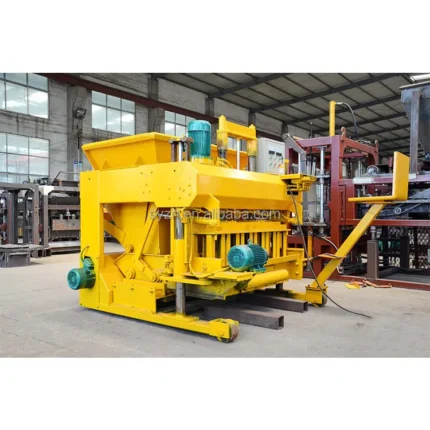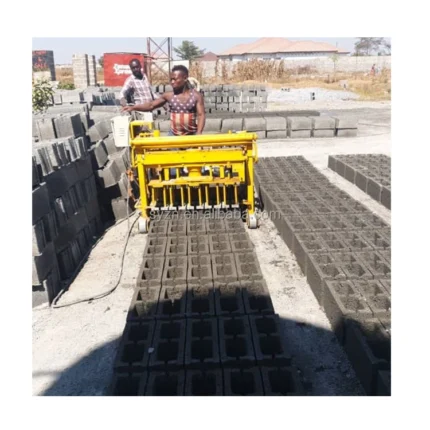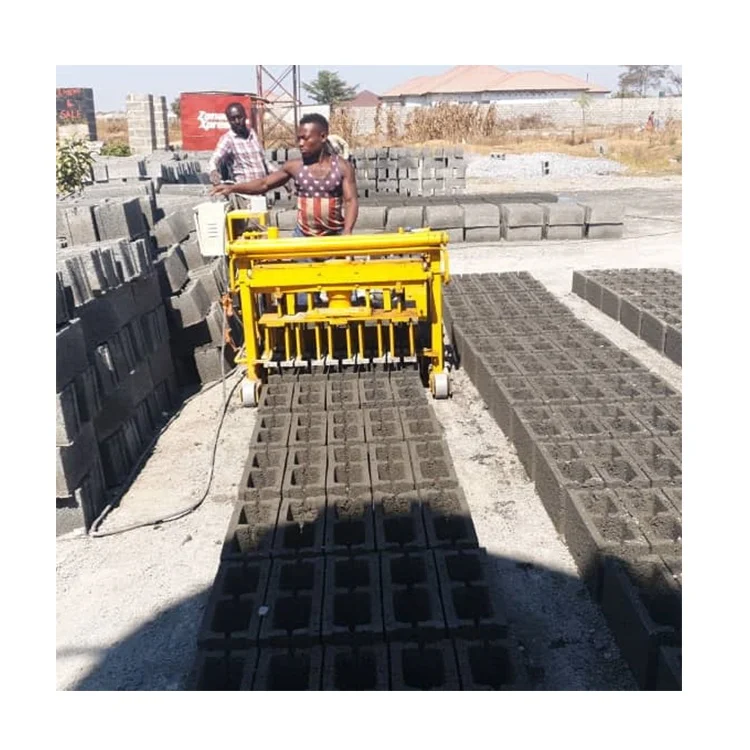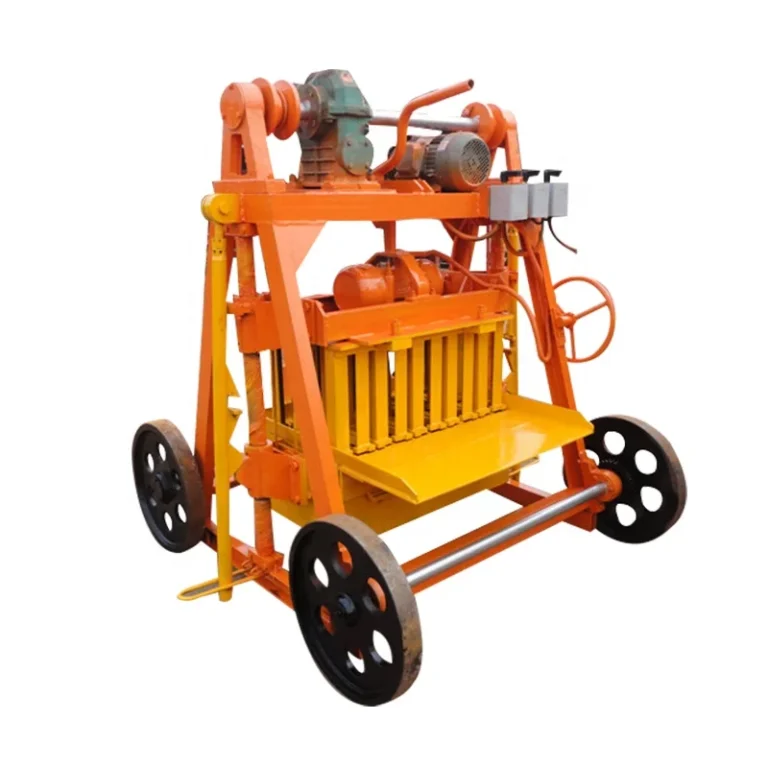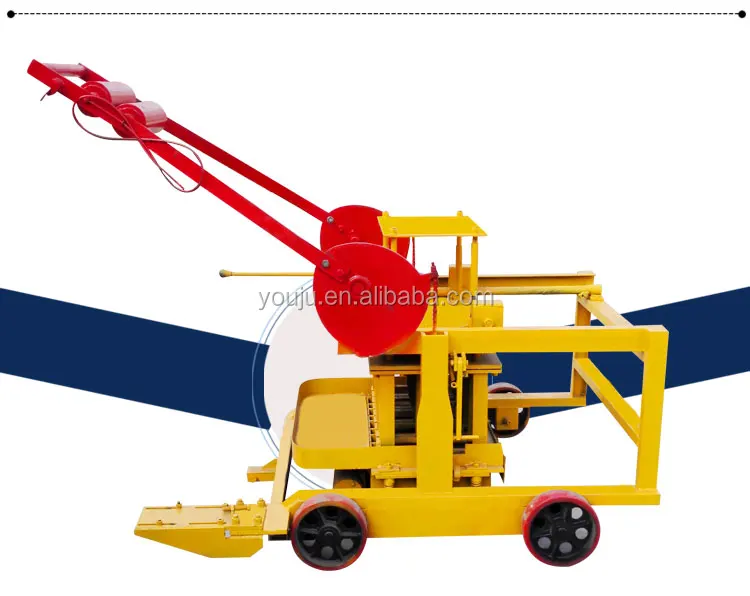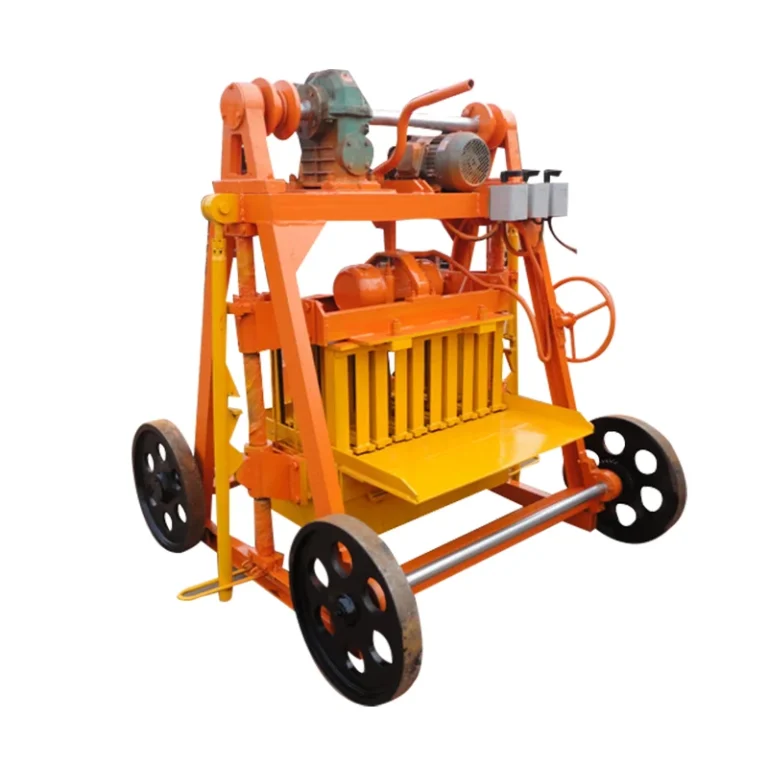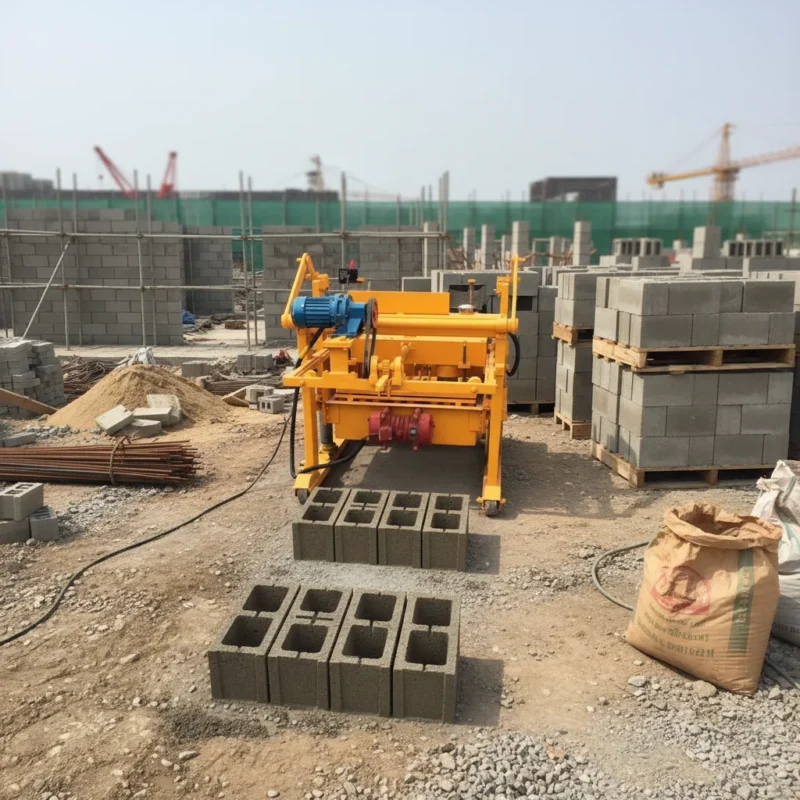
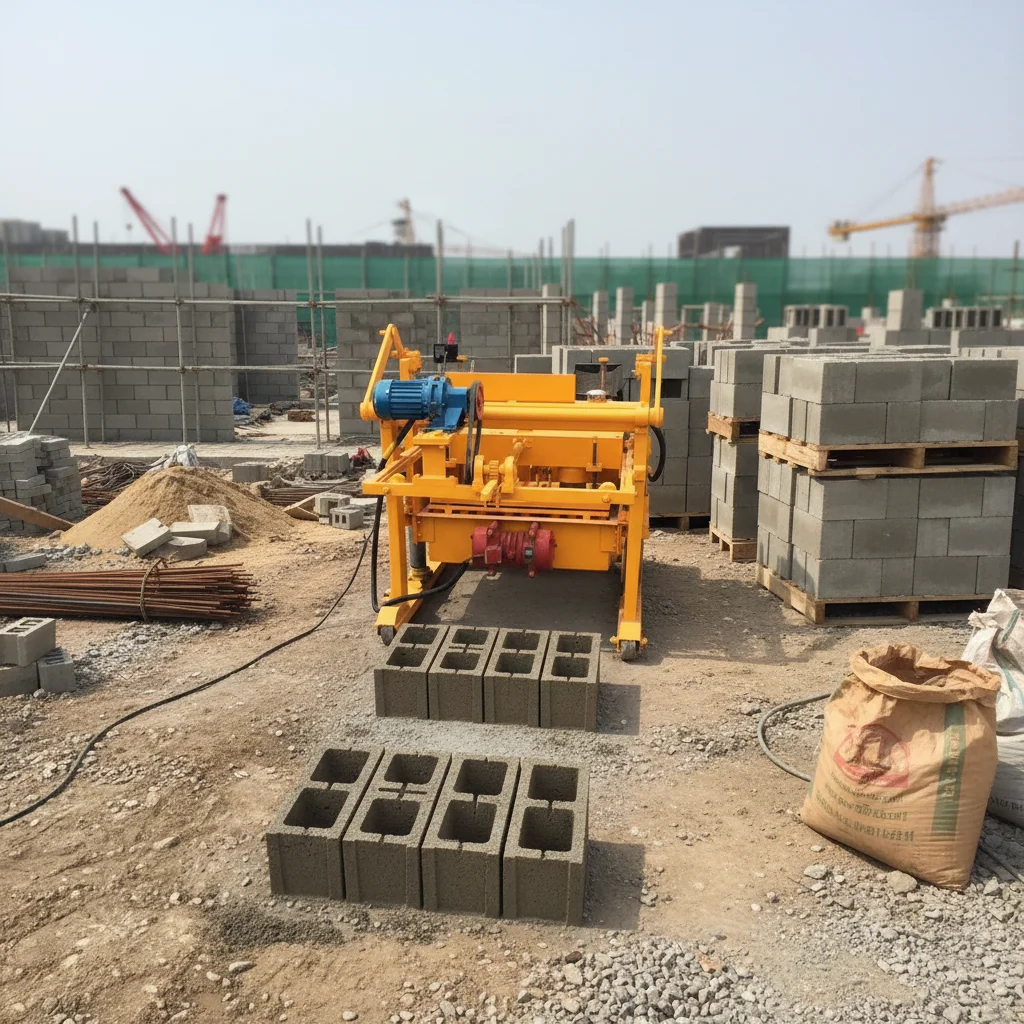
Description
Intelligent Control Upgrades — The QMY4-30 mobile egg-laying press is specified with automation-ready vibration cycles, so buyers can start manual and integrate PLC control as on-site consistency demands grow.
Technical Specifications
| Parameter | Value |
|---|---|
| Model | QMY4-30 |
| Product Type | Manual Mobile Block Making Machine |
| Overall Dimensions (L×W×H) | 1300 × 1500 × 1000 mm |
| Total Mass | 950 kg – 1000 kg |
| Vibration Method | Mold Vibration |
| Exciting Power | 28.6 kN |
| Excitation Frequency | 4500 r/min |
| Total Power | 5.95 kW |
| Output Capacity | 3000 pcs/day (basis not stated in source — confirm block format, material and thickness) |
| Raw Materials | Concrete, fly ash, cinder, coal gangue, industrial waste residue, river sand, gravel, cement |
| Voltage & Frequency | 380V ±10% (source value — verify against site supply) |
| Automation Level | Manual / Mobile (egg-laying type) |
| Mould Formats | Hollow block, solid brick, paving brick, curb stone |
| Stacking Method | Manual (mobile egg-laying, no pallet required) |
| Key Features | Low power envelope, mold vibration, mobile operation without fixed plant |
Application Suitability
| Application | Material or Output |
|---|---|
| On-site hollow block production | River sand, gravel and cement mixes laid directly on ground |
| Solid brick runs for housing projects | Fly ash and cinder blends with local aggregate |
| Paving brick manufacturing at construction yards | Crushed stone and cement with manual curing |
| Curb stone forming for site infrastructure | Coarse aggregate and cement with ground-level egg-laying |
What "3000 Pieces per Day" Actually Means on a Mobile Press
Daily output figures on mobile block machines only hold water when the block format, mix design and local aggregate are stated alongside them.
I have stood on sites in West Africa where a mobile egg-laying machine arrived with a capacity plate that made the contractor expect thousands of hollow blocks before lunch. The reality was a fraction of that, because the quoted number assumed a solid paving format the crew was not even producing. When the local river sand carries high clay content and the moisture varies through the day, the vibration cycle needs adjustment that a purely manual setup cannot deliver consistently. This is where a PLC controlled mobile egg-laying block machine configuration changes what the crew can actually achieve, not by promising more, but by removing the guesswork from each cycle [NEED_CITE: block format assumptions behind quoted mobile machine capacity].
Where Automation Meets the Mobile Machine
A mobile egg-laying press starts as a simple machine: the operator feeds the mould, triggers vibration, and walks the unit forward. The QMY4-30 sits at 5.95 kW total power, which means any automatic mobile block machine upgrade — whether a semi-automatic batching station upstream or a PLC-controlled vibration timer on the press itself — must operate within a modest electrical envelope. The practical value is that contractors can begin with manual operation and introduce control logic in stages, matching automation investment to the point where labour cost or block consistency actually demands it.
Vibration Consistency Without a Fixed Plant
The 28.6 kN exciting force delivered through mold vibration is the baseline around which any control upgrade must be built. On a fixed plant, the press sits on a massive frame that absorbs and channels vibration predictably. A mobile unit relies on its own mass — under 1000 kg — and the ground beneath it. When a PLC-controlled cycle times the vibration precisely rather than leaving it to an operator’s count, the block-to-block density variation narrows. In my experience on sites in South Asia, that narrowing is the difference between a wall that passes compression testing and one that does not [NEED_CITE: vibration cycle timing and block density consistency on mobile machines].
Reading the Specs That Actually Matter
The excitation frequency of 4500 r/min paired with 28.6 kN exciting power tells a buyer how aggressively the mould compacts the mix. For hollow blocks using locally sourced river sand with variable fines content, this vibration profile must be matched to the mix — too short a cycle and the block walls stay porous, too long and the fresh concrete segregates. The 380V ±10% supply rating is common across industrial sites in many export markets, but frequency and control panel language need confirmation before the machine ships, because rewiring a 5.95 kW motor or translating a control display on arrival adds days of downtime. The overall dimensions of 1300 × 1500 × 1000 mm mean the machine fits through standard site gates and can be transported on a flatbed between locations, which is the entire point of choosing mobile over fixed.
The Hidden Cost of Skipping the Voltage Conversation
I have seen mobile block machines arrive at a site in Nigeria and sit idle for two weeks because the local supply ran at a frequency the motor was not wound for. The contractor had focused entirely on price and output figures during the inquiry stage and never confirmed whether the 380V ±10% rating matched their transformer tap settings or whether the PLC display — if one was fitted — would show instructions in a language the operator could read. On a small mobile press, the cost of that oversight is disproportionate because there is no backup line to absorb the delay [NEED_CITE: voltage and frequency mismatches causing commissioning delays on exported machinery].
Why Specify Through This Supplier
Block machinery as a single focus means the QMY4-30 is not assembled from unrelated components and called a system. Configuration is set against the buyer’s actual mix design and the aggregate available near the site, not a catalogue default that assumes materials the buyer cannot source. Mould formats are chosen for the products the local market actually buys, including custom drawings if the standard hollow, solid, paving and curb stone options do not cover the requirement. The automation level is selectable, so a contractor can take delivery as a manual mobile machine today and add PLC-controlled vibration cycling when volume justifies the upgrade. Installation support and operator training cover the control system actually supplied, not a generic manual written for a different configuration.
Documentation & Verification
- Machine specification sheet stating vibration force and power for your confirmed voltage and frequency
- Mould drawing and format list showing cycle assumptions for each block type
- Voltage and control language confirmation signed off before production begins
- Factory test record run on a mix profile matching your local aggregate
- Operation and maintenance manual covering manual and any PLC-controlled modes
Installation, Commissioning & Support
- Site ground preparation guidance based on the 1300 × 1500 mm machine footprint and egg-laying operation
- Electrical connection checklist for the 5.95 kW total power draw at your confirmed 380V supply
- Vibration frequency and cycle timing calibration against your specific mix on first day of production
- Operator training covering both manual triggering and any PLC-controlled vibration cycle fitted
- Wear parts list identifying mould liners and vibration motor brushes with recommended replacement intervals
What to Include in Your Inquiry
Tell us the block formats your market buys and the daily volume you need to hit — specifying the exact dimensions and wall thickness. Share your local aggregate type, cement source, and whether your site supply runs at 50 Hz or 60 Hz. If you already operate a batching or mixing station, describe it so we can map where the QMY4-30 mobile press fits into your current workflow and where an automation upgrade would connect.
Frequently Asked Questions
Q: What automation options can be added to this mobile block machine, and when should they be introduced?
A: The QMY4-30 can be configured with PLC-controlled vibration timing, semi-automatic batching upstream, or both. The right moment to add control is when block-to-block strength variation starts costing you rejected batches or when crew size becomes a recurring expense problem. We map the upgrade against your current output so automation pays for itself through consistency rather than speed alone.
Q: Can a PLC control system manage vibration cycles on a mobile egg-laying machine?
A: Yes, provided the vibration motor and electrical envelope support it. The QMY4-30 draws 5.95 kW total, which leaves headroom for a small PLC and sensor package. The control system times each vibration cycle precisely, removing the operator judgment that causes density variation when the mix moisture changes through the day.
Q: How are voltage, frequency and control language confirmed before the machine ships?
A: These are confirmed during the proposal stage, not at dispatch. We request your site supply details — voltage, phase, frequency — and the preferred display language for any control panel. A written confirmation is signed before production starts, so the machine arrives ready to connect rather than waiting for electrical modifications on site.
Q: What is the realistic daily output, and which block format does that figure assume?
A: Published capacity figures for mobile egg-laying machines are typically based on a specific block size and mix that may not match your production target. We provide a capacity calculation that names the exact block format, wall thickness and cycle time, so you know what to expect from the format you will actually sell rather than a catalogue best-case number.