Description
Matched System Configuration — Every QMJ4-45 mobile block machine ships with pallet size, vibration force, and engine rating verified against your local aggregate and target block format before leaving our Linyi workshop.
Technical Specifications
| Parameter | Value |
|---|---|
| Model | QMJ4-45 |
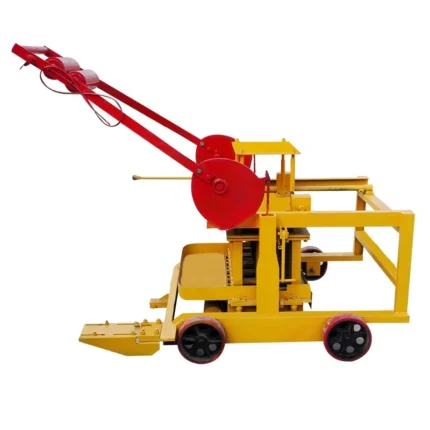
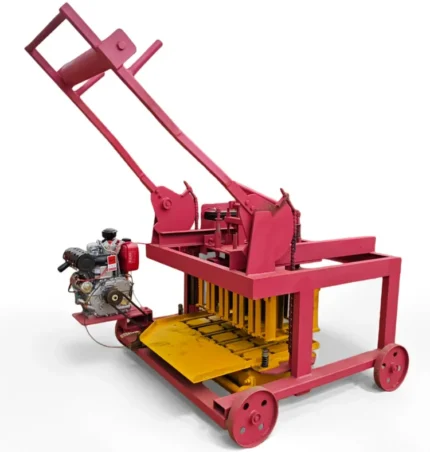
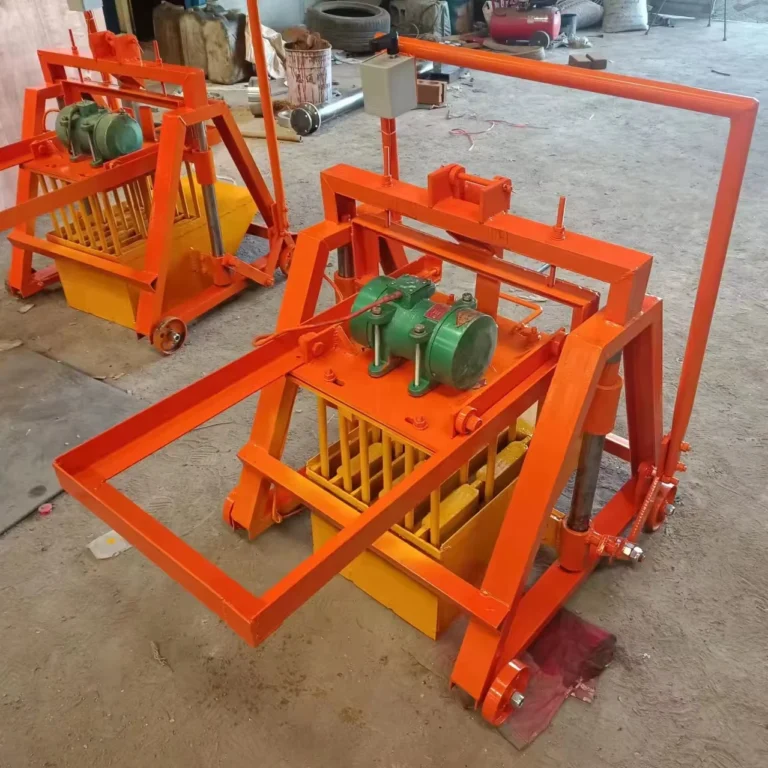
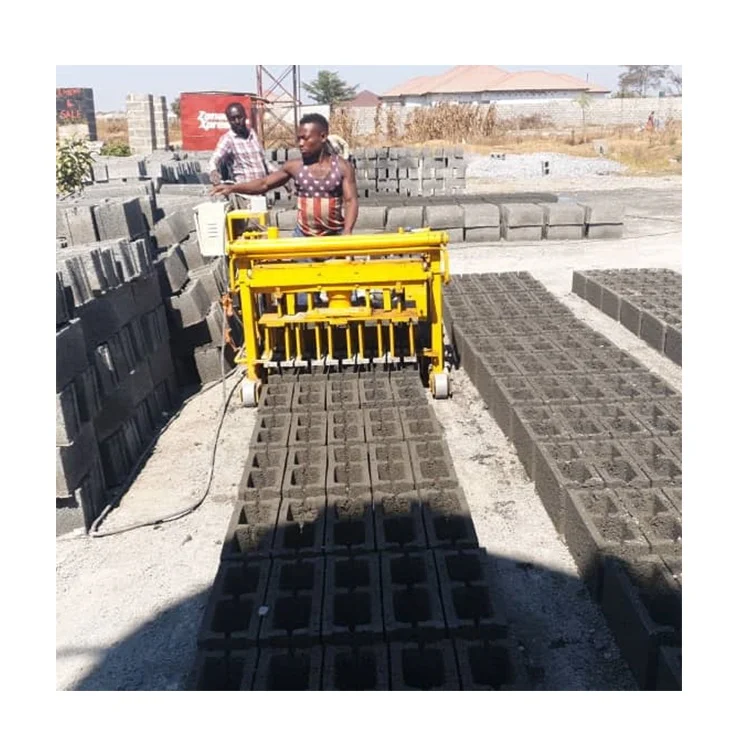
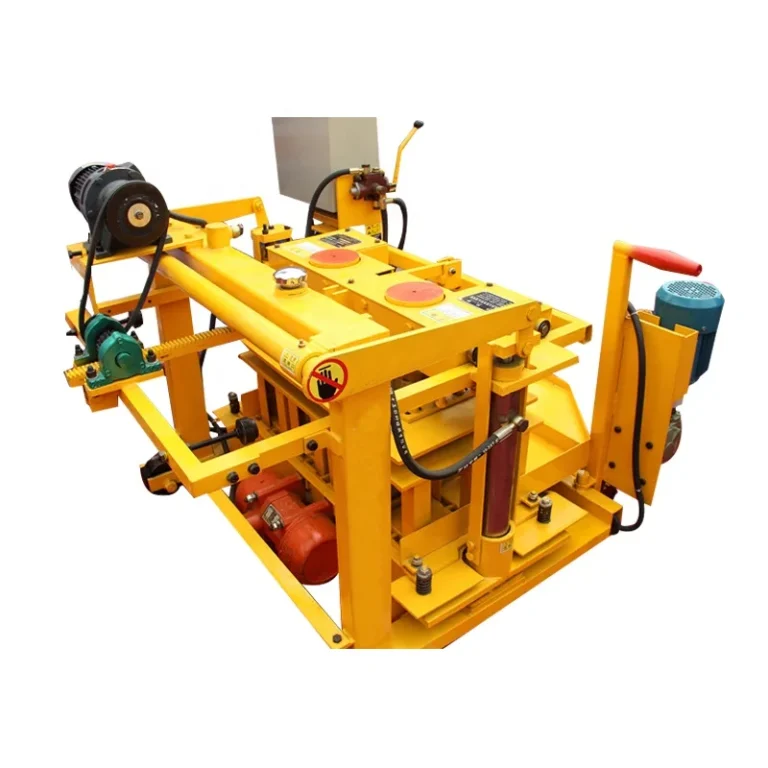
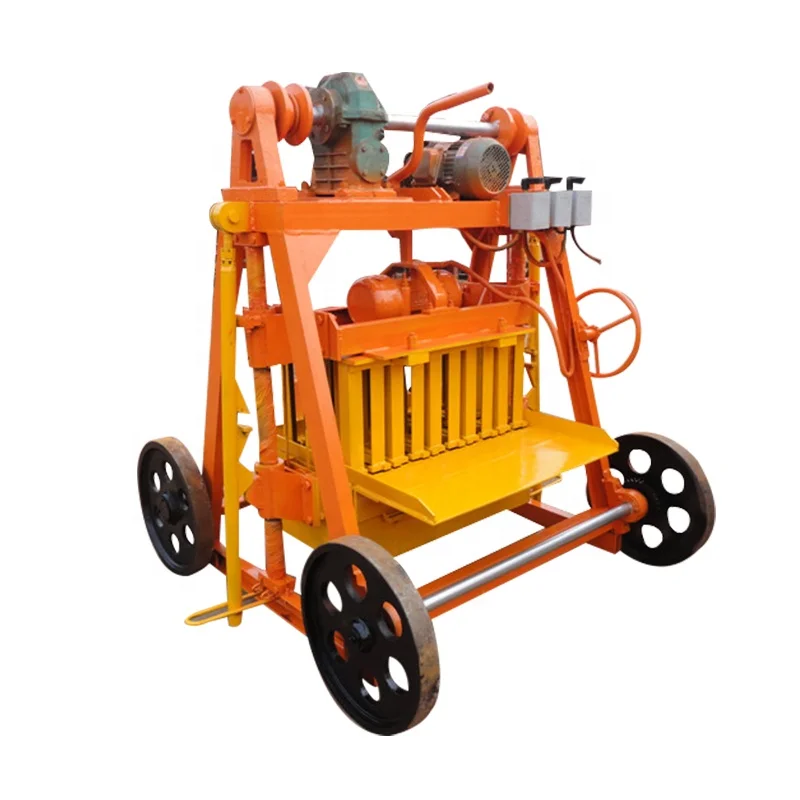
| Product Type | Mobile Egg Laying Block Making Machine |
| Molding Capacity | 4 pcs/mould (basis: 400×200×200mm hollow block) |
| Molding Cycle | 40-45 seconds |
| Vibration Frequency | 2400 r/m |
| Vibration Method | Mold vibration |
| Productivity (400×200×200mm hollow block) | 3000 pcs/day (8 hours) |
| Productivity (400×150×200mm hollow block) | 3500 pcs/day (8 hours) |
| Productivity (400×120×200mm hollow block) | 4500 pcs/day (8 hours) |
| Total Power | 6 kW |
| Power Source | Diesel / Petrol engine |
| Demold Method | Manual |
| Turning Method | Manual |
| Pallet Requirement | None (egg laying on ground) |
| Automation Level | Manual (egg laying / mobile) |
| Warranty | One year guarantee for the whole machine |
Application Suitability
| Application | Material or Output |
|---|---|
| On-site hollow block production | Crushed stone, river sand, and cement without fixed plant infrastructure |
| Small-scale contractor block making | 400×200×200mm, 400×150×200mm, and 400×120×200mm hollow formats |
| Remote project block supply | Areas without reliable grid electricity using diesel or petrol engine |
| First block plant setup | Low-investment hollow block production for entrepreneurs and housing developers |
What "3000 Blocks per Day" Leaves Out About the QMJ4-45
Output only holds when vibration frequency, cycle time, and mix design are matched to a specific block format.
I have watched an automatic mobile block machine sit idle on a job site because the quoted daily capacity assumed a hollow block the buyer never intended to produce. The QMJ4-45 achieves 3000 pieces per day based on a 400×200×200mm hollow block in an eight-hour shift, but switch to a thinner wall format and that number changes. The vibration frequency at 2400 r/m and the 40-45 second molding cycle must align with your local aggregate gradation and cement ratio, or block strength drops and the press runs slower than the rated cycle. [NEED_CITE: relationship between vibration frequency and aggregate sizing in concrete block production]
PLC Upgrade Path From Manual Baseline
The QMJ4-45 ships as a manual egg laying machine with hand-operated demolding and turning, but the control architecture allows a PLC controlled egg laying block machine configuration to be integrated as production scales. This upgrade replaces operator-dependent timing with programmable molding cycles, removing the guesswork from vibration duration and improving batch-to-batch consistency. The diesel or petrol engine power source remains compatible with automated batching systems that feed the hopper on a programmed schedule.
Removing Operator Variables From Block Density
When the QMJ4-45 runs on manual demolding, the operator controls how long vibration is applied and when the mould lifts. Shifting to PLC control locks the 40-45 second molding cycle into a repeatable program, so the 2400 r/m vibration frequency is applied identically across every block laid during a shift. This matters most when your local aggregate varies in moisture content or particle size, because the programmable logic compensates with consistent vibration timing rather than relying on the operator to judge density by eye. [NEED_CITE: PLC control impact on concrete block density consistency]
How Vibration Frequency and Power Source Shape Real Output
The 2400 r/m vibration frequency on the QMJ4-45 is generated through mold vibration rather than table vibration, meaning the energy transfers directly into the concrete mix inside the mould cavity. At 6 kW total power drawn from a diesel or petrol engine, the machine operates independently of grid availability, which is critical for remote housing projects where three-phase electricity is absent. The four-piece mould capacity for 400×200×200mm hollow blocks sets the base cycle, but wall thickness and aggregate density determine whether the 40-45 second cycle holds or extends. Pallet-free egg laying eliminates the need for pallet circulation infrastructure, reducing the footprint on a construction site to just a prepared ground surface. The manual turning and demolding baseline keeps the initial investment low while leaving a clear path toward automated stacking and batching as daily volume grows beyond what one operator can sustain.
When Voltage Mismatch Reaches the Job Site
A QMJ4-45 shipped to a region with unstable frequency can burn through its vibration motor within the first week if the engine governor and electrical output are not confirmed against local standards. I have seen a site lose two weeks waiting for a replacement motor because the voltage and frequency at the destination differed from what was assumed at the factory. Every export shipment now goes through a voltage and frequency check, and the control display language is confirmed with the buyer before the machine leaves Linyi. [NEED_CITE: voltage and frequency standards by export market]
Why Sourcing From A Block-Line Specialist Matters
The QMJ4-45 is specified as part of a matched system rather than a standalone catalogue item, meaning the mould format, engine rating, and vibration setting are chosen together based on your target block and local material. Mould design follows your market’s actual demand, including custom drawings if your region requires a format outside the standard hollow block range. Configuration is set against your mix design and aggregate, not a default factory setting, so the machine arrives calibrated for the raw materials you can actually source. Automation level is selectable, allowing you to start with manual operation and add PLC control and automatic batching as volume justifies the investment. Installation includes operator training on the specific controls and mould change procedure your configuration requires.
Documentation & Verification
- Capacity calculation stating output per hollow block format with assumed cycle time
- Machine specification sheet with engine rating and vibration frequency matched to site conditions
- Voltage, frequency, and control display language confirmation document before dispatch
- Mould drawing and format list showing all cavity dimensions for your block range
- Operation and maintenance manual with wear parts list for first replacement planning
- Factory test record on your specified block format before shipment
Installation, Commissioning & Support
- Prepared level ground surface required; no fixed foundation or pallet system needed for the QMJ4-45 egg laying operation
- Diesel or petrol engine fuel supply and 6 kW equivalent output verified before first run
- Machine arrives partially assembled with vibration motor and mould pre-mounted for rapid site commissioning
- Vibration frequency and molding cycle set during on-site training against your local aggregate and mix
- Operator instruction on manual demolding technique and 40-45 second cycle timing for consistent block density
- Wear parts list covering vibration motor components and mould liners for first-year maintenance planning
What We Need From Your Side
To configure the QMJ4-45 correctly, share the hollow block formats your market demands, the daily volume you need from a single machine, and the aggregate and cement sources available at your project site. Confirm your local voltage, frequency, and the language your operators read so the control panel arrives ready to use. If you plan to add PLC control or automatic batching later, let us know your intended timeline so the upgrade path is designed into the baseline configuration.
Frequently Asked Questions
Q: How is daily output verified per block format on the QMJ4-45?
A: Output is documented per format with the molding cycle and block dimensions stated. The QMJ4-45 produces 3000 pieces per day based on a 400×200×200mm hollow block in eight hours, 3500 pieces for 400×150×200mm, and 4500 pieces for 400×120×200mm. Each figure assumes the 40-45 second cycle holds with your local mix design and aggregate.
Q: Can the QMJ4-45 be upgraded with PLC control from its manual baseline?
A: Yes. The manual egg laying configuration supports a PLC controlled egg laying block machine upgrade that programs the molding cycle and vibration duration. This removes operator timing variables and improves density consistency across shifts. Automatic batching integration is also available as production volume increases.
Q: What voltage and frequency checks happen before dispatch?
A: The engine output and vibration motor rating are verified against your local voltage and frequency standards before shipment. Control display language is confirmed with your team so operators can read settings immediately on arrival. This prevents commissioning delays caused by electrical mismatch at the job site.
Q: How is vibration matched to local aggregate for consistent block strength?
A: The 2400 r/m mold vibration on the QMJ4-45 is calibrated against your specific aggregate gradation and cement ratio during configuration. This ensures the energy transfers effectively into your mix rather than being set to a factory default that may not suit your local material characteristics or target block density.
Q: What is the upgrade path as production volume grows?
A: The QMJ4-45 starts as a manual egg laying machine and can progress through PLC control for cycle consistency, automatic batching for mix accuracy, and eventually full line automation with stacking and cubing. Each stage is designed to integrate with the previous configuration without requiring a complete machine replacement.