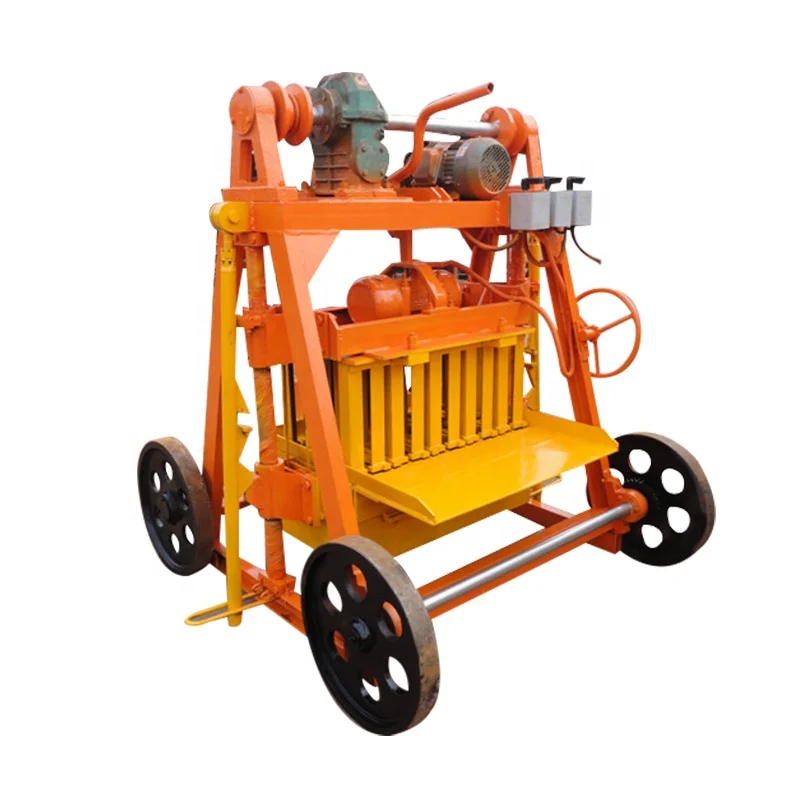
Description
Dual-Stage Vibration Matching — mold vibration calibrated against the buyer’s actual aggregate and mix rather than a default cycle, ensuring block density holds across formats.
Technical Specifications
| Parameter | Value |
|---|---|
| Model | QMJ4-45 |
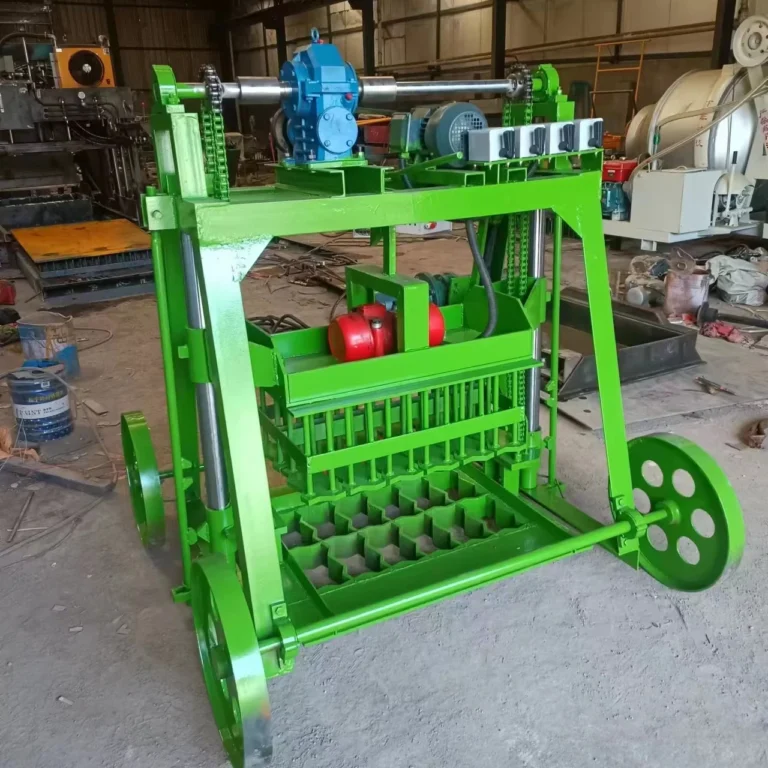
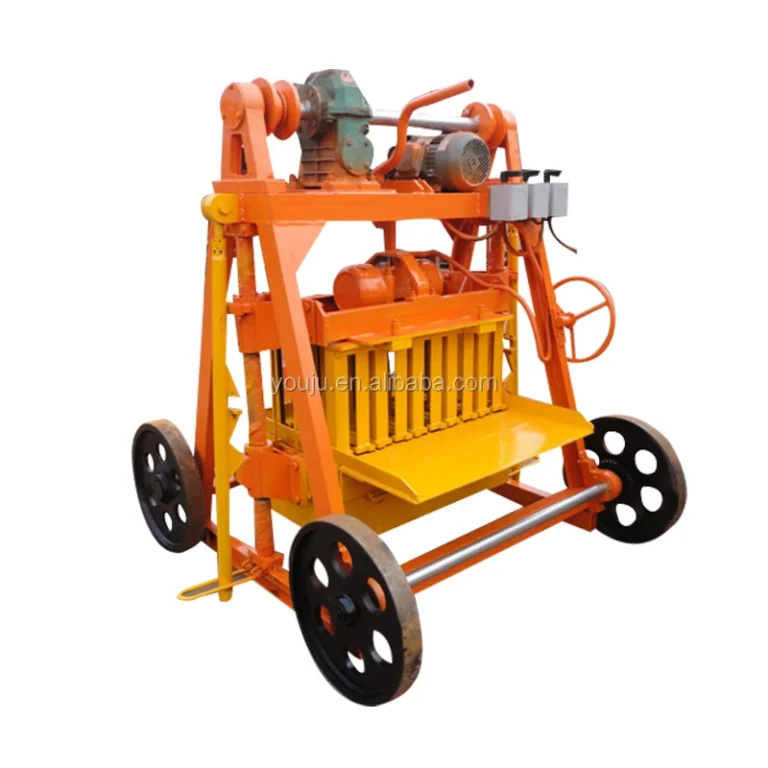
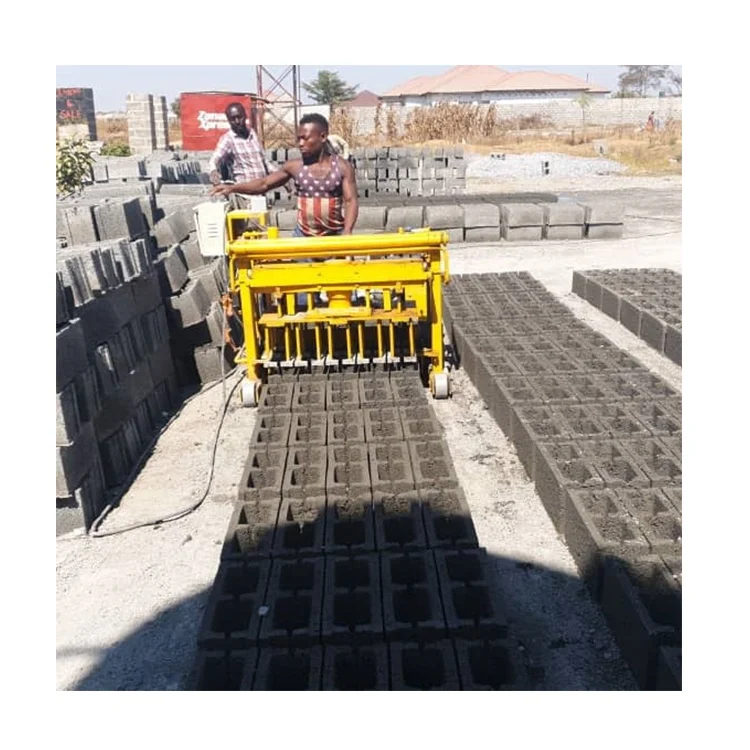
| Product Type | Mobile Egg Laying Block Making Machine |
| Molding Capacity | 4 pcs per cycle |
| Vibration Method | Mold vibration (dual-stage) |
| Vibration Frequency | 2400 r/min |
| Molding Cycle | 40–45 seconds |
| Demolding Method | Manual |
| Turning Method | Manual |
| Total Power | 6 kW |
| Power Source | Diesel or petrol engine |
| Pallet Requirement | Not required (egg-laying type) |
| Automation Level | Manual operation, upgradeable to semi-automatic |
| Warranty | One year |
| Certification | CE |
| Productivity by Block Format | Daily Output (8-hour shift) |
|---|---|
| 400×200×200 mm Hollow Block | 3,000 pcs/day |
| 400×150×200 mm Hollow Block | 3,500 pcs/day |
| 400×120×200 mm Hollow Block | 4,500 pcs/day |
| General Productivity Claim | 2,600–4,000 pcs/day (basis not stated in source) |
Application Suitability
| Application | Material or Output |
|---|---|
| On-site hollow block production for housing projects | Cement, crushed stone, sand, and local aggregate mixes |
| Remote or off-grid construction sites | Diesel-powered operation without grid dependency |
| Small-scale cement block manufacturing startups | Hollow blocks in multiple wall thicknesses |
| Rural building programs without fixed plant infrastructure | Egg-laying production directly on leveled ground |
Why "3,000 Blocks a Day" Can Mislead a Buyer
Every output figure above is tied to a specific hollow block dimension and a full eight-hour shift — no single headline number applies across formats.
Capacity claims on mobile block machines often omit the block size and wall thickness assumed in the calculation. A buyer expecting 4,000 pieces daily may receive that figure based on a 120 mm wall block, only to find their market actually demands 200 mm hollow blocks, dropping real output substantially. I have watched contractors in West Africa commit to project timelines based on a general productivity range, then scramble when the actual format they sell cuts daily volume by a third. The QMJ4-45 output table here states each figure per format so planning stays honest. [NEED_CITE: block format assumptions in manufacturer capacity quotations]
Control Options That Remove Guesswork From Each Cycle
The baseline QMJ4-45 operates through manual demolding and turning, keeping the machine simple for first-time block producers in areas where electrical infrastructure is unreliable. When a buyer’s volume grows or consistency demands tighten, the control layer can shift toward PLC-controlled batching and semi-automatic pallet handling without replacing the press itself. This staged approach means the initial investment stays low while the door to higher consistency remains open.
Batching Consistency Without a Fixed Plant
One recurring issue on remote sites is that operators adjust water content by feel, producing blocks that vary in density from morning to afternoon. Adding PLC-controlled batching to the QMJ4-45 line locks the mix ratio per cycle, so block strength holds steady regardless of which operator runs the machine. The intelligent control options available for this automatic QMJ4-45 block machine let a site supervisor set the recipe once and monitor it across shifts. [NEED_CITE: PLC batching accuracy in mobile block production environments]
Reading the Numbers That Actually Matter
The 2,400 r/min vibration frequency drives mold vibration directly into the block cavity, compacting the mix in two stages rather than a single pass. Dual-stage vibration produces higher core density, which matters especially when local aggregate contains a high clay fraction — a condition I encountered on a site in Nigeria where red soil made single-pass vibration produce crumbly blocks. The 40–45 second molding cycle gives the vibration enough dwell time to settle fines into voids without slowing production to a point where daily targets slip. Total power at 6 kW keeps the diesel engine within a fuel consumption range that small contractors can sustain over a full shift, and the absence of any pallet requirement means the machine lays blocks directly on prepared ground, eliminating a major consumable cost.
The Real Cost of Skipping Configuration Checks
Arriving at a site to find the voltage does not match the motor, or that the control panel displays in a language the operator cannot read, delays commissioning by days or weeks. I have seen diesel-powered machines shipped to regions where petrol was the only fuel available locally, forcing improvised conversions that voided the warranty. When the mix design is never tested against the buyer’s aggregate before dispatch, the first week of production becomes an expensive trial-and-error exercise. These are not equipment failures — they are specification oversights that a thorough pre-shipment checklist prevents. [NEED_CITE: common commissioning delays in exported block machinery]
Why Procurement Here Differs
Block machinery is our single focus, so the QMJ4-45 press, mold, and handling equipment are specified as one matched system rather than assembled from unrelated suppliers. Every configuration is set against the buyer’s actual mix design and local aggregate, not pulled from a catalog default. Molds are designed for the block formats the buyer’s market actually sells, with custom drawings available when standard formats do not fit. The automation level is selectable — a buyer can start with the manual baseline and add semi-automatic or PLC-controlled features as production grows. Installation support includes operator training on-site, and wear parts availability is confirmed before the machine leaves the factory.
Documentation & Verification
- Line layout with capacity calculation per hollow block format and shift length
- Machine specification sheet confirming vibration frequency, power source, and cycle time
- Mold drawing and format list matching the buyer’s target block dimensions
- Voltage and control language confirmation where electrical start or PLC upgrade is specified
- Factory test record run on the buyer’s specified mix before dispatch
- Operation and maintenance manual with wear parts list included in shipment
Installation, Commissioning & Support
- Ground preparation on leveled compacted soil, no fixed foundation required for egg-laying operation
- Diesel engine pre-filled and tested before dispatch; petrol alternative available on request
- Manual demolding and turning demonstrated during on-site operator training sessions
- Molding cycle of 40–45 seconds verified per block format during commissioning runs
- One-year warranty covers vibration motor and structural frame under normal operating conditions
- Wear parts list supplied at delivery with recommended reorder intervals for mold liners
What to Include With Your Inquiry
To size the QMJ4-45 correctly and confirm whether intelligent control options suit your operation, share the hollow block dimensions your market demands, your target daily output, and the type of local aggregate you plan to use. Let us know whether grid electricity is available or if diesel operation is the only option on your site, and specify the control display language your operators need.
Frequently Asked Questions
Q: How is daily output verified for each block format on the QMJ4-45?
A: Each productivity figure in the specification table is measured over an eight-hour shift using a specific hollow block dimension. When a different mold is installed, the cycle time and pieces per cycle change, so the daily total shifts accordingly. We provide a capacity calculation sheet that states the assumed format so buyers can plan realistically.
Q: What automation upgrades are available beyond the manual baseline?
A: The QMJ4-45 can be fitted with semi-automatic pallet handling, PLC-controlled batching, and automatic stacking as production volume justifies the investment. Most first-time producers start manual and add control features once daily output stabilizes and block consistency requirements tighten.
Q: Can the diesel engine be swapped for an electric motor before or after delivery?
A: The power source is configurable between diesel and petrol engines at the factory, and an electric motor conversion is possible where grid supply is stable. Voltage and frequency must be confirmed before shipment so the motor winding matches the site supply without requiring a transformer on arrival.
Q: Which local aggregates work with the mold vibration system on this machine?
A: The dual-stage mold vibration at 2,400 r/min handles a wide range of aggregates including crushed stone, river sand, and laterite soil. We request a sample of the buyer’s local material before dispatch to run a mix compatibility test and adjust vibration parameters if the clay content or particle size demands it.
Q: What support is available after the machine is running on site?
A: Commissioning includes operator training on cycle timing, mix adjustment, and mold change procedures. Remote diagnostics are available where PLC control is installed, allowing our technical team to review cycle logs and adjust batching parameters without a site visit.