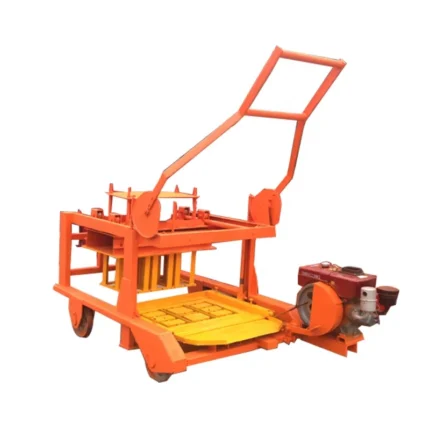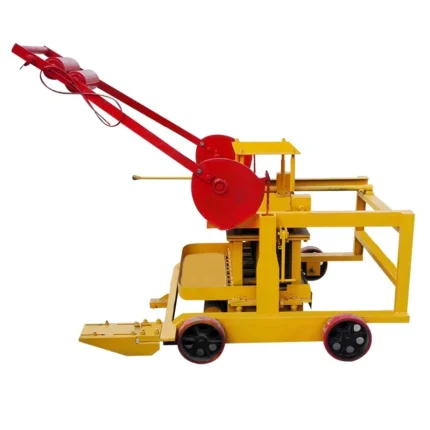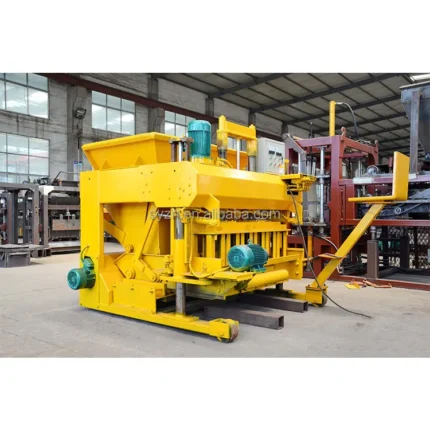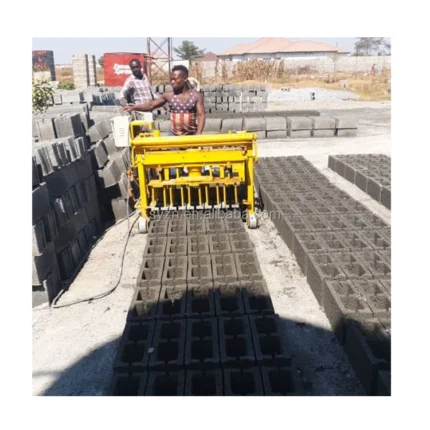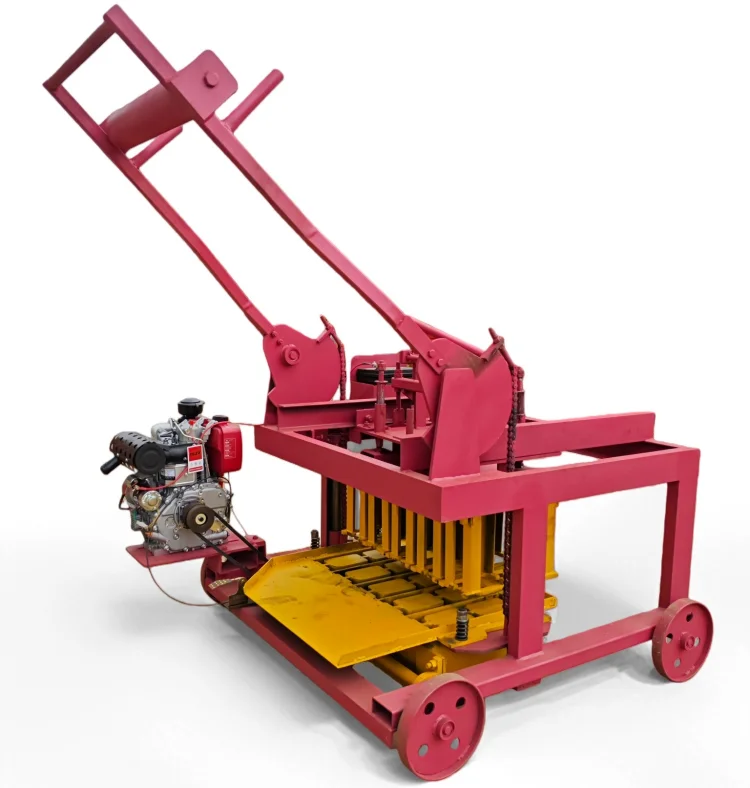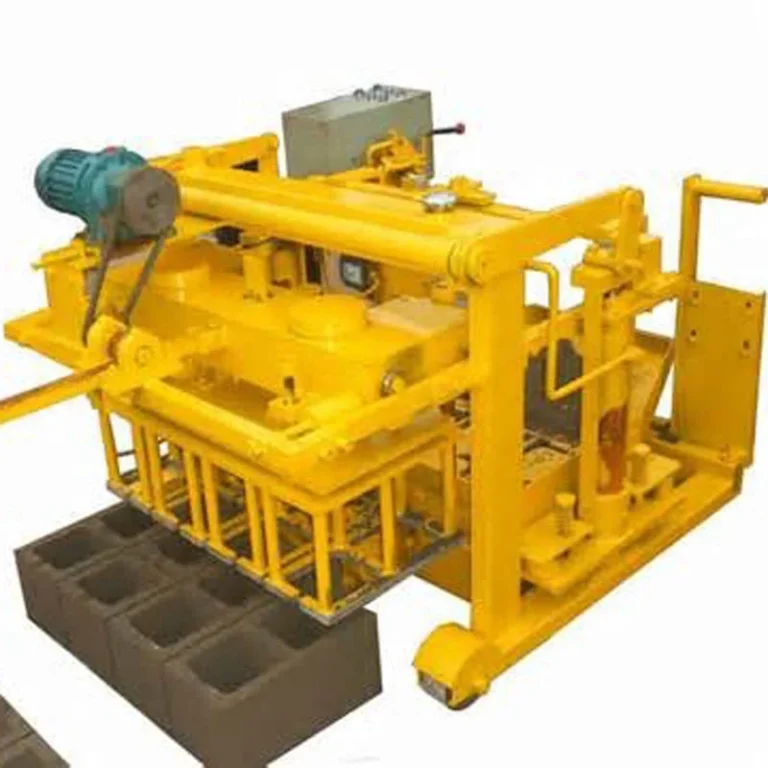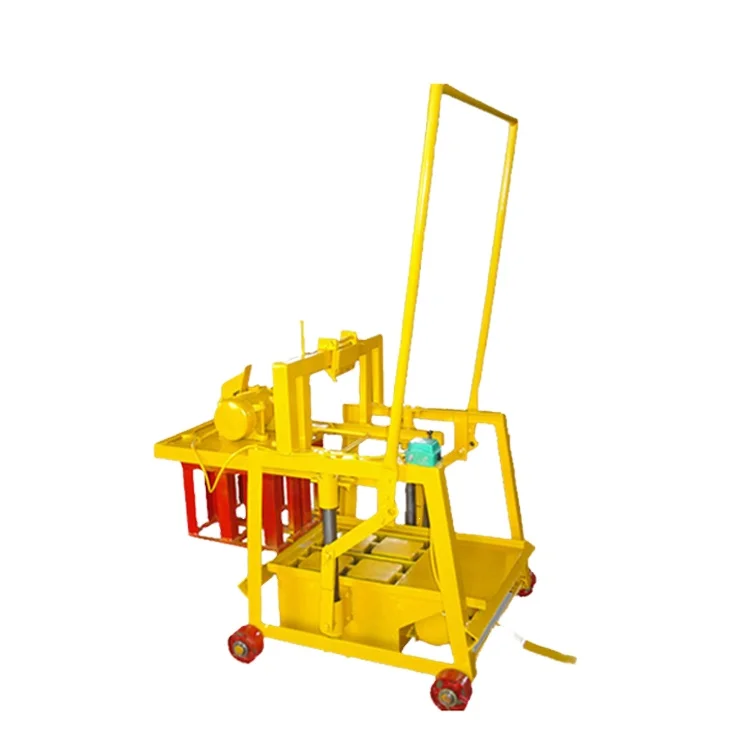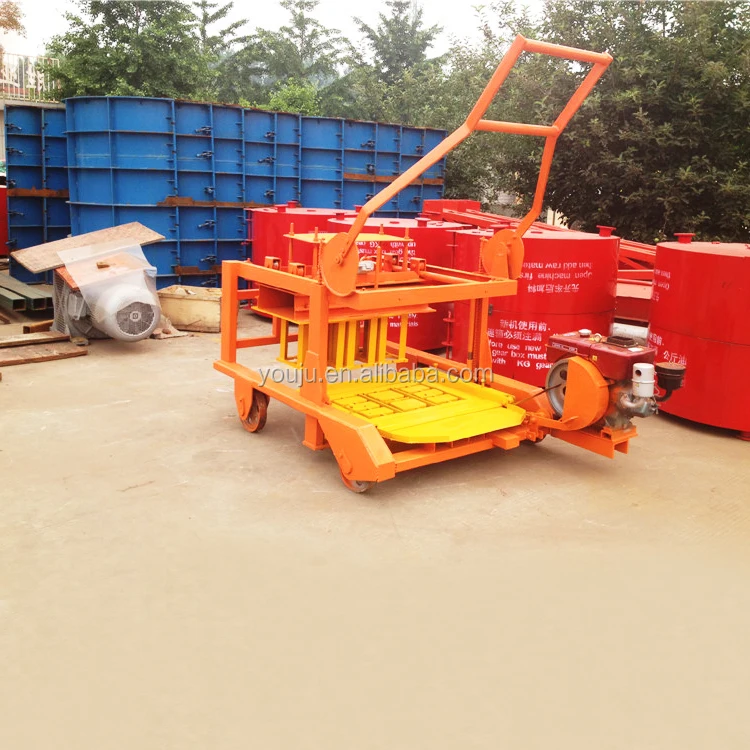
Description
Single-focus machinery engineering — the QMY4-30 mobile block machine is specified as a matched system of press, mould and pallet handling rather than assembled from unrelated components.
Technical Specifications
| Parameter | Value |
|---|---|
| Model | QMY4-30 |
| Product Type | Mobile Hollow Block Making Machine |
| Rated Power | 5 kW |
| Molding Time | 30 seconds per cycle |
| Overall Dimensions | 1200 × 1200 × 1100 mm |
| Net Weight | 950 kg |
| Output Capacity | 480 pcs/hour based on 400×200×200mm hollow block, 4 pcs/mould |
| Output Capacity | 600 pcs/hour based on 400×150×200mm hollow block, 5 pcs/mould |
| Output Capacity | 840 pcs/hour based on 400×100×200mm hollow block, 7 pcs/mould |
| Output Capacity | 3840 pcs/8 hours based on 400×200×200mm hollow block |
| Output Capacity | 4800 pcs/8 hours based on 400×150×200mm hollow block |
| Output Capacity | 6720 pcs/8 hours based on 400×100×200mm hollow block |
| Voltage & Frequency | Configurable (basis not stated in source — confirm voltage and frequency) |
| Control System | Manual operation, PLC option available (basis not stated in source — confirm PLC/MCC/manual) |
| Mould Format | Changeable moulds for hollow block and solid brick |
| Automation Level | Manual mobile egg-laying type |
| Raw Materials | Cement, sand, crushed stones, slag |
| Warranty | One year guarantee |
Application Suitability
| Application | Material or Output |
|---|---|
| On-site block production without a fixed plant | Cement, sand, crushed stones and slag mixed locally at the construction site |
| Small-scale hollow block manufacturing | 400×200×200mm and 400×150×200mm hollow blocks for residential and commercial walls |
| Solid brick production for local markets | Standard solid bricks using changeable moulds on the same machine |
| Start-up block production business | Low initial investment entry into concrete product manufacturing |
| Housing project contractor production | Blocks made directly at the project site, reducing transport cost and breakage |
What "480 Pieces per Hour" Actually Means for Your Site
The stated capacity of the QMY4-30 automatic mobile block machine only holds true when the block format, mix design and operator pace all align with the test conditions.
I have watched a mobile egg-laying machine run at barely half its brochure figure because the local sand had a high clay content that slowed the mix and weakened the green strength. The operator had to wait longer before moving the machine forward, and the cycle stretched well past thirty seconds. Capacity numbers on paper rarely survive contact with real aggregate [NEED_CITE: impact of local aggregate clay content on block cycle time]. Before you compare machines on output alone, ask the supplier to state the capacity per block format and per mix, not just a single headline number.
Control Options That Remove Guesswork from the Operator
A PLC controlled mobile hollow block machine replaces manual timing judgement with repeatable cycle logic, so the vibration duration and molding interval stay consistent regardless of operator experience. On a manual egg-laying machine, the operator decides when to advance to the next position, and fatigue or distraction introduces variation across a shift. Adding PLC control to the QMY4-30 means the cycle sequence is locked in, and batch-to-batch consistency improves without requiring a skilled technician on site full time.
Where Automation Ends on a Mobile Machine
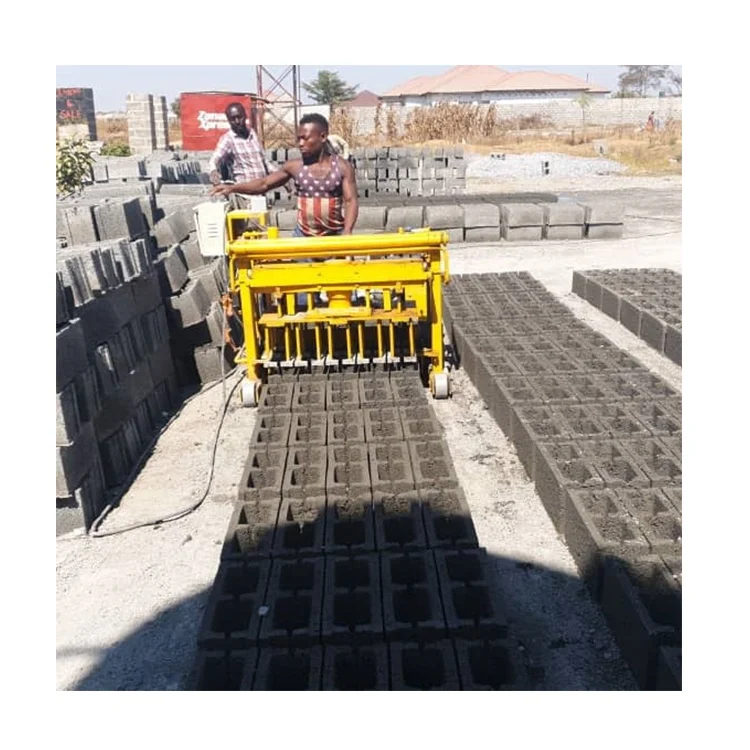
The QMY4-30 is a mobile egg-laying type, which means the machine moves along the curing floor and lays blocks directly on the ground. There is no automatic pallet feeding, stacking or cubing in this configuration. That is the correct trade-off for a buyer who wants portability and low capital cost over a fixed plant layout. What the automatic mobile block machine does offer is the option to start with manual operation and discuss PLC integration later, so the control level can match the operator skill available in your market [NEED_CITE: PLC integration options for mobile egg-laying block machines].
Reading the Specs That Actually Matter
The thirty-second molding cycle on the QMY4-30 determines the theoretical throughput, but the actual daily output depends on how many blocks the operator can produce and move before the mix sets. The five-kilowatt rated power reflects the vibration motor and hydraulic pump combined; if your site runs on a generator, the starting surge must be accounted for in the generator sizing. The overall dimensions of 1200 × 1200 × 1100 mm keep the machine compact enough to move between pouring zones, but the compact footprint also means the hopper volume is limited, so a continuous supply of mixed material from a separate mixer is necessary to avoid idle time. The net weight of 950 kg provides enough mass to stabilise vibration without a bolted-down foundation, which is the entire point of an egg-laying design.
The Cost of Overlooking Voltage and Language Before Shipment
Sending a mobile block machine to a market with a different voltage standard and discovering the mismatch at the port is a delay that compounds into missed project deadlines. The control panel display language, if not confirmed before production, means the operator cannot read fault codes or adjust cycle parameters without external translation [NEED_CITE: voltage and frequency standards by export market]. A PLC controlled mobile hollow block machine that arrives with the wrong frequency rating may run, but the vibration motor will operate outside its design speed, producing blocks with inconsistent density. Confirming voltage, frequency and display language costs nothing before production but can cost weeks of downtime after arrival.
Why Buyers Source This Machine Through a Single-Focus Supplier
Block machinery as the sole product focus means the QMY4-30 is not treated as a catalogue item pulled from a general machinery range. The mould, vibration frequency and hydraulic pressure are configured against the buyer’s actual mix design and local aggregate, not left at factory defaults. Changeable moulds for hollow block and solid brick are supplied with drawings that match the machine’s pallet and vibration envelope, so the buyer is not fitting third-party moulds that cause alignment issues. Installation and commissioning support includes operator training on cycle timing and mould change, which shortens the period between machine arrival and consistent production. Documentation covers the capacity calculation stated per block format, so the buyer can plan curing area and labour around a verified number rather than a brochure claim.
Documentation & Verification
- Machine specification sheet with capacity calculation stated per block format and cycle assumption
- Mould drawing and format list for each hollow block and solid brick size ordered
- Voltage and control language confirmation record signed before production begins
- Factory test record run on the buyer’s specified block format before dispatch
- Operation and maintenance manual covering mould change procedure and daily inspection points
- Packing photographs showing machine and mould loading condition before container sealing
Installation, Commissioning & Support
- The 1200 × 1200 × 1100 mm footprint requires a flat, cured concrete floor with no major unevenness for the egg-laying path
- The 5 kW rated power needs a dedicated circuit or appropriately sized generator accounting for motor start surge
- Machine arrives assembled; the operator needs to install the selected mould and verify vibration motor rotation direction on first power-up
- Commissioning includes running the thirty-second cycle on the buyer’s mix to confirm green strength before full production starts
- Operator training covers mould change steps, hopper refill timing and daily inspection of vibration motor mounts
- Wear parts list and mould spares identified at order stage so replacements are available when first needed
What to Prepare Before You Send an Inquiry
Provide the block format you intend to produce, including the exact dimensions and whether you need hollow block, solid brick or both. State your local raw materials, especially the type and grading of sand or crushed stone, because the mix design directly affects the achievable cycle time. Confirm your site voltage, frequency and preferred control display language so the automatic mobile block machine can be built to match your electrical standard from the start.
Frequently Asked Questions
Q: What automation level does the QMY4-30 offer and can it be upgraded?
A: The QMY4-30 is a manual mobile egg-laying machine where the operator controls movement and cycle initiation. A PLC controlled mobile hollow block machine option is available to automate the cycle sequence and vibration timing, improving batch consistency. The upgrade path from manual to PLC control can be discussed at the inquiry stage based on operator skill and budget.
Q: How to confirm voltage and control language for your market before shipment?
A: State your country’s standard voltage, frequency and preferred display language during the inquiry. The supplier will provide a written confirmation of the electrical specification and PLC language before production begins. This step prevents commissioning delays caused by mismatched motor ratings or unreadable fault codes on arrival.
Q: What is the realistic daily output per block format and what are the cycle assumptions?
A: The stated outputs are 3840 pieces per eight hours for 400×200×200mm blocks, 4800 for 400×150×200mm and 6720 for 400×100×200mm, all based on a thirty-second cycle. Real output depends on mix workability, operator pace and material supply continuity. Request a capacity calculation matched to your specific block format and local aggregate.
Q: How does mould change work on a mobile machine and what is the expected change time?
A: Mould change on the QMY4-30 involves removing the current mould from the vibration table and securing the replacement with the provided fasteners. The process is manual and requires no special tools beyond standard wrenches. Request the mould change procedure in the operation manual before shipment so your team can plan format changeovers into the shift schedule.
Q: What wear parts and mould spares are available for the QMY4-30?
A: Wear parts include vibration motor mounts, hydraulic seals and mould liner plates that contact the mix during compaction. A wear parts list is provided with the quotation, and mould spares can be ordered alongside the machine. Confirming spare availability at the order stage ensures replacements are in stock when your first maintenance interval arrives.