Description
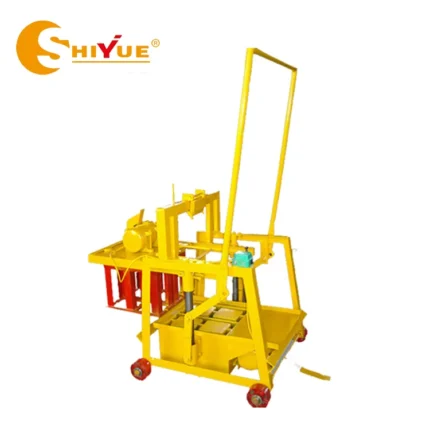
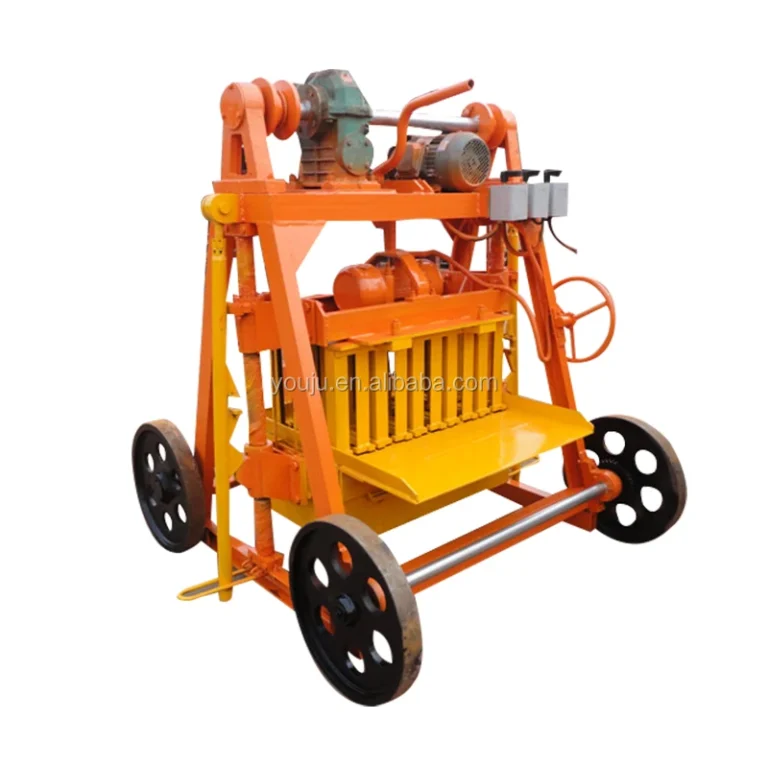
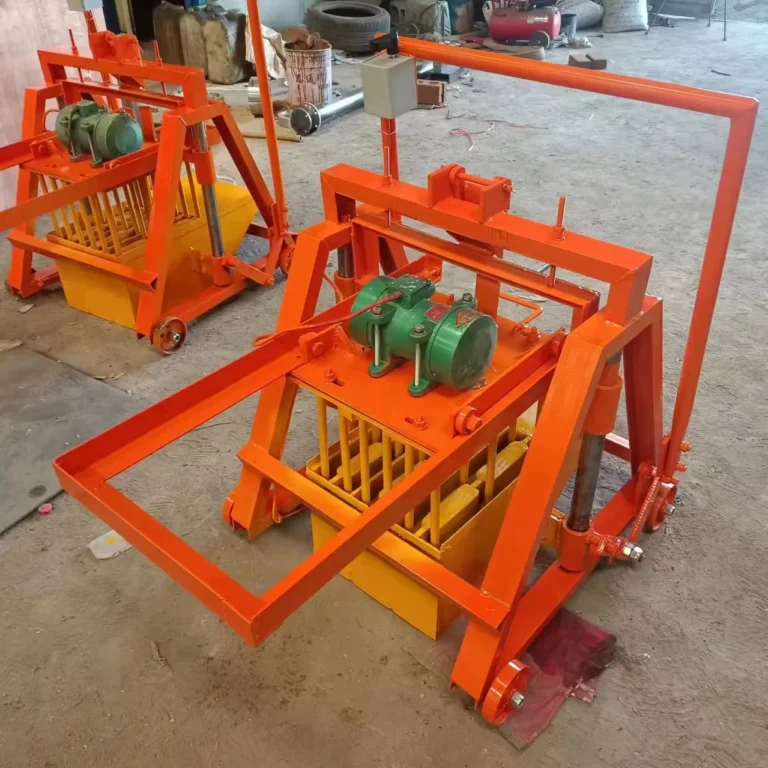
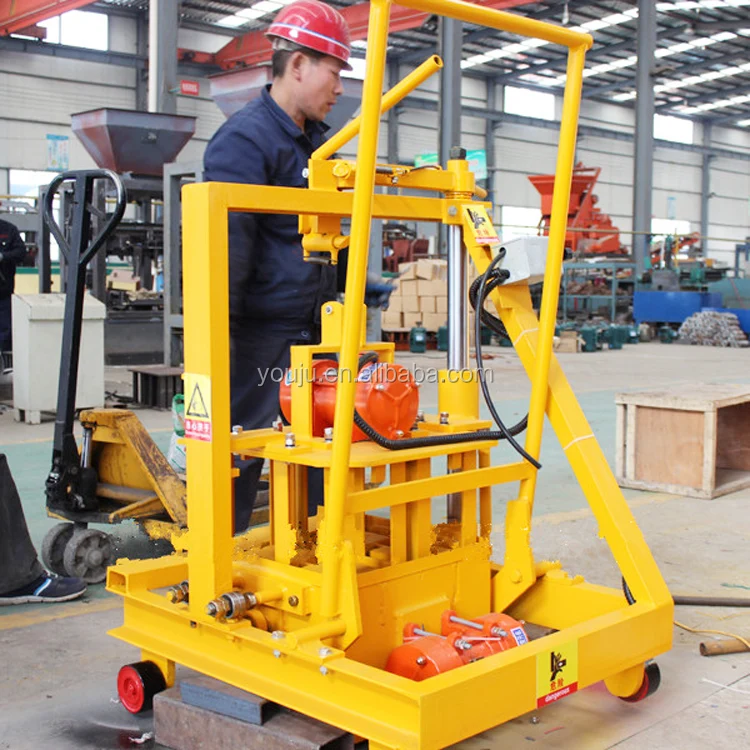
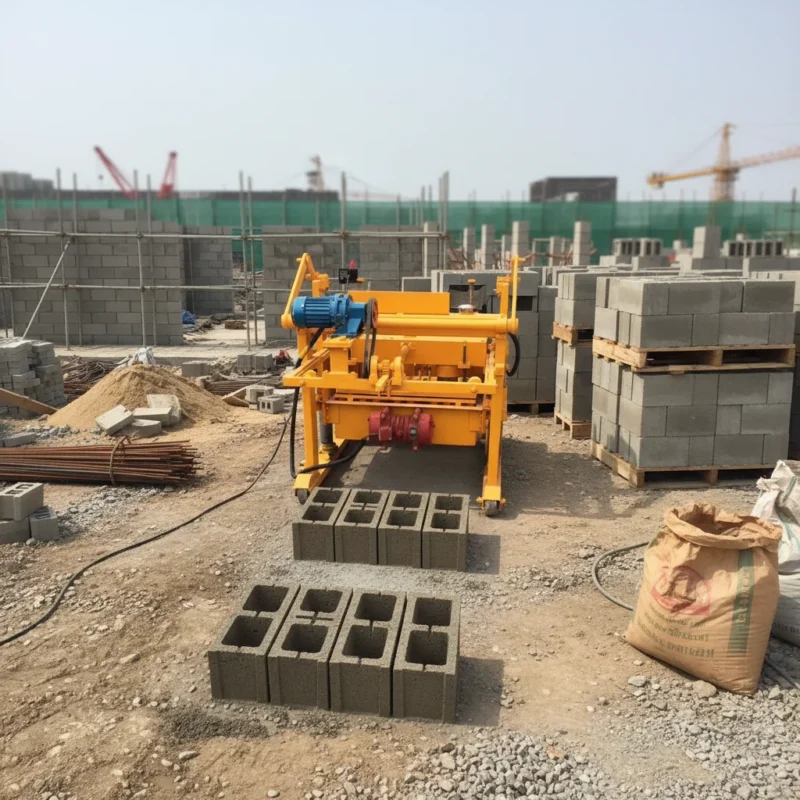
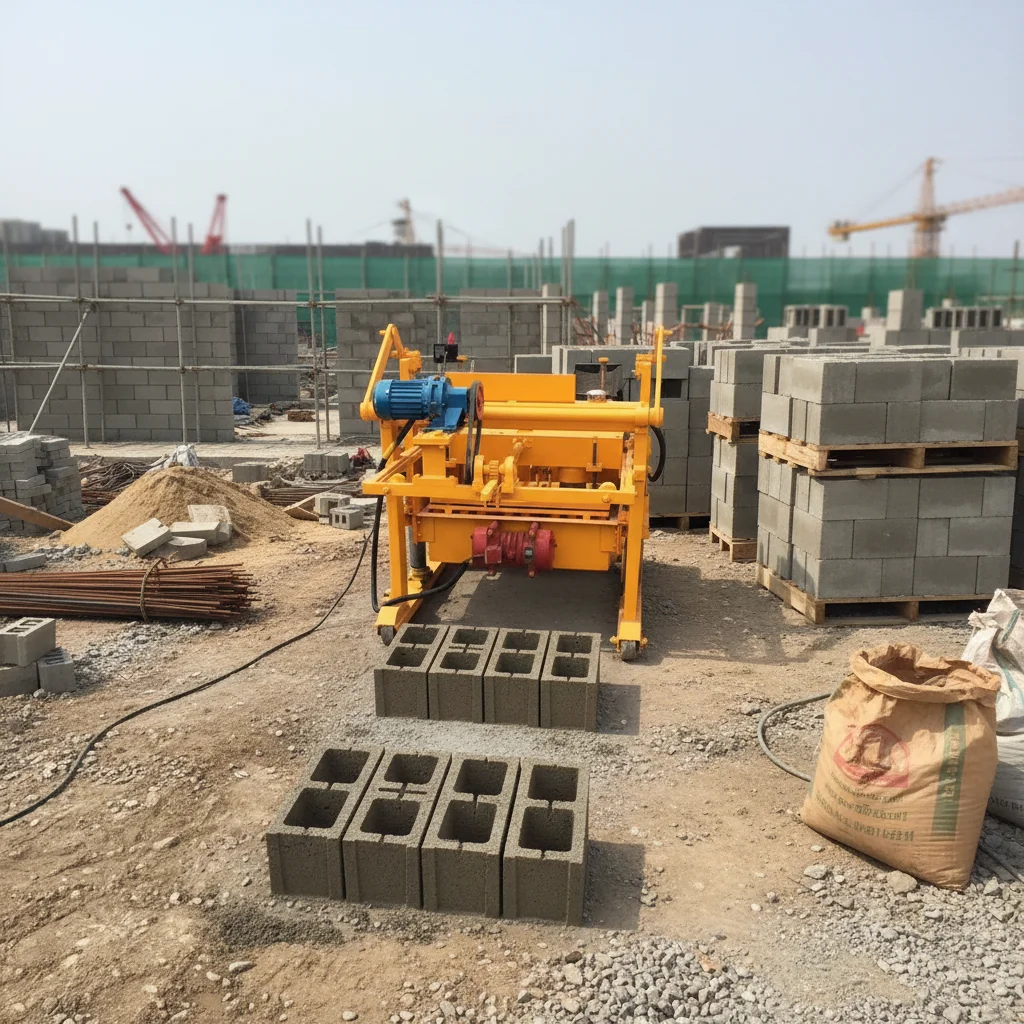
Control architecture that leaves room to grow — the QMY4-30 manual mobile block machine is wired so that batching, pallet feeding and stacking modules can join the line later without replacing the press frame or rewriting the PLC logic from scratch.
Technical Specifications
| Parameter | Value |
|---|---|
| Model | QMY4-30 |
| Product Type | Manual Mobile Block Making Machine |
| Overall Dimensions (L×W×H) | 1300 × 1500 × 1000 mm |
| Net Weight | 950 – 1000 kg |
| Vibration Method | Mold Vibration |
| Vibration Force | 28.6 kN |
| Excitation Frequency | 4500 r/min |
| Total Power | 5.95 kW |
| Output Capacity | 3000 pcs/day (basis not stated in source — confirm block format, material and thickness) |
| Acceptable Raw Materials | Concrete, fly ash, cinder, coal gangue, industrial waste residue, river sand, gravel, cement |
| Mould Formats | Hollow, solid, paving, curb stone |
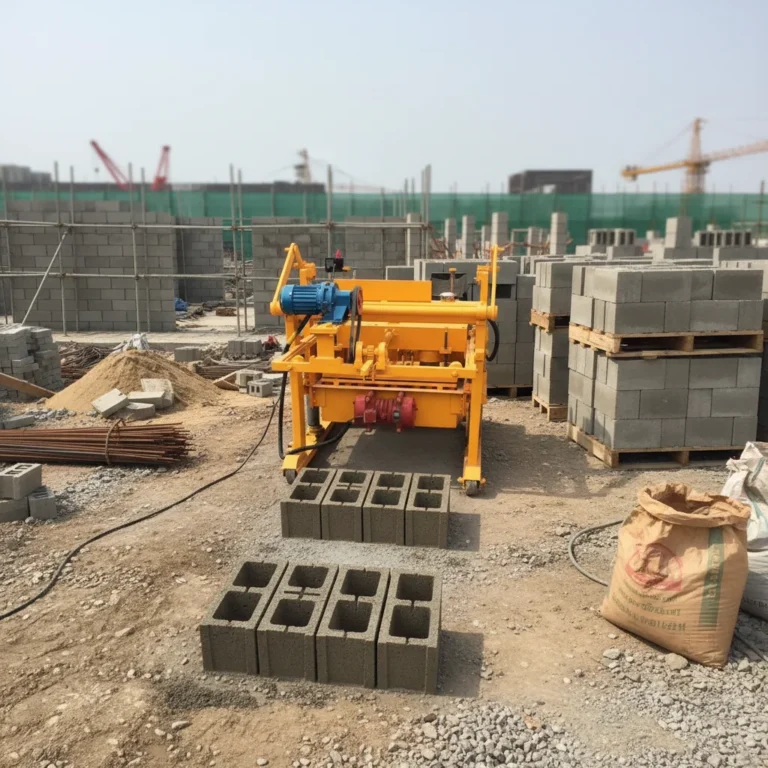
| Assembly State | Mobile / egg-laying (no fixed plant required) |
| Voltage & Frequency | 380V ±10% (source value — verify against destination grid) |
Application Suitability
| Application | Material or Output |
|---|---|
| On-site housing project block production | Hollow and solid blocks from river sand, gravel and cement |
| Remote infrastructure curb stone laying | Curb stones from crushed aggregate and cement |
| Small-scale paver manufacturing for local sale | Paving blocks from fly ash, cinder and cement |
| First-plant entrepreneur block operation | Mixed formats from locally available aggregate and industrial residue |
Why the Voltage Question Should Come Before the Price on a Mobile Block Machine
An automatic mobile block making machine that cannot match the local grid sits idle until a transformer arrives — and that wait is always longer than the buyer expects.
I once watched a mobile unit land on a job site in the Middle East only to find the local supply was 415V at 60 Hz while the motor plate read 380V at 50 Hz. The crew spent three weeks sourcing a step-down transformer before the first block was pressed [NEED_CITE: voltage and frequency standards by export market]. When the QMY4-30 is specified for your market, the winding ratio, frequency rating and any future PLC display language must be locked before the stator goes into the press housing, not after the machine is already on the water.
What Automation Removes from the Operator
The QMY4-30 starts as a manual mobile press where the operator feeds the mold, triggers vibration and wheels the unit forward. This keeps capital outlay low and teaches the crew the rhythm of the cycle. As volume grows, a PLC-controlled batching module can be bolted to the existing mixer feed so that cement-to-aggregate ratios stay constant from the first batch to the last — the single variable that most influences block density when local sand moisture drifts between morning and afternoon.
Where the PLC Controlled Mobile Block Machine Path Leads
Once batching is stable, the next bottleneck is usually pallet handling. A pallet feeder synchronized to the press cycle removes the operator from the lift-and-place motion that causes most fatigue-related stops on manual lines. The control architecture on the QMY4-30 reserves I/O channels so these additions do not require a panel swap. A buyer who starts with manual egg-laying today can move toward a PLC controlled mobile block machine configuration later without discarding the press they already own [NEED_CITE: modular PLC expansion in mobile block lines].
Vibration Force, Frequency and the Density You Actually Get
The 28.6 kN mold vibration at 4500 r/min is the pair of numbers that decides whether a hollow block leaves the mold with enough green strength to survive the wheel to the curing area. Higher frequency tightens the surface finish, while higher force drives the mix into the mold corners. On the QMY4-30 these values are fixed by the eccentric block and motor pulley, so the real tuning happens in the mix design — specifically the fines-to-coarse ratio and cement content of your local aggregate. If the sand you source runs high in clay, the vibration will smear rather than compact, and block edges will slump before the pallet is moved. Requesting a vibration match against your actual material is the step that prevents this.
The Cost of Skipping the Mould Change Conversation
A mobile press that takes most of a shift to swap from hollow to paving format cancels the format flexibility the buyer paid for. On the QMY4-30, mold retention relies on bolt-on clamps, and a crew that has not practiced the change will lose time searching for shims and realigning the feed shoe. Clarifying the mold change procedure and keeping a dedicated tool kit with the machine prevents a flexible asset from becoming a single-format one [NEED_CITE: mould change time impact on daily format versatility].
Why Source the QMY4-30 Through This Line
Block machinery is the single focus here, so the press, mold, pallet and any future handling module are specified as one system rather than assembled from unrelated suppliers. The configuration is set against your actual mix design and local aggregate, not a catalogue default that assumes washed river sand. Molds are available for the formats your market actually sells, and custom drawings are accepted when a project calls for a non-standard curb profile. The automation level is selectable, meaning a buyer can begin with manual operation and add PLC batching, pallet feeding and stacking as demand scales. Installation support and operator training are included so the first production run happens with the crew that will run the machine daily.
Documentation & Verification
- Machine specification sheet listing vibration force, excitation frequency and total power for the QMY4-30
- Capacity calculation sheet stating the exact block format, material and thickness assumed
- Voltage and frequency confirmation document matching your destination grid before production
- Mold drawing and format list for hollow, solid, paving and curb stone profiles
- Factory test record on your specified raw material mix before dispatch
Installation, Commissioning & Support
- Level compacted ground is sufficient; the 1300 × 1500 mm footprint requires no fixed foundation
- 5.95 kW total draw needs a dedicated 3-phase circuit at the confirmed voltage and frequency
- Machine ships assembled; wheels and handle are fitted on arrival for immediate site movement
- First-day commissioning verifies mold vibration amplitude against your mix sample
- Operator training covers manual feed rhythm, mold release timing and basic eccentric block maintenance
- Wear parts list identifies mold liners, vibration springs and drive belts with reorder codes
Before You Send the Inquiry
Share the block format you intend to run most, the daily volume you are targeting, and the source and gradation of your local aggregate. Confirm the voltage, frequency and any control display language your crew requires so the electrical package is built correctly the first time. If you plan to add batching or stacking automation later, state that upfront so the control panel is laid out with the expansion in mind.
Frequently Asked Questions
Q: How is output capacity verified on the QMY4-30 and what format is it based on?
A: The 3000 pcs/day figure in the source data carries no stated block format, material or thickness. A verified capacity calculation must be requested per specific format — for example, 400×200×200 mm hollow blocks versus 200×100×60 mm pavers — because cycle time and mold cavity count change the daily total significantly.
Q: Can this machine be upgraded from manual to PLC controlled mobile block machine later?
A: Yes. The control panel reserves I/O points for a batching module, pallet feeder and stacking unit. Upgrades are added without replacing the main press frame or rewriting the base logic, allowing the line to grow with demand.
Q: What voltage and frequency options are available for my market?
A: The default plate reads 380V ±10% at 50 Hz, but windings can be configured for the destination grid. Voltage, frequency and PLC display language must be confirmed before the motor and panel enter production to avoid on-site delays.
Q: How do vibration force and mold design need to match my local aggregate?
A: The 28.6 kN force and 4500 r/min frequency are fixed mechanical values. The match happens in the mix design — fines content, cement ratio and moisture — which determine whether the vibration compacts cleanly or smears the block surface against the mold wall.