Description
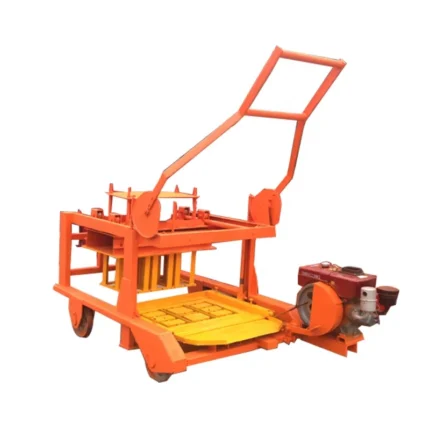
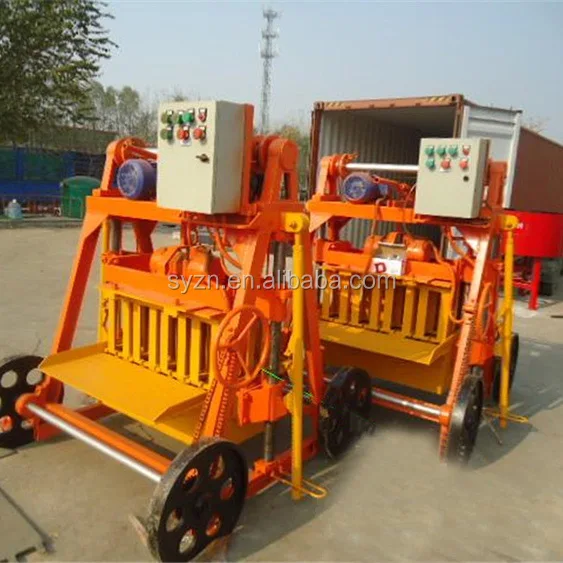
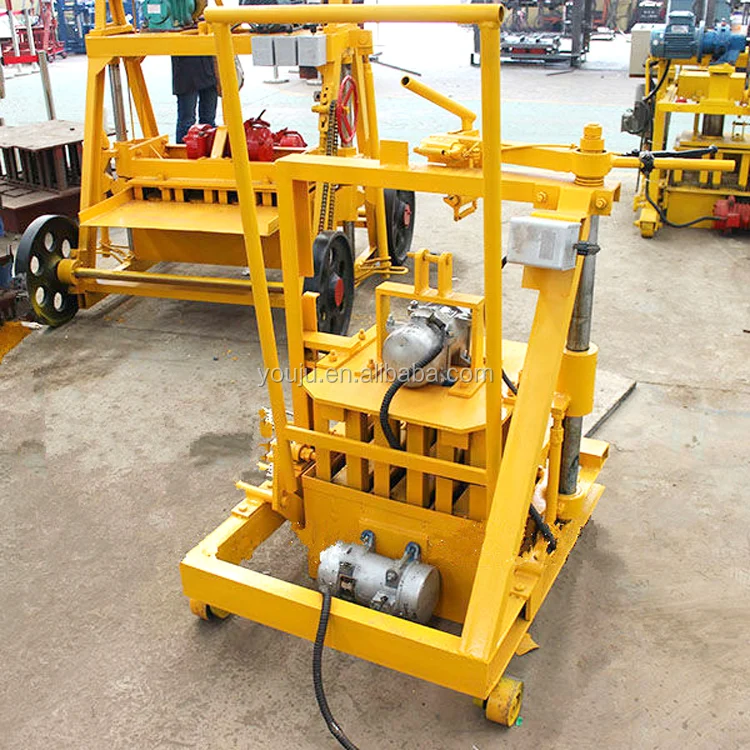
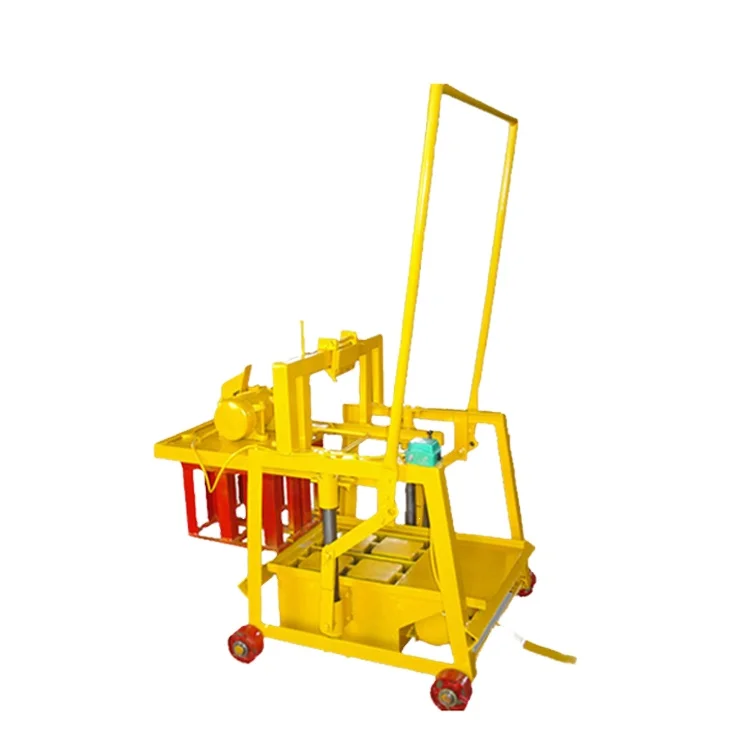
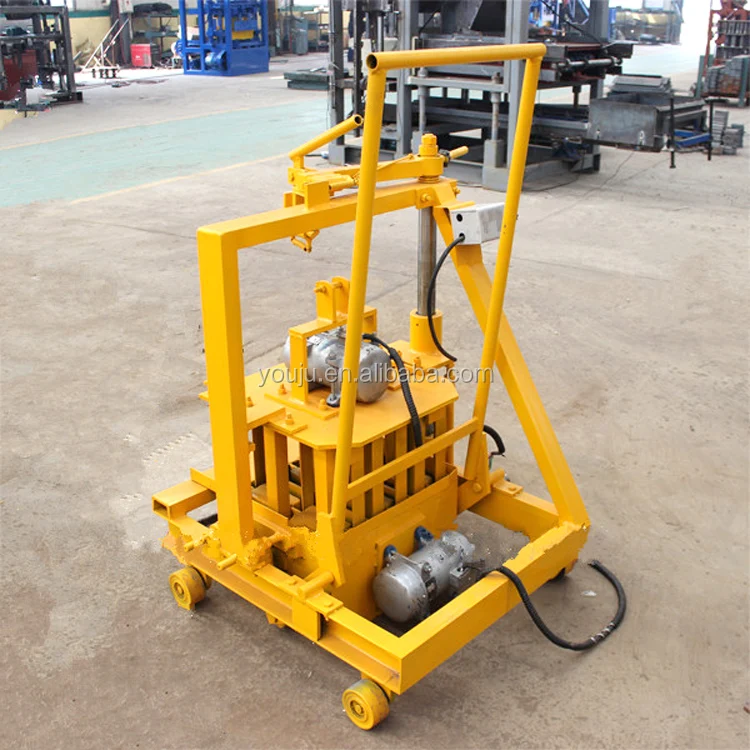
QMJ2-45 Mobile Block Making Machine | Intelligent PLC Control
Upgradeable control architecture — The QMJ2-45 mobile egg-laying block making machine can be specified with PLC-controlled batching and mould actuation so operators no longer rely on feel alone to hold cycle consistency, locking in parameters that match your actual mix design and local aggregate from day one.
Technical Specifications
| Parameter | Value |
|---|---|
| Model | QMJ2-45 |
| Product Type | Mobile Egg-Laying Block Making Machine |
| Machine Operation | Manual mobile egg-laying, upgradeable to PLC-controlled automation |
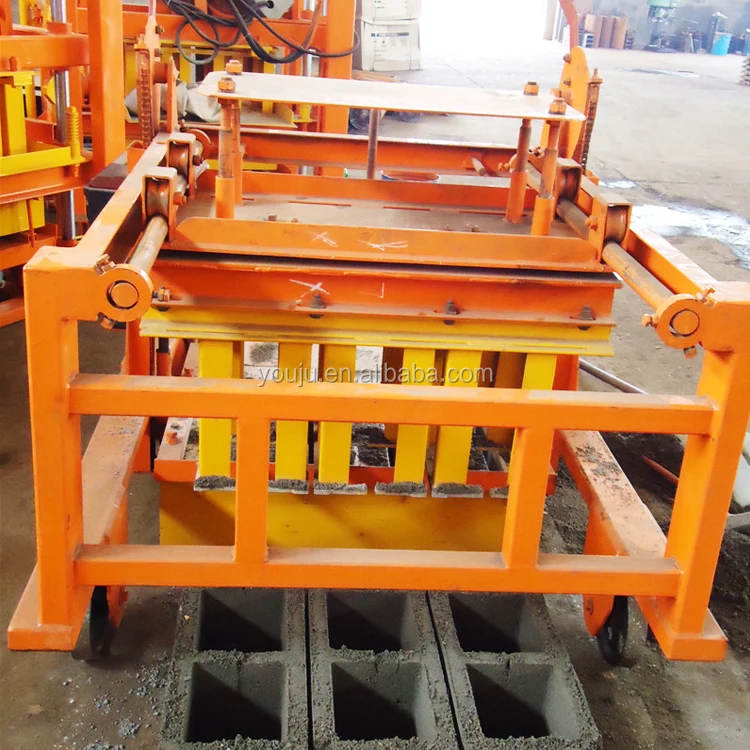
| Mould Format | Interchangeable moulds for hollow brick |
| Mould Formats Supported | 400×200×200mm (2 pcs/mould), 400×150×200mm (3 pcs/mould), 400×100×200mm (4 pcs/mould) |
| Cycle Time | 25–30s per mould |
| Output Capacity | 160 pcs/h based on 400×200×200mm hollow block, 2 pcs/mould |
| Output Capacity | 240 pcs/h based on 400×150×200mm hollow block, 3 pcs/mould |
| Output Capacity | 320 pcs/h based on 400×100×200mm hollow block, 4 pcs/mould |
| 8-Hour Output | 1280 pcs based on 400×200×200mm hollow block |
| 8-Hour Output | 2560 pcs based on 400×100×200mm hollow block |
| Pallet Requirement | No pallets required (egg-laying type) |
| Power Source | Electric engine |
| Voltage & Frequency | Configurable to buyer market (basis to be confirmed before order) |
| Control System | Manual operation; PLC-controlled batching and mould actuation available as upgrade |
| Automation Level | Manual baseline; semi-automatic upgrade path |
| Labour Requirement | 1 to 3 workers |
| Mould Material | High quality steel with heat treatment and carburization technology |
| Assembly State | Mobile, free-moving, no fixed plant required |
| Standards | ISO9001:2000, CE |
Application Suitability
| Application | Material or Output |
|---|---|
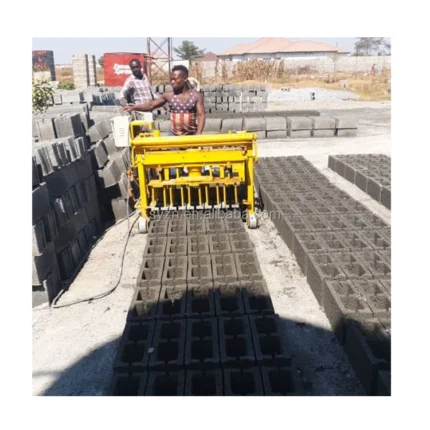
| On-site hollow block production at construction sites | Concrete mix with locally sourced crushed stone, sand, and cement |
| Small-scale block plant in limited urban or rural space | Hollow brick in 400×200×200mm, 400×150×200mm, and 400×100×200mm formats |
| Remote locations without pallet or curing rack infrastructure | Egg-laying production on levelled ground, pallet-free |
| Entrepreneur first block plant with minimal capital | Low-volume hollow block runs with future automation upgrade path |
| Contractor self-supply for housing or boundary wall projects | Consistent hollow brick output matched to project volume |
What "Manual Operation" Actually Costs You in Block Consistency
Automation removes the operator’s guesswork from every cycle, holding vibration and pressure steady regardless of shift changes or fatigue.
When a buyer runs a manual mobile egg-laying machine, the person on the controls decides when to stop vibration, when to lift the mould, and how fast to move to the next position. I have watched operators shorten cycles near the end of a shift because the sun was going down, and the blocks from that last hour crumbled during transport. The automatic mobile egg-laying block machine with PLC-controlled mould actuation holds each parameter constant, so the block formed at 4pm matches the one formed at 8am. Inconsistent vibration and unmeasured batching are the two most common causes of hollow block rejection at delivery. [NEED_CITE: block strength variation causes in small-scale mobile production]
PLC-Controlled Batching Removes the Biggest Variable
The QMJ2-45 as a manual machine depends on workers measuring raw material by shovel or bucket, which introduces moisture and ratio drift between batches. When configured as a PLC controlled mobile block making machine, the batching station meters aggregate, sand, cement, and water by weight before each mix, so the concrete entering the mould is identical every cycle. This matters most when local sand varies in clay content or moisture across seasons, because the control system compensates rather than leaving the operator to adjust by eye. Batch-to-batch consistency in block density follows directly from batch-to-batch consistency in the mix.
Upgrade Path From Manual to Semi-Automatic Without Replacing the Machine
A buyer setting up a first block plant often cannot justify full automation on day one. The QMJ2-45 mobile block machine allows a staged approach: start with manual mould handling and add PLC-controlled batching, then later integrate automatic mould actuation and remote diagnostics. The machine frame and mould mounting points remain the same through each upgrade stage, so capital already spent is not discarded. This is how the automatic mobile egg-laying block machine grows with the buyer’s volume rather than forcing a full machine replacement when demand increases. [NEED_CITE: PLC retrofit options on manual mobile block machines]
Mould Heat Treatment and Carburization in a Mobile Context
Mobile egg-laying machines endure more mechanical shock than stationary presses because they move across uneven ground between cycles. The moulds on the QMJ2-45 are manufactured from high quality steel and treated with heat treatment and carburization technology, which hardens the surface layer to resist abrasion from concrete aggregate while keeping the core tough enough to absorb impact. Carburized moulds maintain dimensional accuracy longer, meaning a hollow brick that measures 400×200×200mm in the first week still measures the same after months of daily production. Mould life directly affects block consistency and the frequency of replacement orders.
The Commissioning Delay That Voltage Assumptions Cause
I once prepared a QMJ2-45 mobile block machine for a buyer in a market running 415V/50Hz, only to find on arrival that the site supply was 380V/60Hz from a local generator. The machine would not run at full vibration force, and every block came out under-compacted. Voltage, frequency, and PLC display language must be confirmed before the machine leaves the factory, not assumed from a regional guess. The PLC-controlled upgrade path only delivers its consistency benefit when the control system matches the buyer’s actual power supply and the operator can read the interface. [NEED_CITE: voltage and frequency standards by export market]
Why Buyers Choose This Machine Through Us
Block machinery is our single focus, which means the QMJ2-45 is specified as a matched system — machine, mould, and any batching upgrade are configured together, not assembled from separate suppliers. We set the cycle parameters against the buyer’s actual mix design and local aggregate, not a catalogue default, so the machine arrives ready for the material it will actually process. Mould design covers the hollow brick formats the buyer’s market sells, and custom drawings are available when standard sizes do not match. The automation level is selectable at order, so a buyer can start manual and upgrade to PLC-controlled operation without replacing the press. Installation and commissioning support includes operator training on whichever control level the buyer selected.
Documentation & Verification
- Machine specification sheet stating cycle time per hollow brick format, not a generic hourly figure
- Mould drawing and format list confirming 400×200×200mm, 400×150×200mm, and 400×100×200mm dimensions
- Voltage and PLC display language confirmation document signed before production begins
- Factory test record on buyer’s specified hollow brick format before dispatch
- Operation and maintenance manual with wear parts and mould list for first replacement planning
- CE declaration and ISO9001:2000 documentation where applicable
Installation, Commissioning & Support
- Ground levelling guidance for egg-laying operation, no pallet system or curing rack infrastructure required
- Power connection confirmed to buyer’s voltage and frequency before electric engine wiring is finalized
- Mould mounting and alignment check on first installation with hollow brick dimensional verification
- PLC control system commissioning including batching calibration to buyer’s local aggregate and cement ratio
- Operator training on mould change procedure across all three hollow brick formats
- Wear parts and mould replacement list provided with recommended reorder intervals
What We Need to Quote Accurately
To configure the QMJ2-45 correctly, tell us which hollow brick format your market demands, your target daily output, and the type of aggregate and sand available locally. We also need your site voltage and frequency, preferred PLC display language, and whether you want to start manual with a future automation upgrade or specify PLC-controlled batching from day one.
Frequently Asked Questions
Q: How is output capacity verified per block format, and what cycle time assumption is used?
A: Output figures are stated per format with the mould cavity count: 160 pcs/h based on 400×200×200mm hollow block at 2 pcs/mould, 240 pcs/h at 3 pcs/mould for 400×150×200mm, and 320 pcs/h at 4 pcs/mould for 400×100×200mm, all assuming a 25–30s cycle. Generic cycles-per-hour figures without format context are not used.
Q: What automation upgrades are available from manual to PLC-controlled operation?
A: The baseline QMJ2-45 is manual. The first upgrade adds PLC-controlled batching for consistent mix ratios, removing shovel-measured variation. A further stage adds automatic mould actuation so vibration time and mould lift are machine-controlled. Each stage reduces operator-dependent variables and improves batch-to-batch block density consistency.
Q: Can the PLC control system support my local voltage, frequency, and display language?
A: Voltage and frequency are confirmed with the buyer before production, and the PLC display language is specified at order. This is documented in a written confirmation so the control system matches the site power supply and the operator can read the interface on day one, avoiding commissioning delays.
Q: How does automation improve block strength consistency across production runs?
A: Manual operation leaves vibration duration, mould lift timing, and batching ratios to operator judgement, which drift across shifts. PLC-controlled batching locks cement-to-aggregate ratios by weight, and automated mould actuation holds vibration time constant, so every block receives identical energy regardless of who operates the machine or what time of day.