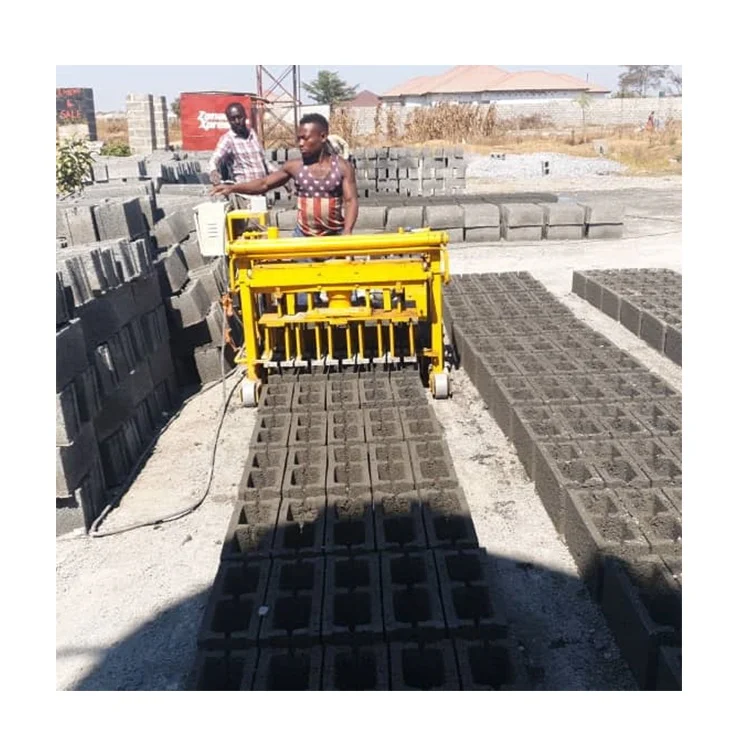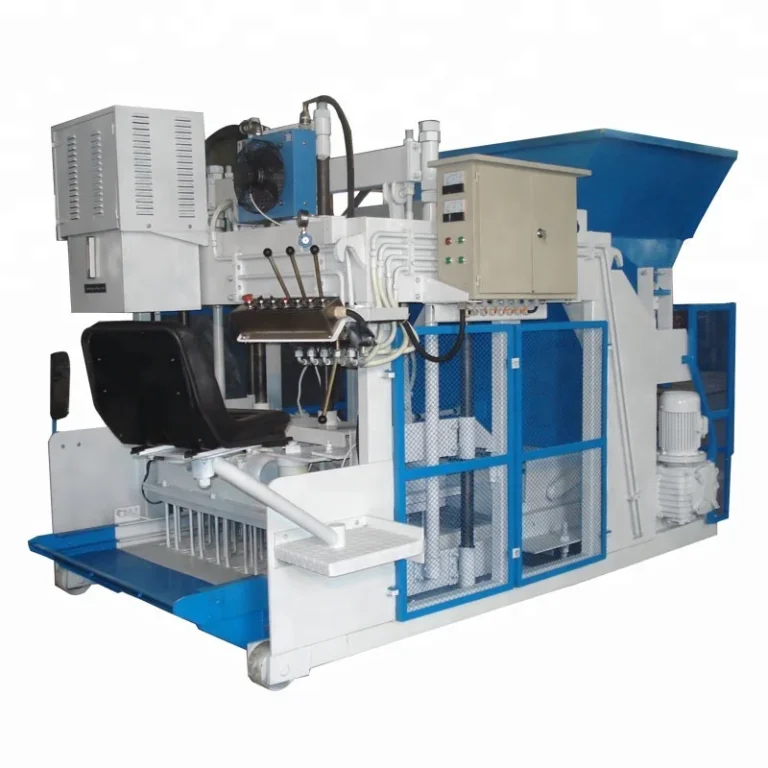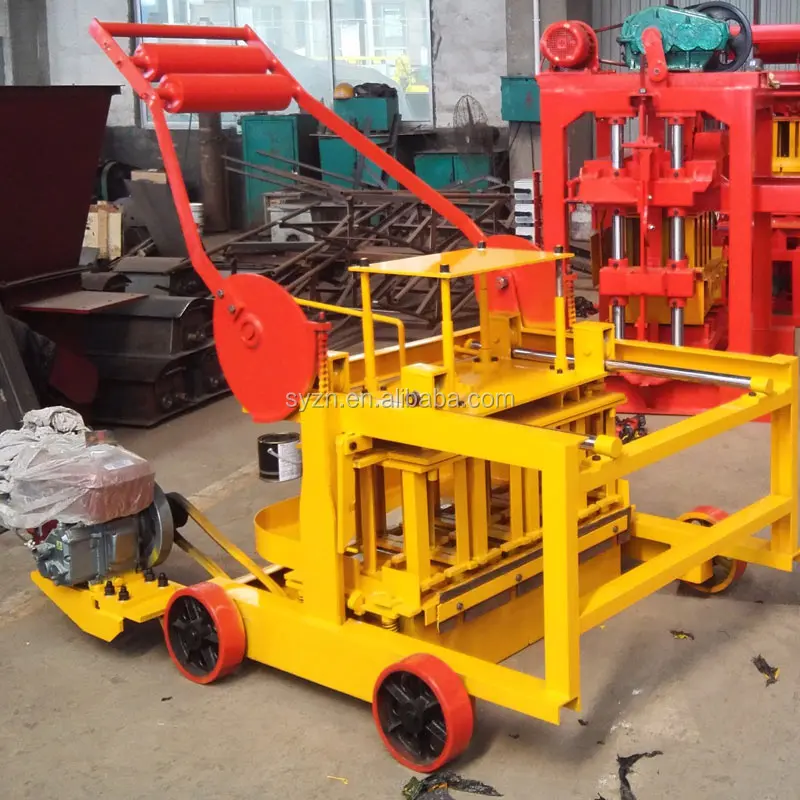


Description
Configuration Match — QMR4-45 power source, control language, and mould format confirmed against the buyer’s site conditions before dispatch, not defaulted from a catalogue.
Technical Specifications
| Parameter | Value |
|---|---|
| Model | QMR4-45 |
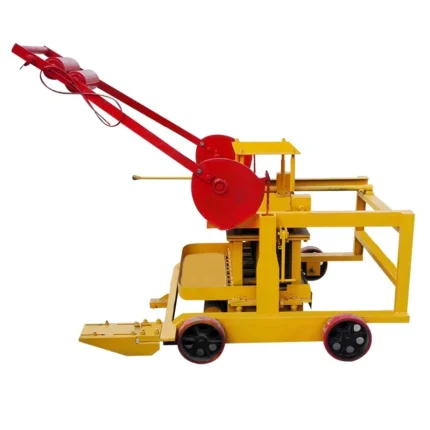
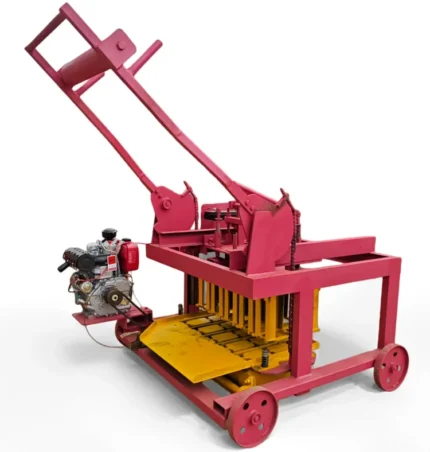
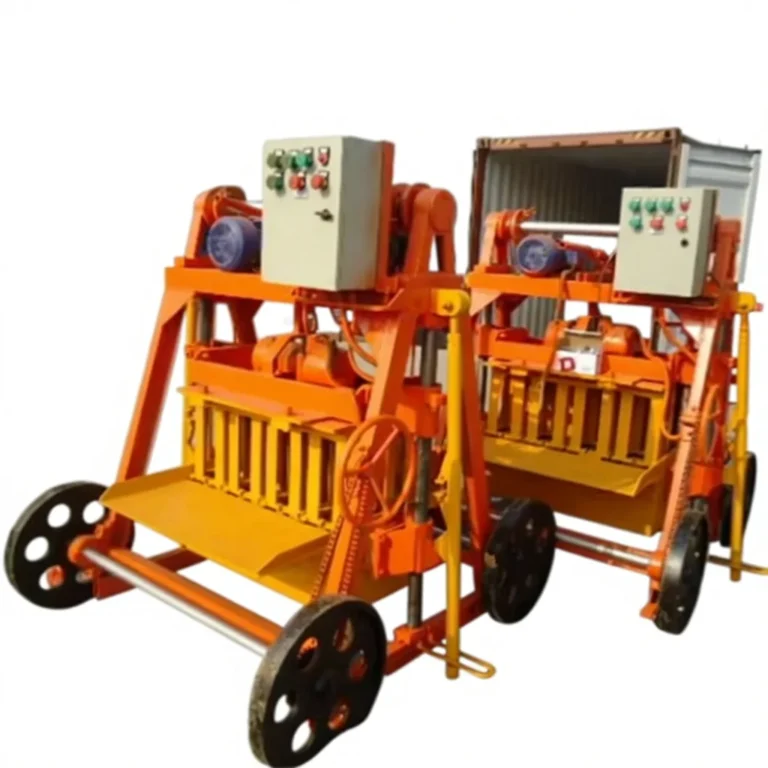
| Product Type | Mobile Egg-Laying Block Making Machine |
| Overall Dimensions (L×W×H) | 1100 x 950 x 2100 mm |
| Net Weight | 810 kgs |
| Power Source | Diesel / Petrol Engine / Electric (voltage and frequency to be confirmed) |
| Molding Cycle | 30–45 s depending on block format and mix consistency |
| Output Capacity | 2560 pcs/day (basis not stated in source — block format and material to be confirmed) |
| Mould Compatibility | Paver brick, hollow block, concrete block, solid brick, fly ash brick |
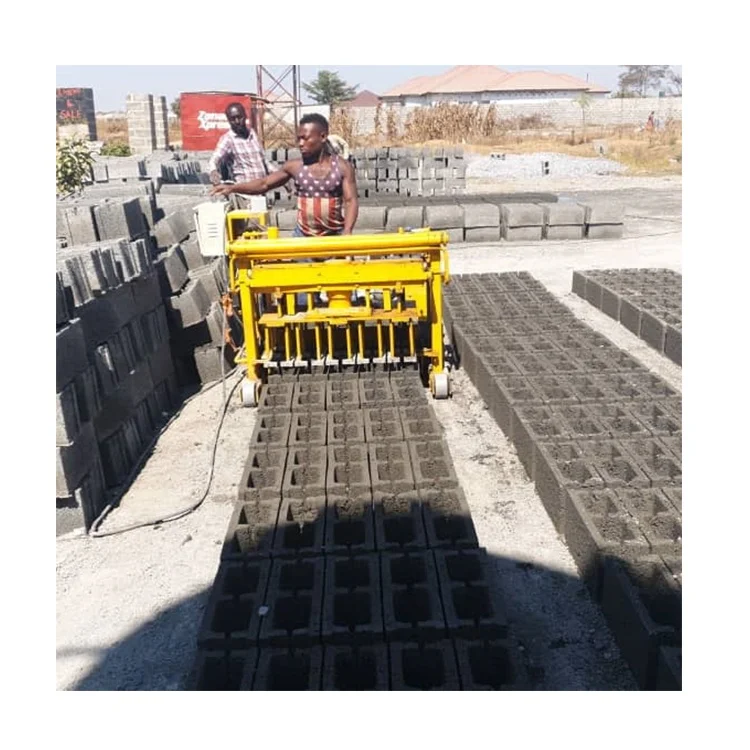
| Pallet Requirement | None (egg-laying type) |
| Mobility | Mobile / movable on-site |
| Basic Equipment Included | JZC350 Diesel Concrete Mixer or JQ350 Diesel Concrete Mixer with electric generating unit; trolley |
| Automation Level | Manual operation with motorized vibration and pressing |
| Control System | Available with PLC or MCC control (to be confirmed at order) |
| Warranty | 1 Year |
Application Suitability
| Application | Material or Output |
|---|---|
| On-site hollow block production for housing projects | Crushed stone, sand, cement blends |
| Solid brick manufacturing for local masonry markets | River sand, fly ash, cement mixes |
| Paver block laying for driveways and walkways | Fine aggregate with pigment additives |
| Remote or off-grid block production | Diesel-powered operation with locally sourced aggregate |
| First-plant entrepreneur setup with low capital | Mixed aggregate, low-slump concrete |
What "2560 Pieces per Day" Actually Depends On
Every capacity figure must name the block format it assumes — otherwise it is a cycle count, not an output promise.
Buyers often see a daily capacity number and sign off without asking which block size was used to calculate it. A 400×200×200 mm hollow block takes a different cycle and material volume than a 200×100×60 mm paver. When the format is not stated, the real daily output can fall noticeably short once production starts. With the QMR4-45 mobile egg-laying machine, the 30–45 s cycle range reflects that variation, and the final number depends on the buyer’s chosen mould, mix consistency, and operator rhythm [NEED_CITE: block format and cycle time relationship in mobile presses].
Control Configuration That Matches the Operator
An automatic mobile block machine PLC controlled setup removes guesswork from vibration timing and pressing duration. When the operator no longer has to judge cycle completion by eye, batch-to-batch density stays more consistent across a long shift. The PLC option on the QMR4-45 also means the display language can be set before shipment, so the operator reads prompts in their working language rather than translating on the fly.
Power Source Flexibility for Unpredictable Sites
Remote construction sites and rural housing projects rarely have stable grid power. The QMR4-45 is available with diesel, petrol, or electric drive, so the buyer selects based on what the site actually offers. Diesel pairing with the included JZC350 mixer keeps the entire production cell fuel-independent. For sites with reliable electricity, the electric option reduces noise and running cost [NEED_CITE: diesel versus electric power considerations for remote block production sites].
Reading the Specs That Matter Most
The 30–45 s molding cycle is the single number that determines whether the machine keeps pace with the mixer and the curing area. If the mix is too wet, the block slumps before the cycle ends; if too dry, vibration force may not fully compact the material. The net weight of 810 kgs gives the frame enough mass to absorb vibration without walking across the floor, which matters when the machine is moved repeatedly across a site. The egg-laying design eliminates pallet investment entirely — blocks are deposited directly onto the ground, so the curing area only needs to be level and accessible for the trolley.
When the Wrong Power Choice Costs a Week
A buyer who selects electric drive for a site with frequent outages will face stalled production and half-cured batches in the mixer. Equally, a diesel engine sized too small for the vibration motor will bog down under load, stretching cycle times and reducing compaction. These mismatches are not machine faults — they are configuration errors that surface only after arrival [NEED_CITE: power source mismatch impact on mobile block machine commissioning]. Specifying voltage, frequency, and engine horsepower against actual site conditions prevents the delay.
Why Buyers Come Back for the Second Line
Block machinery is the only product category here, so every recommendation is built around the press, the mould, the mixer, and the handling as one system. The QMR4-45 is configured against the buyer’s local aggregate and target block format, not shipped with a default mould that may not match the market. Automation is selectable — a buyer can start with manual operation and add PLC control or semi-automatic pallet handling as volume grows. Factory testing runs the actual cycle time on the buyer’s chosen format before the crate closes. Installation support and operator training are included so the first week of production is supervised, not experimental.
Documentation & Verification
- Line layout showing QMR4-45 footprint, mixer placement, and curing area dimensions
- Capacity calculation sheet stating the block format behind the daily output figure
- Mould drawing and format list confirming dimensional match to local market standards
- Voltage, frequency, and control language confirmation record signed before production
- Factory test record with measured cycle times on buyer’s specified block format
Installation, Commissioning & Support
- Level ground preparation required across the egg-laying path, no fixed foundation needed for the 1100 x 950 mm machine footprint
- Diesel engine commissioning and fuel system check performed on-site for off-grid configurations
- PLC parameter setup and display language verification during first powered run
- Mould change demonstration so the operator practices format switching within the shift
- Wear parts list covering vibration motor brushes and mould liner replacement intervals
Before You Send the Inquiry
To match the QMR4-45 to your site, specify the block format you sell most, the local aggregate type available, and your power source conditions. If you are considering the automatic mobile block machine PLC controlled option, confirm the local voltage, frequency, and preferred display language. Mention whether you already have a mixer or curing area so the included equipment package can be adjusted.
Frequently Asked Questions
Q: How is the 2560 pcs/day capacity calculated, and which block format does it assume?
A: The figure comes from a continuous cycle count over a standard shift, but the source does not state which block format it assumes. Before ordering, we calculate real output against your specific mould size — a 400×200×200 mm hollow block and a 200×100×60 mm paver produce very different daily totals from the same 30–45 s cycle range.
Q: How do I choose between diesel, petrol, and electric power for my site?
A: The choice depends on grid reliability. Sites with stable electricity benefit from lower running cost and noise with electric drive. Remote or off-grid locations typically use diesel, which also powers the included JZC350 mixer independently. We confirm engine horsepower or motor kW against your vibration load before final specification.
Q: What block formats and mould sizes are available, and can I order custom moulds?
A: Standard moulds cover hollow block, solid brick, paver brick, and fly ash brick in common dimensions. Custom moulds are designed to buyer drawings, so if your local market uses a non-standard kerb or interlocking format, we engineer the mould cavity and confirm cycle compatibility before production.
Q: What is the upgrade path from this manual mobile machine to semi-automatic operation?
A: The QMR4-45 can be specified with PLC control from the start, adding automated cycle timing and vibration sequencing. As volume grows, buyers can move to a semi-automatic stationary press with pallet feeding and stacking — the mould format knowledge and mix design carry over directly from this mobile stage.
Q: What voltage, frequency, and control language options are confirmed before shipment?
A: If the electric option is selected, we confirm voltage and frequency to match the local grid standard, and set the PLC display to the operator’s working language. This confirmation is documented and signed off before production begins so commissioning is not delayed by electrical mismatch or translation issues on arrival.