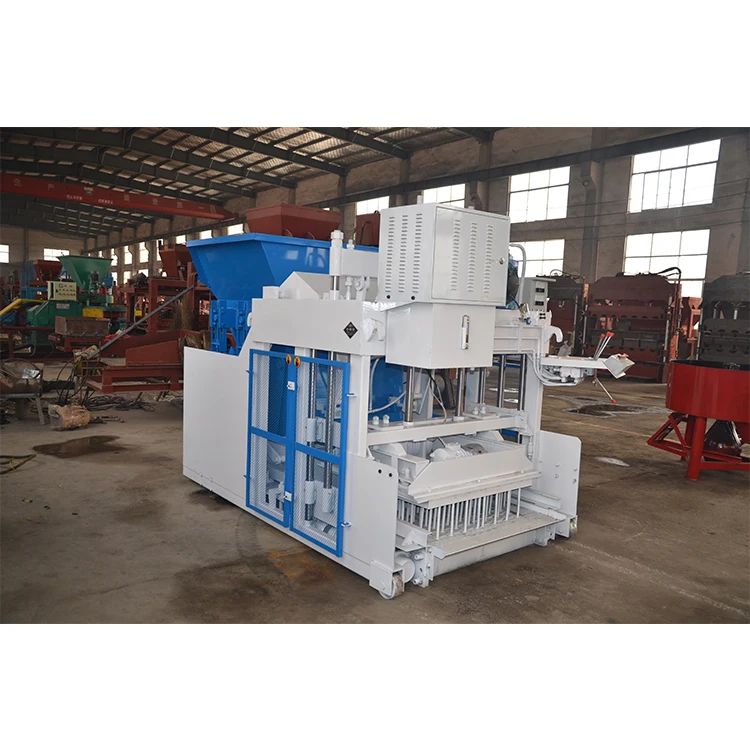
Description
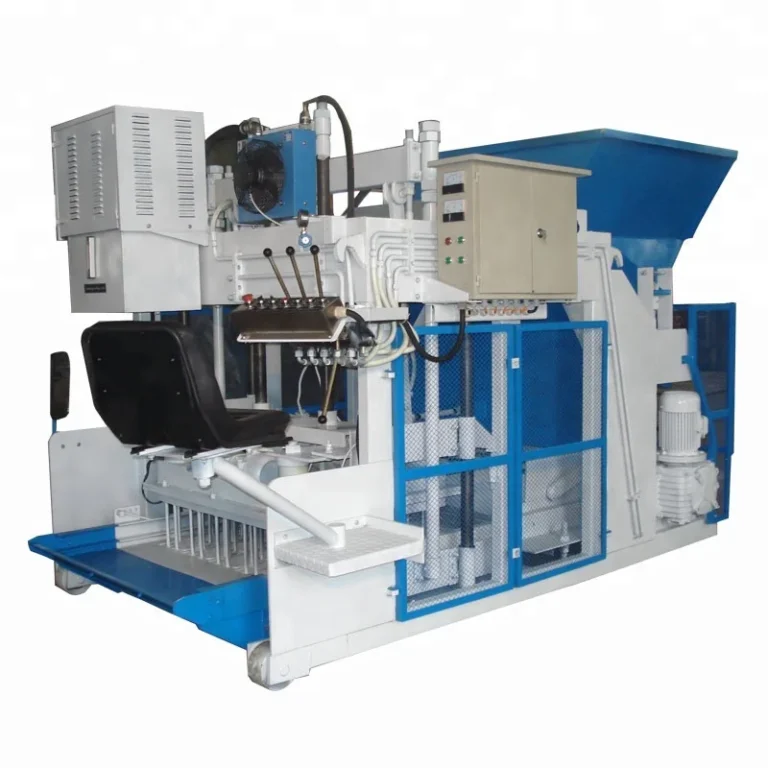
Integrated System Logic — The QMY12-15 egg laying block machine is configured around the buyer’s actual aggregate and block format, not a catalogue default, ensuring automation, hydraulic pressure, and vibration work as one matched unit on the job site.
Technical Specifications
| Parameter | Value |
|---|---|
| Model | QMY12-15 |
| Product Type | Egg Laying Concrete Block Making Machine |
| Overall Dimensions (L×W×H) | 3250×2100×2300 mm |
| Rated Power | 16 kW |
| Net Weight | 4500–4600 kg |
| Pressure Type | Hydraulic |
| Vibration System | Twice-vibration of molding core |
| Motor Brand | Siemens |
| Pallet Requirement | No pallet required (egg-laying / mobile) |
| Automation Level | Automatic hydraulic pressure |
| Workers Required | 2–3 |
| Cycle Time (400×200×200 mm) | 10–15 s, 12 pcs/mould |
| Mould Format Options | 400×200×200 mm / 400×150×200 mm / 400×100×200 mm |
| Voltage & Frequency | Configurable to site supply (confirm before ordering) |
| Control System | PLC (brand and language to be confirmed) |
| Assembly State | Mobile / self-propelled egg-laying type |
| Standards | ISO 9001:2008, SGS, CE |
Application Suitability
| Application | Material or Output |
|---|---|
| On-site housing project block production | Crushed stone, sand, cement, and water mixed on the project slab |
| Contractor-led wall construction without a fixed plant | Hollow and solid blocks laid directly onto a cured concrete floor |
| Entrepreneur first-line cement brick venture | Paving blocks and kerbstones from locally sourced aggregate |
| Expansion of existing concrete product range | Interlocking bricks and porous blocks on an existing yard surface |
Why Voltage Confirmation Beats Every Other Spec on the Sheet
A motor that cannot start is a machine that does not exist on your site.
I learned this the hard way when a QMY12-15 shipped to a West African project arrived with 380V motors while the local grid ran at 415V/50Hz. The hydraulic pump would not engage, and the crew stood idle for three weeks waiting for a variable-frequency drive retrofit. Since then, I treat the voltage and frequency check as a gate that must close before production begins [NEED_CITE: voltage and frequency standards by export market]. An automatic egg laying block machine PLC controlled from a panel that speaks the operator’s language removes guesswork at start-up and keeps the cycle running consistently through the shift.
How PLC Logic Holds Block Density Steady
The PLC on this automatic egg laying block machine PLC controlled setup times the hydraulic ram stroke, vibration burst, and mould lift in a fixed sequence. Once the operator locks the recipe, every cycle repeats with the same dwell and pressure, so block density does not drift as the shift wears on. The twice-vibration of the molding core fires in two stages, compacting the mix from the bottom up before the hydraulic head applies final compression, producing a more uniform cell structure than a single-vibration pass.
What the Control Panel Actually Manages on the Yard
Beyond the press cycle, the panel tracks cumulative output, alarms on motor overload, and flags when the hydraulic oil temperature exceeds its safe window. On a mobile machine working outdoors, ambient heat and dust can push fluid temperature higher than in a covered plant, so the thermal alarm is not a luxury — it protects the pump from cavitation damage [NEED_CITE: hydraulic oil temperature limits for mobile block presses]. Operators read the screen in their chosen language, reducing the chance that a warning goes unnoticed until the block quality has already slipped.
Reading the Numbers That Matter Most
The 16 kW rated power must be supplied on a dedicated circuit; sharing a feeder with a concrete mixer can cause voltage sag that trips the PLC mid-cycle. The 3250×2100×2300 mm footprint dictates aisle width on the curing yard — forklift traffic needs clearance on both sides for the machine to travel and lay the next row. The twice-vibration system demands a rigid concrete floor; a soft or cracked slab absorbs energy that should be driving aggregate particles together. Siemens motor construction means replacement parts are available through regional distributors rather than waiting on overseas freight.
When a Mis-Matched Configuration Stops the Job
A control panel set to a language the operator cannot read turns a simple alarm into a shutdown event while the supervisor translates. Sending 380V equipment to a 415V grid forces an unplanned VFD purchase and rewiring, burning through the schedule buffer the contractor counted on. Specifying a mould format that does not match the wall thickness the local building code demands means the entire first production run is scrap before the correction is made [NEED_CITE: regional block dimension standards for load-bearing walls]. Each of these failures is preventable with a two-page checklist exchanged before the machine leaves the factory.
Why Buyers Run the Specification Conversation Here
Block machinery is the single focus of the workshop, so the QMY12-15 is not assembled from unrelated supplier skids. Configuration is set against the buyer’s own mix design and target block format, not pulled from a generic price sheet. Mould design and supply cover the formats the buyer’s market actually sells, including custom drawings when standard sizes do not fit. Automation is selectable, so a contractor can begin with basic hydraulic pressure and add pallet-free stacking modules later. Installation and commissioning include operator training on the PLC screen the crew will use every day.
Documentation & Verification
- Line layout showing machine travel path and curing yard dimensions for the QMY12-15 footprint
- Capacity calculation sheet stating the exact block format and cycle time assumed
- Hydraulic and electrical schematic matching the voltage and frequency you confirm
- Factory test record run on your specified mould and mix proportions
- Mould drawing and format list for every block size included in the order
- Operation and maintenance manual translated into your site language
Installation, Commissioning & Support
- Dedicated 16 kW circuit with isolator sized for the Siemens motor inrush current
- Cured concrete floor checked for flatness before the 4500 kg machine travels on it
- Voltage and PLC language verified at the control cabinet before the first mould cycle
- Twice-vibration timing tuned to the buyer’s aggregate gradation during commissioning
- Operator training covering mould change between 400×200×200 mm and 400×100×200 mm formats
- Spare hydraulic seals and vibration springs shipped with the first container
What to Include in Your Next Inquiry
Send the block format your market sells, the daily volume the project requires, and the aggregate type and maximum particle size available locally. State the site voltage, frequency, and the language the crew reads on a screen. If the yard surface is already poured, share its dimensions and condition so the travel path and curing layout can be drafted before the machine ships.
Frequently Asked Questions
Q: How is the daily output figure calculated for each block size?
A: Every capacity number we quote states the exact mould format, cycle time, and shift length it assumes. For the 400×200×200 mm hollow block, the cycle runs 10–15 seconds with 12 pieces per mould. If your target format differs, the output per shift changes, and we provide a revised calculation before the order is placed.
Q: Which PLC brand is fitted and can the interface display our local language?
A: The PLC brand is confirmed during the specification phase so it matches the service network in your region. The HMI language is set to your operator’s preference before dispatch. We verify both items on the factory test record you receive before shipment.
Q: How do we ensure the motor and control cabinet match our site voltage?
A: We ask for your supply voltage and frequency at inquiry stage and print the confirmed values on the electrical schematic. The motor nameplate and transformer taps are matched to those values. A mismatch discovered on site costs weeks, so this step is non-negotiable before the machine leaves our floor.
Q: What does the twice-vibration system change compared to a single pass?
A: The first vibration settles the mix into the mould cavity while the second compacts it against the hydraulic head. This two-stage action produces a denser block wall and more consistent strength across the batch, reducing breakage during handling and curing on the yard.
Q: Can the automation level be expanded after the machine is running?
A: The QMY12-15 starts with automatic hydraulic pressure and PLC-controlled cycling. Additional modules such as remote diagnostics or automated batching can be added later without replacing the core press. We plan the control cabinet with spare I/O so the upgrade is a software and wiring task, not a rebuild.