

Description
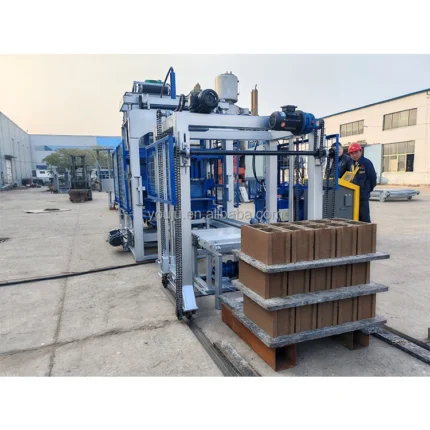
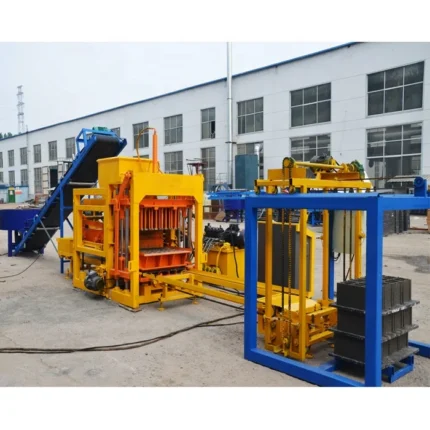
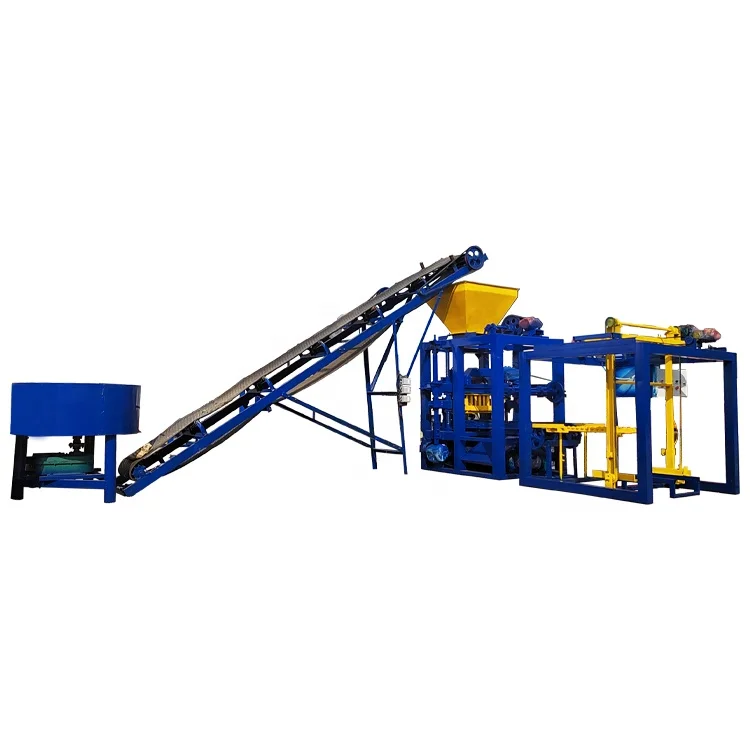
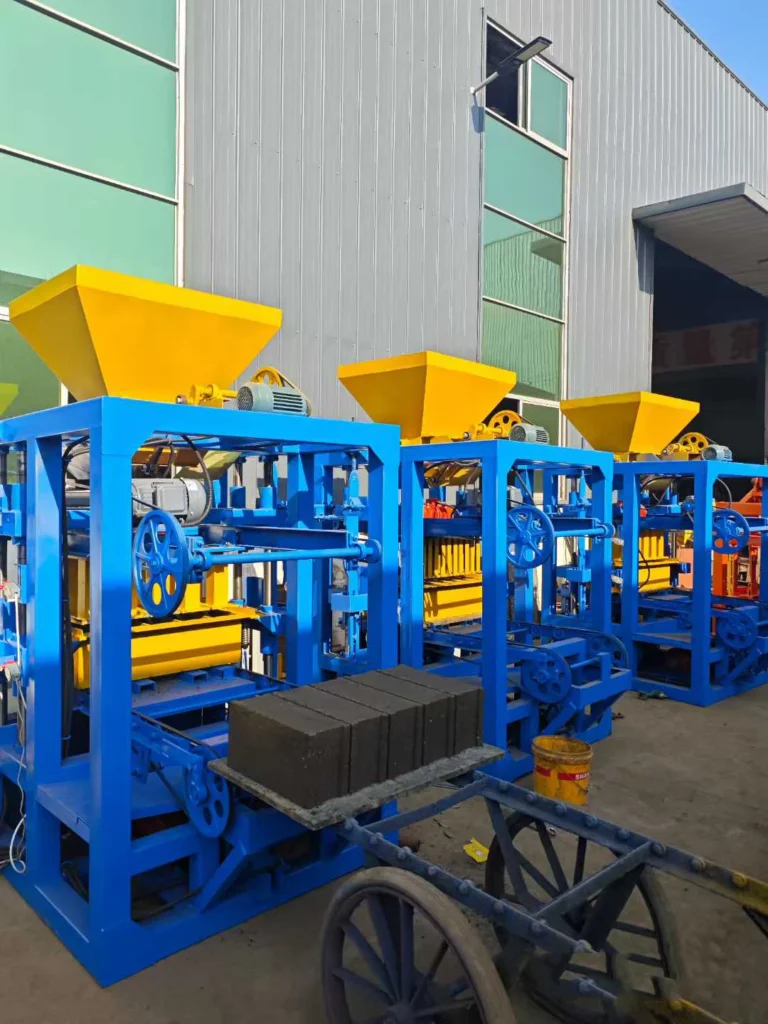
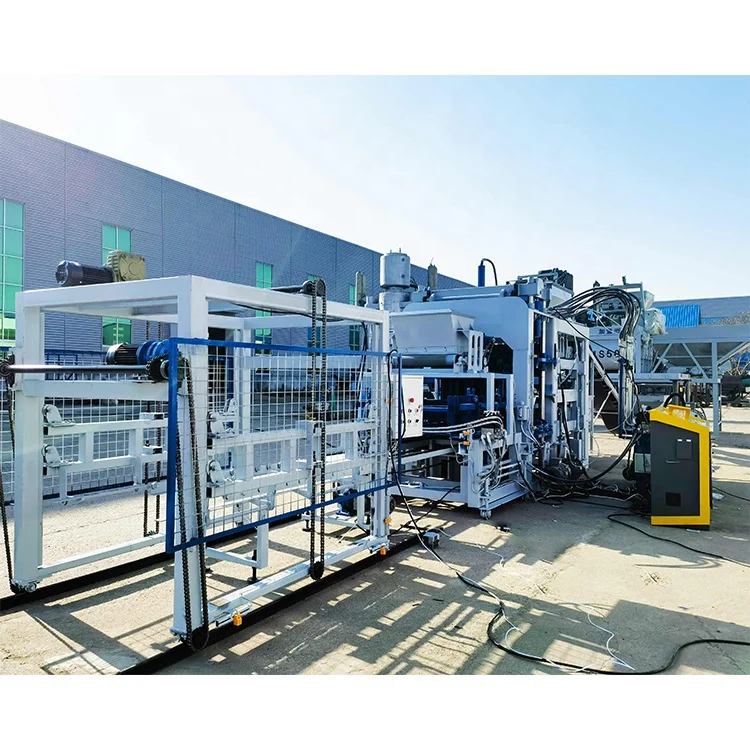
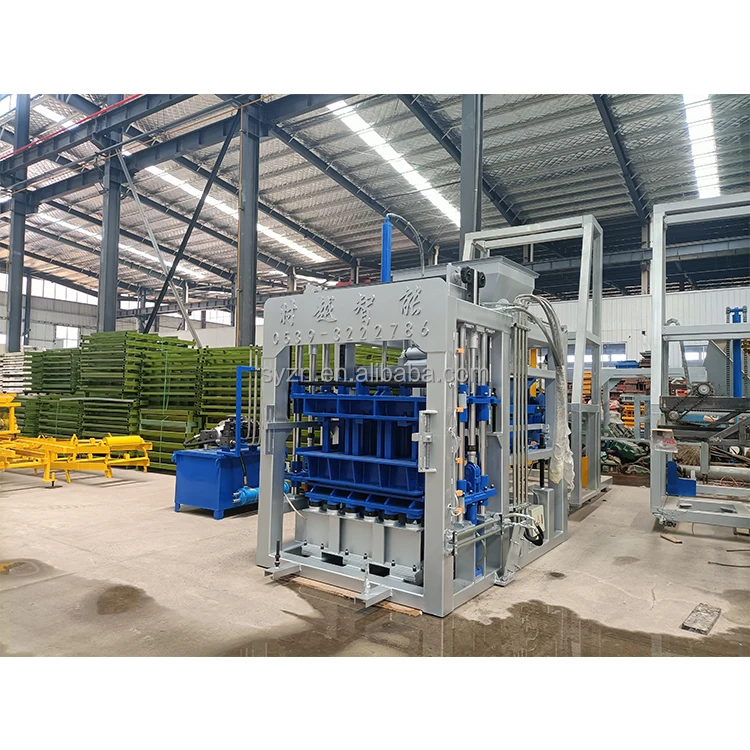
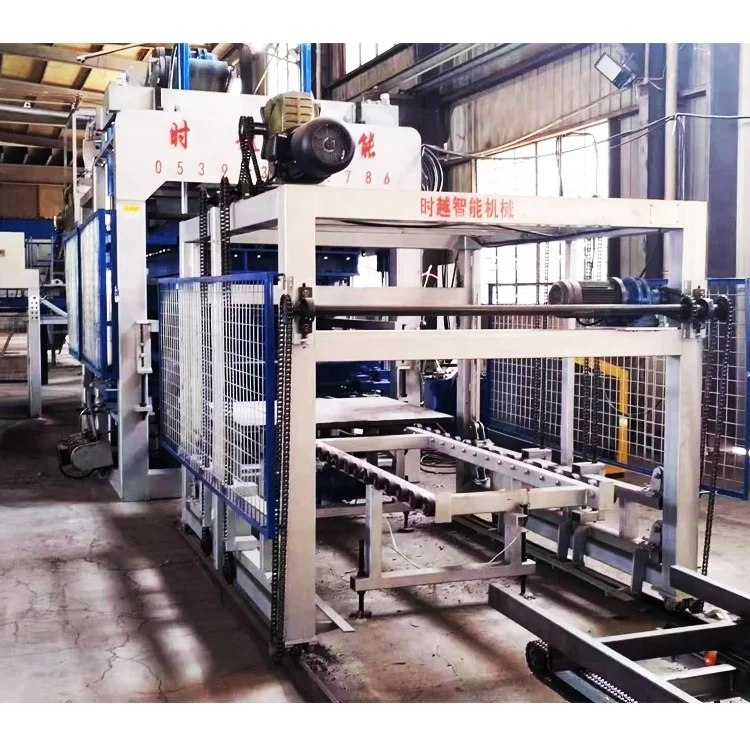
Configuration Set Against Actual Block Format — the QT15-15 is specified as a matched system of press, mould, pallet, and automation level against your target output, not sold as a standalone unit with capacity quoted without context.
Technical Specifications
| Parameter | Value |
|---|---|
| Model | QT15-15 |
| Product Type | Stationary Concrete Block Making Machine |
| Overall Dimensions (L×W×H) | 9350×2520×2950 mm |
| Net Weight | 15 T |
| Rated Power | 45.7 kW |
| Voltage & Frequency | 380V or customized (frequency to be confirmed per target market) |
| Control System | PLC (brand and language options to be confirmed) |
| Hydraulic Pressure | 21 MPa |
| Vibration System | Four external vibration motors (reduced per-motor starting load) |
| Upper Mould Synchronization | Dual-side synchronous gear, four-point stabilization |
| Material Feeder | Cylinder with turning arm (European design) |
| Vibration Damping | Airbag system with adjustable air pressure per brick type |
| Pallet Size | 1350×850×40 mm |
| Mould Format & Capacity | 400×200×200 mm hollow block: 15 pcs/mould, 3600 pcs/hour, 28800 pcs/day (basis not stated in source) |
| Mould Format & Capacity | 400×150×200 mm hollow block: 16 pcs/mould, 4320 pcs/hour, 34560 pcs/day (basis not stated in source) |
| Mould Format & Capacity | 240×115×53 mm solid brick: 62 pcs/mould, 14000 pcs/hour, 112000 pcs/day (basis not stated in source) |
| Cycle Time per Format | To be confirmed |
| Mould Change Time | To be confirmed |
| Automation Level | Configurable (semi-automatic to fully automatic stacking and cubing, to be confirmed) |
| Certification | ISO 9001:2008, CE |
| Warranty | 1 year |
| Color Options | Customized per buyer request |
Application Suitability
| Application | Material or Output |
|---|---|
| Hollow Block Production | Crushed stone, cement, sand, and aggregate mixes for 400×200×200 mm and 400×150×200 mm formats |
| Solid Brick Production | Cement and fine aggregate blends for 240×115×53 mm standard bricks |
| Interlocking Paver Production | High-density concrete mixes for pavement and driveway formats (mould dependent) |
| On-Site Contractor Production | Local aggregate and cement for housing project block requirements |
What the PLC Display Language Means for Commissioning Day
A high-output automatic QT15-15 block making machine PLC controlled can sit idle for weeks if the interface language does not match the operators on the floor. I have watched a full production line stall in West Africa because the touch screen shipped in Chinese, and the local electrician could not navigate the fault menus. The hardware was perfect; the communication layer failed.
When a plant upgrades from manual or relay-based logic to full PLC sequencing, the operator stops making timing decisions. The press cycles, the feeder sweeps, the vibration ramps — all governed by the program. That consistency is the entire reason to invest in the intelligent side of block production. But if the alarm text reads in a language the shift supervisor cannot parse, every minor sensor fault becomes a line-down event waiting for a translator or a fly-in technician. [NEED_CITE: PLC interface language requirements for exported industrial machinery]
What the PLC Removes and What It Adds
On a stationary press of this output class, the PLC eliminates manual sequencing of the feed drawer, vibration onset, hydraulic head descent, and demoulding lift. The operator loads raw material and monitors — the timing judgement that once varied between shifts is now locked into the program cycle. This is where batch-to-batch consistency originates, not in the steel but in the logic.
Adjustable Vibration as a Control Parameter
The airbag damping system lets you set air pressure per brick type directly from the control interface. A hollow block with thin walls needs a different compaction profile than a dense solid paver. Without this adjustment, the operator is forced to run a compromise setting that either under-compacts one format or over-stresses the mould on another. The automatic QT15-15 block making machine PLC controlled setup stores these profiles so a format switch includes the vibration tune, not just a physical mould swap. [NEED_CITE: vibration force matching to concrete mix design in block production]
Pressure, Vibration, and the Density Equation
The 21 MPa hydraulic pressure and four-motor external vibration system work together to determine the final block density. Pressure alone compresses; vibration liquefies the mix momentarily so particles settle into a tighter arrangement before the pressure locks them. The dual-side synchronous gear on the upper mould ensures that pressure reaches all four corners of the cavity evenly — without it, blocks at the far end of the pallet emerge with lower compressive strength than those at the centre. The 1350×850×40 mm pallet must also match the curing rack spacing and forklift tine width already in the plant, otherwise the automation gains are lost in manual rehandling.
When Automation Level Is Assumed but Not Specified
Buyers frequently receive a quotation that names a press model and a theoretical output but does not state whether pallet feeding, stacking, or cubing is included. The result is a machine that produces blocks at full speed while workers stack them by hand behind the line — the bottleneck simply moves, it does not disappear. An automatic QT15-15 block making machine PLC controlled configuration only delivers its throughput promise when the upstream feeder and downstream stacker are specified as part of the same package. [NEED_CITE: stationary block line automation level and labour allocation]
Why the Intelligent Side Is Configured Here
Block machinery is our single focus, which means the press, mould, pallet, and handling stations are specified as one matched system rather than assembled from separate vendors. The PLC program is written against the exact block formats your market sells, and the voltage, frequency, and display language are confirmed before the panel is wired — not discovered on arrival. Mould drawings and format lists ship with the documentation so there is no ambiguity about which cavities are on the pallet. The automation level is selectable, meaning a plant can commission the QT15-15 in semi-automatic mode and add stacking or cubing modules later without replacing the press.
Documentation & Verification
- Line layout and capacity calculation stating the block format and cycle time assumed for each output figure
- PLC program logic description with alarm text in the confirmed display language
- Hydraulic and electrical schematic matching the as-built voltage and frequency configuration
- Mould drawing and format list covering every cavity on the 1350×850 mm pallet
- Factory test record run on the buyer’s specified block format before crating
Installation, Commissioning & Support
- Foundation drawing accounting for the 9350×2520 mm footprint and vibration isolation requirements
- Dedicated 45.7 kW power circuit confirmed to the target voltage and frequency before panel build
- PLC display language and alarm codes verified during factory acceptance, not after container arrival
- On-site commissioning covering hydraulic pressure calibration at the full 21 MPa working range
- Airbag damping pressure profiles set per brick type during operator training sessions
- Wear parts list covering mould liners, vibration motor bearings, and hydraulic seals for the first year
Before You Request a Quotation
To size the QT15-15 correctly, we need your target block formats with dimensions, the local aggregate type and maximum particle size, and the daily output you need per format — not a single headline number. Tell us your site voltage and frequency, the language your operators read, and whether you already have pallets and curing racks that the line must interface with.
Frequently Asked Questions
Q: How is capacity verified, and what block format does each number assume?
A: Every output figure is tied to a specific block dimension, mould cavity count, and cycle time. We do not quote a single headline capacity. The line layout document states the format assumed for each number, so you can compare the stated output against your actual product mix and shift hours.
Q: What automation level is included, and can I upgrade later?
A: The automation level is selectable at order stage, from semi-automatic with manual pallet handling through to fully automatic stacking and cubing. The press itself remains the same, so adding downstream modules later does not require a replacement machine.
Q: How is PLC language and voltage confirmed before shipment?
A: Voltage, frequency, and display language are confirmed during the order stage and written into the build specification. The factory acceptance test runs with the buyer’s confirmed settings so there are no surprises during on-site commissioning.
Q: What is the mould change process and how does it affect shift time?
A: The mould change time depends on the specific clamping and alignment system configured for your order. We state the expected changeover duration in the quotation so you can plan format switches within your shift schedule realistically.
Q: How does the vibration system match my local aggregate and mix?
A: The airbag damping system allows adjustable air pressure per brick type, and the four external motors ramp vibration force based on the profile stored in the PLC. We configure these profiles against your submitted mix design and aggregate sample.