
Description
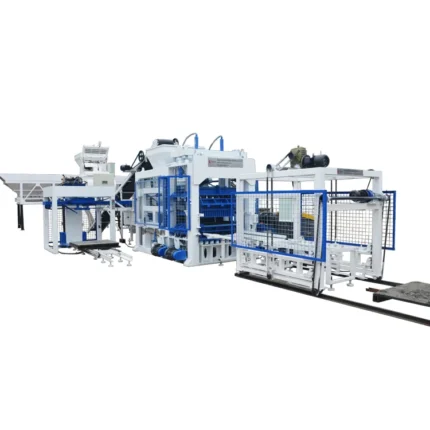
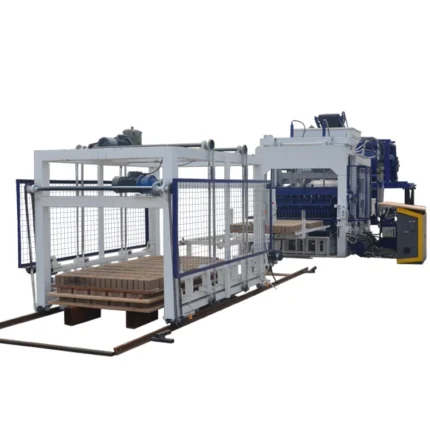
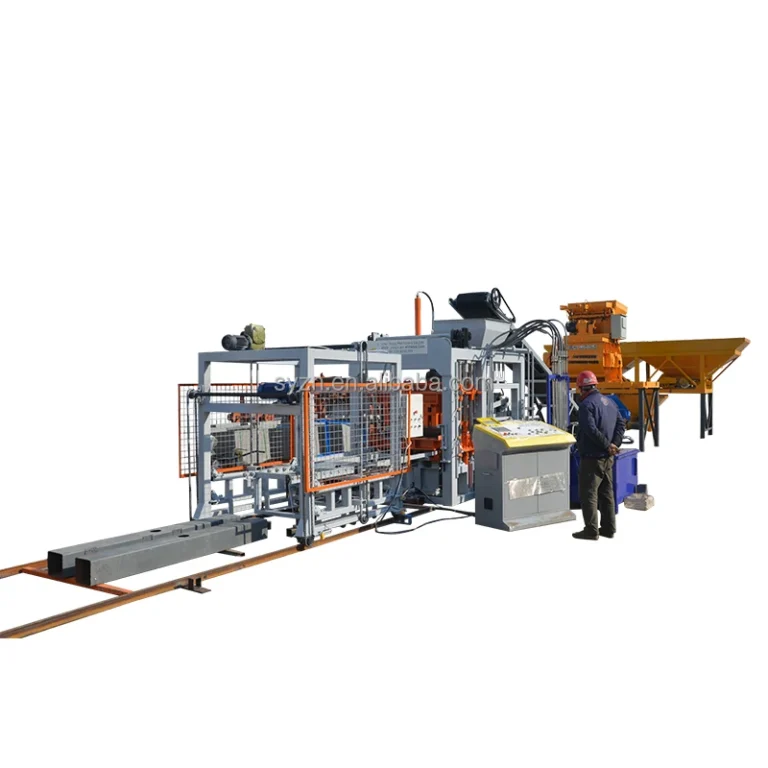
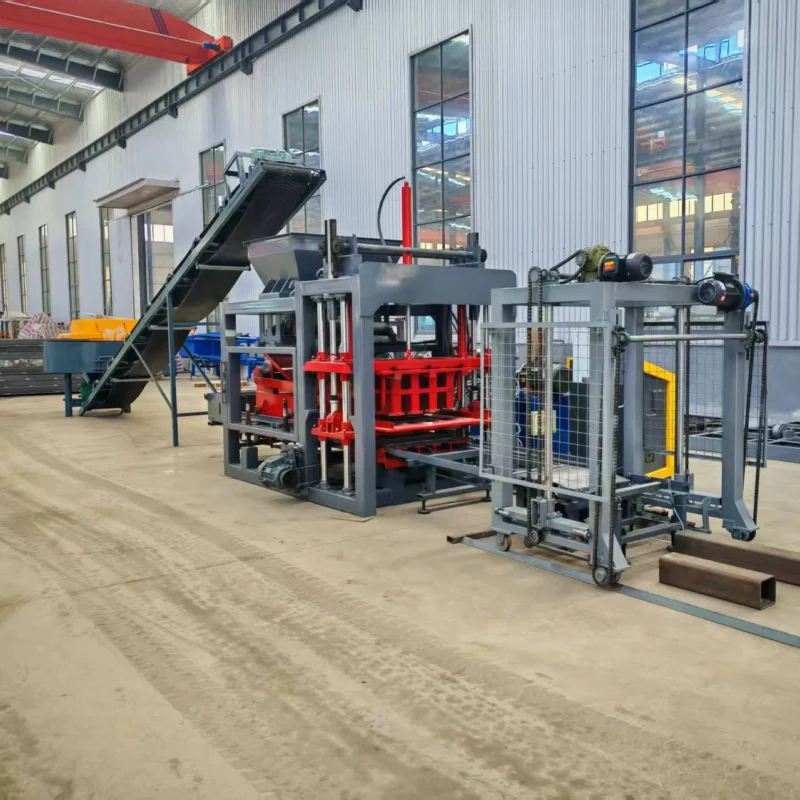
Integrated Line Synchronization — the QT4-15A’s PLC-controlled cycle time and hydraulic demolding are specified together with pallet handling and stacking stations so the press never waits on downstream equipment.
Technical Specifications
| Parameter | Value |
|---|---|
| Model | QT4-15A |
| Product Type | Fully Automatic Concrete Block Making Machine |
| Overall Dimensions (L×W×H) | 4100×1600×2600 mm |
| Rated Pressure | 16-21 MPa |
| Main Vibration Form | Platform Vibration |
| Vibration Frequency | 4200 r/min |
| Vibration Force | 55 kN |
| Pallet Size | 880×550 mm |
| Molding Cycle | 25-30 s (basis not stated in source — confirm block format / material / thickness) |
| Overall Power | 18.45 kW |
| Total Mass | 4 T |
| Demolding Method | Hydraulic |
| Factory Area Required | 300 m² |
| Control System | PLC (exact brand/model to be confirmed) |
| Voltage & Frequency | Configurable to destination grid (to be confirmed before production) |
| Automation Level | Fully automatic |
Application Suitability
| Application | Material or Output |
|---|---|
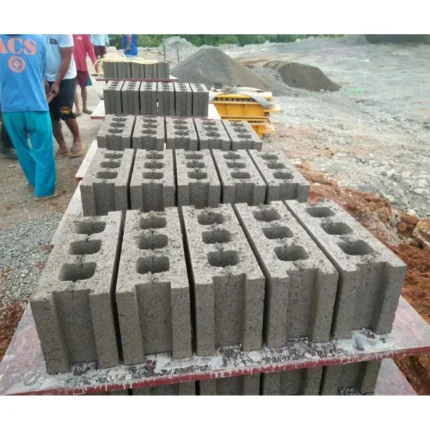
| Hollow block production | Crushed stone, sand, cement, fly ash blends |
| Solid block manufacturing | Local aggregate with cement binder |
| Paver and colored paver output | Fine sand and pigment-modified concrete |
| Interlocking brick forming | Graded aggregate with controlled moisture |
| Kerbstone and curb units | Coarse gravel and high-cement mix designs |
What PLC Control Actually Removes from the Operator’s Shift
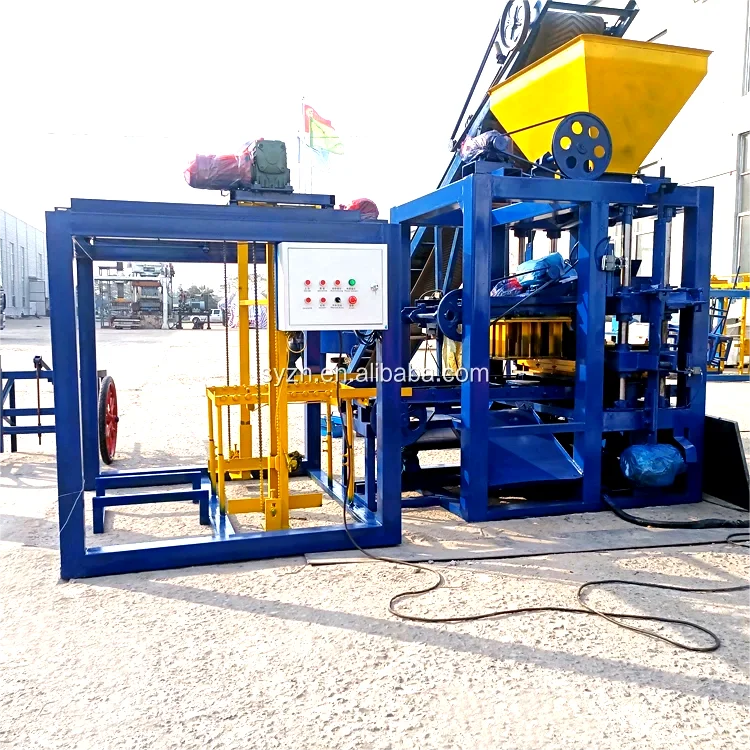
The automatic QT4-15 block making machine PLC controlled configuration takes the timing decisions — vibration duration, pressure hold, demolding speed — out of the operator’s hands and locks them into repeatable cycles.
Every manual block plant I have walked into has a different rhythm by lunchtime. Morning operators run tighter cycles; afternoon shifts let vibration linger. Block density drifts, and strength testing shows scatter across the day’s output [NEED_CITE: consistency requirements for structural masonry units]. The QT4-15A’s PLC holds molding parameters constant regardless of who stands at the panel, which is the core promise of the automatic QT4-15 block making machine PLC controlled setup. The question is not whether the machine can automate — it is whether the automation scope you specify actually covers the stations where inconsistency enters the line.
Closing the Loop Between Press Cycle and Pallet Flow
A PLC manages the press timing, but real consistency requires the pallet feed, stacking, and curing rack handling to move in the same rhythm. If the pallet return loop lags behind the press cycle, the machine idles and daily output drops below what the cycle time suggests. The QT4-15A’s control architecture coordinates these stations so the press does not wait, and so each pallet arrives at the stacking point on schedule.
Where Operator Dependency Ends and Process Control Begins
The distinction between semi-automatic and fully automatic operation is not a toggle — it is a series of decisions about which manual tasks get eliminated. Pallet feeding, vibration timing, hydraulic hold, and stacking can each be automated independently. With the QT4-15A, specifying the full automatic scope means the operator monitors rather than drives the cycle, reducing the skill threshold and the batch-to-batch variance that manual timing introduces [NEED_CITE: automation impact on batch consistency in masonry production].
Reading the Specifications Beyond the Brochure Numbers
Platform vibration at 55 kN force and 4200 r/min determines how densely the mix compacts inside the mould cavity, but only when matched to the cavity depth and the maximum aggregate size in your local material. A deep hollow block cavity needs sustained vibration to consolidate the base; a shallow paver cavity can over-compact and crack if the force is not reduced. The 16-21 MPa hydraulic pressure range covers the demolding force needed across formats — hollow blocks release more easily than dense interlocking pavers, so the pressure must be set per format rather than left at a single default. Pallet size at 880×550 mm is a constraint that reaches beyond the press: your curing racks, forklift tines, and yard layout must all accommodate that dimension, or pallet handling becomes the bottleneck. The automatic QT4-15 block making machine PLC controlled system stores these per-format settings so changeovers involve calling a programme rather than recalibrating from scratch.
The Cost of Specifying Automation Without Mapping the Line
A buyer who automates the press but leaves pallet stacking manual has not reduced labour — they have moved it downstream. The stacker still needs an operator, and the press pauses when the manual crew falls behind [NEED_CITE: hidden labour costs in partially automated block lines]. Equally, choosing pallet material without checking your forklift’s tine width or curing rack slot height leads to pallets that cannot be handled or stored with existing equipment. These mismatches surface only after the machine arrives and commissioning begins.
Why Sourcing the QT4-15A Through This Configuration Process
Block machinery is the single product focus, which means the press, mould, pallet, and handling equipment are specified as one system rather than assembled from separate suppliers. Configuration starts with your actual mix design and local aggregate, not a catalogue default, so the vibration and pressure parameters are set for the material you will actually run. Mould design covers the formats your market demands, including custom drawings when standard moulds do not match. The automation level is selectable — a buyer can start with semi-automatic operation and plan the upgrade path as production volume grows. Documentation includes a factory test record that reflects your block format before the machine leaves the workshop.
Documentation & Verification
- Line layout with capacity calculation stated per block format and confirmed cycle time
- Machine specification sheet with all QT4-15A parameters verified against production build
- Mould drawing and format list showing every cavity with dimensional tolerances
- Voltage, frequency, and PLC display language confirmation signed before production
- Hydraulic and electrical schematic matching the as-built configuration
- Factory test record run on the buyer’s confirmed block format and pallet size
Installation, Commissioning & Support
- 300 m² factory area verified against your site plan and ceiling height for the 2600 mm machine height
- Power supply confirmed for 18.45 kW total draw with dedicated circuit and correct voltage and frequency
- Machine arrives dismantled with reassembly sequence documented for local crew and supervisor
- PLC parameters set during commissioning against your confirmed mix design and target block format
- Operator training covers PLC interface language, per-format programme recall, and alarm response
- Wear parts list identifies hydraulic seals and mould liners with replacement intervals by production volume
Preparing a Useful Inquiry
A meaningful specification conversation starts with your target block format, the local aggregate and cement you plan to run, and your existing curing and handling equipment. Share the pallet size already in your yard, your site voltage and frequency, and the language your operators read on a control screen. If you are replacing an existing press, note which stations are currently manual and which you intend to automate next.
Frequently Asked Questions
Q: How is the QT4-15A’s cycle time verified per block format?
A: Cycle time changes with block format, wall thickness, and mix composition. A 25-30 second cycle may apply to a standard hollow block but not to a dense interlocking paver. We verify cycle time against the specific format you intend to produce and document it in the capacity calculation before the order is confirmed.
Q: What PLC display language options are available?
A: The PLC interface language is confirmed during the specification stage so operators read instructions in their working language at commissioning. Voltage and frequency are set to match the destination grid. The exact PLC brand and remote diagnostics capability are confirmed in the quotation.
Q: Can the automation level start semi-automatic and upgrade later?
A: Yes. The QT4-15A platform supports starting with manual pallet handling and adding automatic stacking or cubing as production volume grows. The upgrade path is defined during initial specification so mechanical and electrical interfaces are prepared in the base machine.
Q: How are pallet size and stacking scope handled in the quotation?
A: The 880×550 mm pallet must match your existing curing racks and forklift. Pallet material, automatic stacking, and curing rack handling are specified line items, not assumed inclusions. Each is confirmed or excluded before the quotation is finalized.
Q: What mould change system is fitted on the QT4-15A?
A: The mould change method and estimated time are documented per format in the quotation. Custom moulds are available to buyer drawings. The format list and changeover procedure are included in the operation manual so flexibility is measurable on the shop floor.