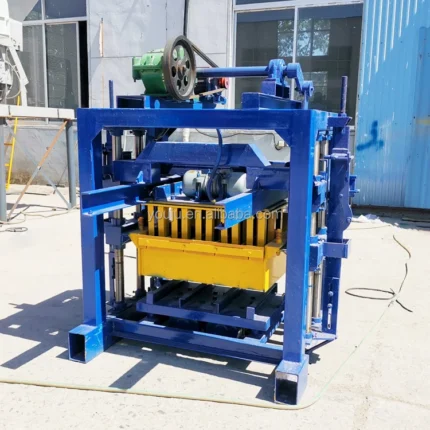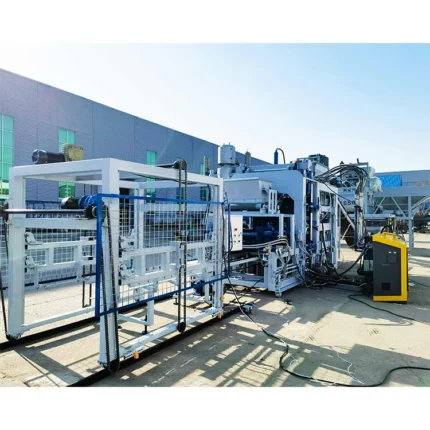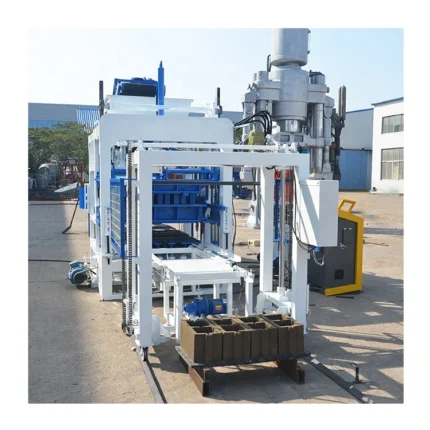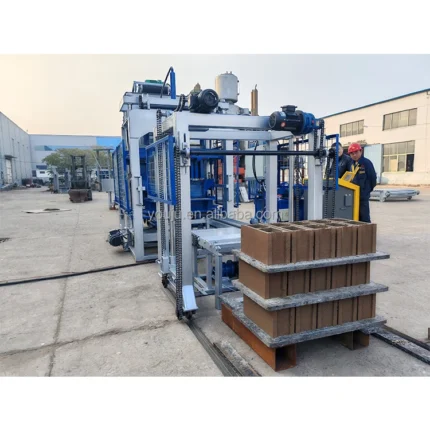
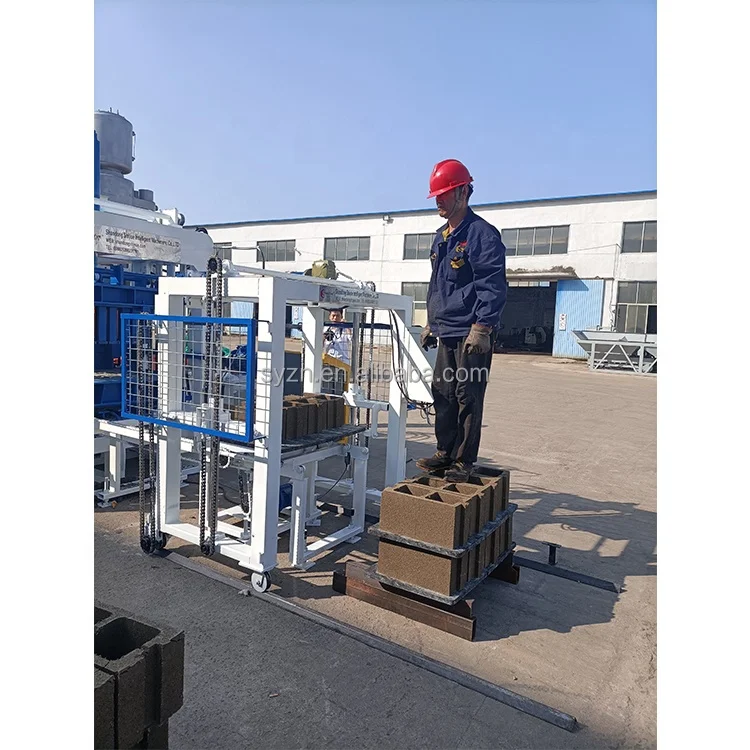
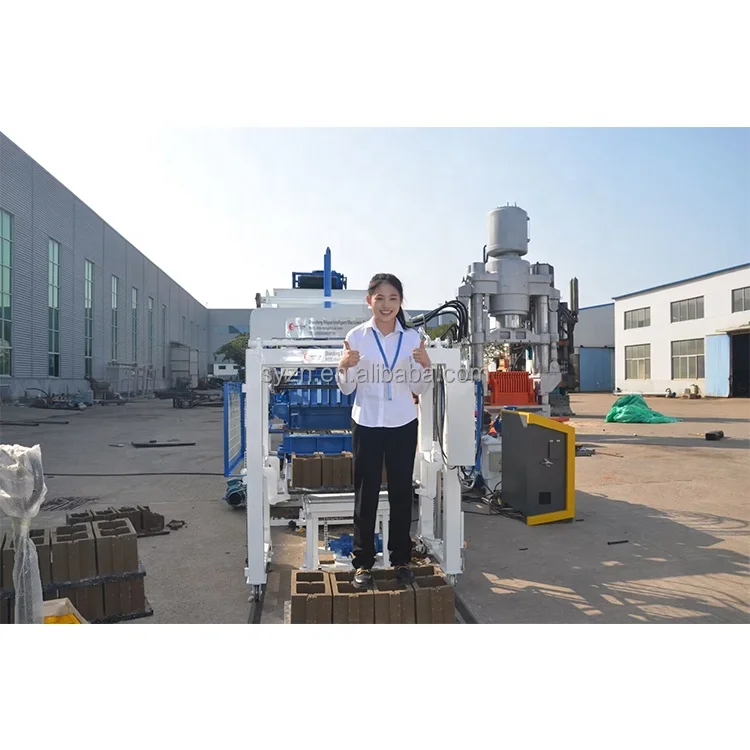
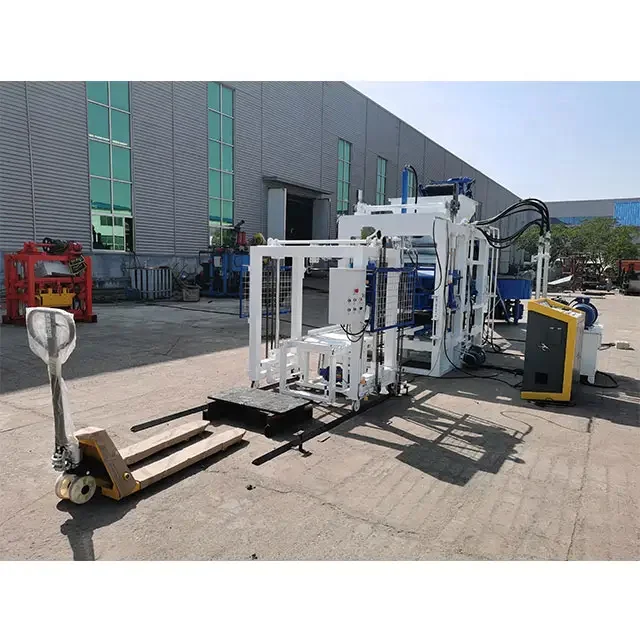
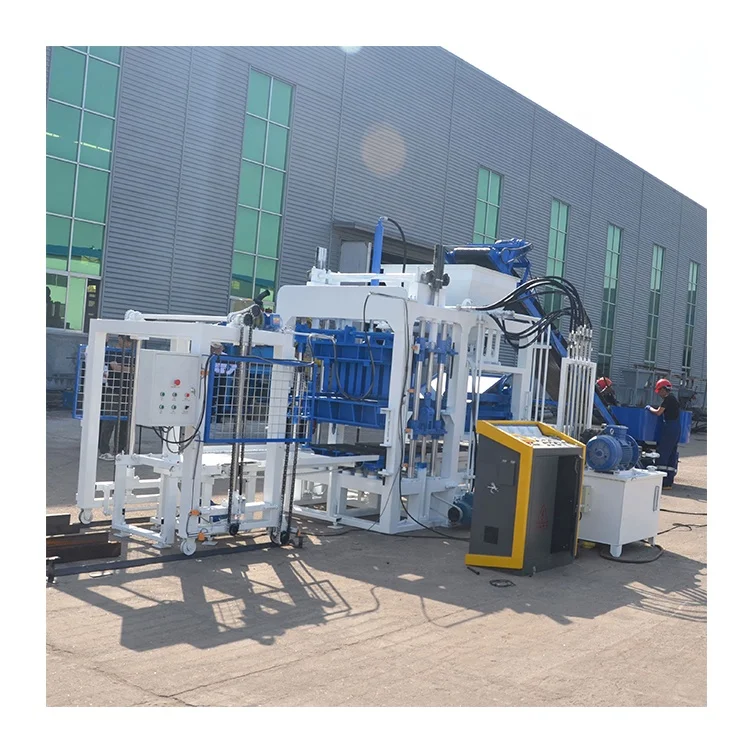
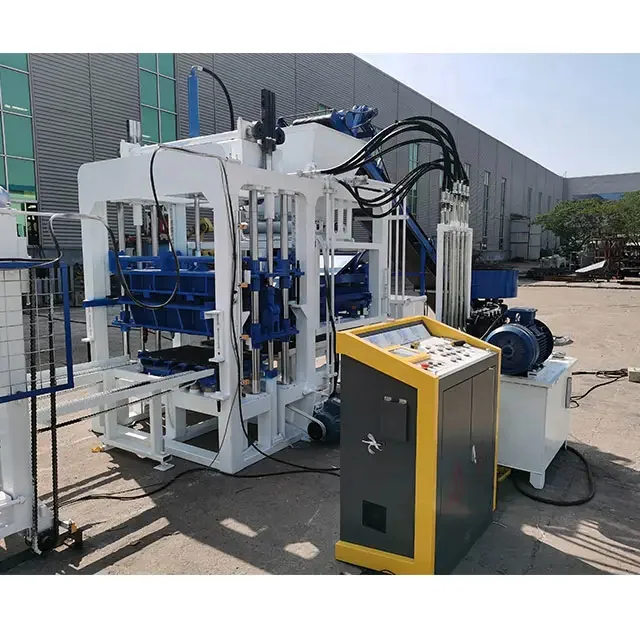
Description
Single-Focus Configuration — Machine, mould, pallet, and PLC logic are engineered as one matched system rather than assembled from unrelated suppliers, ensuring the automation layer responds to actual material behaviour on your line.
Technical Specifications
| Parameter | Value |
|---|---|
| Model | QT4-15A |
| Product Type | Automatic Hydraulic Block Making Machine |
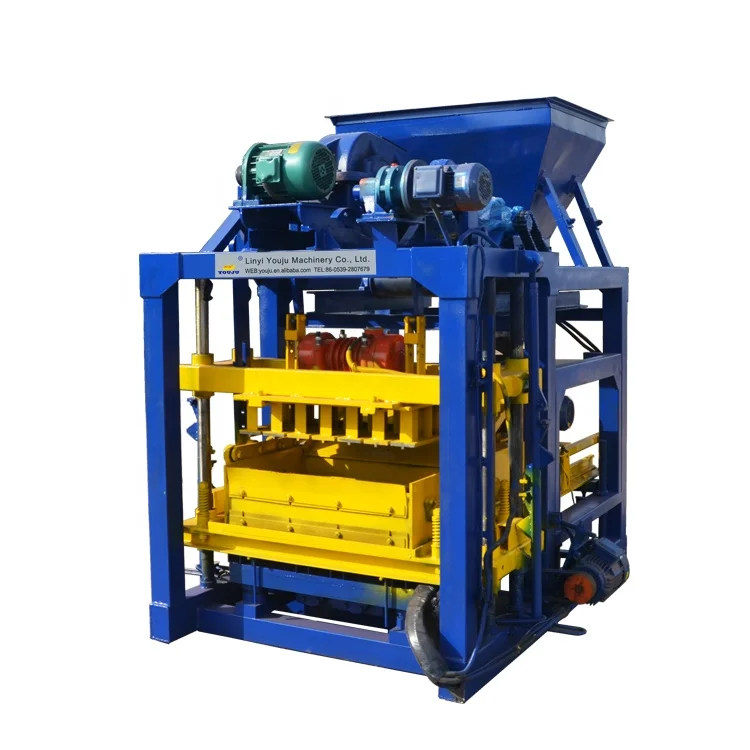
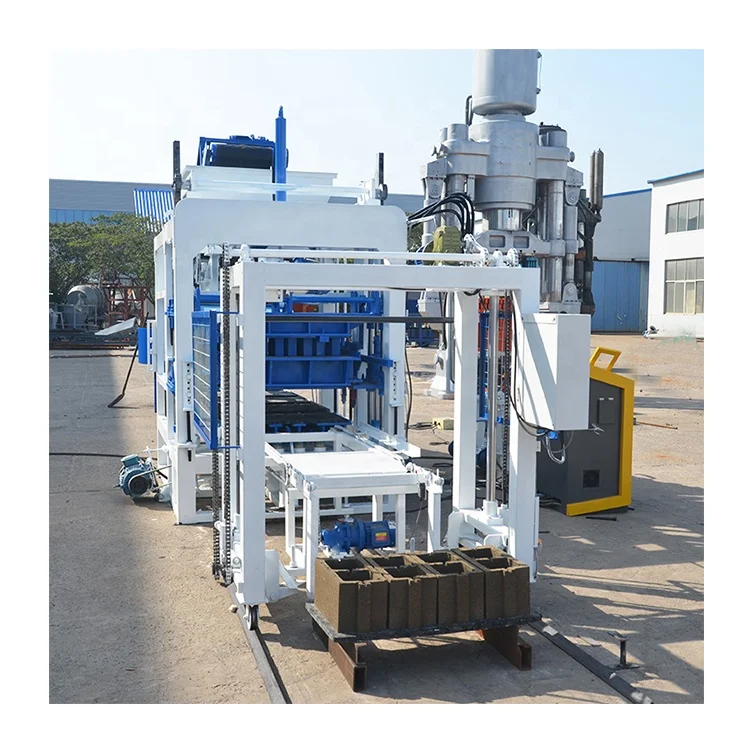
| Overall Dimensions (L×W×H) | 4100 × 1600 × 2600 mm |
| Rated Hydraulic Pressure | 16–21 MPa |
| Vibration Form | Platform Vibration |
| Vibration Frequency | 4200 r/min |
| Vibration Force | 55 kN |
| Pallet Size | 880 × 550 mm |
| Molding Cycle | 25–30 s (basis not stated in source — confirm block format / material / thickness) |
| Overall Power | 18.45 kW |
| Total Mass | 4 T |
| Demolding Method | Hydraulic |
| Recommended Factory Area | 300 m² |
| Control System | PLC (fully automatic) |
| Automation Level | Fully Automatic |
| Applied Products | Hollow / solid blocks, pavers, interlocking blocks, curbstone, colored pavers |
| Raw Materials | Crushed stone, sand, cement, fly ash, gravel, slag |
| CE Declaration | Applicable where required |
Application Suitability
| Application | Material or Output |
|---|---|
| Hollow block production for residential and commercial walls | Crushed stone, sand, cement, fly ash |
| Solid block manufacturing for load-bearing structures | Gravel, sand, cement blends |
| Paver and interlocking block runs for walkways and driveways | Fine aggregate with pigment additives |
| Curbstone production for road and drainage infrastructure | Coarse aggregate, cement, slag |
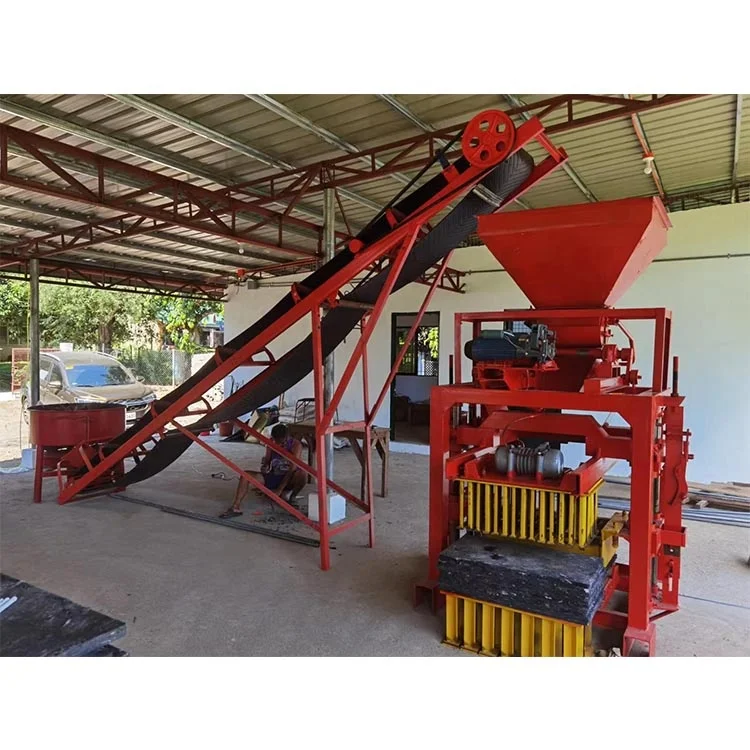
| On-site block production for housing development contractors | Locally sourced sand and crushed stone |
What "Fully Automatic" Actually Means When the Mix Changes
An automatic hydraulic block making machine PLC controlled setup only holds cycle consistency when the programme accounts for real-world variable moisture, aggregate grading, and cement ratio.
Most PLC-controlled block presses run a fixed sequence, and when local aggregate moisture shifts after rain the same programme produces weak blocks on the bottom layer and cracked blocks on the top. I have watched lines in tropical climates lose an entire shift because the PLC cycle was never adjusted for seasonal humidity — the machine kept pressing, but the blocks kept failing [NEED_CITE: impact of aggregate moisture on concrete block compressive strength]. The QT4-15A PLC configuration is set against the buyer’s actual mix design and local aggregate sample before the control logic is finalised, so the automatic hydraulic block making machine PLC controlled cycle you run on day one is the same one calibrated for your material, not a generic default programme.
Closing the Loop Between PLC Timing and Pallet Handling
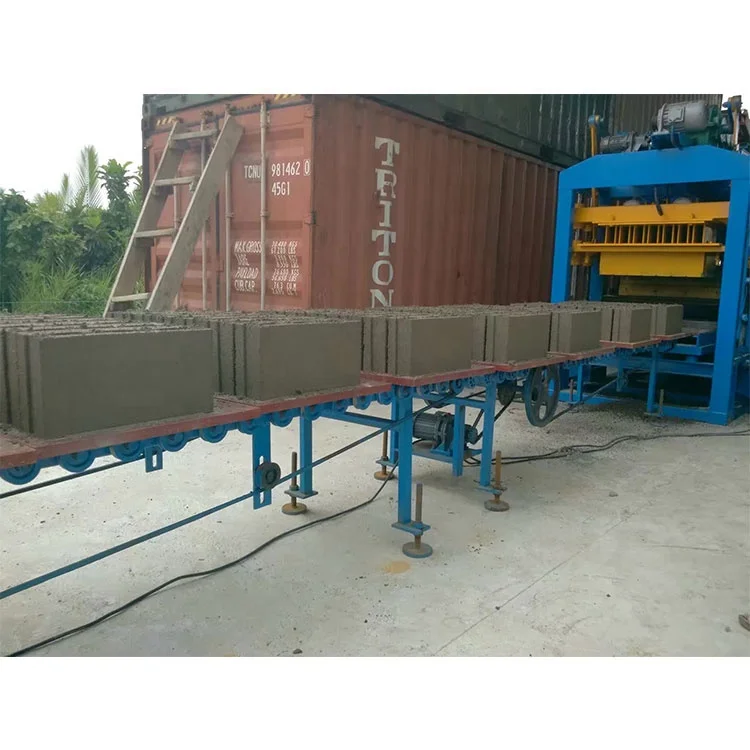
The automation value of the QT4-15A lies in how the PLC synchronises the press cycle with upstream feeding and downstream pallet movement. Platform vibration at 4200 r/min must finish its compaction phase before the hydraulic demolding stroke begins, and the PLC enforces that sequence rather than leaving it to operator judgement. When the press completes a cycle in 25–30 seconds, the pallet feed mechanism must already have the next board in position, otherwise the press sits idle and the quoted cycle time becomes theoretical.
Where Voltage Confirmation Meets Control Language
Before the PLC cabinet is wired, the target market voltage, frequency, and HMI display language are confirmed so the machine arrives ready to run. An automatic hydraulic block making machine PLC controlled system programmed in one language and powered for another grid standard creates commissioning delays that no amount of on-site troubleshooting can shorten. The QT4-15A electrical specification is locked after buyer confirmation, covering supply voltage, frequency, and the operator interface language, so the control panel speaks to your team from the first power-on [NEED_CITE: voltage and frequency standards by export market].
Pressure, Vibration, and the Density Question
The 16–21 MPa hydraulic pressure and 55 kN platform vibration force on the QT4-15A are specified together because one without the other produces inconsistent block density. High pressure with low vibration leaves unmixed pockets in the core; strong vibration with insufficient hydraulic clamping causes the mould to shift and produces out-of-tolerance dimensions. The 880 × 550 mm pallet size determines the mould footprint and therefore the maximum block area per cycle, which in turn sets the vibration force requirement — these three values are not independently adjustable after the machine is built. Factory area of 300 m² must accommodate the press, raw material hoppers, pallet return path, and a curing zone that matches the pallet dimensions so that forklifts already on site can move stacked boards without custom handling equipment.
The Cost of Skipping the Automation Audit
When a buyer selects a block press without confirming how the PLC will communicate with existing batching or stacking equipment, the automation promise collapses at the line boundary. Operators end up manually moving pallets that the machine was supposed to feed automatically, and the labour savings never materialise [NEED_CITE: automation integration challenges in concrete product manufacturing]. The QT4-15A automation level is selectable so that a buyer can begin with semi-automatic pallet handling and add automatic stacking or cubing modules later, provided the PLC architecture is specified for that upgrade path from the start.
Why the Configuration Conversation Matters Here
Block machinery is the single manufacturing focus, so the QT4-15A press, mould, pallet, and handling equipment are specified as one system rather than sourced from separate suppliers and forced to communicate on site. The PLC configuration is set against the buyer’s actual mix design, local aggregate, and target block format — not a catalogue default that assumes material conditions the buyer cannot replicate. Mould design covers the formats the buyer’s market actually sells, with custom drawings supported when standard moulds do not match local dimensions. The automation level is selectable at order, meaning a buyer can start semi-automatic and add stacking or cubing modules as demand grows without replacing the PLC cabinet. Factory testing runs the complete cycle with the buyer’s confirmed pallet size and voltage specification, producing a test record before the machine is crated for shipment.
Documentation & Verification
- Line layout and capacity calculation stating the block format assumed for QT4-15A cycle timing
- Machine specification sheet with confirmed voltage, frequency, and PLC display language
- Mould drawing and format list covering hollow, solid, paver, interlocking, and curbstone options
- Hydraulic and electrical schematic for on-site maintenance and troubleshooting
- Factory test record run on buyer-confirmed pallet size and block format before dispatch
- Operation and maintenance manual with wear parts and mould replacement schedule
Installation, Commissioning & Support
- 300 m² factory area requirement confirmed against buyer’s available floor space and ceiling height for the 2600 mm machine height
- 18.45 kW overall power demand matched to buyer’s local voltage and dedicated circuit specification before wiring
- Machine arrives with hydraulic and electrical connections pre-mapped to the confirmed PLC configuration
- On-site commissioning includes PLC parameter tuning against buyer’s actual mix design and aggregate moisture
- Operator training covers mould change procedure, pallet feed adjustment, and HMI navigation in confirmed language
- Wear parts list and mould maintenance schedule provided with first shipment for planned inventory
Before You Request a Quote
To configure the QT4-15A accurately, share your target block format and dimensions, daily output requirement stated per format, local raw material source with typical aggregate grading, available factory floor space and ceiling clearance, local supply voltage and frequency, preferred PLC display language, and whether stacking or cubing automation is required now or planned for later expansion.
Frequently Asked Questions
Q: What block format does the 25–30 second molding cycle assume?
A: The cycle time depends on block height, wall thickness, and material composition. A thin paver may complete within the lower end of that range while a tall hollow block requires longer vibration. A capacity calculation stating the exact format assumed is included with every QT4-15A quotation so you can project daily output accurately.
Q: Can the PLC display language be set to match our operators?
A: Yes. The HMI language is confirmed before the control cabinet is assembled, so operators see instructions and alarms in their working language from the first shift. This is specified during the quotation stage and documented on the electrical schematic provided before shipment.
Q: How is the electrical system confirmed for our country before production?
A: Supply voltage, frequency, and plug or terminal standard are confirmed in writing before the machine enters production. The QT4-15A electrical build then matches your grid specification, and the confirmation document is included in the shipment paperwork to avoid commissioning delays.
Q: Can we start semi-automatic and add stacking later?
A: The PLC architecture can be specified with upgrade capacity so that automatic stacking or cubing modules can be integrated later without replacing the control cabinet. This option is selected at order and documented in the electrical schematic so the expansion path is clear to your maintenance team.
Q: What tools and time are needed for a mould format swap?
A: Mould change procedure depends on the specific format and block dimensions. The operation manual provided with the QT4-15A details the bolt pattern, lifting points, and alignment steps for each supported mould, and the mould list identifies which formats are available for your machine configuration.