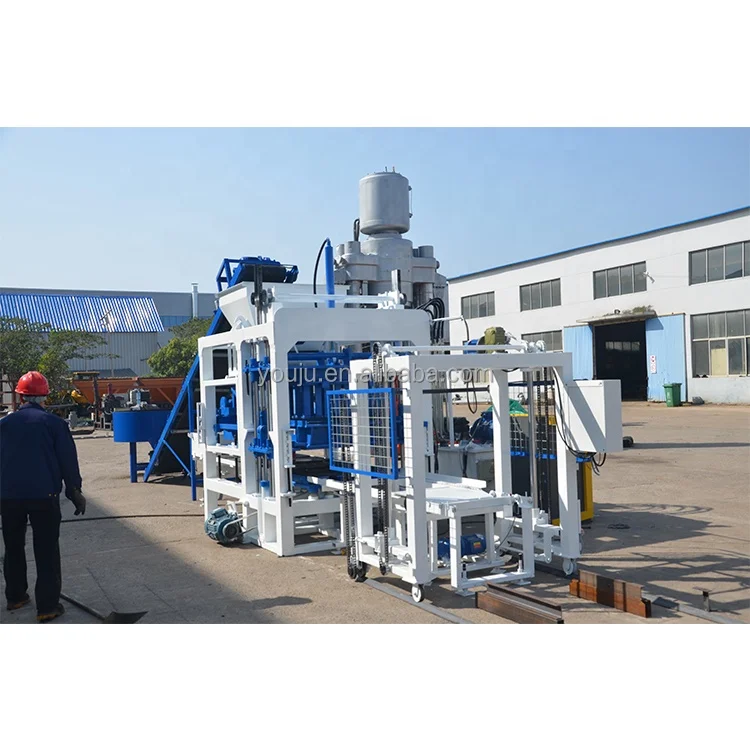
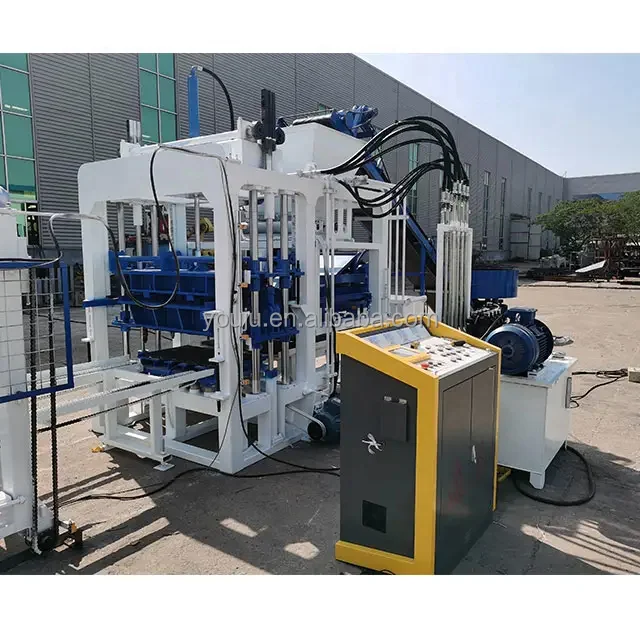

Description
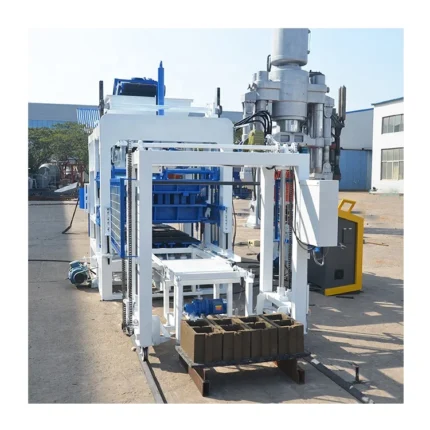
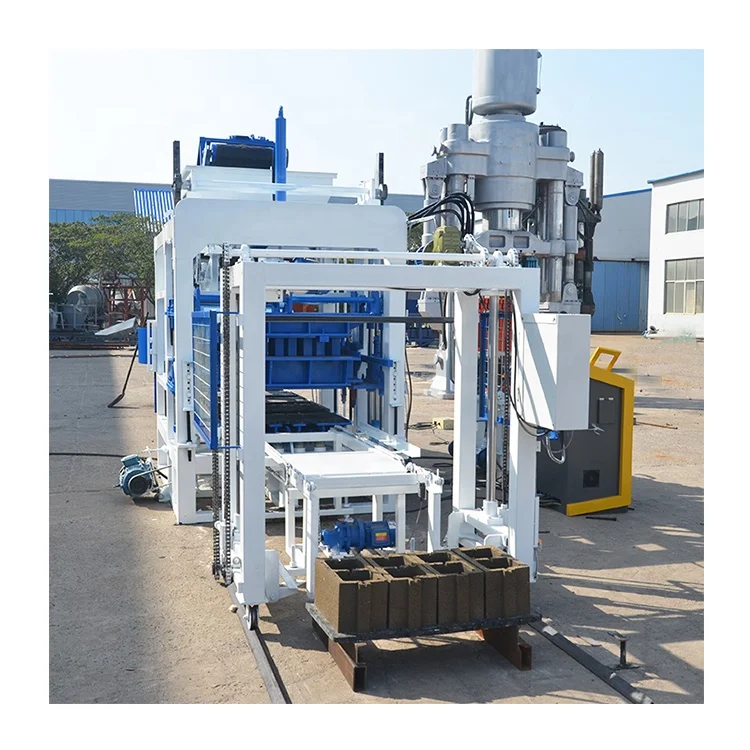
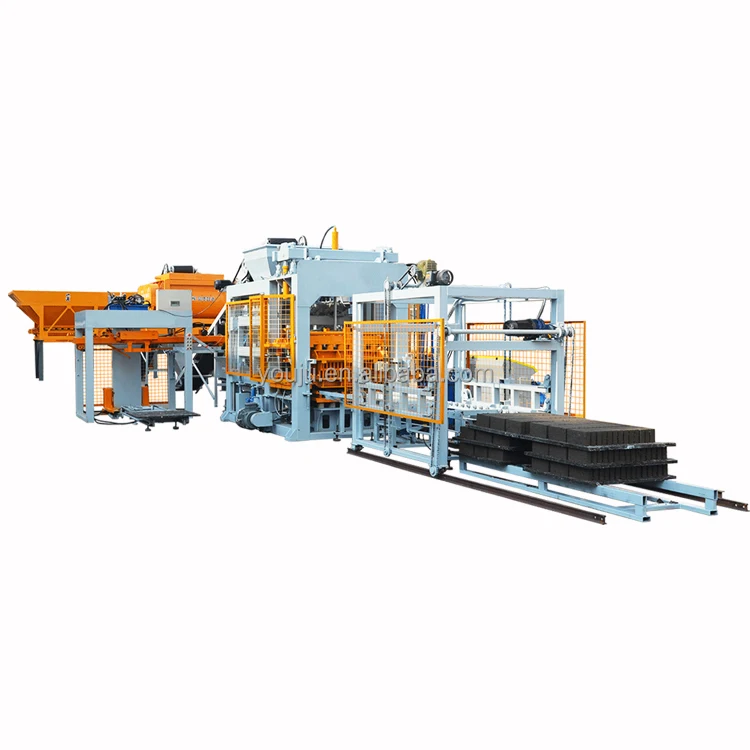
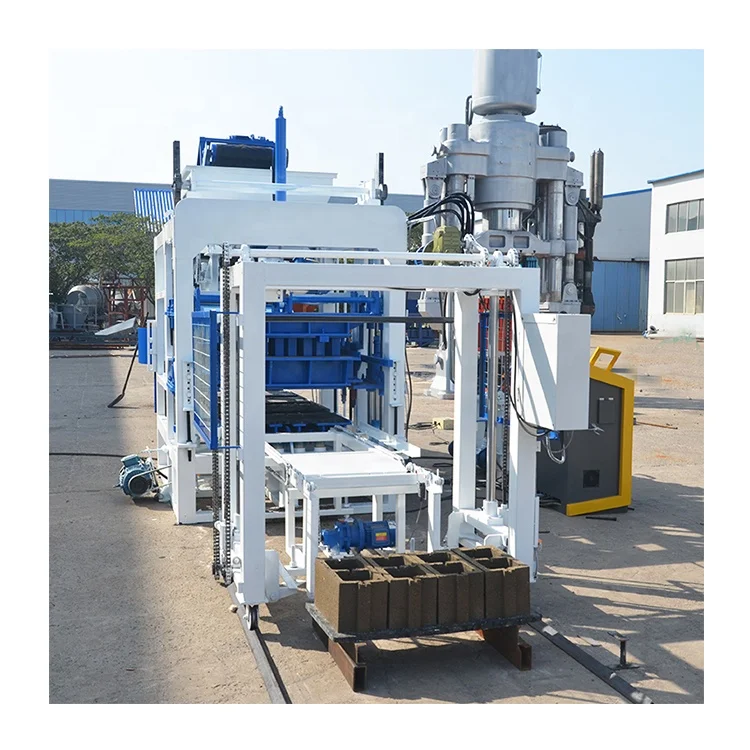
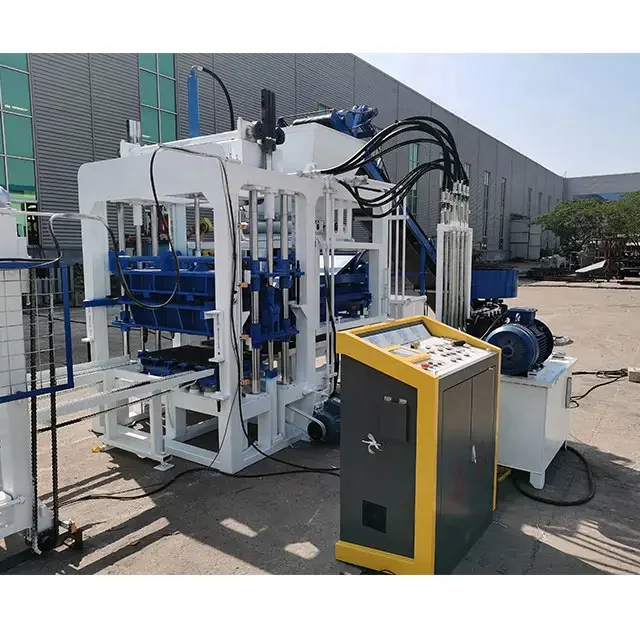
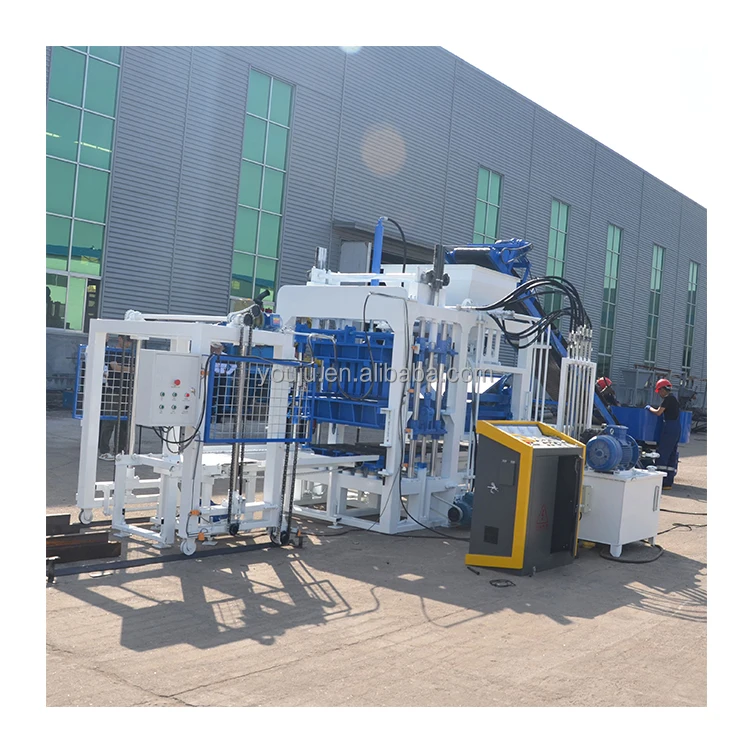
Intelligent control architecture — The QT4-18 pairs PLC logic with a frequency converter so vibration force and cycle timing remain locked across every shift, removing operator guesswork from block consistency.
Technical Specifications
| Parameter | Value |
|---|---|
| Model | QT4-18 |
| Product Type | Automatic Concrete Block Making Machine |
| Overall Dimension | 2500×1750×2200mm |
| Rated Pressure | 16MPa |
| Vibration Form | Platform Vibration |
| Pallet Size | 950×550mm |
| Molding Cycle | 18-25s (basis not stated in source) |
| Overall Power | 27.5kW |
| Control System | PLC with frequency converter, human-machine interface |
| Electrical Components | Schneider |
| Mould Lifting Mechanism | Double-sided synchronous gears |
| Material Feeder | Distribution belt hopper |
| Mould Change Method | Manual with bolt removal |
| Supporting Equipment Compatibility | JQ500 concrete pan mixer, 8m / 6m belt conveyor, stacker, block clamper, cement silo, batching plant, trolley |
Application Suitability
| Application | Material or Output |
|---|---|
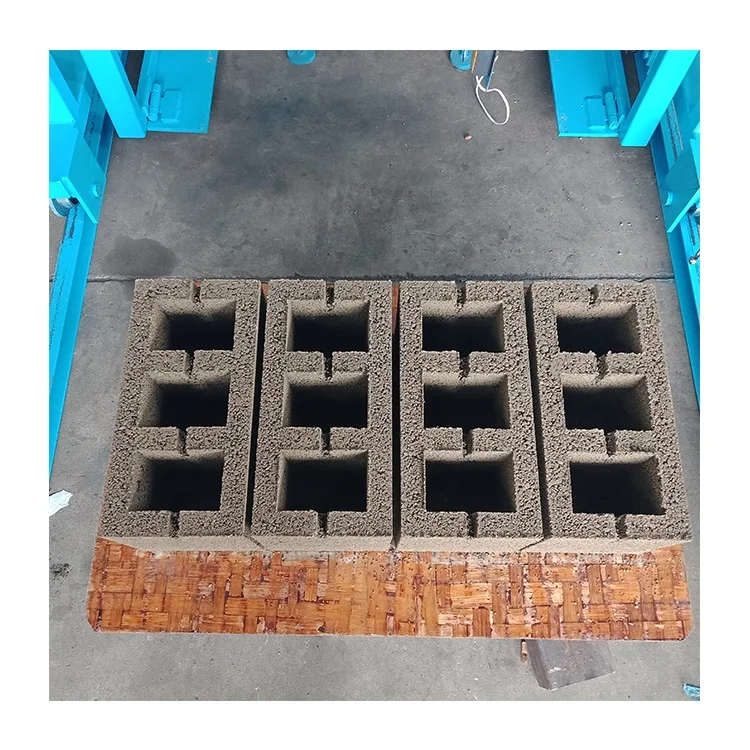
| Hollow block production | Crushed stone, river sand, cement, fly ash |
| Solid block manufacturing | Dense aggregate mixes for load-bearing walls |
| Paving block production | High-strength concrete for walkways and driveways |
| On-site contractor block making | Local aggregate sourced near construction projects |
What the Automatic QT4-18 Block Machine PLC Controlled Actually Controls
The machine automates the press cycle, but stacking, pallet return, and curing often remain manual unless explicitly added.
When buyers read "automatic" on a block machine spec sheet, the assumption is usually a fully unmanned line from mixer to stacked cubes. In reality, the automatic QT4-18 block machine PLC controlled system governs the moulding press itself — material feeding, vibration, hydraulic pressure, and demoulding repeat on a programmed cycle. [NEED_CITE: block machine automation scope definitions] What happens before and after the press varies widely between quotations. I have walked onto sites where the press ran flawlessly while four workers moved pallets by hand because automatic stacking was never in the scope. Confirming which stations are included — pallet feeding, stacking, cubing — before the order is placed prevents that mismatch.
Where the PLC Removes Human Variance
Block strength inconsistency often traces back to an operator adjusting vibration time by feel rather than by formula. The automatic QT4-18 block machine PLC controlled interface stores cycle parameters digitally, so the vibration duration, pressure hold, and feed timing repeat identically across every pallet. Once the correct settings are established for a specific mix, the human-machine interface locks them in. This matters most on plants running two or three shifts with different crews, where verbal handovers typically introduce drift.
Frequency Converter as a Tuning Tool
Local aggregate varies from quarry to quarry, and a fixed vibration intensity either under-compacts a coarse mix or over-vibrates a fine one. The frequency converter on the QT4-18 lets the operator dial vibration force to match what the material actually needs. On a project in Southeast Asia, I watched a line lose nearly half its daily output because the river sand carried high clay content and the fixed-frequency vibration could not achieve target density. After switching to adjustable frequency and re-tuning the cycle, strength readings came back within spec. [NEED_CITE: vibration frequency adjustment for concrete block compaction]
Reading the Specs Beyond the Press
The 16MPa rated pressure and platform vibration work together to determine成型 density — pressure alone does not guarantee block strength if vibration is not matched to the aggregate particle size. The 950×550mm pallet size dictates how many blocks fit per cycle and must align with the curing racks and forklifts already on site; a mismatch there means pallets pile up on the floor. The 27.5kW overall power draw requires a dedicated circuit with adequate capacity, and the Schneider electrical components simplify sourcing replacements in most export markets. The double-sided synchronous gear mould lifting balances the upper mould during demoulding, which is the stage where freshly pressed blocks are most vulnerable to cracking.
When the Wrong Configuration Reaches the Site
Voltage and frequency left unconfirmed before shipment can stall commissioning for weeks. I have seen machines sit idle at port because the local supply was 60Hz and the motor was wound for 50Hz. The PLC display language is another detail that sounds minor until the first operator cannot read the error codes. Mould change time also deserves scrutiny — the QT4-18 uses manual bolt removal, which is acceptable for plants running one format all week but becomes a bottleneck if the buyer switches between hollow and paving blocks daily. [NEED_CITE: common block machine commissioning delays related to voltage mismatch]
Why This Supplier Approach Differs
Block machinery is the single focus here, so the press, mould, pallet, and handling equipment are specified as one matched system rather than assembled from separate vendors. Configuration is set against the buyer’s actual mix design and local aggregate, not pulled from a catalogue default. Mould design covers the formats the buyer’s market actually sells, with custom drawings available. Automation level is selectable — a buyer can start with the press under PLC control and add automatic stacking or cubing later without replacing the controller. Installation support includes operator training on the specific HMI language and parameter set. [NEED_CITE: block machine supplier single-focus configuration approach]
Documentation & Verification
- Factory test record run on your specified block format and mix ratio before dispatch
- PLC parameter sheet listing stored cycle settings for each mould in your order
- Voltage, frequency, and HMI language confirmation document signed before production
- Hydraulic and electrical schematic matching the as-built machine configuration
- Wear parts list with mould wear intervals for your target aggregate type
Installation, Commissioning & Support
- Foundation pad leveled to 2500×1750mm footprint with anchor bolt template provided
- Dedicated 27.5kW circuit with correct voltage and frequency confirmed before wiring
- Press arrives partially assembled; mould and hopper mounted on site after positioning
- PLC parameters loaded and test cycle run with your local aggregate sample present
- Operator training covers HMI navigation, alarm codes, and mould change procedure
- Spare mould wear plates and hydraulic seals included for first replacement cycle
Before You Request a Quote
Share the specific block format and dimensions you plan to produce, along with a sample or lab report of your local aggregate. Confirm the voltage, frequency, and preferred PLC display language for your site. Let us know which stations — pallet feeding, stacking, cubing — you want included and which you will handle manually, so the quotation scope matches your actual labour plan.
Frequently Asked Questions
Q: How is the QT4-18 capacity verified for my specific block format?
A: The 18–25s molding cycle is a range, not a single number. We provide a capacity sheet that names the exact block dimensions, wall thickness, and mix assumed in the calculation, so daily output figures reflect your actual product rather than a generic estimate.
Q: What automation level ships with the machine, and what can I add later?
A: The PLC controls the press cycle including feeding, vibration, and demoulding. Pallet feeding, stacking, and cubing may remain manual depending on your package. The control architecture supports adding those stations later without replacing the PLC unit.
Q: How does the frequency converter improve block consistency?
A: Adjustable vibration frequency lets you tune compaction force to your local aggregate characteristics. Coarse crushed stone needs different intensity than fine river sand. Dialing in the correct frequency reduces batch-to-batch strength variation across shifts.
Q: What voltage and PLC language options should I confirm before ordering?
A: Confirm your site supply voltage and whether it is 50Hz or 60Hz before production starts. The HMI language should match your operators’ preference. Getting these details wrong delays commissioning after the machine arrives.
Q: How long does a mould change take on this machine?
A: The QT4-18 uses manual bolt removal for both upper and lower moulds. For plants running one format continuously this is not an issue, but if you switch formats daily you should ask whether a quick-change system is available for your production schedule.