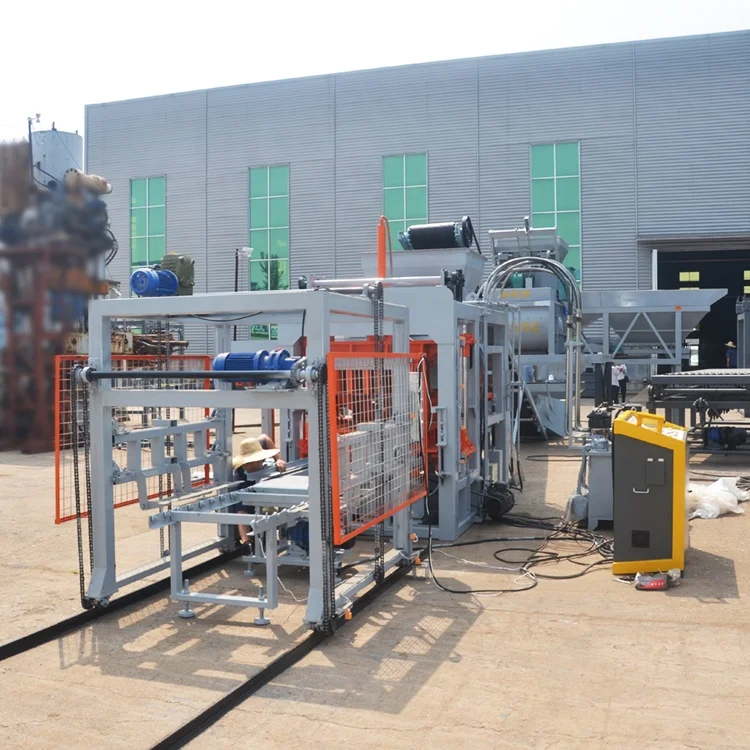


Description
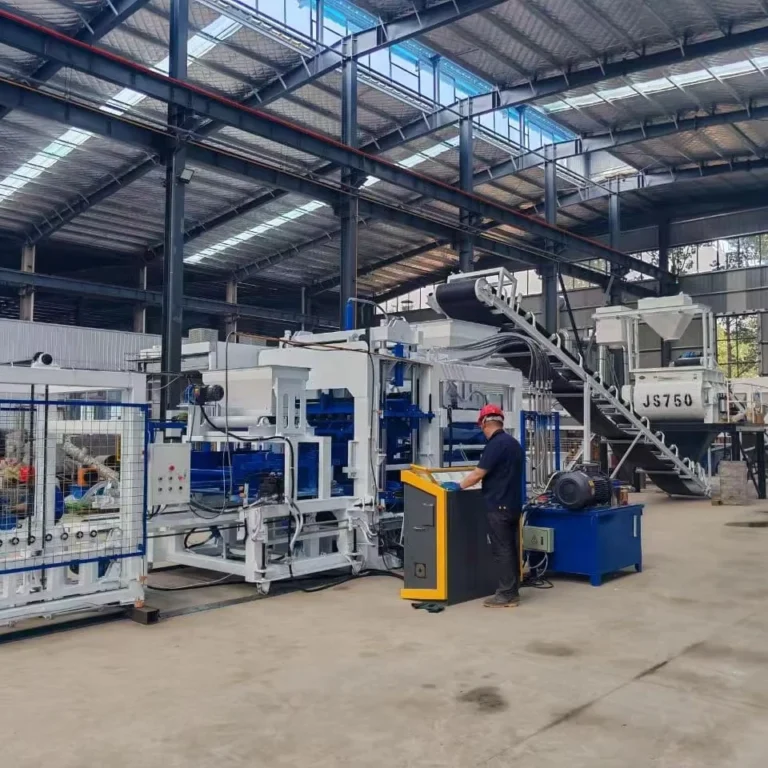
Matched System Design — The QT6-15 line specifies batching, pressing, and stacking as one integrated sequence rather than separate machines bolted together, so cycle times align across every station and the press is never left waiting for a pallet.
Technical Specifications
| Parameter | Value |
|---|---|
| Model | QT6-15 |
| Product Type | Automatic Concrete Block Making Machine |
| Control System | PLC controller |
| Automation Level | Fully automatic (unattended operation, man-machine combination) |
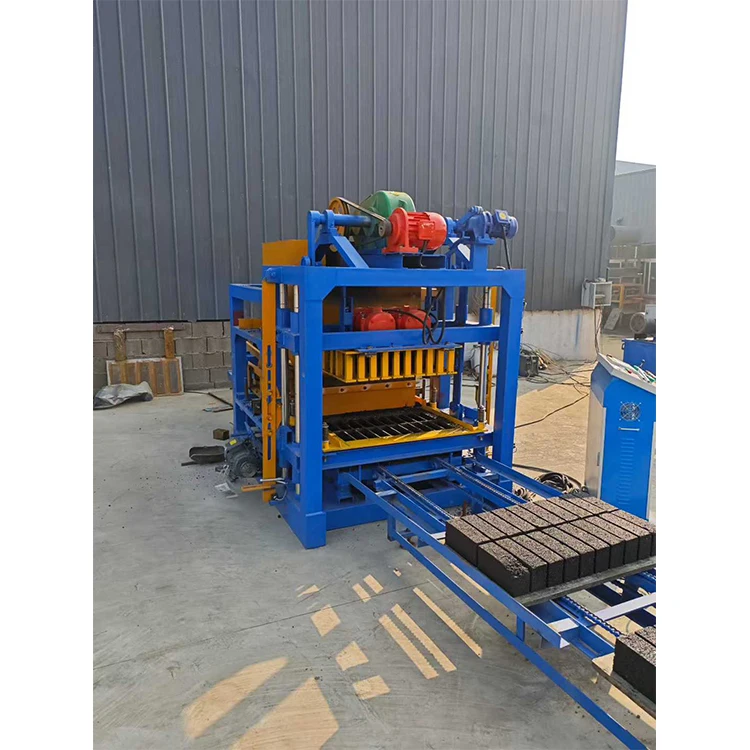
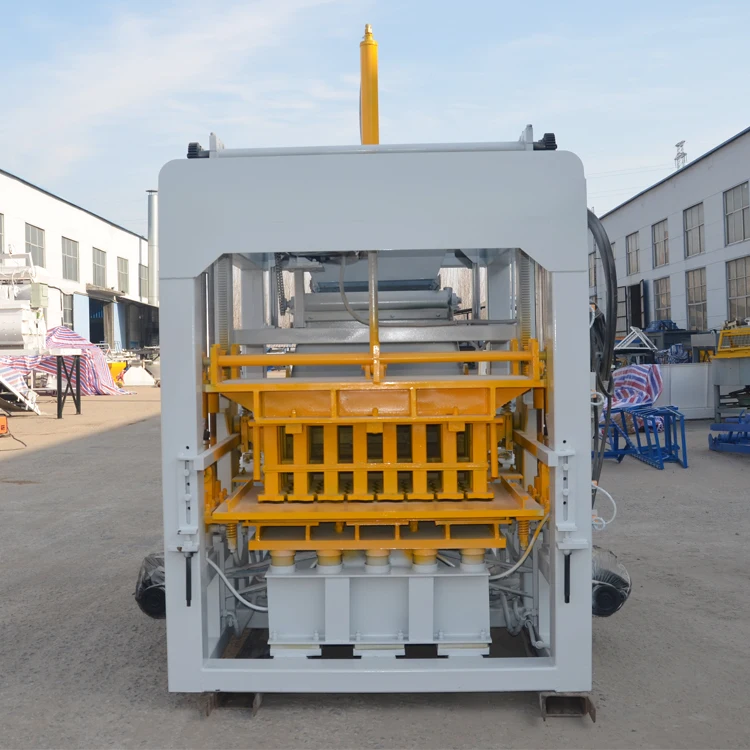
| Line Composition | Batching machine, mixer, cement silo, conveyor, block forming machine, stacker, PLC controller |
| Material Feeding | Automatic (no human feeding loader required) |
| Block Transport | Forklift truck transport after forming |
| Mould Format Compatibility | Hollow blocks, paving blocks |
| Stacking Method | Automatic stacker included |
| Output Capacity | High output (basis to be confirmed — depends on block format, material, and thickness) |
| Pallet Size | Configurable (basis to be confirmed — depends on block format) |
| Cycle Time | Format-dependent (basis to be confirmed) |
| Hydraulic Pressure | Format-dependent (basis to be confirmed) |
| Vibration Force | Format-dependent (basis to be confirmed) |
| Voltage & Frequency | Configurable (basis to be confirmed — must match buyer’s local supply) |
Application Suitability
| Application | Material or Output |
|---|---|
| Hollow block production for load-bearing and partition walls | Crushed stone, sand, cement, and lightweight aggregates |
| Paving block production for walkways, driveways, and yards | Fine aggregate, cement, and pigment for colored surfaces |
| Fully automatic plant operation with minimal manual labor | Continuous shift production targeting consistent block density |
| Upgrade path from semi-automatic to full automation | Existing manual or semi-automatic plants adding stacking and batching |
What "Fully Automatic" Actually Means on the Shop Floor
An automatic QT6-15 block making machine PLC controlled line is only as automatic as its weakest station — if pallets are still moved by hand after forming, the press bottleneck simply shifts downstream.
I have watched plants invest in PLC-controlled forming presses and then leave pallet handling entirely manual, so workers spend the shift hauling cured stacks instead of monitoring quality. The QT6-15 line addresses this by integrating the automatic stacker into the same PLC loop that governs batching and forming, which means the unattended operation claim covers the entire material path, not just the press itself [NEED_CITE: automation integration standards for concrete block lines]. When the buyer’s local operator panel speaks a language the workforce actually reads, the difference between "automatic" and "actually runs without supervision" disappears.
Removing the Operator from Every Material Handoff
The automatic QT6-15 block making machine PLC controlled configuration eliminates human intervention at batching, mixing, feeding, forming, and stacking. The cement silo, conveyor, and mixer operate on timed sequences managed by the same controller that governs the press cycle, so raw material arrives at the hopper in sync with each stroke. This matched sequencing is what allows unattended operation in practice, not just on the specification sheet.
Why Pallet Workflow Determines True Throughput
The stacker and forklift-compatible pallet transport are specified as part of the line, not as optional add-ons quoted separately. On too many sites, the forming press runs at its rated cycle time while finished pallets pile up at the exit because nobody included a handling plan. The QT6-15 line design accounts for the buyer’s existing forklift capacity and curing rack layout [NEED_CITE: pallet handling integration in block plant design], so formed blocks leave the press area without interrupting the next cycle.
Reading the Spec Sheet Beyond the Press
The hydraulic pressure and vibration force ratings determine whether the QT6-15 can achieve the block density the buyer’s market requires, and these must be matched to the specific mix design and local aggregate available. A machine tuned for river sand may underperform with the crusher dust common in Southeast Asian quarries. The PLC controller manages batching ratios, but the mechanical settings — vibration frequency, hydraulic pressure, mould fill depth — must be calibrated against the buyer’s actual raw materials during commissioning. Pallet size directly affects how many blocks fit per cycle and must align with the curing area dimensions and forklift fork width already on site.
The Hidden Cost of Skipping the Voltage Conversation
Every export machine carries an assumed voltage and frequency, and when that assumption is wrong, the PLC will not boot, the hydraulic pump motor will overheat, or the vibration motor will run at the wrong speed and produce undersized blocks. Confirming voltage, frequency, and PLC display language before production begins — not after the container arrives — prevents commissioning delays that can stretch into weeks while a replacement transformer or language firmware pack is sourced [NEED_CITE: voltage and frequency standards by export market]. I once saw a line sit idle for eleven days because the HMI defaulted to a language none of the local operators could read.
Why This Line Configuration Holds Up in Practice
The QT6-15 is specified as one matched system from batching through stacking, which means cycle time calculations account for every station rather than assuming infinite buffer space between machines. Mould design and supply covers the formats the buyer’s market actually sells, including custom drawings for interlocking or non-standard profiles. Automation level is selectable, so a buyer can begin with semi-automatic pallet handling and add the stacker later without replacing the press. The PLC controller supports multiple display languages, confirmed and loaded before dispatch so the first production day is not spent troubleshooting the interface. Factory testing covers the buyer’s specified block format, not just a generic test block, so the test record reflects actual production conditions.
Documentation & Verification
- Line layout showing station spacing and pallet flow path for the QT6-15 configuration
- Capacity calculation document stating the assumed block format and dimensions
- PLC programming record with display language confirmed to buyer’s requirement
- Hydraulic and electrical schematic matching the as-built machine configuration
- Factory test record run on buyer’s specified mould and block format
- Voltage and frequency confirmation sheet signed before production release
Installation, Commissioning & Support
- Foundation plan matched to QT6-15 press vibration force and overall line footprint
- Dedicated power circuit sized to the QT6-15 rated power with correct voltage tap setting
- Machine reassembly sequence from container-dismantled state to operational line
- PLC parameter tuning on buyer’s local aggregate and mix design during first production run
- Operator training covering HMI navigation in the confirmed display language
- Wear parts list for moulds, hydraulic seals, and vibration components with reorder intervals
Before You Send an Inquiry
To size the QT6-15 correctly for your plant, prepare the target block format and dimensions, your daily output target, and the specific raw materials you can source locally. Include your existing voltage and frequency supply, the PLC display language your operators need, and the curing area dimensions so pallet size can be matched. If you are upgrading from a manual or semi-automatic setup, note which stations you want to automate first and which you plan to add later.
Frequently Asked Questions
Q: How is the QT6-15 output capacity calculated, and which block format does it assume?
A: Output capacity depends entirely on the block format, mould cavity count, and cycle time for that specific product. A hollow block and a paving block require different vibration durations and hydraulic sequences, so the same press produces different quantities per hour depending on the mould installed. We provide a capacity calculation document that states the assumed format and dimensions so the daily output figure is transparent before you commit.
Q: What PLC control language options are available for the operator interface?
A: The PLC controller supports multiple display languages, and the required language must be confirmed before production so the firmware is loaded and tested at the factory. This prevents the common problem where the HMI arrives in a default language that local operators cannot read, which delays first production while a language pack is sourced remotely.
Q: How does the automation level affect labor requirements at each line station?
A: In the fully automatic configuration, the batching, mixing, forming, and stacking stations operate under PLC control without manual intervention, and forklift transport handles cured blocks. If you choose semi-automatic operation, pallet handling at certain stations requires an operator. The automation level is selectable and can be expanded later without replacing the press.
Q: Can the QT6-15 line be upgraded from semi-automatic to fully automatic after installation?
A: Yes, the line is designed so the stacker, automatic pallet feeder, and batching modules can be added to an existing semi-automatic installation. The press and PLC controller remain the same, so the upgrade involves adding hardware and updating the control program rather than replacing core equipment.
Q: What voltage and frequency configurations are supported for different markets?
A: The QT6-15 electrical system is configurable to match the buyer’s local voltage and frequency supply. This must be confirmed before production begins, along with the required motor ratings and PLC power supply specification, to avoid commissioning delays caused by incompatible electrical components arriving on site.