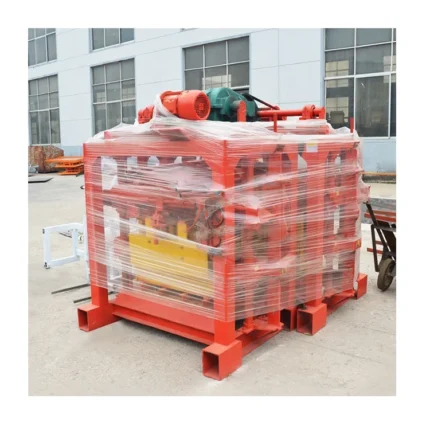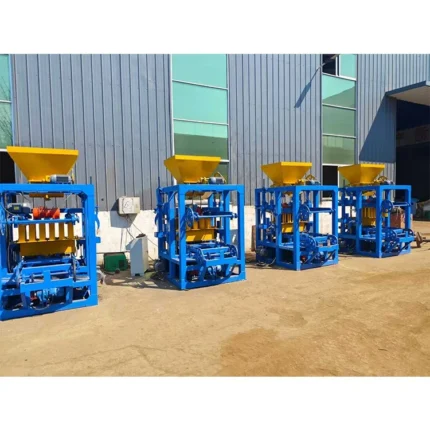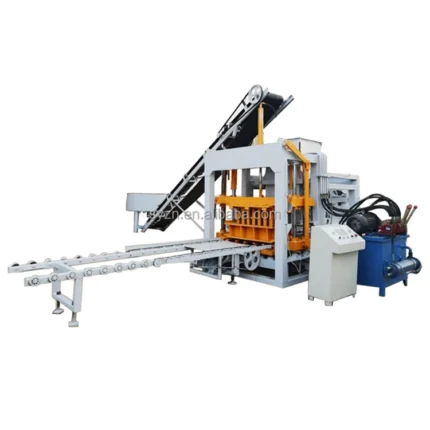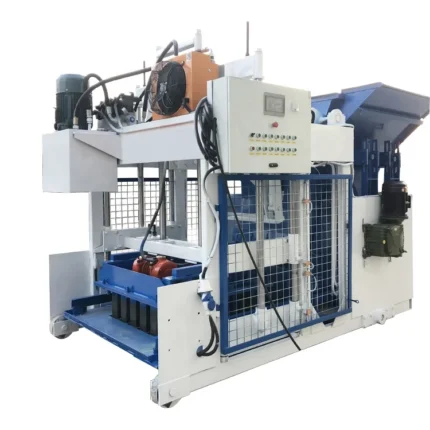
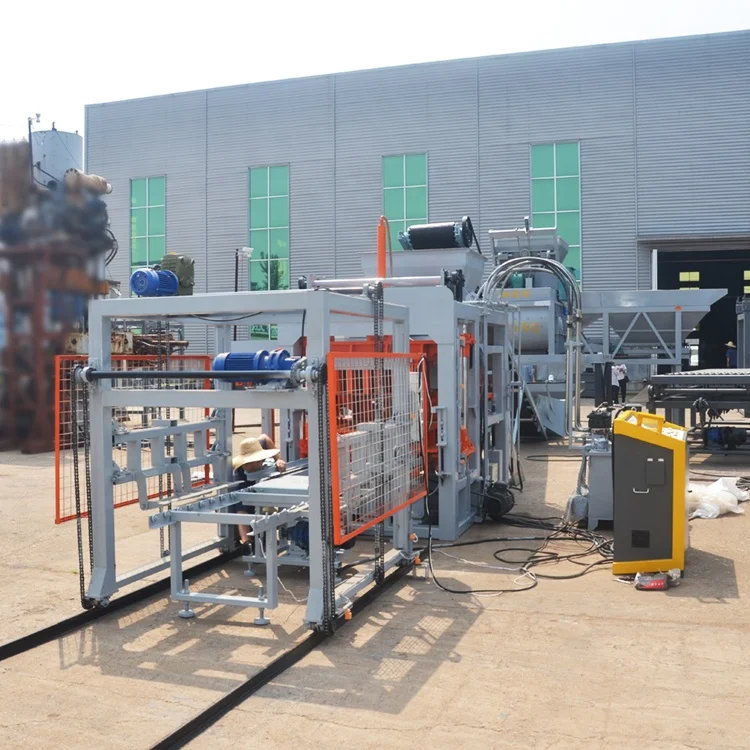
Description
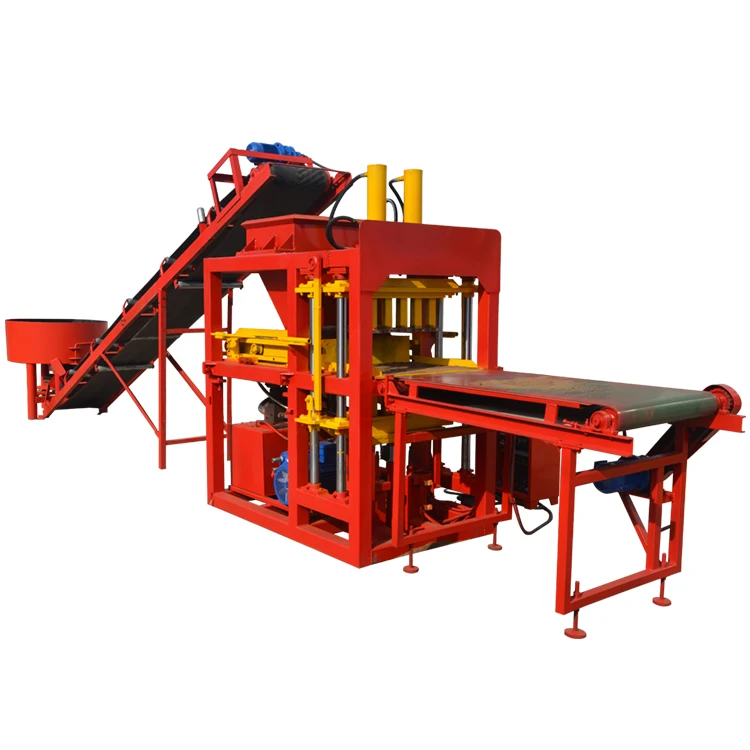
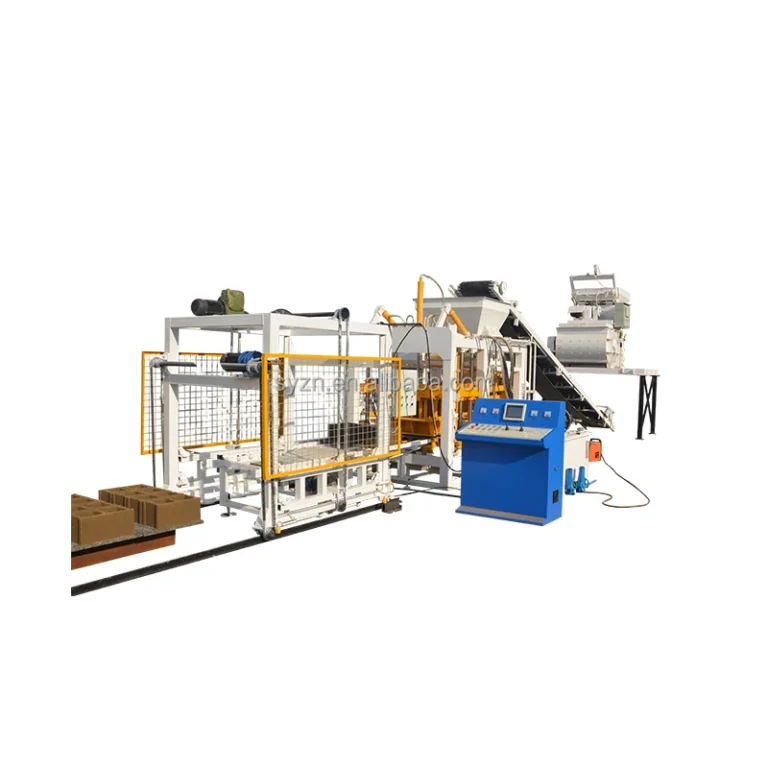
Integrated Control Logic — The automatic QT6-15 block machine stores block-format recipes directly inside the PLC, so every production run pulls the exact vibration frequency and hydraulic sequence your mix demands.
Technical Specifications
| Parameter | Value |
|---|---|
| Model | QT6-15 |
| Product Type | Hydraulic Hollow Block Making Machine |
| Overall Dimensions | 8200×1700×2950 mm |
| Total Mass | 7 T |
| Overall Power | 37 kW |
| Vibration Frequency | 0–60 Hz |
| Vibration Form | Platform Vibration |
| Vibration Force | 45 kN |
| Moulding Mode | Load automatically, vibration moulding |
| Demolding Method | Hydraulic |
| Pallet Size | 880×850 mm |
| Molding Cycle | 15–20 s (basis not stated in source) |
| Control System | PLC with touch screen HMI |
| Fault Diagnosis System | Included |
| Safety Logic Circuit | Action interlock controlled by PLC |
| Hydraulic System | Independent integrated station, isolated from dust and vibration |
| Raw Material Adaptability | Waste ash, slag, various aggregates; cement dosage adjustable |
Application Suitability
| Application | Material or Output |
|---|---|
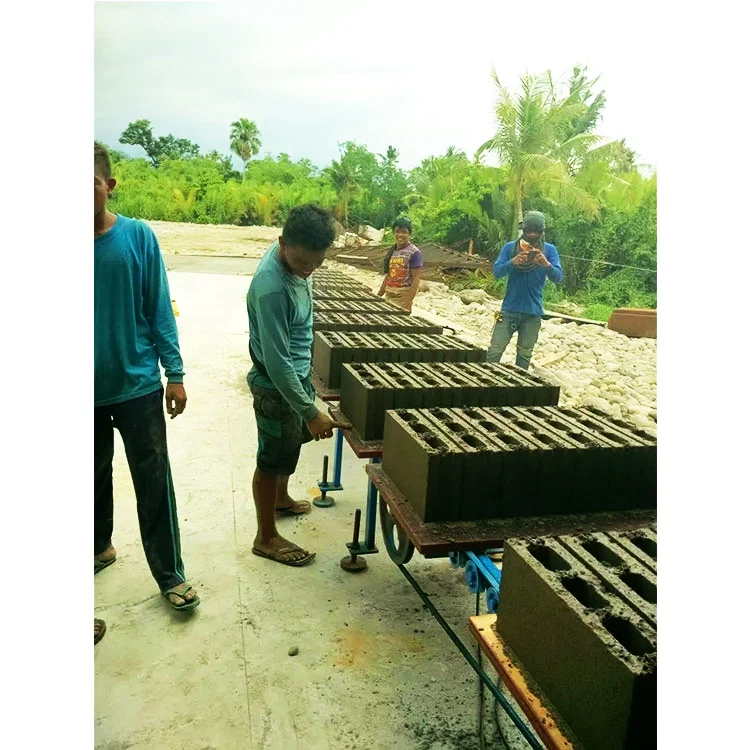
| Hollow block production | Crushed stone, sand, and cement blends |
| Solid brick production | Fly ash, slag, and cement mixtures |
| Paving block manufacturing | Fine aggregate with adjustable cement dosage |
| Multicellular brick forming | Lightweight aggregate and waste ash blends |
What "15 to 20 Seconds per Cycle" Actually Means on the Shop Floor
The PLC controlled block making machine only hits its cycle time when vibration, pressure, and feed volume are pre-tuned to your exact material.
I have walked through plants where the quoted cycle looked impressive on paper, but the operator spent half the shift adjusting feed times because the local stone powder carried too much clay. The vibration frequency that works for clean river sand will leave air pockets in a high-fines mix, forcing longer compaction or weaker blocks. Before any capacity figure becomes meaningful, the vibration profile and hydraulic sequence need to match what your supplier can actually deliver week after week. [NEED_CITE: aggregate variability impact on concrete block consistency]
Recipe Storage That Eliminates Operator Guesswork
The touch-screen HMI on this PLC controlled block making machine lets you save a full parameter set for each mould you run. Vibration frequency, feed duration, and hydraulic dwell are recalled with one selection, so the Monday morning shift produces blocks identical to Friday afternoon. When you switch from 400×200×200 mm hollow blocks to 200×100×60 mm pavers, the system pulls the stored recipe instead of relying on the operator remembering last month’s settings.
Interlocks and Diagnostics That Catch Problems Before Scrap Piles Up
The safety logic circuit inside the PLC enforces action interlocks across every moving component, preventing the press from firing if a pallet is misaligned or the feed hopper is out of position. The built-in fault diagnosis system monitors sensor states and displays the exact point of failure on the HMI, so your maintenance team traces electrical or hydraulic faults in minutes rather than hours. [NEED_CITE: PLC fault diagnosis standards for industrial forming equipment]
How Vibration Force and Hydraulic Pressure Shape Block Density
The 45 kN vibration force working through the platform delivers energy into the mould cavity from below, compacting the mix upward while hydraulic pressure clamps the head plate down. This two-directional consolidation is what drives compressive strength above 15 MPa in properly proportioned mixes. The 0–60 Hz adjustable frequency range means you can dial in a lower frequency for larger hollow blocks that need deeper energy penetration, then raise it for thin pavers where surface finish matters. If your local aggregate is angular and harsh, a higher frequency with shorter dwell often produces a cleaner face than brute-force vibration. The independent hydraulic station sits away from dust and main-frame vibration, keeping valve response consistent across a full shift.
The Cost of Skipping Configuration Against Your Actual Mix
Buyers who accept a catalogue-default machine without testing their own aggregate often discover the problem only after the container arrives. The vibration force may be too aggressive for a lightweight ash blend, cracking block corners during demolding, or too gentle for a dense slag mix, leaving hollow walls under-compacted. Either scenario generates scrap, invites customer complaints on delivered strength, and burns through pallets faster than planned. [NEED_CITE: concrete block compressive strength testing and certification requirements]
Why This Machine Is Configured, Not Just Quoted
Shiyue Machinery sets the automatic QT6-15 block machine against your specific block format and material before production begins. Mould design follows the shapes your market actually buys, with custom drawings when standard cavities do not fit. The automation level is selectable, so you can start with semi-automatic pallet handling and add stacking or cubing stations later. Voltage, frequency, and PLC display language are confirmed in writing before steel is cut. Factory test records document the run against your target format, not a generic cycle.
Documentation & Verification
- Machine specification sheet listing QT6-15 parameters against your confirmed voltage and frequency
- Mould drawing and format list showing cavity count for each block type you ordered
- PLC parameter sheet with stored recipes for every mould included in the scope
- Factory test record documenting cycle times on the block format you will produce first
- Hydraulic and electrical schematic matching the as-built independent station layout
- Operation and maintenance manual written for the HMI language you selected
Installation, Commissioning & Support
- Foundation plan sized for the 8200×1700 mm footprint and 7 T operating mass
- Dedicated power circuit matching the 37 kW total load at your confirmed voltage
- PLC language and HMI labels verified before the machine leaves the factory
- Vibration frequency and hydraulic pressure calibrated on-site against your actual mix
- Operator training covering recipe storage, fault diagnosis readouts, and mould change procedure
- Wear parts list identifying hydraulic seals and vibration components for first reorder
Preparing Your Inquiry
Share the exact block dimensions you plan to sell, the aggregate sources available within hauling distance of your plant, and the daily volume you need to justify the investment. Include your site voltage, frequency, and preferred PLC display language so the control configuration is locked before production. If you already run curing racks and forklifts, note the pallet dimensions they accept so the 880×850 mm pallet size can be evaluated against your existing handling setup.
Frequently Asked Questions
Q: How does the PLC store and recall process parameters for different block formats?
A: The touch-screen HMI lets the operator save vibration frequency, feed time, and hydraulic dwell as a named recipe for each mould. When the mould is changed, selecting the recipe on screen recalls all stored values, so the machine starts the new format with parameters already tuned rather than requiring manual adjustment from scratch.
Q: What does the fault diagnosis system actually detect and how does it alert the operator?
A: The PLC monitors sensor states across pallet feed, hopper position, hydraulic pressure, and vibration motor status. When a reading falls outside the expected range, the HMI displays a text alarm identifying the faulty component, allowing maintenance staff to locate and resolve the issue without tracing wiring manually.
Q: How do I confirm voltage, frequency, and PLC language before the machine ships?
A: During the quotation stage, you provide your site electrical specifications and preferred HMI language. These are written into the order confirmation and verified again before production begins, so the PLC firmware and motor windings match your local supply when the machine arrives.
Q: Can I start with semi-automatic operation and expand automation later?
A: The QT6-15 control architecture supports adding automatic pallet feeding, stacking, and cubing stations as separate modules. The PLC retains the same recipe logic whether pallets are loaded by hand or by an automated feeder, so upgrading later does not require replacing the main control system.