Description
Intelligent Control Integration — Every PLC program and sensor is mapped to the buyer’s confirmed voltage, frequency, and display language before the QT6-15 leaves our Linyi workshop, preventing the three-week commissioning standstill I once watched a fly ash block line endure.
Technical Specifications
| Parameter | Value |
|---|---|
| Model | QT6-15 |
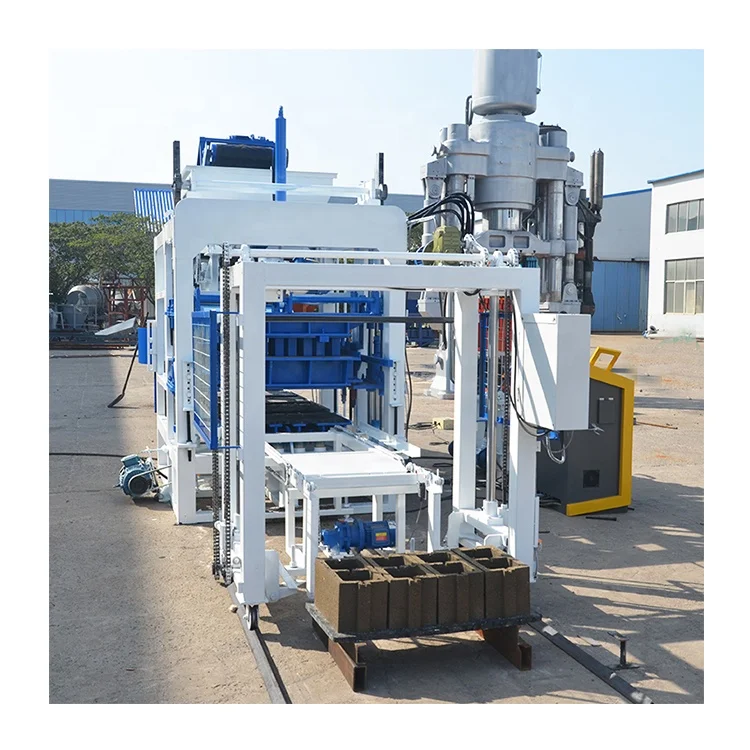
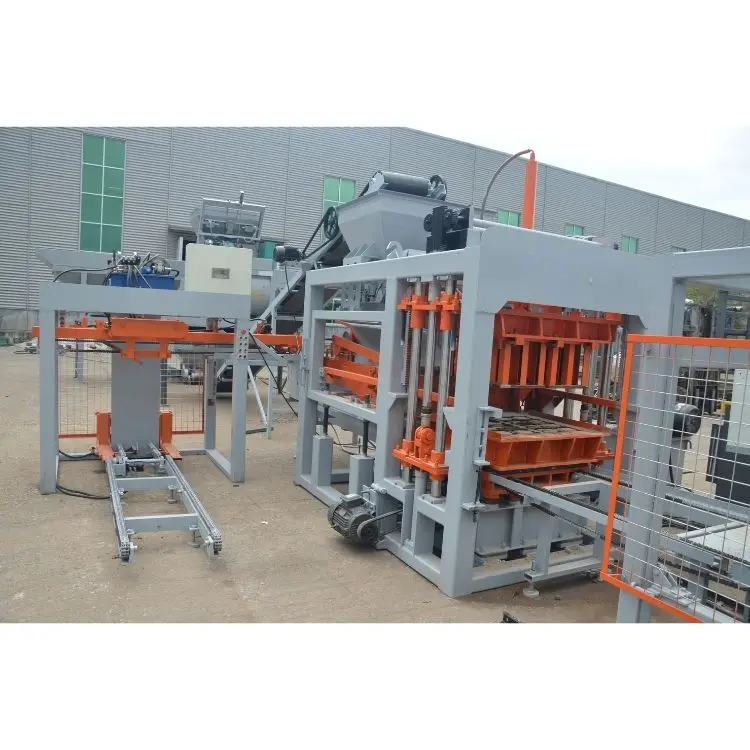
| Product Type | Automatic Hydraulic Concrete Block Making Machine |
| Molding Way | Vibration and hydraulic pressing |
| Rated Pressure | 21 MPa |
| Molding Cycle | 15s–20s (basis not stated in source) |
| Pallet Size | 900 × 700 mm |
| Main Machine Weight | 6000 kg |
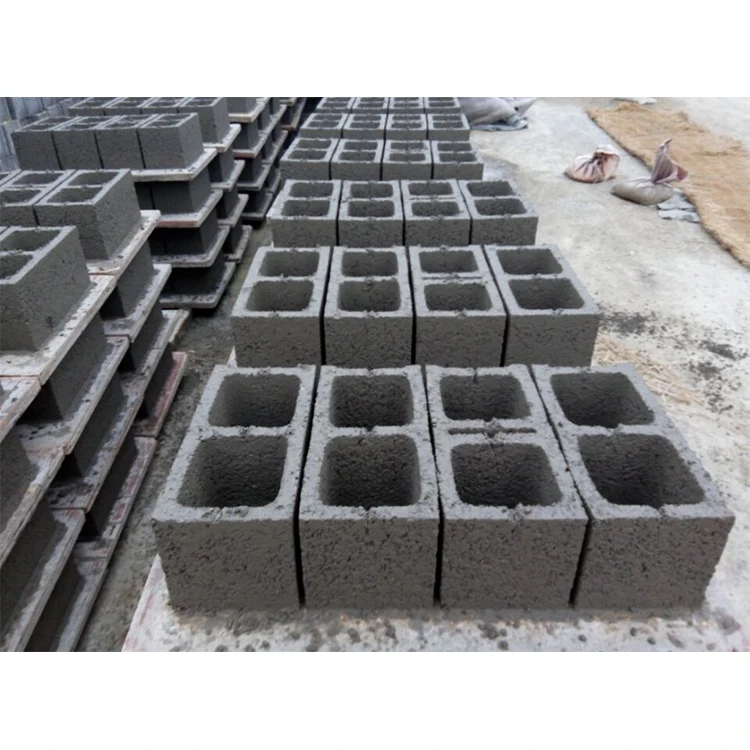
| Output: Hollow Block 400×200×200 mm | 6 pcs/pallet, 1440 pcs/h, 11520 pcs per 8-hour shift |
| Output: Paving Brick 200×100×60 mm | 21 pcs/pallet, 5040 pcs/h, 40320 pcs per 8-hour shift |
| Output: Solid Brick 240×115×53 mm | 32 pcs/pallet, 7680 pcs/h, 61440 pcs per 8-hour shift |
| Control System | PLC (source value — verify against manufacturer catalog) |
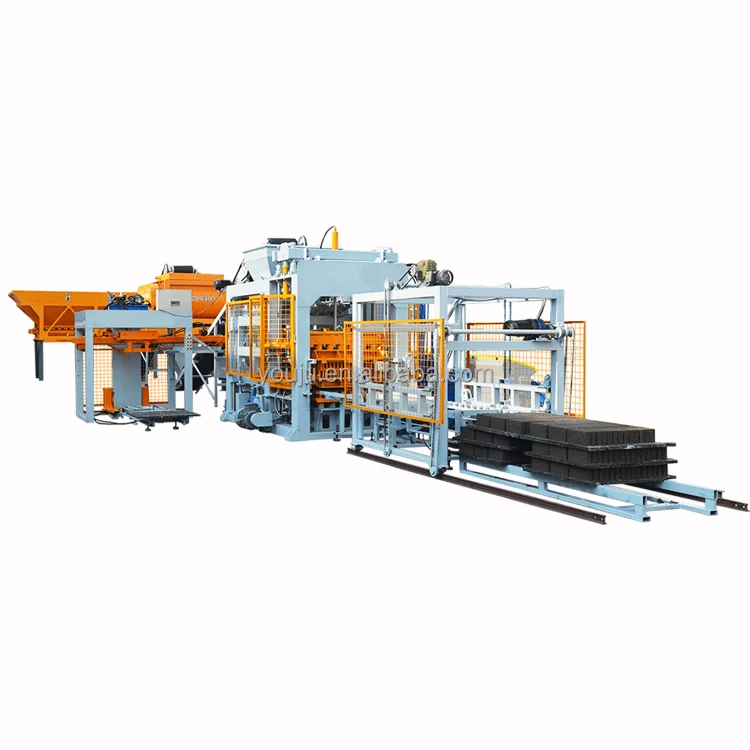
| Automation Level | Fully automatic, selectable simple or full line configuration |
| Raw Materials | Cement, sand, fly ash, stone powder, slag |
| Voltage & Frequency | Customizable to local voltage |
| Warranty | 1 year (excluding wearing parts) |
Application Suitability
| Application | Material or Output |
|---|---|
| Hollow block production | Fly ash, cement, sand, stone powder, slag blends |
| Paving brick manufacturing | Color sidewalk pavers, kerbstones from crushed aggregate |
| Solid brick production | Standard masonry units for load-bearing or partition walls |
| On-site contractor block making | Portable line setups for housing or infrastructure projects |
| Format expansion for existing plants | Quick mould change between hollow, solid, and paving formats |
Why the Voltage Question Must Precede the Automatic QT6-15 Block Machine PLC Controlled Order
An unconfirmed supply specification turns a fully intelligent line into dead iron on the shop floor.
I once watched a client lose three weeks of production because the PLC cabinet arrived wired for a frequency their local grid could not sustain. The变频改造 required a complete panel rebuild, delayed commissioning, and pushed their first commercial delivery past a penalty clause date [NEED_CITE: voltage and frequency standards by export market]. The automatic QT6-15 block machine PLC controlled configuration eliminates that risk only when the buyer’s grid profile, transformer capacity, and preferred HMI language are locked in writing before fabrication begins. A control system programmed in a language the shift operator cannot read is no more intelligent than a manual press.
From Manual Timing to Recipe-Driven Consistency
On a manually operated press, the operator judges when the vibration cycle is complete and when to release the hydraulic head. Shift-to-shift variation in block density is inevitable, and inconsistent compaction leads to rejection rates that only surface after curing. The automatic QT6-15 block machine PLC controlled architecture replaces that judgment with stored recipes: each block format, mix proportion, and compaction sequence is recalled from the HMI, removing human timing from the loop entirely. Batch-to-batch strength variance drops to the tolerance of the raw material feed, not the skill of the operator on duty.
Selectable Automation That Grows with the Plant
The simple line pairs the QT6-15 with a mixer and a belt conveyor, leaving pallet handling and stacking to manual labor. The full line extends upstream to a cement silo with weigh batching and downstream through an automatic pallet loader, stacker, and block-pallet separator. A buyer starting with the simple configuration can introduce downstream automation stations one at a time, because the PLC I/O architecture is pre-wired for expansion modules [NEED_CITE: PLC I/O expansion standards in block machinery]. This staged upgrade path means capital deployment follows actual demand growth rather than projected volumes.
What 21 MPa and 900 × 700 mm Actually Govern
The 21 MPa rated hydraulic pressure works in concert with the vibration table to compact the mix into the mould cavity. Higher pressure allows denser blocks from leaner cement ratios, but only if the vibration frequency is matched to the aggregate gradation — a mismatch produces honeycomb voids or surface spalling. The 900 × 700 mm pallet dimension dictates the mould footprint, the curing rack spacing, and the forklift tine width required to move stacked cubes. Specifying the pallet size against the buyer’s existing curing yard layout and material handling fleet prevents a situation where the press produces smoothly but the downstream logistics chain cannot absorb the output [NEED_CITE: pallet sizing guidelines for concrete block curing]. The 15s–20s molding cycle is a range, not a single number, because fly ash mixes typically require longer vibration than pure sand-cement blends to achieve full cavity fill.
When Automation Specs Are Skipped
A buyer who selects a full automatic line but operates with an unskilled workforce often finds the stacker and separator stations faulting more than they run. The result is an expensive line running at semi-automatic throughput, with the capital cost of the unused automation stations depreciating on the balance sheet [NEED_CITE: block plant automation skill mismatch outcomes]. Conversely, a buyer who specifies only a simple line and later faces rising labor costs has no upgrade path if the PLC architecture was not pre-configured for expansion. Both scenarios stem from specifying automation level against ambition rather than against the actual operator skill and local labor market available at the production site.
Why This Configuration Approach Exists
Block machinery is the single manufacturing focus of our Linyi facility, so the QT6-15 press, its moulds, pallets, and handling stations are engineered as one matched system rather than assembled from separate suppliers. Machine configuration is set against the buyer’s submitted mix design and local aggregate sample, not pulled from a catalogue default. Mould design and supply cover the specific formats the buyer’s market demands, including custom drawings for non-standard pavers or interlocking profiles. Automation level is selectable and upgradable, and installation support includes on-site commissioning with operator training on the exact HMI language chosen at order confirmation. Every specification is documented — from the line layout capacity calculation to the voltage and control language confirmation — so there is a written reference point when questions arise months after startup.
Documentation & Verification
- Line layout stating output per block format, not a single cycles-per-hour figure
- PLC HMI language and voltage confirmation sheet signed before production
- Mould drawing pack listing cavity dimensions and format changeover procedure
- Hydraulic and electrical schematics for on-site maintenance troubleshooting
- Factory test record on buyer’s specified mix before dispatch
Installation, Commissioning & Support
- Foundation plan accounts for 6000 kg main machine mass and vibration isolation requirements
- Top cylinder removal procedure documented for standard container loading and on-site reassembly
- Electrical cabinet energized against confirmed voltage and frequency before PLC boot sequence
- Recipe programming session covers buyer’s target block formats during on-site commissioning
- Wear parts and mould maintenance schedule handed over with spare parts list at delivery
What We Need to Configure Your Line
Share the target block formats, required daily output per format, and the raw materials available at your production site. Confirm your local voltage, frequency, and preferred PLC display language. Tell us the curing area dimensions and existing material handling equipment so the pallet size and automation level can be matched to your actual layout rather than a theoretical plant drawing.
Frequently Asked Questions
Q: How is output capacity verified, and which block format does each figure assume?
A: Every capacity figure is tied to a specific block dimension and molding cycle. Hollow block 400×200×200 mm yields 6 pieces per pallet at 1440 per hour; paving brick 200×100×60 mm yields 21 per pallet at 5040 per hour. The line layout document states the assumed format for each output claim so daily planning reflects actual product mix.
Q: What PLC display language options are available, and how is the language confirmed?
A: The HMI can be configured in multiple languages including English, Spanish, Arabic, and others based on buyer requirement. The chosen language is confirmed in writing on the voltage and control confirmation sheet before production begins, ensuring the operator interface matches the workforce skill profile at delivery.
Q: How does automation level selection affect labor, and what is the upgrade path?
A: A simple line requires manual pallet handling and stacking labor, while a full line automates pallet loading, stacking, and separation. The PLC I/O architecture is pre-wired for expansion, so downstream stations can be added individually as demand grows without replacing the core control system or rewiring the cabinet.
Q: How is hydraulic pressure matched to local aggregate and mix design?
A: The 21 MPa rated pressure is configured alongside vibration frequency to suit the buyer’s submitted mix proportions and aggregate gradation. A sample mix is tested at factory commissioning, and the vibration and pressure parameters are adjusted in the PLC recipe to achieve target block density and surface finish.
Q: What is included in the full automatic line versus the simple line?
A: The simple line includes the mixer, conveyor, and press. The full line adds a cement silo, weigh batching machine, automatic pallet loader, stacker, and block-pallet separator. Cycle times across all stations are synchronized so the press is never left waiting for pallets or raw material feed.