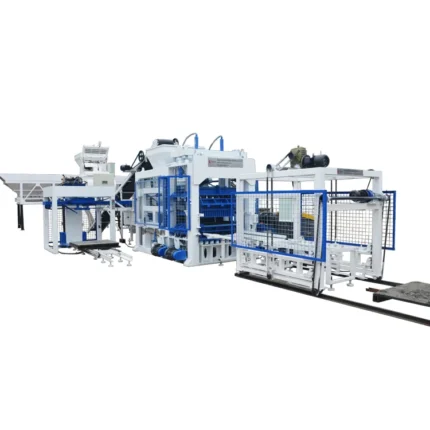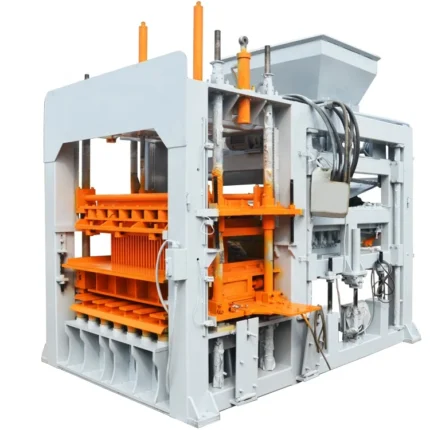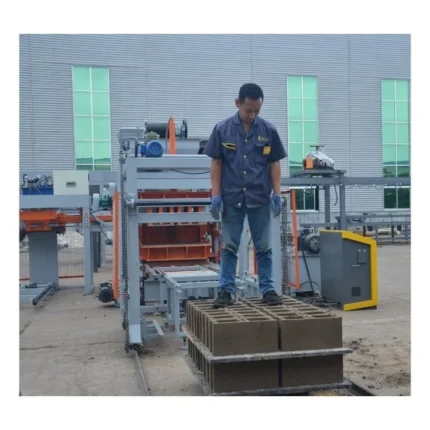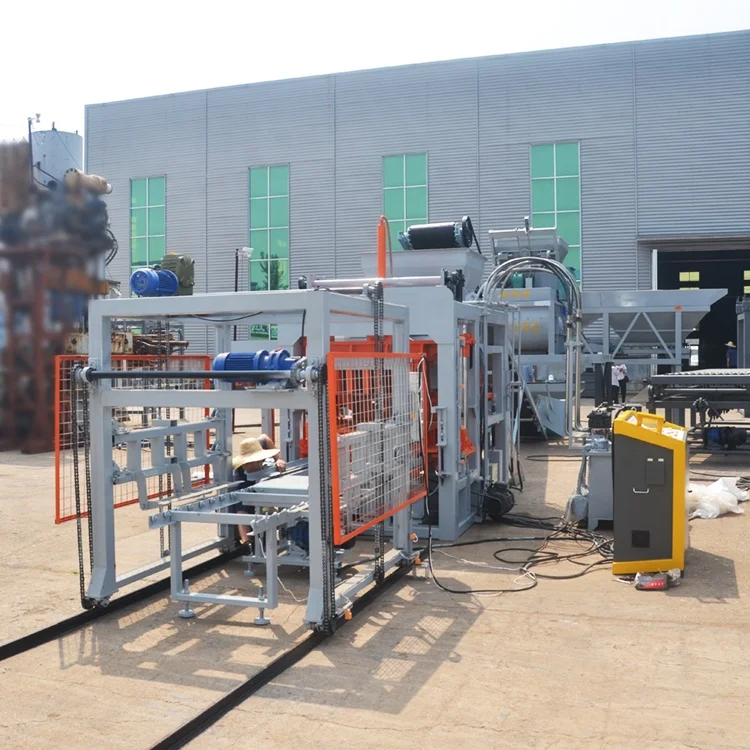
Description
Intelligent Control Integration — PLC logic, remote diagnostics, and format-specific cycle data specified as one matched system on the QT7-15, not assembled from separate automation add-ons.
Technical Specifications
| Parameter | Value |
|---|---|
| Model | QT7-15 |
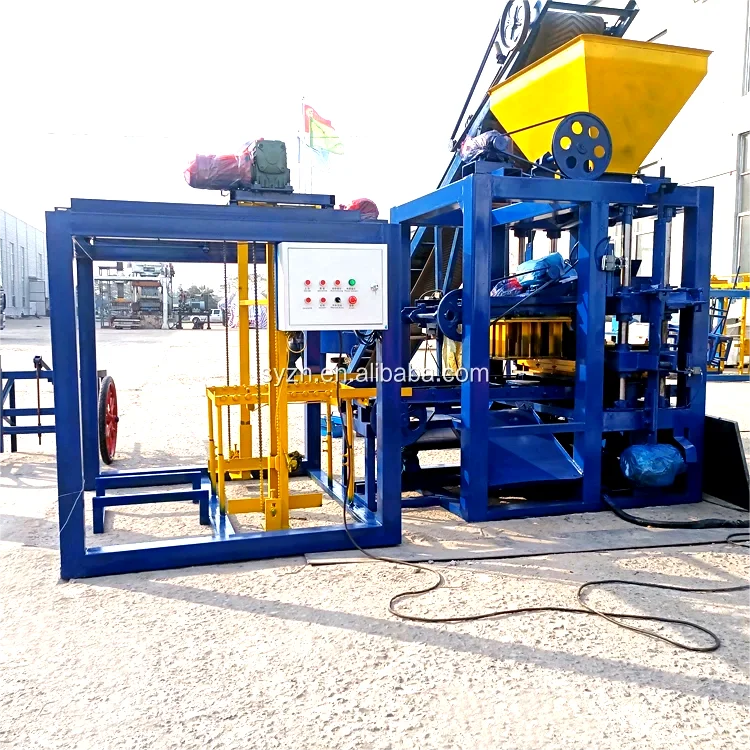
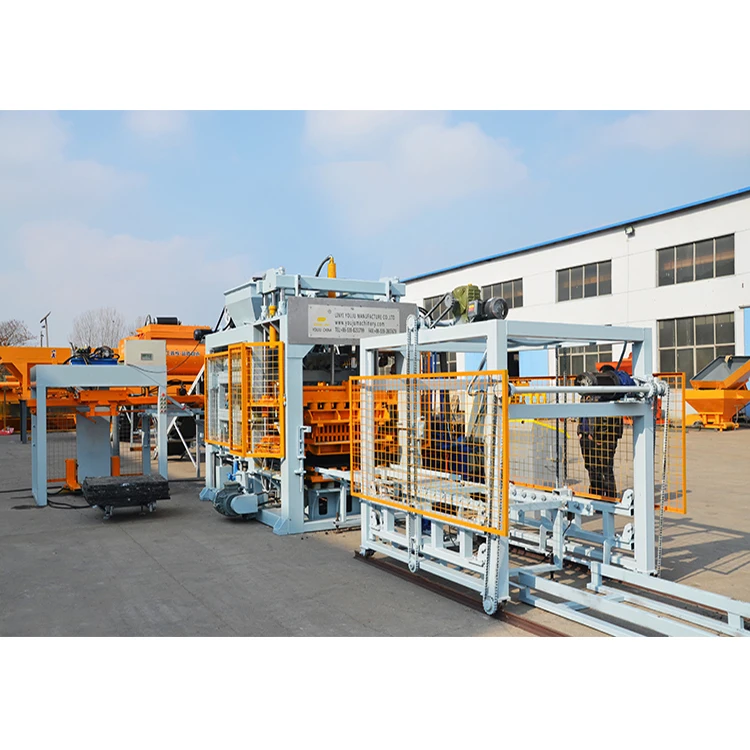
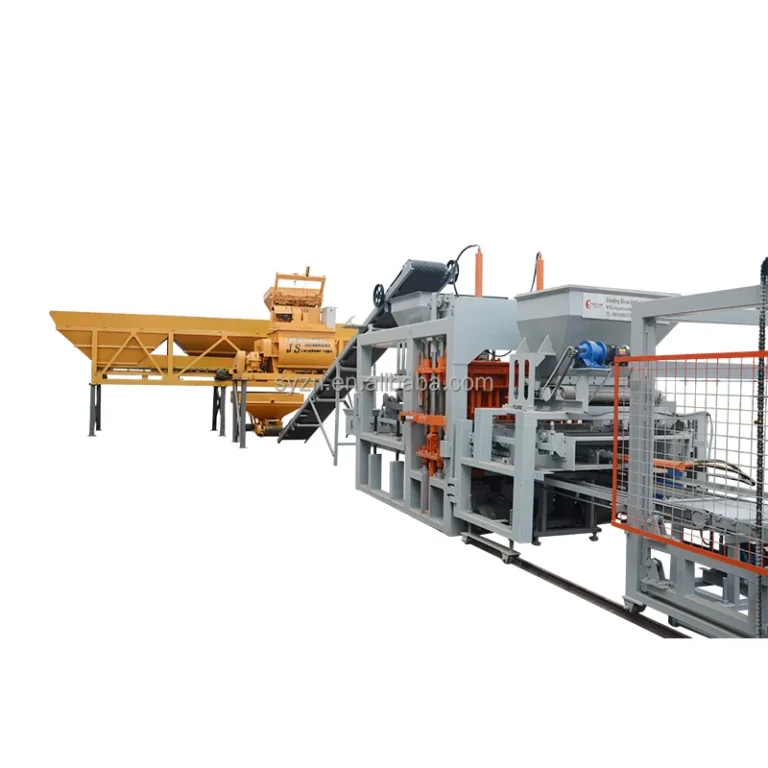
| Product Type | Automatic Hollow Block Making Machine |
| Pallet Size | 1150 × 700 mm |
| Molding Cycle (Hollow Block) | 15–20 s |
| Molding Cycle (Rectangular Brick 200×100×60 mm) | 20–25 s |
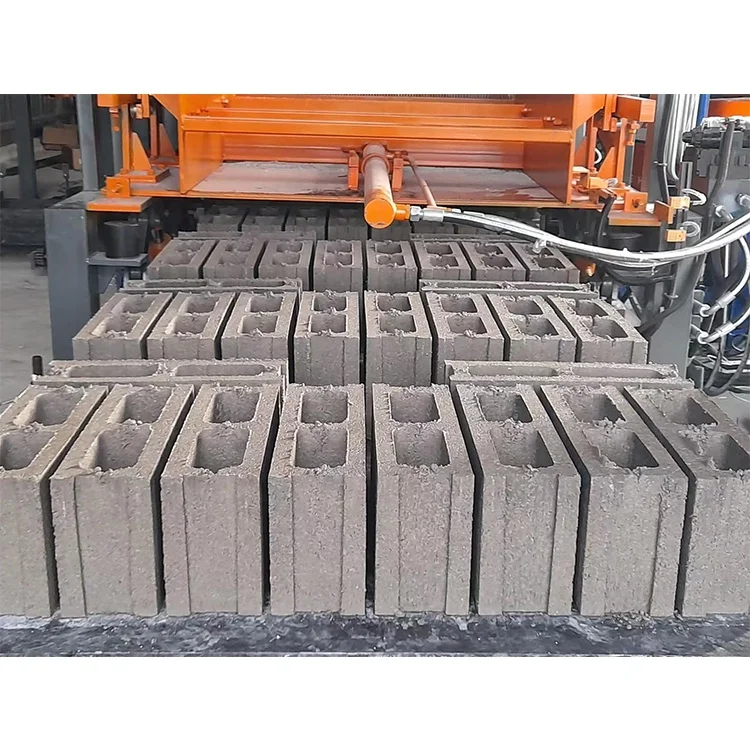
| Output Capacity (400×200×200 mm Hollow Block) | 1260–1680 pcs/hour, 7 pcs per mould (basis: stated cycle) |
| Output Capacity (400×150×200 mm Hollow Block) | 1440–1920 pcs/hour, 8 pcs per mould (basis: stated cycle) |
| Output Capacity (200×100×60 mm Rectangular Brick) | 3888–4860 pcs/hour, 27 pcs per mould (basis: stated cycle) |
| Overall Power | 45 kW |
| Vibration Force | 100 kN |
| Vibration Frequency | 0–60 Hz (adjustable) |
| Vibration Form | Platform Vibration |
| Demolding Method | Hydraulic |
| Total Mass | 8 T |
| Control System | PLC with touch screen interface, remote fault diagnosis supported |
| Automation Level | Automatic |
| Key Features | PLC intelligent control, product process data input and storage, adjustable frequency vibration, hydraulic demolding, remote diagnostics connectivity |
Application Suitability
| Application | Material or Output |
|---|---|
| Hollow block production | Concrete mix with crushed stone, sand, and cement; formats 400×200×200 mm and 400×150×200 mm |
| Rectangular paving brick production | Concrete mix with fine aggregate and cement; format 200×100×60 mm |
| Multi-cellular and standard brick production | Varied concrete mixes adjusted to local aggregate availability |
| Block production plant expansion | Adding hollow block and paver formats on a single PLC-controlled line |
| On-site construction block production | Contractors producing hollow blocks locally with consistent density via platform vibration |
Why PLC Language Confirmation Must Happen Before the Machine Leaves the Factory
An unreadable touch screen on day one stops the entire commissioning schedule.
I spent weeks in a Southeast Asian block plant where the operator stared at a default-language PLC screen, unable to navigate menus or acknowledge alarms. The automatic QT7-15 block machine PLC controlled system sat idle while we arranged a video call across time zones to walk through language settings one screen at a time [NEED_CITE: PLC interface language configuration standards for exported industrial machinery]. That delay cascaded into lost production days, missed delivery deadlines to local contractors, and a frustrated crew reverting to manual workarounds that bypassed the automation they had paid for. When the display language and alarm text are confirmed against the buyer’s operator team before the control cabinet is closed, the QT7-15 starts producing blocks the same week it is powered on.
What the Control System Actually Manages on Every Cycle
The automatic QT7-15 block machine PLC controlled architecture handles more than start and stop commands. The touch screen interface stores product process data for each block format, so switching from 400×200×200 mm hollow blocks to 200×100×60 mm rectangular bricks loads the correct vibration frequency, hydraulic timing, and cycle duration without manual dial adjustment. This removes operator guesswork between formats and keeps density consistent across shifts.
Remote Fault Diagnosis as a Downtime Containment Tool
When a sensor fault or hydraulic timing error triggers an alarm, the remote diagnostics system allows off-site technicians to read the same fault codes the operator sees on the touch screen. Instead of waiting for a service visit to identify the issue, the plant team receives guided troubleshooting steps within hours [NEED_CITE: remote diagnostic response protocols for industrial PLC systems]. For a fully automatic line where the press, pallet feeder, and stacking sequence depend on synchronized PLC signals, this capability shortens unplanned stops that would otherwise idle the entire production floor.
Reading the Specs That Determine Actual Shift Output
The QT7-15 delivers 100 kN of vibration force through platform vibration at an adjustable 0–60 Hz range. On hollow blocks, vibration frequency and hydraulic demolding pressure must work together — higher frequency compacts fine aggregate into the mould corners while hydraulic pressure ensures uniform density through the block body. If the frequency is set too low for a coarse local aggregate, the block surfaces will show voids and fail compressive strength tests. The 1150 × 700 mm pallet size determines how many blocks cure per rack position, and mismatching this to an existing curing area or forklift fork width creates a bottleneck between the press output and the stacking zone. The 45 kW overall power draw requires a dedicated circuit with correct voltage and frequency, which must be confirmed before the motor windings are built to specification.
The Cost of Skipping Automation Configuration Upfront
A plant owner who selects a fully automatic QT7-15 without specifying the pallet feeding and stacking sequence often finds that blocks pile up at the press exit faster than manual labour can move them. The PLC manages the press cycle perfectly, but the downstream bottleneck cancels the throughput advantage [NEED_CITE: block production line synchronization between press cycle and pallet handling equipment]. Similarly, choosing a vibration frequency range without testing it against the buyer’s actual mix design leads to inconsistent block strength, customer rejections, and warranty claims that trace back to a configuration decision made during the quotation stage rather than a machine defect.
Why This Supply Chain Holds Up After the First Year
Block machinery is the single focus of this manufacturer, so the QT7-15 press, moulds, pallets, and handling equipment are specified as one matched system rather than sourced from separate vendors. Configuration is set against the buyer’s actual mix design and target block format, not a catalogue default. Mould design covers the formats the buyer’s market actually sells, with custom drawings available for non-standard sizes. The automation level allows a plant to start with PLC-controlled automatic operation and integrate additional handling stations later without replacing the press. Installation support includes on-site commissioning with operator training tied to the specific formats programmed into the touch screen.
Documentation & Verification
- Line layout and capacity calculation stating the block format and mould cavity count assumed for each output figure
- PLC touch screen language and alarm text confirmation signed off before control cabinet assembly
- Mould drawing and format list confirming cavity count per block type against the buyer’s market requirements
- Factory test record verifying molding cycle times per format against the quoted specification sheet
- Voltage, frequency, and hydraulic pressure settings documented in the electrical and hydraulic schematic package
Installation, Commissioning & Support
- Dedicated 45 kW power circuit with voltage and frequency matching the motor winding specification built for the buyer’s grid
- Foundation pad leveled to support the 8 T total mass and absorb platform vibration without transferring resonance to adjacent structures
- PLC touch screen walked through with operators on each programmed block format, including alarm acknowledgment and cycle override procedures
- Remote diagnostics connectivity tested against the site network before the commissioning team departs
- Mould change procedure practiced with the buyer’s maintenance crew using the specified hydraulic demolding sequence
- Wear parts and hydraulic seal list cross-referenced against local supplier availability for first replacement planning
What to Prepare Before Requesting a Quotation
Send the exact block formats and daily output target for each, along with a sample or description of the local aggregate available. Confirm the site voltage, frequency, and the language the operator team reads on a touch screen. Include the curing area dimensions and the forklift specifications already on site, so the 1150 × 700 mm pallet size can be validated against existing handling equipment before the order is finalized.
Frequently Asked Questions
Q: How is the output capacity verified, and which block format does each capacity figure assume?
A: Every capacity figure on this page states the block format, mould cavity count, and cycle time range it is based on. For example, 1260–1680 pieces per hour assumes 400×200×200 mm hollow blocks with 7 cavities per mould. Factory test records confirm these cycle times before dispatch, and the line layout document repeats the format assumption for each output tier so shift planning starts from verified data.
Q: What PLC language options are available, and is the display language confirmed before shipment?
A: The touch screen interface supports multiple language options, and the specific display language is confirmed with the buyer before the control cabinet is assembled. Alarm text, menu labels, and process data screens are all set to the chosen language. This step is built into the production workflow so operators can navigate the automatic QT7-15 block machine PLC controlled system without translation delays on commissioning day.
Q: How does the remote fault diagnosis system work, and what connectivity does the site need?
A: The remote diagnostics system transmits fault codes and system status from the PLC to off-site technicians who can read the same data the operator sees. The site needs a stable internet connection at the control cabinet location. This allows troubleshooting guidance to reach the plant within hours rather than days, reducing unplanned downtime on a fully automatic line where every station depends on PLC synchronization.
Q: How is the vibration frequency matched to different block formats and local aggregate types?
A: The platform vibration system adjusts across a 0–60 Hz range. Coarse aggregate typically requires lower frequency with longer vibration time, while fine sand-based mixes compact faster at higher frequency. The correct setting for each block format is stored in the PLC process data, so the operator selects the format on the touch screen and the system applies the matching vibration profile automatically for consistent density across every production run.
Q: What is the mould change procedure, and how long does a format switch take on the QT7-15?
A: The hydraulic demolding system releases the mould from the press, and the replacement mould is positioned and locked into place following the documented change procedure. The PLC then loads the stored process data for the new format, including cycle time and vibration settings. Exact changeover duration depends on crew familiarity and is practiced during commissioning so the buyer’s maintenance team can execute format switches independently.