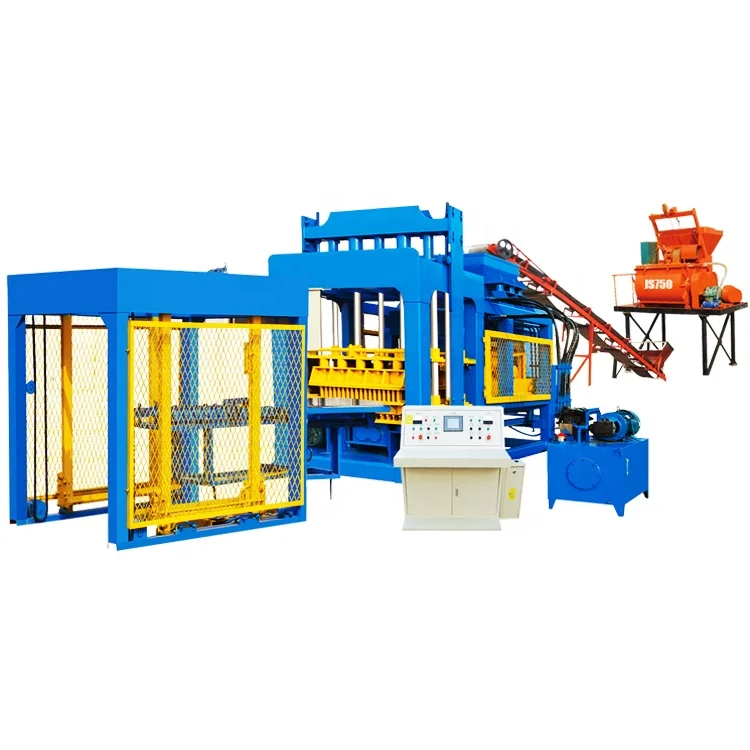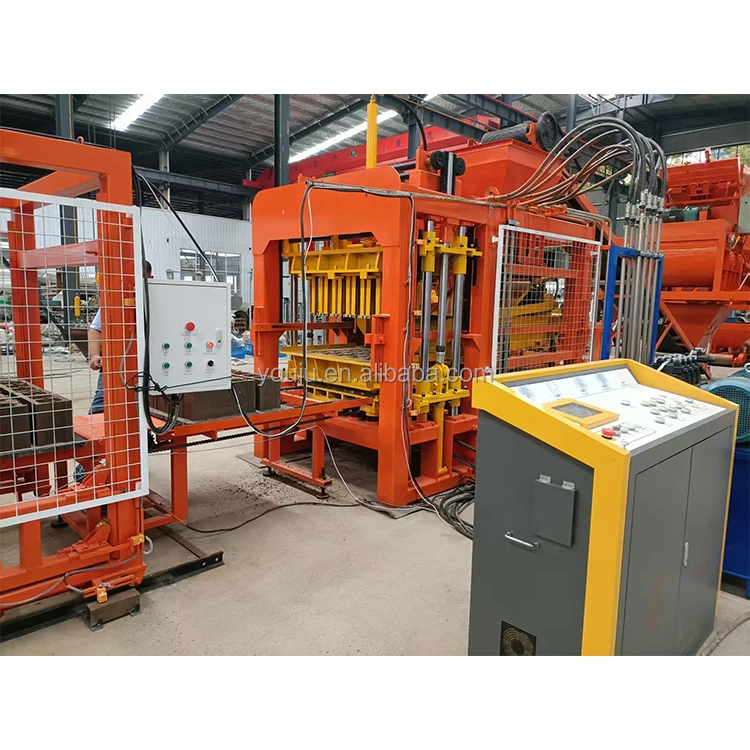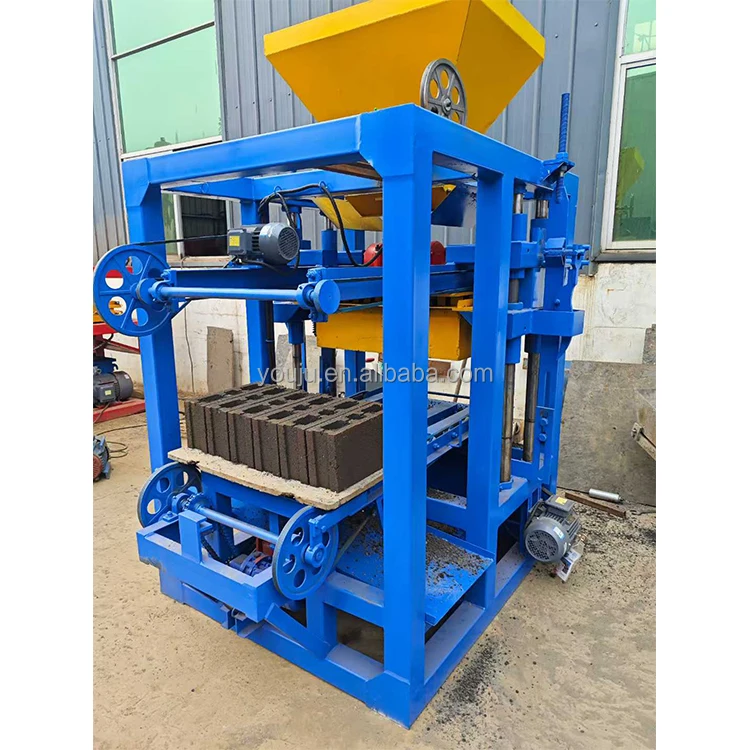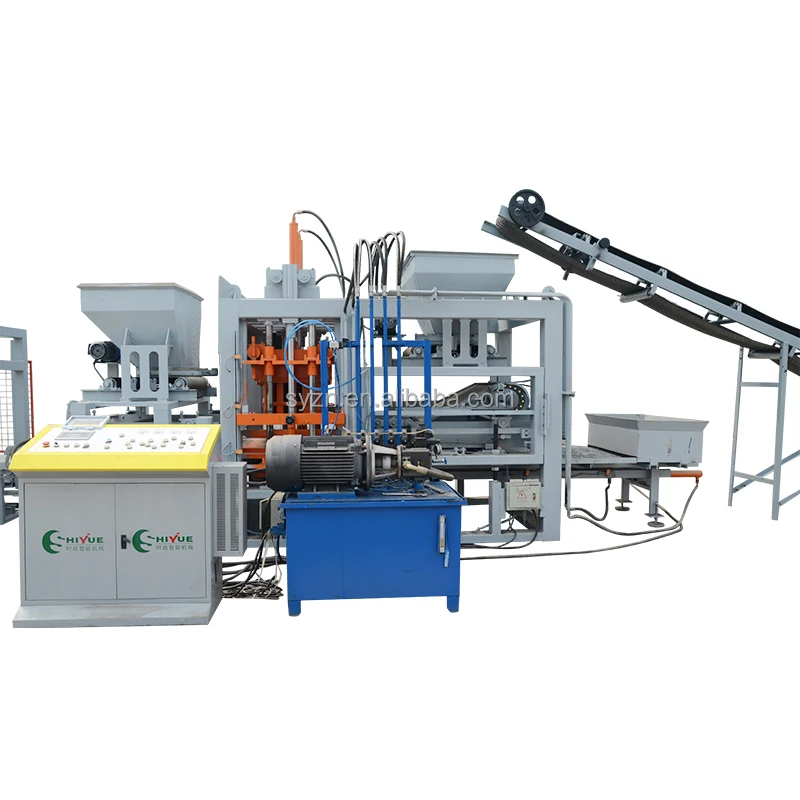


Description
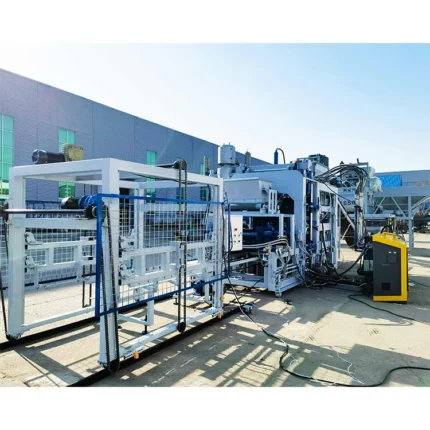
Configurable automation levels — The QT7-15 pairs a Siemens PLC with selectable pallet feeding and stacking stations, letting plant owners remove manual handling at their own pace while maintaining batch-to-batch consistency across block formats.
Technical Specifications
| Parameter | Value |
|---|---|
| Model | QT7-15 |
| Product Type | Automatic PLC Controlled Concrete Block Making Machine |
| Dimension of Host Machine | 3200 × 2300 × 2750 mm |
| Weight of Host Machine | 6 Tons |
| Molding Area | 1150 × 700 mm |
| Workshop Area Requirement | 200 m² |
| Host Machine Power | 45 kW |
| Vibration Force | 100 kN |
| Vibration Frequency | 2800–4500 Times/Minute |
| Vibration Method | Hydraulic + Platform Vibration |
| Pallet Size | 1150 × 700 × 25 mm |
| Voltage Options | 220 / 380 / 415 / 440 V (Customized) |
| Control System | Original Siemens PLC with independently developed program |
| Travel Switch Components | France Schneider and Japan Omron |
| Host Machine Motor | Germany SIEMENS or CE standard brand |
| Mould Hardness | 54–58 HRC (heat treatment and carburizing) |
| Mould Lifespan | Over 100,000 cycles |
| Cycle Time | 15 seconds (basis not stated in source — confirm block format and material) |
| Welding Standard | Carbon dioxide protection welding |
| Batching Machine | PLD1200, 1200 L weigh-batching hopper, 3 species, ±2% precision |
| Concrete Mixer | JS500, 500 L discharge, 25 m³/h production capacity |
| Automation Stations | Pallet feeder, brick receiver, SY-4 stacker (3 kW, 600 kg) |
| Color Paver Option | Additional color feeding system available |
| Certification Standard | CE (materials and spare parts selected per international CE standards) |
Application Suitability
| Application | Material or Output |
|---|---|
| Hollow block production | Crushed stone, sand, cement, and fly ash aggregates |
| Solid block manufacturing | Dense concrete mixes for load-bearing walls |
| Interlocking paver production | Fine aggregate and cement blends for walkways and driveways |
| Color paver runs | Surface-layer color feed over a standard concrete base mix |
| Kerbstone and porous brick | Adjusted vibration profiles for structural or permeable formats |
What "15 Seconds per Cycle" Leaves Out for an Automatic PLC Controlled Block Making Machine
A quoted cycle time means nothing unless it names the block format, wall thickness, and mix design it was measured against.
In my years running brick machinery through commissioning across the Pearl River Delta and overseas, I have watched buyers celebrate a 15-second cycle number on a brochure, only to discover their local volcanic aggregate requires a longer vibration window to reach target density. The automatic PLC controlled block making machine you buy should quote cycle time per format — a 150 mm hollow block and a 60 mm paver do not share the same molding period. When that detail is missing from the proposal, daily output falls short and the line sits idle while operators adjust manually [NEED_CITE: concrete block cycle time dependencies on aggregate type and block geometry].
PLC Control That Removes Guesswork from Every Molding Cycle
The Siemens PLC on the QT7-15 runs an independently developed control program that stores cycle parameters per block format. When an operator switches from hollow block to paver production, the system recalls vibration frequency, hydraulic pressure hold time, and feed duration without manual dial adjustments. This programmable approach is what separates a true automatic PLC controlled block making machine from a semi-automatic press with a screen bolted on.
Vibration Tuning That Matches Your Local Aggregate
The hydraulic-plus-platform vibration system operates between 2800 and 4500 cycles per minute, delivering 100 kN of vibration force across the 1150 × 700 mm molding area. That adjustable frequency range matters because coarse crushed stone needs a different vibration profile than fine sand-based mixes. During commissioning, these parameters are set against the buyer’s actual material samples, ensuring block strength stays consistent from the first pallet to the last [NEED_CITE: vibration frequency matching for concrete block density targets].
Reading the Numbers That Actually Govern Output
The 45 kW host machine power drives both the hydraulic station and the vibration motors, so any increase in vibration force draws from the same power envelope. The 100 kN vibration force must be balanced against hydraulic pressure to avoid cracking green blocks before they reach the curing rack. Pallet size at 1150 × 700 × 25 mm dictates how many blocks sit on each board and therefore how many boards cycle per hour — choose a pallet that does not match your existing curing racks or forklift forks, and you create a handling bottleneck downstream. The PLD1200 batching machine holds three aggregate species at ±2% precision, which directly governs whether batch-to-batch density stays within tolerance. Moulds hardened to 54–58 HRC survive prolonged contact with abrasive aggregates without losing dimensional accuracy, and the stated lifespan beyond 100,000 cycles gives a planning horizon for replacement scheduling rather than reactive downtime.
The Hidden Cost of Skipping Automation Station Confirmation
I once visited a plant where the quotation covered the press and the mixer but left pallet stacking to two workers at the end of the line. Within weeks those two workers became the limiting station — the press waited for empty pallets while finished blocks piled up on the ground. The QT7-15 line includes the SY-4 stacker and brick receiver as grouped equipment, so that particular gap is closed. But buyers who compare quotations line by line without checking whether pallet feeding, stacking, and cubing are scoped will find their labor cost per block stays higher than expected [NEED_CITE: automation station scoping in block plant quotations].
Why Source the QT7-15 Through This Configuration Process
Block machinery is the single focus here, meaning the host machine, moulds, pallets, and handling equipment are specified as one matched system rather than assembled from separate suppliers. Configuration is set against the buyer’s actual mix design and local aggregate, not a catalogue default — I have seen too many lines arrive tuned for river sand when the site only has crushed basalt. Mould design covers the formats the buyer’s market actually sells, including custom drawings when standard moulds do not match local dimensions. Automation level is selectable, so a plant can start with the pallet feeder and stacker now and add cubing later. Installation and commissioning support includes operator training on the PLC interface, not just mechanical assembly.
Documentation & Verification
- Line layout and capacity calculation stating the block format assumed for the QT7-15 cycle time
- Machine specification sheet with voltage and PLC display language confirmed per destination country
- Mould drawing and format list including any custom dimensions from buyer-supplied drawings
- Hydraulic and electrical schematic matching the shipped configuration
- Factory test record on the buyer’s target block format before dispatch
- CE declaration and packing photographs for customs and insurance purposes
Installation, Commissioning & Support
- Workshop floor must accommodate the 200 m² footprint and 2750 mm host machine height with clearance for the stacker
- Dedicated power circuit sized for 45 kW host plus mixer and batching loads at the confirmed voltage and frequency
- Grouped equipment arrives dismantled; reassembly includes hydraulic hose routing and PLC cable termination on site
- First-run parameter tuning sets vibration frequency and hydraulic hold time against the buyer’s local aggregate samples
- Operator training covers PLC recipe selection, mould change procedure, and travel switch calibration using Schneider and Omron components
- Wear parts list and mould replacement schedule provided, referencing the 54–58 HRC hardness rating for planning intervals
Preparing Your Inquiry for an Accurate Proposal
To move from a general inquiry to a configuration that matches your plant, share the block formats you intend to produce, your target daily output per format, and the local aggregate and cement available at your site. Include your existing curing area dimensions and forklift capacity so pallet size can be matched, and confirm the voltage, frequency, and preferred PLC display language for your country. If you operate upstream equipment already, note its throughput so the batching and mixer stations can be sized to keep the press fed without waiting.
Frequently Asked Questions
Q: How is cycle time verified per block format, and what daily output can I expect with my target product?
A: Cycle time depends on block format, wall thickness, and mix design. The QT7-15 PLC stores parameters per format, and a capacity calculation is prepared during the proposal stage naming the specific block used for the quoted cycle. Daily output is then derived from that verified cycle time and the number of operating hours, not from a single brochure figure.
Q: What automation stations are included, and what remains manual at this tier?
A: The grouped equipment covers the pallet feeder, brick receiver, and SY-4 stacker, removing manual pallet handling and end-of-line stacking. Cubing for transport is available as an additional station. Raw material feeding into the PLD1200 batching hopper may still involve a loader depending on your site layout.
Q: Can the PLC display language and voltage be confirmed for my country before shipment?
A: Yes. Voltage is configurable across 220, 380, 415, and 440 V options, and frequency is matched to the destination grid. The PLC display language is confirmed during the order stage so the interface reads correctly when the operator begins training on site, avoiding commissioning delays.
Q: What is the upgrade path if I start semi-automatic and add stacking later?
A: The QT7-15 platform supports adding the SY-4 stacker and brick receiver after initial installation if the line was commissioned without them. The PLC program accommodates the additional stations, and mechanical interfaces on the host machine allow integration without replacing the press or rewriting the control logic.
Q: How are moulds specified for my local aggregate, and what is the replacement cycle?
A: Moulds are designed for the formats your market sells, with drawings reviewed during the proposal stage. Heat treatment and carburizing bring hardness to 54–58 HRC, and the rated lifespan exceeds 100,000 cycles. Replacement timing depends on aggregate abrasiveness, and the wear parts list provided with the machine helps plan procurement before unplanned downtime occurs.