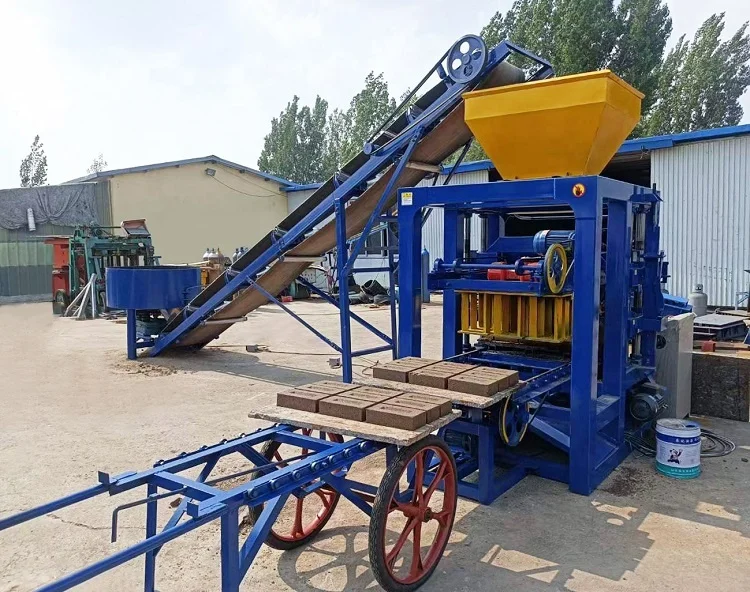
Description
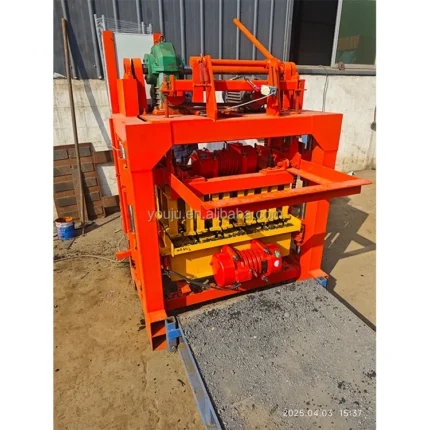
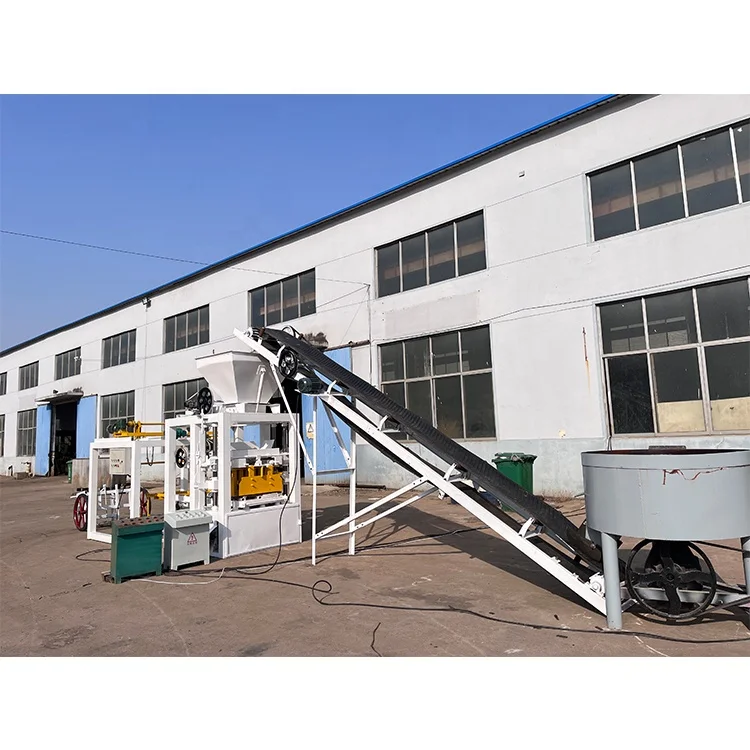
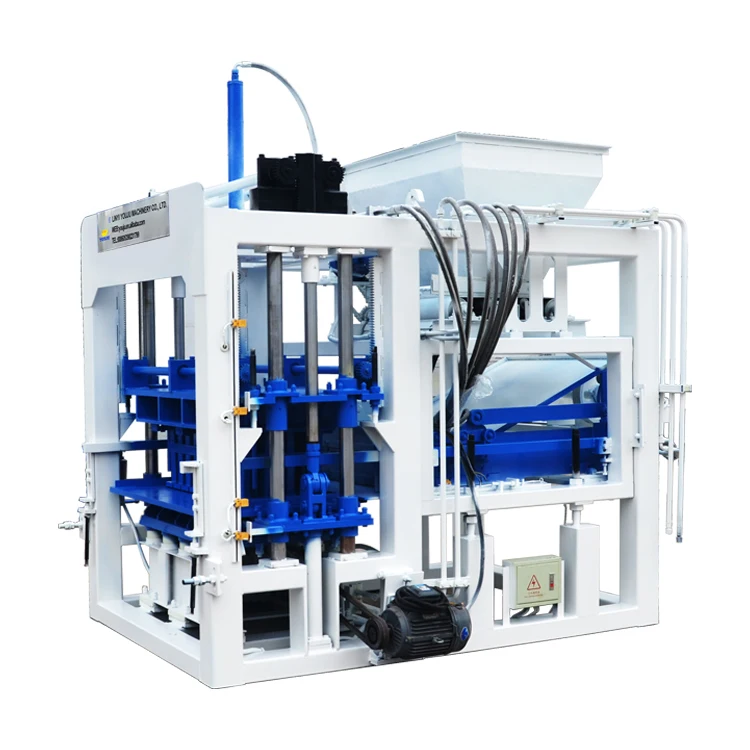
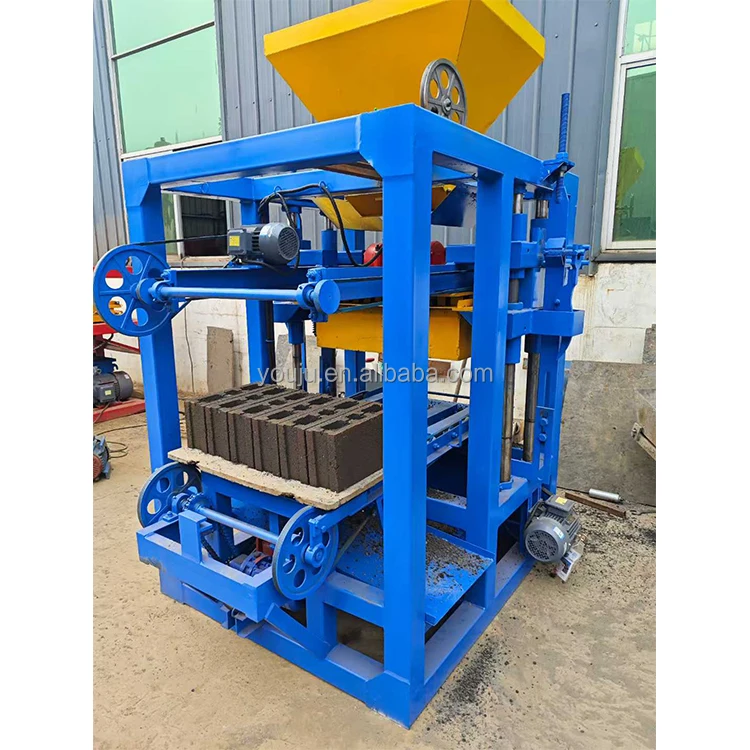
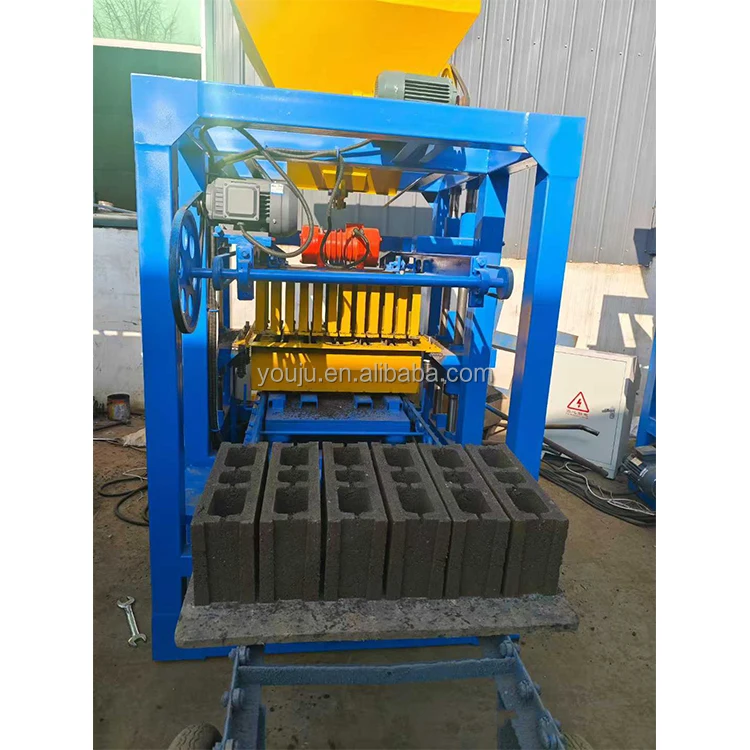
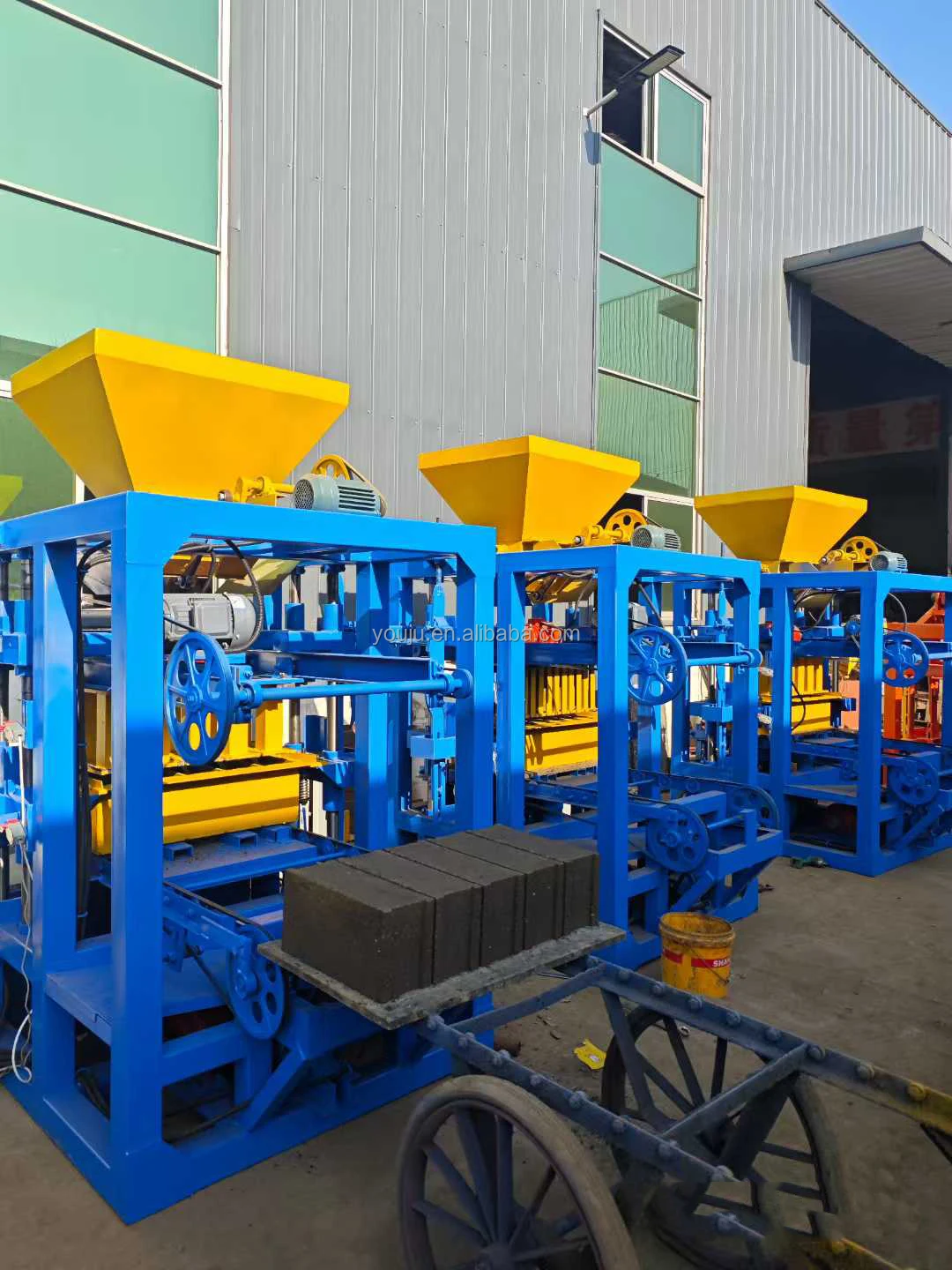
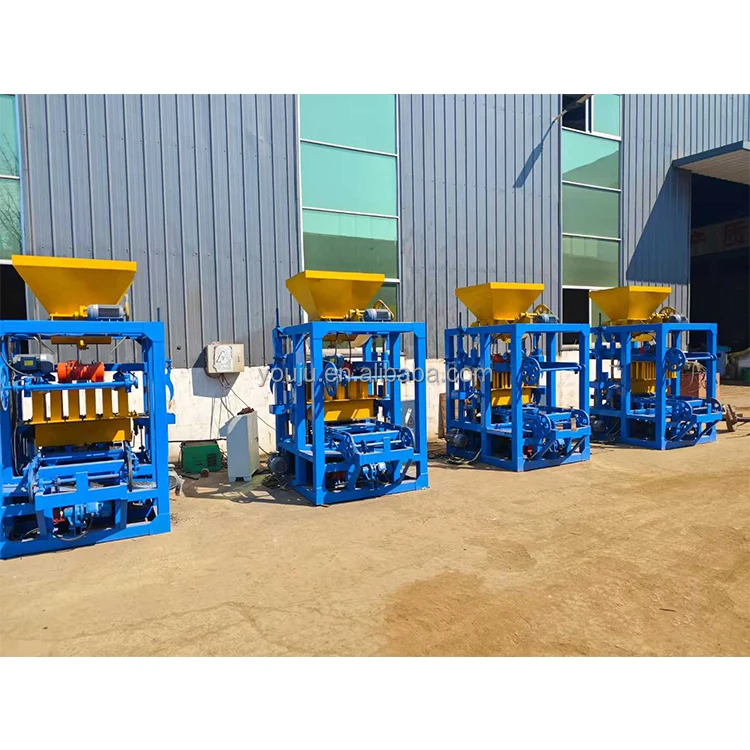
Intelligent control integration — The QTJ4-24 PLC controlled semi-automatic block machine pairs platform vibration with selectable automation, removing guesswork from batch consistency while preserving an upgrade path.
Technical Specifications
| Parameter | Value |
|---|---|
| Model | QTJ4-24 |
| Product Type | Semi-Automatic Concrete Block Making Machine |
| Molding Type | Platform Vibration |
| Overall Dimensions (L×W×H) | 3600mm × 1700mm × 2560mm (working state) |
| Total Mass | 1750 kgs |
| Pallet Size | 850mm × 450mm |
| Overall Power | 14.25 kW |
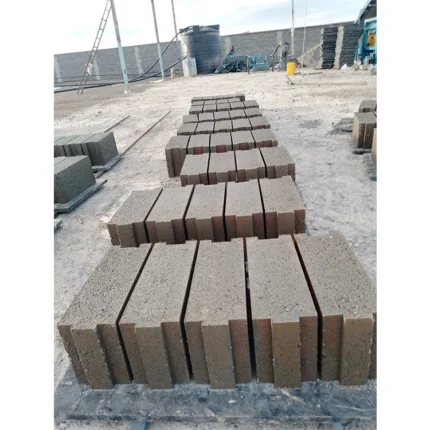
| Mould Format (Hollow Block) | 390mm × 190mm × 190mm (4 pcs/mould) |
| Mould Format (Solid Brick) | 240mm × 115mm × 53mm (21 pcs/mould) |
| Vibration System | Lower platform (2 × 3 kW motors) + Upper vibration (1.5 kW attached device) |
| Elevating System | Cone-shape motor with JZQ250 speed reducer, V-belt drive |
| Delivery Device | Cycloidal pin wheel speed reducer, chain and V-belt drive |
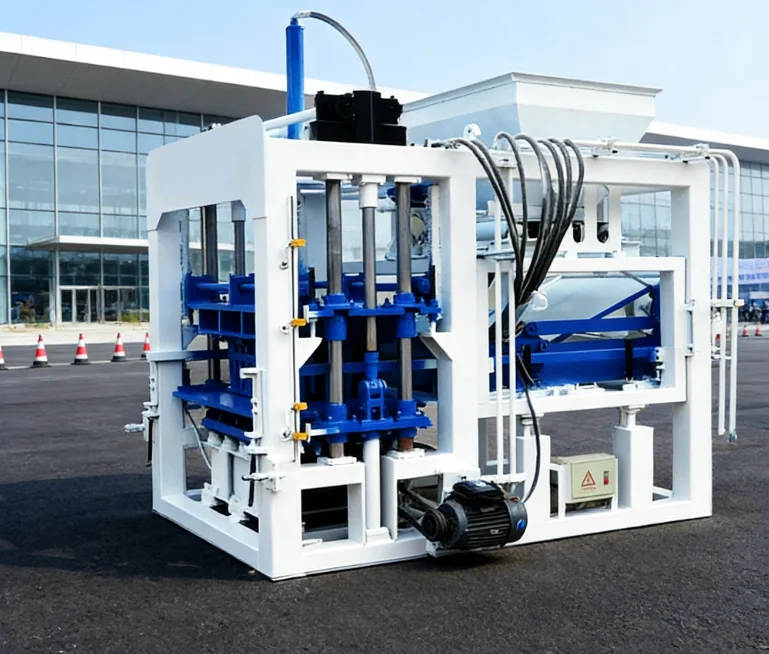
| Machine Frame | Dragon gate style, super steel construction, four wear-resisting vertical shafts |
| Automation Level | Semi-automatic (mechanical and electronic combined control) |
| Control System | Electronic controlling part (PLC type and language to be confirmed) |
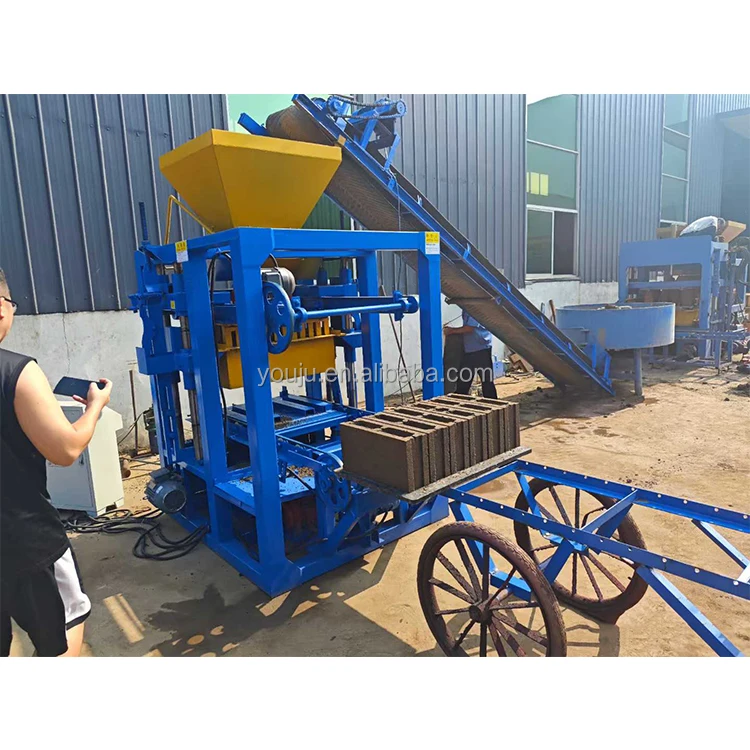
| Supporting Equipment (Basic) | JQ350 pan mixer, 6m belt conveyor, trolley |
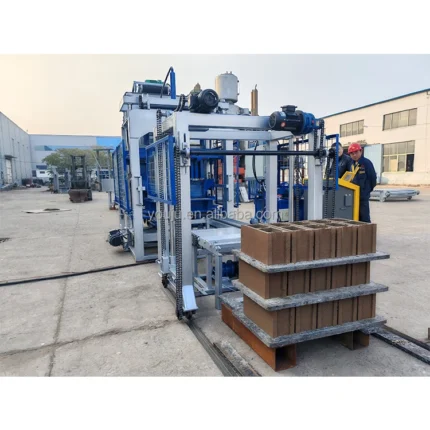
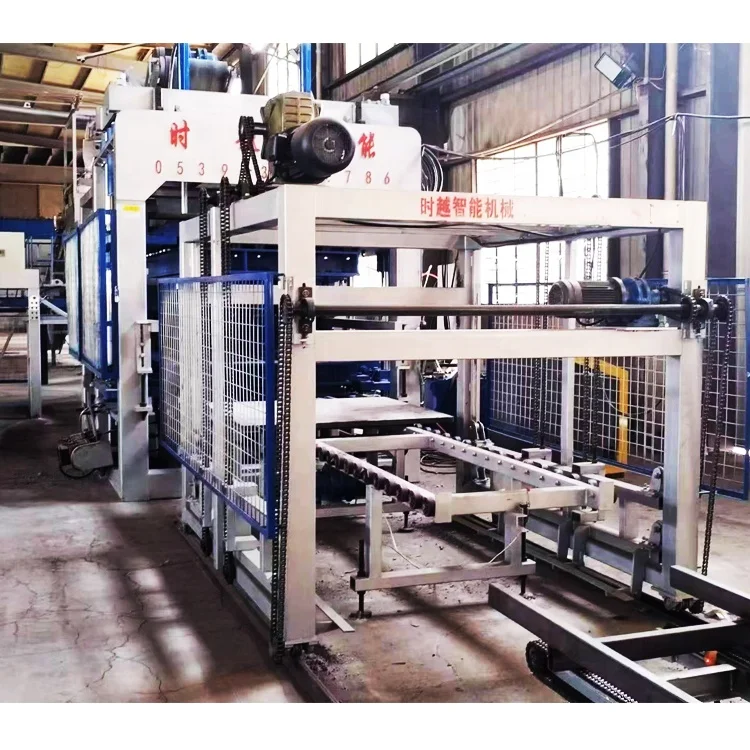
| Supporting Equipment (Optional) | Auto stacker (3-6 layers per pallet height) |
| Cycle Time per Format | basis not stated in source |
| Output Capacity | basis not stated in source |
| Voltage & Frequency | to be confirmed with buyer’s site |
| Mould Change Time | basis not stated in source |
Application Suitability
| Application | Material or Output |
|---|---|
| Small-scale hollow block production | Crushed stone, cement, sand, and water mix for 390×190×190mm hollow blocks |
| Solid brick manufacturing | Fine aggregate and cement blend for 240×115×53mm standard bricks |
| On-site contractor block plants | Local aggregate and cement for housing and development projects |
| First-line entrepreneur setup | Semi-automatic production with manageable capital cost and upgrade path |
| Format addition to existing range | Hollow block or solid brick formats on the same machine platform |
Why the Voltage and Control Language Question Comes Before the Price
A PLC controlled semi-automatic block machine that arrives with the wrong voltage or an unreadable display is not a production asset — it is a crate of steel sitting on your floor.
I spent years commissioning lines in Shandong workshops and later flew out to buyer sites across different continents. The pattern is always the same: the buyer focused on output numbers and mould count, but nobody confirmed whether the control panel would speak their operator’s language or whether the site transformer could handle the inrush current. One project stalled for weeks because the PLC interface defaulted to Chinese characters and the local electrician could not trace the fault codes. The delay cost far more than the machine itself [NEED_CITE: typical commissioning delays caused by unconfirmed electrical parameters]. When you are evaluating a QTJ4-24, the electrical confirmation must happen before the production order is released, not after the container is loaded.
How the PLC Controlled Semi-Automatic Block Machine Holds Consistency
The QTJ4-24 uses a combined mechanical and electronic control system that manages the vibration cycle, mould elevation, and material delivery in a repeatable sequence. The operator initiates each cycle, but the timing and force application are governed by the control logic rather than manual judgment. This removes the most common source of block-to-block variation: inconsistent compaction time and uneven vibration duration. When the control language and display are confirmed to match the operator’s working language before shipment, the learning curve on day one shrinks from days to hours.
The Upgrade Path From Semi-Automatic to Full Line Automation
What makes this machine platform valuable for a growing plant is that the automation level is selectable. A buyer can start with the QTJ4-24 in its standard semi-automatic configuration — manual trolley transfer, operator-initiated cycles — and later add an automatic stacker that handles three to six layers per pallet height. The transition to full PLC-controlled batching, pallet feeding, and cubing does not require replacing the press. The mechanical frame, vibration system, and mould interface remain the same; only the peripheral stations and control depth change. This staged approach keeps initial capital expenditure aligned with actual market demand while preserving the option to scale [NEED_CITE: phased automation adoption in small block plants].
Reading the Specs That Actually Matter on the Floor
The dual vibration system is the core of block density. The lower platform carries two 3 kW motors that drive matched excitation force upward through the mould, while a 1.5 kW attached device provides upper vibration to settle the top face. Together, they compact the mix from both directions, which is critical when local aggregate contains a higher percentage of fines or irregular particle shapes. The dragon gate frame with four wear-resisting vertical shafts keeps the mould aligned over thousands of cycles; any drift in shaft tolerance translates directly into block dimension variation that your buyer will reject at the gate. The 850mm × 450mm pallet size must be checked against your existing curing racks and forklift fork width — a mismatch here means buying new racking or hand-stacking cured blocks. The JQ350 pan mixer and 6m belt conveyor in the basic package handle a small workshop volume, but if your daily target requires continuous feeding, the mixer capacity and belt speed must be evaluated against your actual cycle rhythm. Power draw at 14.25 kW total means a dedicated circuit with appropriate breaker sizing, confirmed against your site voltage and frequency before the machine enters production.
The Hidden Cost of Skipping Electrical and Control Confirmation
When voltage and frequency are assumed rather than verified, the consequences cascade through the entire commissioning phase. Motors wound for a frequency the site does not supply will overheat or run at the wrong speed, altering vibration force and cycle timing in ways that are not immediately visible on the block face. PLC display panels locked in an unfamiliar language turn a ten-minute fault diagnosis into a multi-day troubleshooting exercise that requires flying in a technician. Operators who cannot read the control interface will revert to manual overrides, defeating the consistency the electronic control was designed to deliver. These are not rare edge cases; they appear regularly on projects where the electrical confirmation step was treated as paperwork rather than a production-critical checkpoint [NEED_CITE: export machinery electrical compatibility standards].
Why Buyers Source This Machine Through Our Configuration Process
Every QTJ4-24 we build is configured against the buyer’s actual mix design and local aggregate, not pulled from a catalogue default with vibration force set to a generic value. The mould format is selected for the block dimensions your market actually buys, with custom mould design available from your own drawings when standard formats do not match. Voltage, frequency, and PLC display language are confirmed line-by-line before production begins — I personally check every contract against these parameters because I have seen what happens when they are left to assumption. The automation level is chosen to match your current labour setup and your growth plan, so you are not paying for automatic stacking you do not need today but can add next year. Documentation arrives with the machine, not weeks after: factory test records, electrical schematics, and wear parts lists in your operator’s language.
Documentation & Verification
- Factory test record showing cycle sequence on your specified block format before dispatch
- Electrical schematic confirming voltage, frequency, breaker sizing, and control wiring
- PLC display language confirmation sheet signed off before production release
- Mould drawing and format list matching your agreed block dimensions
- Wear parts and consumables list with part numbers for reorder
- Operation and maintenance manual in confirmed operator language
Installation, Commissioning & Support
- Dedicated circuit required for 14.25 kW total load with site voltage and frequency verified before connection
- Machine arrives in working-state dimensions of 3600×1700×2560mm — confirm workshop doorway and floor load capacity
- Four vertical shafts and vibration motors inspected and alignment checked during on-site commissioning
- PLC control language and fault code display verified with operator on first power-up
- Mould change procedure demonstrated using your specific format tooling and supplied hardware
- Optional auto stacker integration tested at three to six layer heights against your pallet racking
What We Need to Configure Your QTJ4-24 Correctly
Tell us the exact block formats your market demands — dimensions, wall thickness for hollow blocks, and target compressive strength. Share your local aggregate source and typical mix proportions so we can match vibration force and cycle timing to what you will actually feed. Confirm your site voltage, frequency, and the language your operators read on a control panel. If you have existing curing racks or forklifts, provide the pallet dimensions they accept so the 850mm × 450mm pallet spec is validated against your floor layout. Let us know whether you want to start with manual trolley transfer or include the auto stacker from day one, so the control system is built to support your chosen automation level without rewiring later.
Frequently Asked Questions
Q: How is the output capacity of the QTJ4-24 calculated, and which block format is the figure based on?
A: Output capacity depends on the block format, mix design, and operator cycle rhythm. Any capacity figure must state the assumed format — for example, four 390×190×190mm hollow blocks per mould or twenty-one 240×115×53mm solid bricks per mould. We provide a line layout and capacity calculation that names the format explicitly, so you can compare it against your daily target without guesswork.
Q: What PLC control options and display languages are available, and can the system be upgraded to full automation later?
A: The electronic control system supports multiple display languages, confirmed and locked in before production. The QTJ4-24 is designed with a defined upgrade path: you can start with semi-automatic operation and later add automatic pallet feeding, stacking, and full PLC batching without replacing the press, vibration system, or mould interface.
Q: How do I confirm the machine’s voltage and frequency match my site before shipment?
A: Voltage and frequency are confirmed during the quotation stage and written into the production order. We verify motor winding specifications, transformer sizing, and PLC power supply ratings against your site data. A signed electrical confirmation sheet is required before the machine enters the production queue.
Q: How long does a mould change take on the QTJ4-24, and what tools or training are needed?
A: Mould change time varies by format and operator experience. The four vertical shaft guide system keeps the mould aligned during swap, and the process uses standard hand tools. We demonstrate the full change procedure during commissioning using your specific mould set and provide written steps in the operation manual.
Q: How is vibration force matched to my local aggregate and mix design to ensure consistent block strength?
A: The dual vibration system — two 3 kW lower platform motors plus a 1.5 kW upper device — is configured based on your aggregate gradation, cement ratio, and target compressive strength. We set vibration duration and force profile against your actual mix, not a factory default, and validate it during the factory test before dispatch.