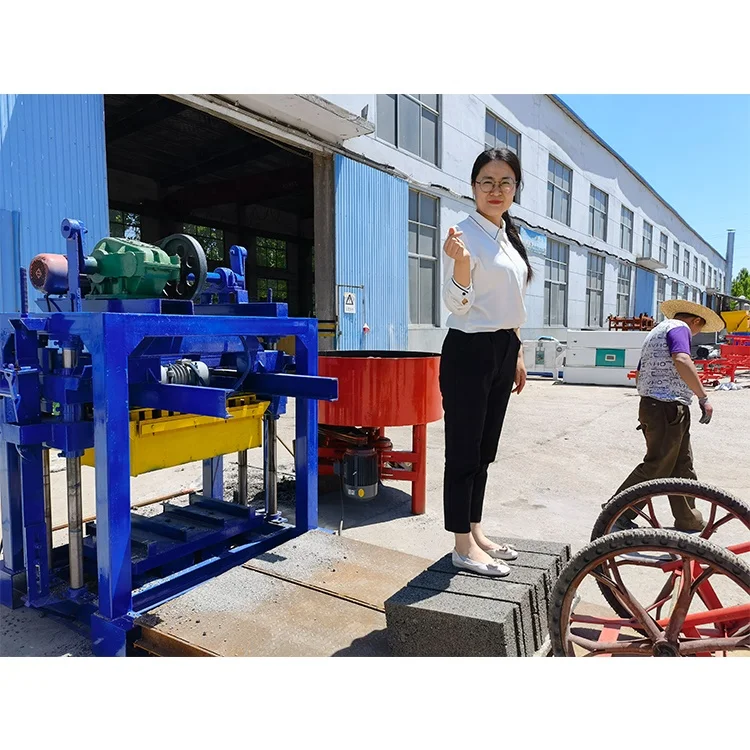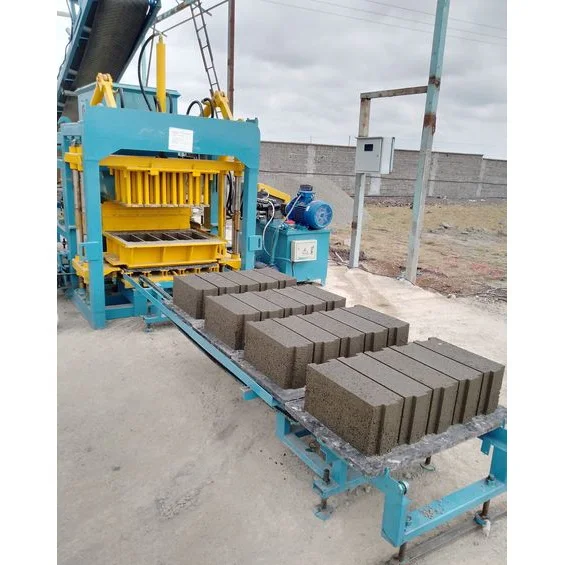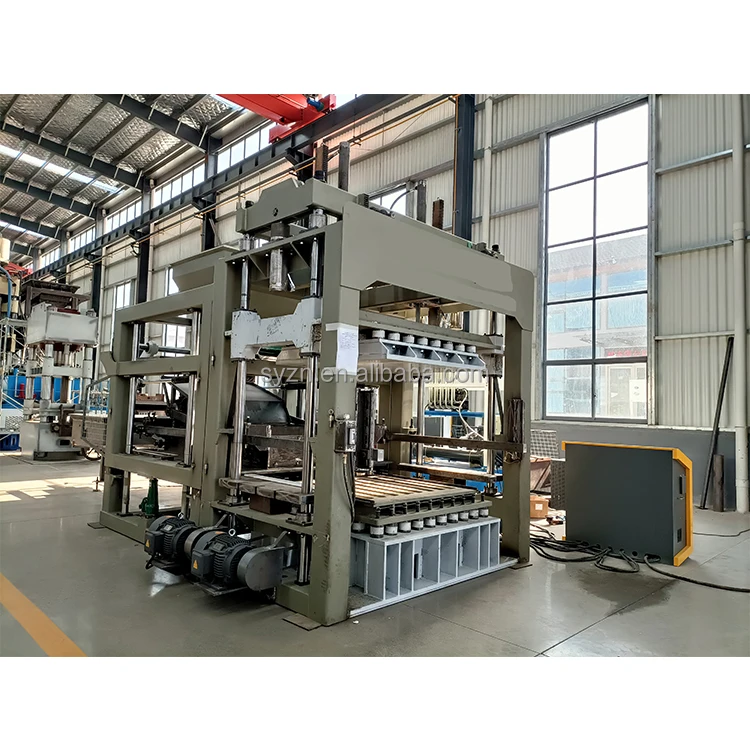


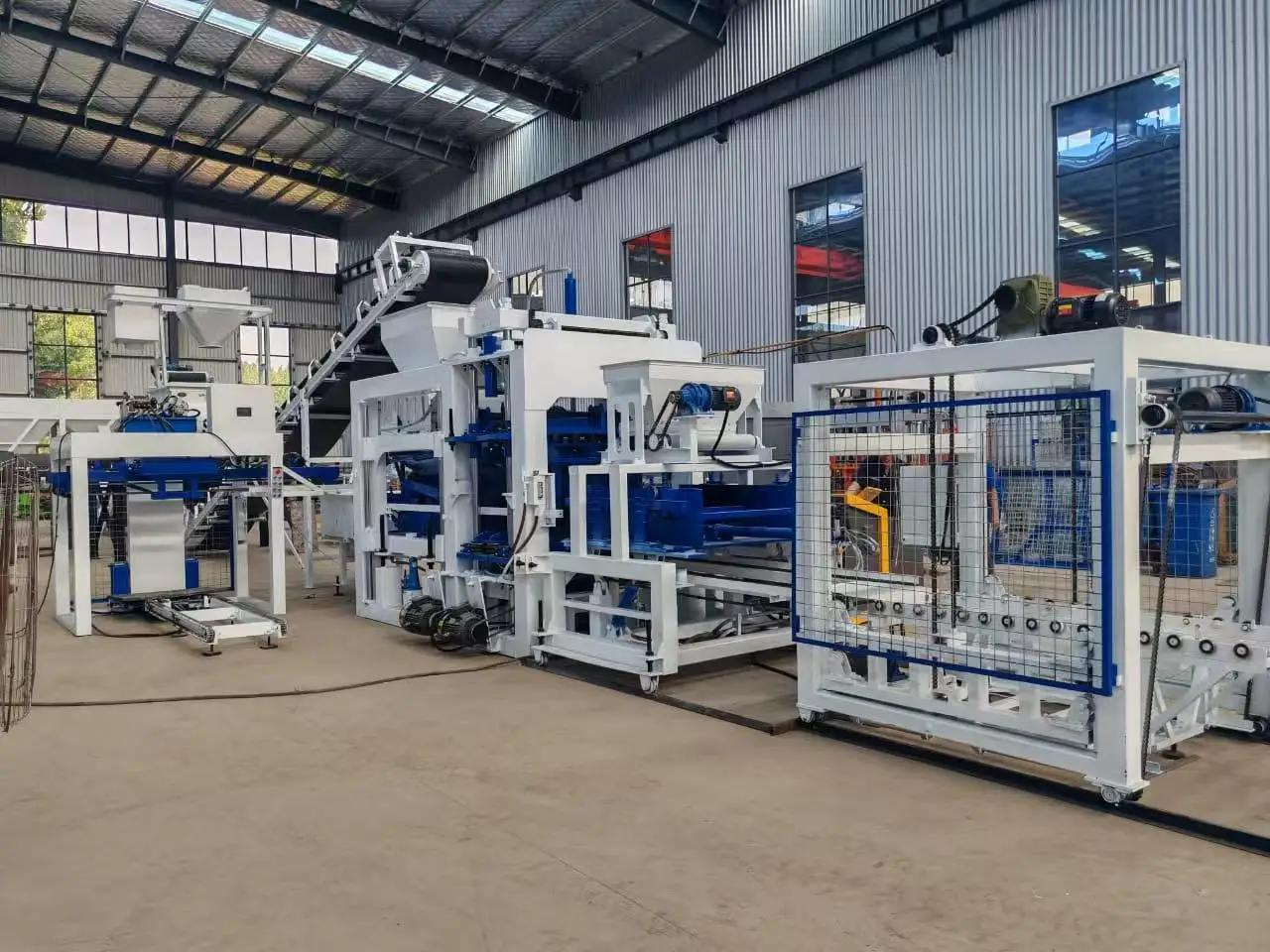
Description
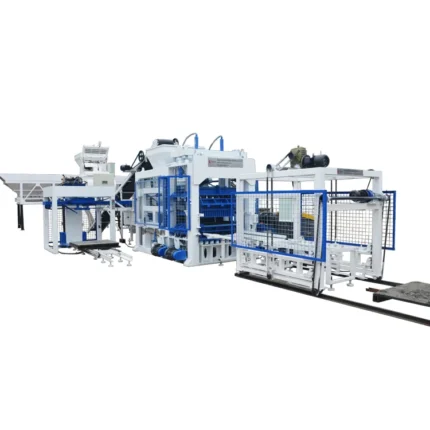
Matched System Logic — The QT8-15 automatic block making machine PLC controlled is specified as a coordinated press, pallet, and control package rather than a catalogue default, ensuring the automation level fits the buyer’s actual plant workflow.
Technical Specifications
| Parameter | Value |
|---|---|
| Model | QT8-15 |
| Product Type | Automatic Hydraulic Block Making Machine |
| Overall Dimensions (L×W×H) | 8300×1860×3000 mm |
| Total Mass | 8 T |
| Rated Pressure | 21 MPa |
| Main Vibration Form | Platform Vibration |
| Vibration Frequency | 2800–4500 r/min |
| Vibration Force | 45 kN |
| Pallet Size | 950×900 mm |
| Molding Cycle | 15–20 s (basis not stated in source — confirm block format / material / thickness) |
| Overall Power | 55.5 kW |
| Demolding Method | Hydraulic |
| Factory Area Required | 300 m² |
| Control System | PLC (language options to be confirmed) |
| Voltage & Frequency | Configurable (confirm target market supply) |
| Automation Level | Automatic |
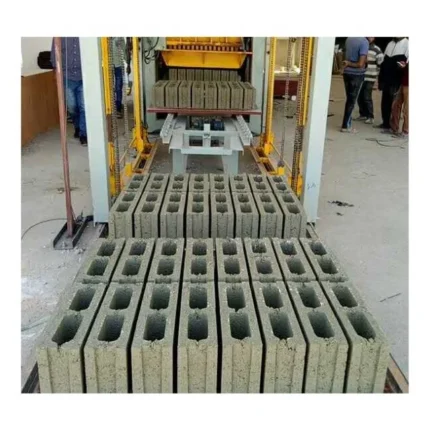
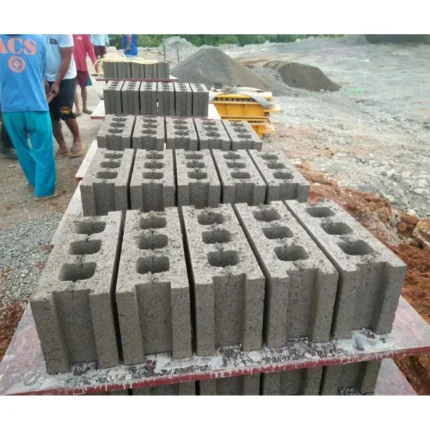
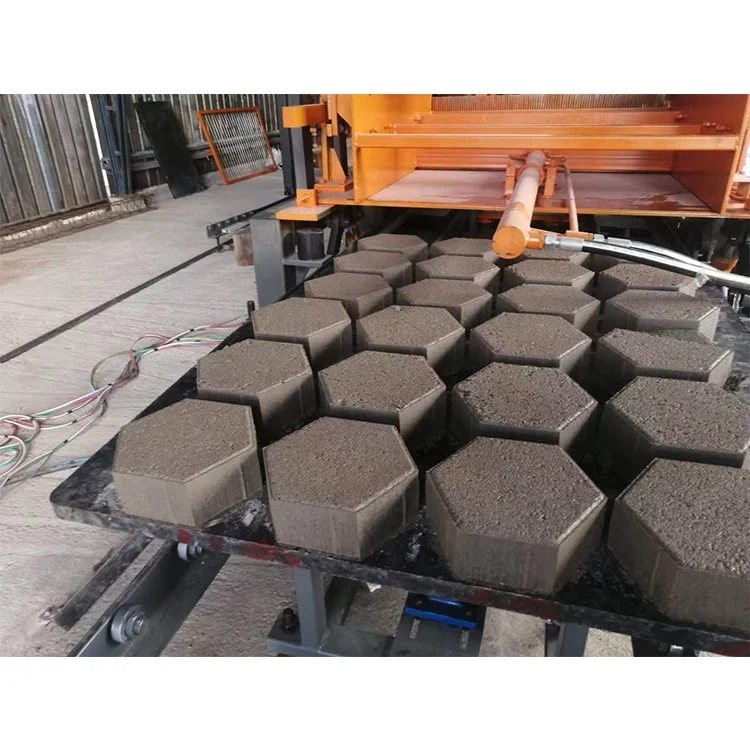
| Applied Products | Concrete blocks, hollow/solid blocks, pavers, interlocking blocks, curbstone, colored pavers |
| Raw Materials | Crushed stone, sand, cement, dust, fly ash, gravel, slag |
| Loading | 1×40HQ container (basic equipment) |
Application Suitability
| Application | Material or Output |
|---|---|
| Hollow Block Production | Crushed stone, sand, cement, fly ash |
| Solid Block Manufacturing | Gravel, sand, cement, slag |
| Paver and Colored Paver Output | Fine aggregates, cement, pigment |
| Interlocking Block and Kerbstone | Coarse aggregates, cement, dust |
Why the Language on the Screen Matters Before the Machine Arrives
A mismatched PLC interface language turns the first week of commissioning into a translation exercise instead of a production start.
I spent two days flying to a Southeast Asian site because a QT8-15 Block Paver Machine Brick Manufacturing Machine Block Machine Making Automatic arrived with the entire HMI locked in Chinese characters. The local operators could not navigate the recipe screens, and the commissioning schedule collapsed before the first pallet was cycled. That automatic QT8-15 block making machine PLC controlled delay cost the contractor idle labor and pushed back the curing schedule for an entire housing project [NEED_CITE: typical commissioning delays from language mismatch on exported PLC systems]. The fix was a firmware flash on-site, but it should have been a line item on the factory test sheet. When the control language, voltage, and frequency are confirmed in writing before the machine is wired, the intelligent side of the press actually delivers what the automation spec promises.
Sequencing the Automation Stations Around the Press
The QT8-15 automatic block making machine PLC controlled is not just a press; it sits inside a chain of material feeding, pallet circulation, and stacking stations that must cycle in lockstep. If the pallet feeder is slower than the press release, the hydraulic demolding waits, and the 15–20 s molding cycle stretches into dead time. The PLC manages these interlocks so the operator monitors a single sequence rather than watching each station independently. This coordination is where automation level becomes a real plant variable rather than a catalogue checkbox.
Scaling the Control Logic From Semi-Automatic to Full Line
Buyers often start with manual pallet handling and add automatic stacking or cubing later. The QT8-15 control architecture allows this upgrade path without replacing the core PLC or rewiring the main cabinet. The initial configuration stores format recipes for the block types the buyer’s market actually sells, and the same interface later accepts signals from downstream stackers and curing rack handlers. This means the intelligent control investment is protected even when the plant layout expands [NEED_CITE: PLC scalability in modular block production lines].
Reading the Vibration and Pressure Numbers Together
The 45 kN vibration force and 21 MPa rated pressure on the QT8-15 are not independent specs; they work as a matched pair against the buyer’s mix design. Platform vibration at 2800–4500 r/min consolidates the concrete around the mould cavity, while the hydraulic pressure compresses it from above. If the local aggregate is angular crushed stone rather than rounded river gravel, the vibration frequency needs to sit toward the upper end of the range to achieve full compaction. The 950×900 mm pallet size must also clear the curing rack spacing and forklift capacity already on site, or the automated press output piles up at the end of the line [NEED_CITE: vibration force and hydraulic pressure interaction in concrete block compaction].
When the Automation Spec Does Not Match the Plant Reality
A press configured for a mix the buyer cannot source locally forces a material change that negates the PLC consistency advantage. Pallet size chosen without checking the existing curing area means the automatic stacker has no destination, and blocks are handled manually anyway. Voltage and frequency left to the factory default can trip the main breaker on the first cycle if the site supply is 50 Hz and the cabinet was wired for 60 Hz. These are not rare edge cases; they appear regularly on installations where the automatic QT8-15 block making machine PLC controlled was ordered from a catalogue page rather than a confirmed site survey [NEED_CITE: common installation faults from unconfirmed electrical and material specifications].
Why the Intelligent Configuration Matters Here
Block machinery as a single focus means the QT8-15 press, mould, pallet, and handling equipment are specified as one system rather than assembled from separate suppliers. The control logic is set against the buyer’s actual mix design and target block format, not a default programme. Automation level is selectable so a plant owner can begin semi-automatic and add stacking modules later without a full control replacement. Mould design covers the formats the buyer’s market sells, including custom drawings for interlocking or kerbstone profiles. Installation and commissioning support includes operator training on the PLC interface in the confirmed language so the first shift runs without external intervention.
Documentation & Verification
- Line layout and capacity calculation stating the block format assumed for the QT8-15 cycle time.
- PLC display language and voltage confirmation sheet signed before cabinet wiring.
- Factory test record on the buyer’s specific pallet size and mould configuration.
- Hydraulic and electrical schematic matching the as-built 55.5 kW power supply.
- Wear parts and mould list with replacement intervals for the hydraulic demolding system.
Installation, Commissioning & Support
- Foundation pad sized for the 8300×1860 mm footprint and 8 T dynamic load.
- Dedicated circuit rated for 55.5 kW overall power with confirmed voltage and frequency.
- PLC language and HMI labels verified against the signed confirmation sheet before first power-on.
- Vibration frequency tuned on-site to match the buyer’s local aggregate and mix design.
- Operator training on the 950×900 mm pallet loading sequence and hydraulic demolding cycle.
- Wear parts stock list covering hydraulic seals and vibration motor bearings for the first year.
What We Need to Configure Your Line
To size the QT8-15 correctly, share the target block format, daily output requirement, local raw material source, and site voltage. We also need the curing rack spacing and forklift capacity already on site so the 950×900 mm pallet is confirmed before production. If the plant will start semi-automatic and add stacking later, state the intended upgrade timeline so the PLC reserve I/O is allocated at the factory.
Frequently Asked Questions
Q: How is the 15–20 s molding cycle verified for my specific block format?
A: The cycle figure depends on block format, material, and thickness, which must be stated before the number is meaningful. We run a factory test with your actual mould and mix recipe, then record the real cycle time on the test sheet so the daily output calculation matches your production target rather than a catalogue assumption.
Q: What automation upgrade path exists after the initial QT8-15 commissioning?
A: The PLC cabinet includes reserve I/O for downstream stackers, cubing units, and curing rack handlers. You can start with manual pallet handling and add automatic stations later without replacing the main controller. The upgrade is a module addition, not a full control swap, keeping the original investment intact.
Q: How are pallet size and material matched to my existing plant equipment?
A: We check your curing rack spacing and forklift capacity before the 950×900 mm pallet is ordered. If the rack pitch or fork width differs, the pallet dimension is adjusted so the press output feeds directly into your curing area without manual re-handling or pallet rejection at the stacker.
Q: How does the QT8-15 mould change affect multi-format scheduling?
A: Hydraulic demolding and PLC-stored format recipes shorten the changeover compared to manual bolt-and-clamp systems. The operator selects the target recipe on the HMI, and the press adjusts vibration and pressure parameters automatically, keeping multi-format production viable within a single shift rather than losing the day to setup.
Q: How do you match vibration force and pressure to my local aggregate?
A: We review your mix design and aggregate source before setting the vibration frequency range and hydraulic pressure curve. Angular crushed stone requires different compaction energy than rounded gravel, so the 45 kN vibration force and 21 MPa pressure are tuned to your material to maintain consistent block strength across batches.