

Description
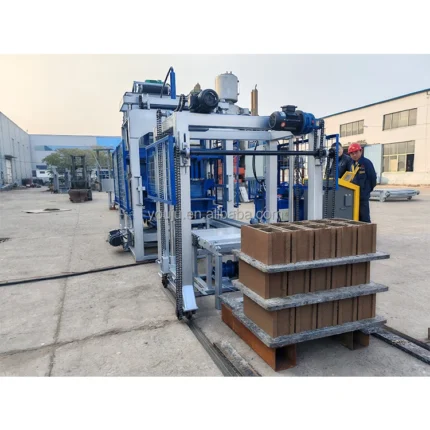
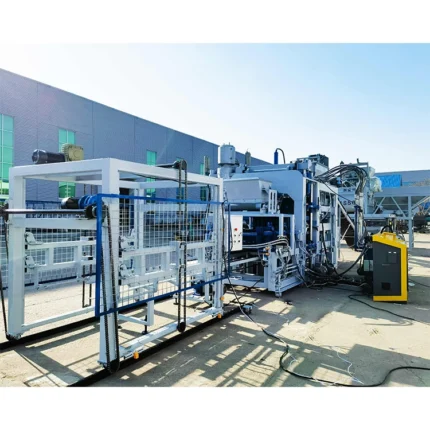
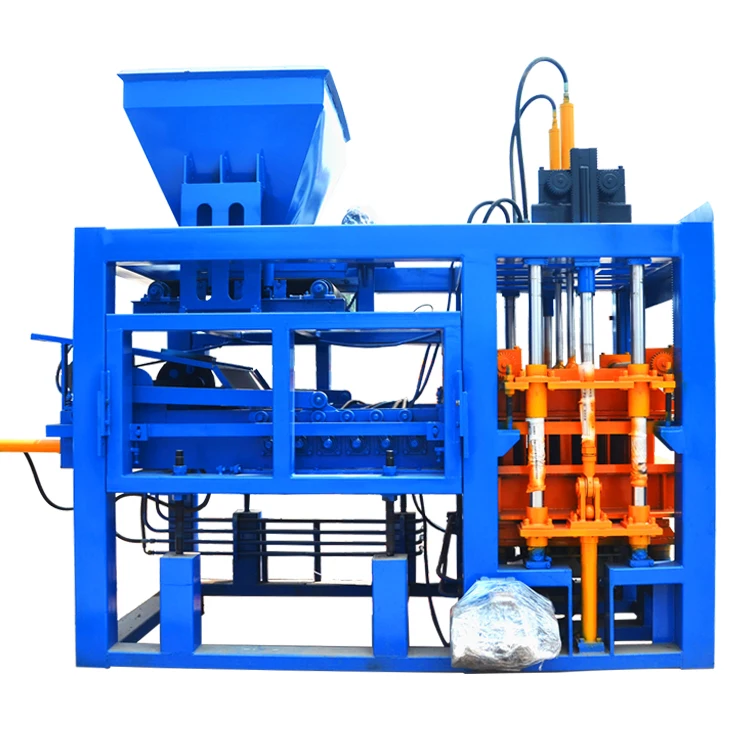
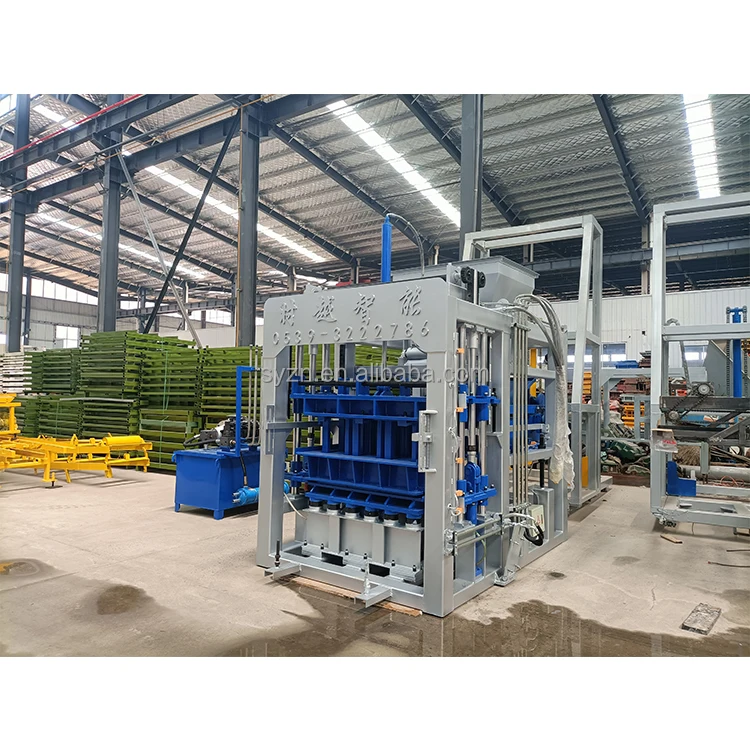
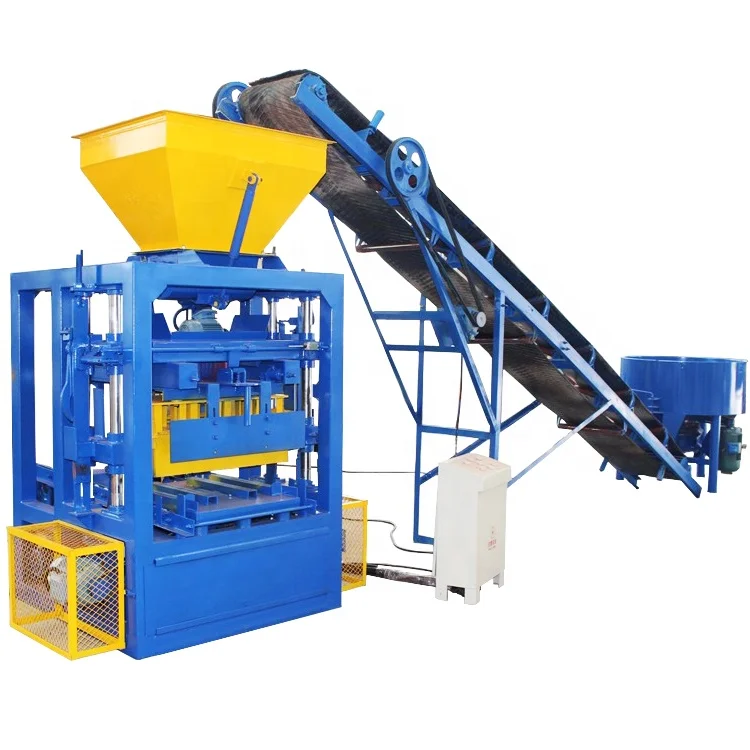
Matched System Engineering — the QT8-15 block making machine PLC controlled setup treats the press, hydraulic circuit, and automation stations as one integrated line rather than a collection of standalone components.
Technical Specifications
| Parameter | Value |
|---|---|
| Product Type | Hydraulic Concrete Block Making Machine |
| Model | QT8-15 |
| Overall Dimensions (L×W×H) | 8300×1860×3000 mm |
| Rated Pressure | 21 MPa |
| Vibration Form | Platform Vibration |
| Vibration Frequency | 2800–4500 r/min |
| Vibration Force | 60 kN |
| Pallet Size | 950×900 mm |
| Molding Cycle | 15–25 s (basis not stated in source — confirm block format / material / thickness) |
| Overall Power | 55.5 kW |
| Total Mass | 9 T |
| Demolding Method | Hydraulic |
| Control System | PLC with human-machine interface dialogue system |
| Automation Level | Fully automatic |
| Feeding System | Semi-closed screen reticular rotational feeding unit |
| General Water Consumption | 12 T/Day |
| Factory Area | 600 m² |
Application Suitability
| Application | Material or Output |
|---|---|
| Hollow block production | Crushed stone, sand, cement, fly ash |
| Solid block manufacturing | Gravel, slag, cement blends |
| Paving slab and colored paver output | Fine aggregate, cement, pigment |
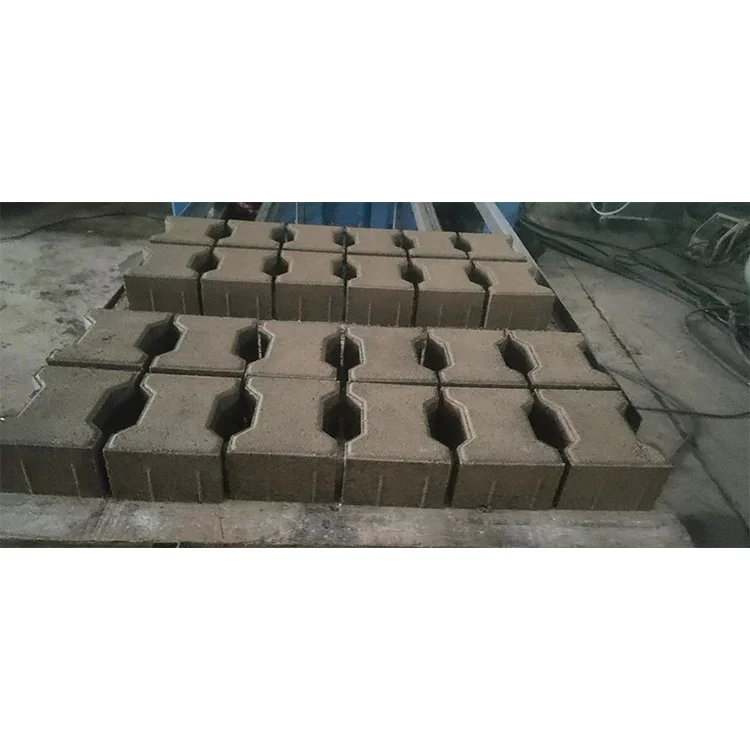
| Interlocking block forming | Crushed stone, sand, cement |
| Curbstone production | Coarse aggregate, cement |
What the Molding Cycle Number Does Not Tell You
The automatic QT8-15 block making machine PLC controlled cycle time of 15–25 seconds appears straightforward on a spec sheet, but that range shifts depending on the block format, wall thickness, and mix design being pressed.
I have watched buyers sign contracts based on a single cycle-time figure, then discover at commissioning that their primary product — a thick-walled hollow block using a high-fly-ash mix — pushes the cycle to the slow end of the range. Daily output then falls well below the number they planned their business case around. The honest approach is to confirm the cycle time against the specific block format and local aggregate before the purchase order is finalized [NEED_CITE: block cycle time variance by format and mix].
How the PLC Dialogue System Removes Operator Guesswork
The automatic QT8-15 block making machine PLC controlled interface lets operators store vibration frequency, hydraulic pressure, and feeding duration as named presets. When the line switches from hollow blocks to interlocking pavers, the operator selects the saved recipe rather than manually adjusting valves and timers. This eliminates the drift that occurs when different shifts set parameters by feel, and it gives plant owners a repeatable baseline for every production run.
Synchronizing Vibration and Hydraulic Flow for Batch Consistency
Platform vibration alone does not guarantee uniform density. The QT8-15 pairs its 2800–4500 r/min vibration range with computer-controlled hydraulic flow pressure so that both forces act on the mould cavity at the same moment. When the vibration frequency and hydraulic pressure arrive in sync, the aggregate particles settle into a tighter matrix. The result is a block that meets its target compressive strength across every pallet, not just the first few cycles after a mould change [NEED_CITE: hydraulic-vibration synchronization effect on block density].
Reading the Specs That Actually Shape Output
The 21 MPa rated pressure and 60 kN vibration force together determine how densely the mix is compacted inside the mould. Higher pressure without sufficient vibration leaves air pockets near the block core; high vibration without adequate pressure produces a block that crumbles at the edges during demolding. The 950×900 mm pallet size dictates the maximum mould footprint and must align with the curing racks and forklifts already on site — a mismatch here forces a plant to rebuild its curing area. The 55.5 kW total power draw requires a dedicated circuit with adequate breaker capacity; undersized supply wiring causes voltage drop that shortens motor life. The semi-closed screen reticular rotational feeding unit forces material into the mould cavity at a controlled rate, which matters most for thin-walled pavers where uneven fill shows up as surface blemishes.
The Cost of Overlooking Automation Scope
A quotation that lists the press as "fully automatic" without itemizing pallet feeding, stacking, and curing rack handling can leave a plant with an automated press and a crew of workers still moving wet pallets by hand. I have seen buyers assume stacking was included, only to learn at delivery that the automatic stacker was an optional station quoted separately. The press itself runs fine, but the bottleneck shifts to manual pallet handling, and the labour savings the buyer expected never materialize [NEED_CITE: automation scope gaps in block machine quotations].
Why Source the QT8-15 Through This Line
Block machinery is our single focus, so the QT8-15 press, its mould, pallet, and handling equipment are specified as one matched system rather than assembled from unrelated suppliers. Configuration is set against your actual mix design, local aggregate, and target block format instead of a catalogue default. Mould design covers the formats your market sells, with custom drawings available for non-standard shapes. The automation level is selectable, meaning a buyer can start with the press and pallet feeder now and add stacking or cubing stations later. Installation and commissioning support includes operator training so your crew is running the line independently before our technician leaves the site.
Documentation & Verification
- Line layout drawing with capacity calculation stated per block format
- PLC language and voltage confirmation sheet signed before production
- Hydraulic and electrical schematic matching the shipped configuration
- Factory test record using your target mould and mix proportions
- Mould drawing and format list covering every block in the quotation
Installation, Commissioning & Support
- Foundation pad sized to the 8300×1860 mm footprint with anchor bolt plan
- Dedicated 55.5 kW supply circuit with voltage and frequency confirmed on the电控柜 nameplate
- Press shipped partially dismantled; reassembly and alignment on site before first run
- PLC parameter presets loaded for each block format during commissioning
- Operator training covering mould change, recipe selection, and daily maintenance checkpoints
- Wear parts list and first-set spares included with shipment
Tell Us What the Line Needs to Produce
Before we size the automation stations around the QT8-15, share the block formats your market demands, the daily volume per format, and the aggregate available locally. Let us know your site voltage and frequency, the PLC display language your operators need, and whether pallet stacking and cubing are part of the scope or will be added in a later phase.
Frequently Asked Questions
Q: How is the PLC control language confirmed before shipment, and can it be changed after delivery?
A: We confirm the PLC display language with a signed verification sheet before the cabinet is wired. The human-machine interface can be reloaded with a different language file after delivery, but doing so on site requires a technician and a brief stoppage. Confirming upfront avoids that delay entirely.
Q: What does the 15–25 s molding cycle assume, and which block format is it based on?
A: The 15–25 second range is a general envelope. The actual cycle for a given block depends on wall thickness, mix moisture, and aggregate size. We provide a capacity calculation that states the assumed format and mix, so you can plan daily output around a figure that matches your product.
Q: How does the QT8-15 automation level compare to semi-automatic models?
A: The QT8-15 automates material feeding, vibration, hydraulic pressing, and demolding through PLC control. Semi-automatic models require the operator to trigger each step manually. The upgrade path allows adding automatic stacking and cubing stations without replacing the press itself.
Q: Can vibration frequency and hydraulic pressure be saved as per-format presets?
A: Yes. The PLC dialogue system stores vibration frequency, hydraulic pressure, and feeding time under a named recipe for each block format. Operators recall the preset when changing moulds, so parameter consistency is maintained across shifts.
Q: What is the upgrade path from partial automation to a full stacking and cubing line?
A: The QT8-15 press and pallet feeder can operate independently. Automatic stacking and cubing stations connect to the same PLC network and can be added later. The electrical cabinet is pre-wired with reserved I/O channels for those future stations.