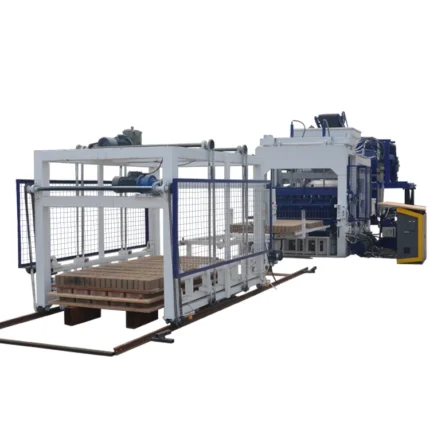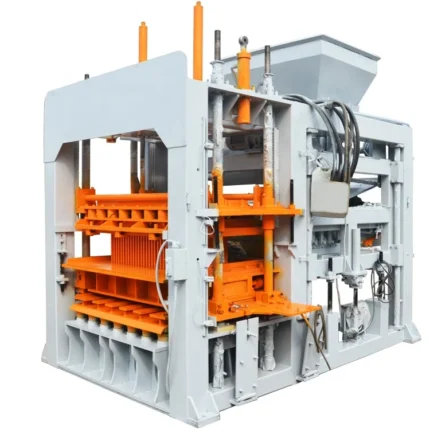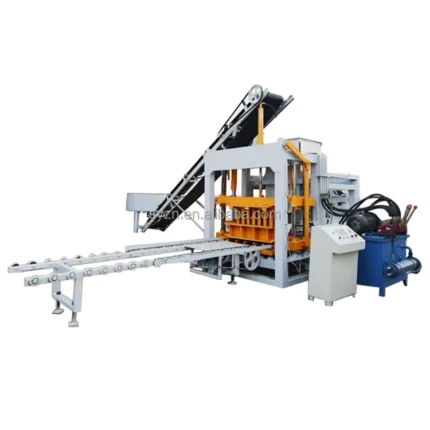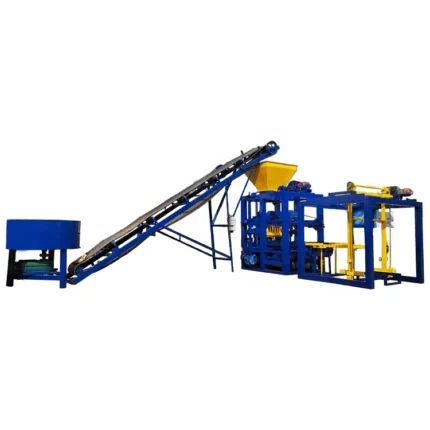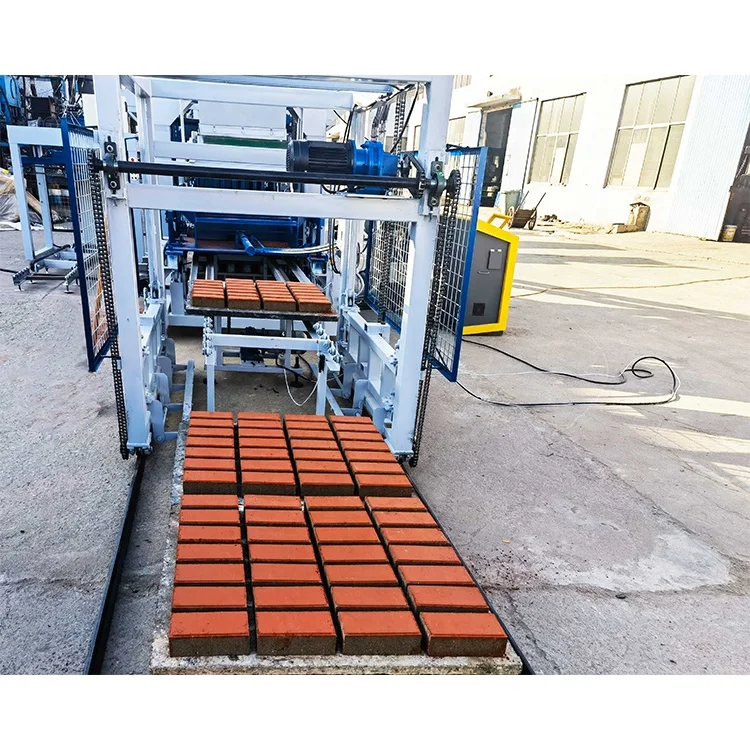

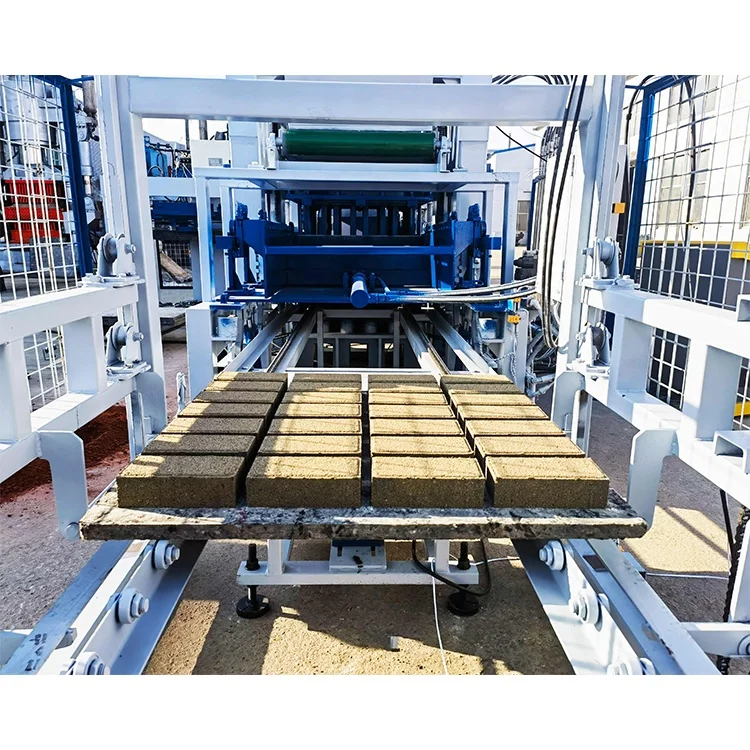
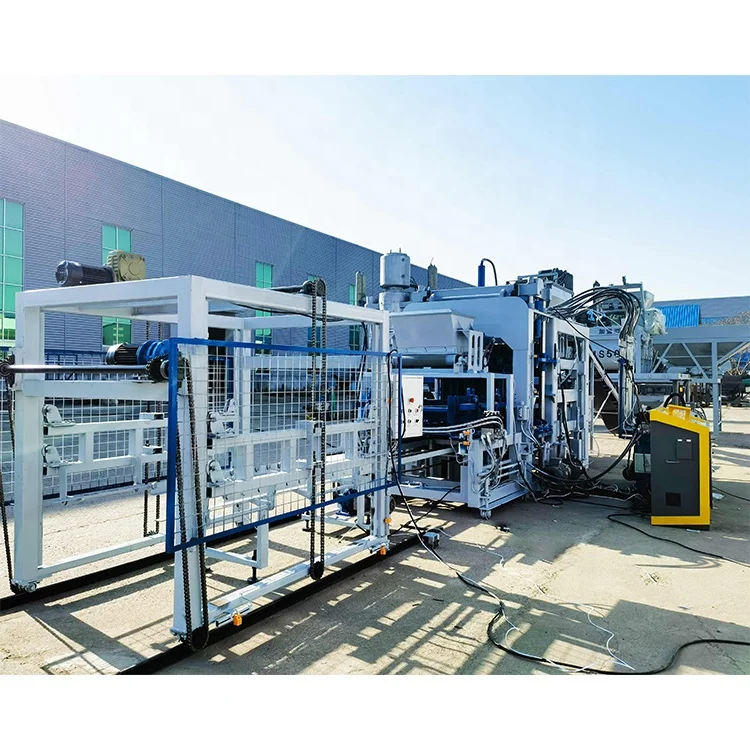
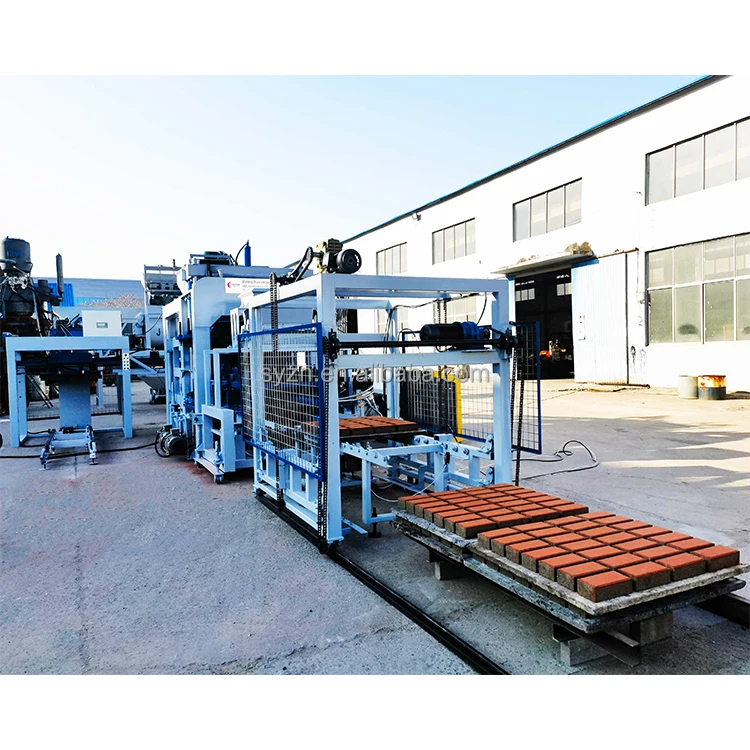
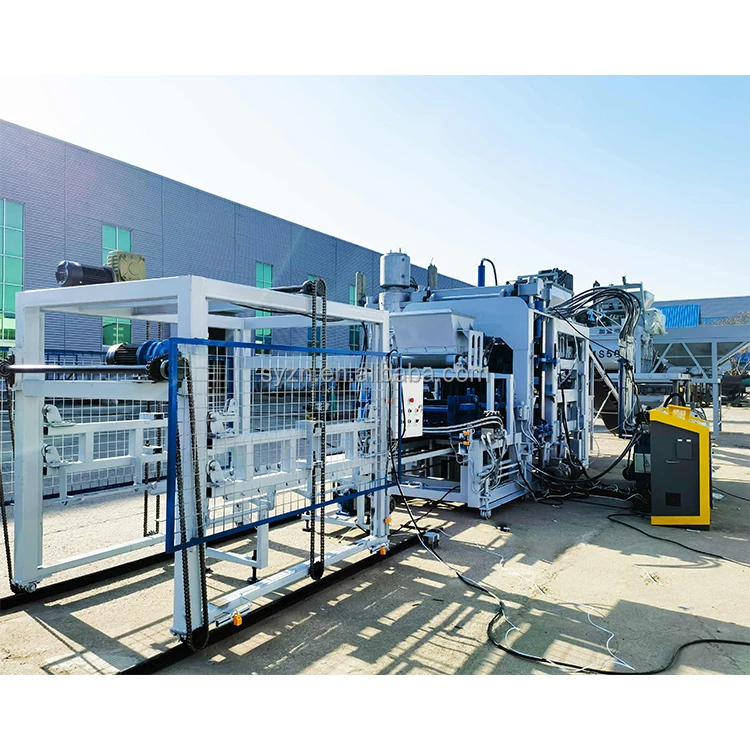
Description
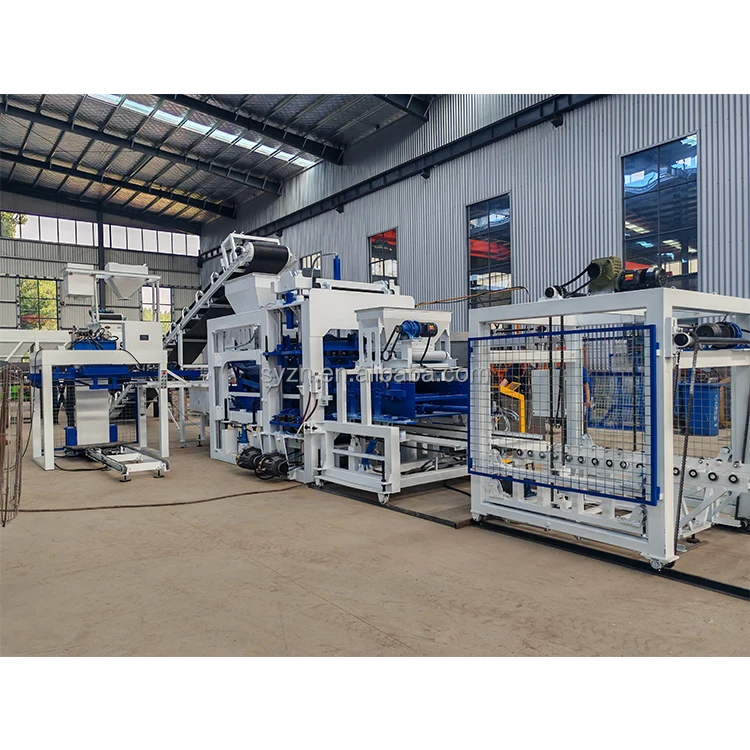
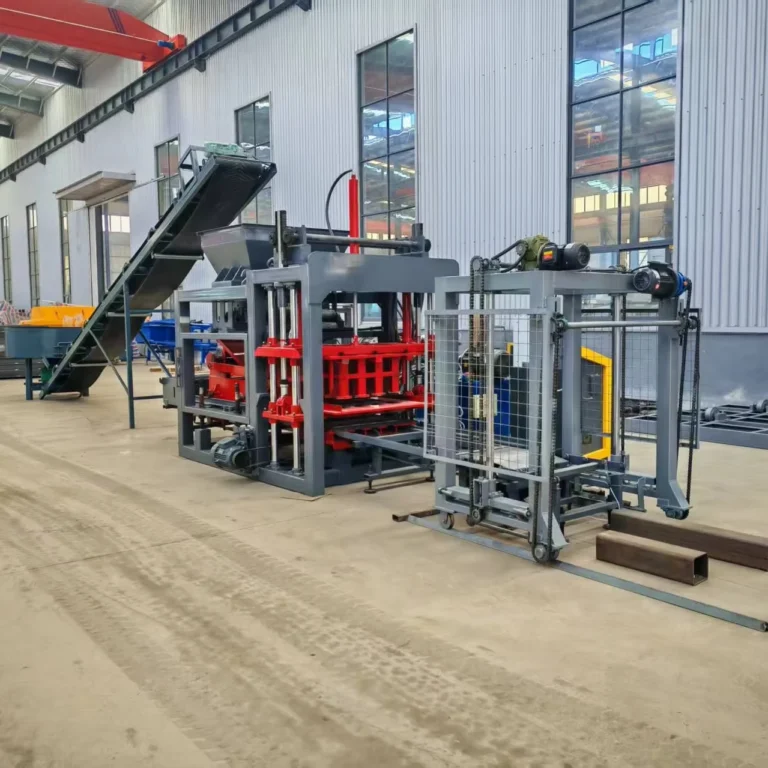
Matched Automation System — Every control parameter on the QT8-15 is locked to your actual production environment before the machine leaves the factory, not left for on-site guessing.
Technical Specifications
| Parameter | Value |
|---|---|
| Model | QT8-15 |
| Product Type | Hydraulic Concrete Block Making Machine |
| Overall Dimensions (L×W×H) | 8300×1860×3000 mm |
| Rated Pressure | 21 MPa |
| Main Vibration Form | Platform Vibration |
| Vibration Frequency | 2800–4500 r/min |
| Vibration Force | 45 kN |
| Pallet Size | 950×900 mm |
| Molding Cycle | 15–20 s (basis not stated in source — confirm block format / material / thickness) |
| Overall Power | 55.5 kW |
| Total Mass | 8 T |
| Demolding Method | Hydraulic |
| Factory Area Required | 300 m² |
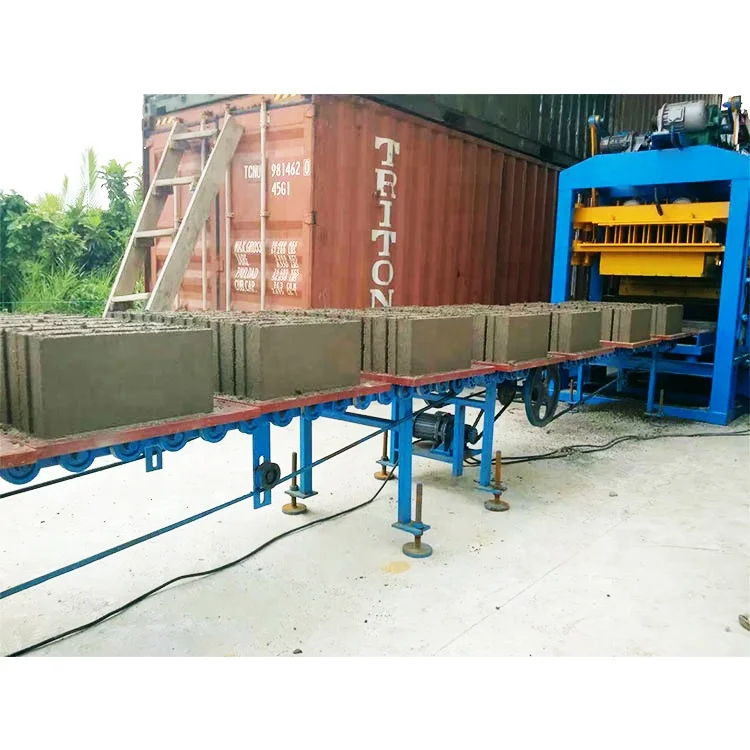
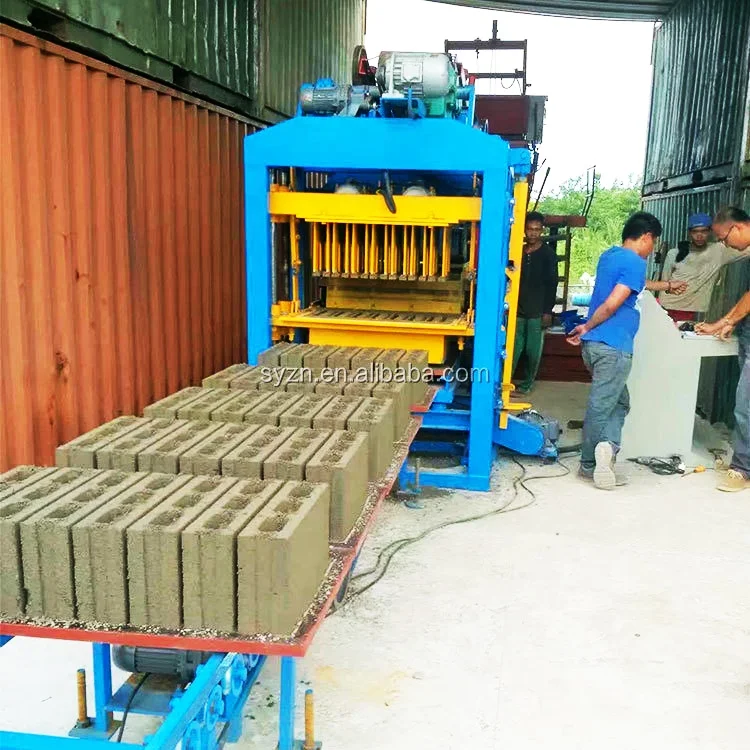
| Applied Products | Concrete blocks, hollow/solid blocks, pavers, interlocking blocks, curbstone, colored pavers |
| Raw Material | Crushed stone, sand, cement, dust, fly ash, gravel, slag |
| Voltage & Frequency | Configurable (confirm before order) |
| Control System | PLC (brand and language to be confirmed) |
| Automation Level | Configurable from semi-automatic to full automatic |
Application Suitability
| Application | Material or Output |
|---|---|
| Hollow block production | Crushed stone, sand, cement, fly ash |
| Solid block manufacturing | Gravel, sand, cement, slag |
| Paving block and colored paver runs | Fine aggregate, cement, pigment |
| Interlocking brick and curbstone | Coarse aggregate, sand, cement |
| On-site contractor production | Locally sourced aggregate and cement |
Why the PLC Language Question Must Come Before the Price
A control interface the operator cannot read turns a fully automatic QT8-15 block machine into an expensive manual press on day one.
I have seen this exact scenario halt commissioning across the Pearl River Delta more times than I care to count. A mid-sized hydraulic concrete block making machine arrives on site, the electrician powers up the cabinet, and the entire HMI is in a language the local crew does not speak. Debugging stops. Production stops. The buyer calls the supplier, and weeks pass before a patched language file arrives — if it arrives at all. This is why the PLC controlled concrete block making machine configuration must be validated in writing, down to the display language and voltage frequency, before the production order is released [NEED_CITE: industrial PLC language and voltage standards by export market].
Control Logic That Removes the Operator from the Equation
The automatic QT8-15 block machine places the PLC at the center of every station: raw material batching, pallet indexing, vibration timing, hydraulic press stroke, and stacking sequence. When these movements are coordinated by a single programmable controller rather than individual relays, cycle-to-cycle variation drops because the timing is no longer dependent on operator reflex. The system can also store recipes for different block formats, meaning a switch from hollow block to paving block becomes a parameter recall rather than a full manual recalibration.
The Upgrade Path from Semi-Automatic to Full Line Control
Many buyers start with a semi-automatic configuration where pallet feeding and stacking are handled manually, then add automation modules as labour costs rise or throughput demands increase. The QT8-15 platform supports this progression: the PLC architecture and hydraulic valving are specified with additional I/O capacity so that automatic pallet feeders, stackers, and cubing stations can be integrated later without replacing the core controller [NEED_CITE: PLC I/O expansion for block line automation upgrades]. This protects the initial investment and avoids a complete control retrofit down the line.
Reading the Numbers That Actually Matter on the Press Floor
The 21 MPa rated hydraulic pressure and 45 kN platform vibration force work together — pressure compresses the mix from above while vibration consolidates it from below, and the ratio between the two determines block density and ultimately compressive strength. A 15–20 second molding cycle is achievable, but only when matched to a specific block format, wall thickness, and mix design; quoting that cycle time without stating the assumed format is misleading. The 950×900 mm pallet size governs how many blocks are pressed per cycle and must align with the curing rack dimensions and forklift capacity already in your yard. At 55.5 kW overall power, the electrical supply must be confirmed for voltage and frequency before the motor windings and heater elements are ordered.
What Happens When the Configuration Is Skipped
Buyers who approve a quotation without confirming pallet size often discover on arrival that their existing curing racks cannot accommodate the boards, forcing a capital outlay on new racks or a daily manual restacking bottleneck. An unconfirmed voltage frequency can burn out the main drive motor within the first hour of operation, and a PLC display locked to the wrong language means the operator runs the press on default parameters that may not suit the local aggregate. These are not theoretical risks — they appear on service call logs with predictable regularity [NEED_CITE: common commissioning failures in exported block machinery].
Why Buyers Source This Machine Through a Single-System Approach
Block machinery is the sole focus of the production team behind the QT8-15, meaning the press, moulds, pallets, and handling equipment are specified as a matched set rather than assembled from unrelated vendors. Configuration is built around your actual mix design and local aggregate, not a generic catalogue default. Mould design covers the formats your market sells, with custom drawings available when standard options do not fit. Automation level is selectable at order and expandable later. Installation support includes operator training so the crew can run the line independently from the first week.
Documentation & Verification
- Line layout with capacity calculation stating the block format assumed for the QT8-15
- PLC brand, display language, and wiring diagram confirmed in writing before production
- Mould drawing and format list matching your target block dimensions
- Factory test record on your specific mix and pallet size before dispatch
- Hydraulic and electrical schematic for on-site maintenance reference
- Packing photographs and customs documentation support
Installation, Commissioning & Support
- 300 m² factory area with level concrete foundation to support the 8 T QT8-15 mass and vibration loads
- Dedicated power circuit sized for 55.5 kW at confirmed voltage and frequency before cabinet wiring
- Machine dismantled for container loading with reassembly sequence documented in the manual
- First-run parameter tuning on your raw material and target block format during commissioning
- Operator training covering PLC navigation, mould change procedure, and daily maintenance checkpoints
- Wear parts list with hydraulic seal and vibration motor specifications for local sourcing
What to Include in Your Inquiry
Provide the exact block formats you intend to produce, including dimensions and target compressive strength, along with your local aggregate type and cement source. Confirm the site voltage and frequency, preferred PLC display language, and the automation level you need now versus what you plan to add later. If you have existing pallets, curing racks, or forklifts, share their dimensions so the QT8-15 pallet and handling configuration is built around your current assets.
Frequently Asked Questions
Q: How do I verify realistic daily output per block format on the QT8-15?
A: Request a capacity calculation that states the specific block format, wall thickness, and mix design assumed for each cycle time figure. A single cycles-per-hour number without a format reference is not meaningful for production planning. The supplier should provide output estimates per format you intend to run.
Q: What PLC details must be confirmed before the QT8-15 ships?
A: Confirm the PLC brand, display language, voltage and frequency rating, and whether remote diagnostics capability is included. These should be documented in writing and verified during the factory test so that no on-site surprises delay commissioning once the machine is powered up.
Q: Can I start semi-automatic and add full stacking later?
A: Yes. The QT8-15 control architecture is specified with additional I/O headroom so that automatic pallet feeders, stackers, and cubing stations can be integrated without replacing the PLC. This allows you to match automation investment to your actual labour and throughput needs over time.
Q: How are vibration force and hydraulic pressure matched to my raw material?
A: The 45 kN vibration force and 21 MPa hydraulic pressure are configured against your local aggregate gradation and mix design during the proposal stage. Factory testing on your actual material confirms block density and strength before the machine is cleared for shipment.
Q: What is the mould change procedure and how long does it take?
A: Mould change time depends on the quick-clamp system specified and the operator’s familiarity with the procedure. It should be demonstrated during the factory acceptance test on the exact formats you ordered, with the measured time recorded so you can plan shift schedules accurately.