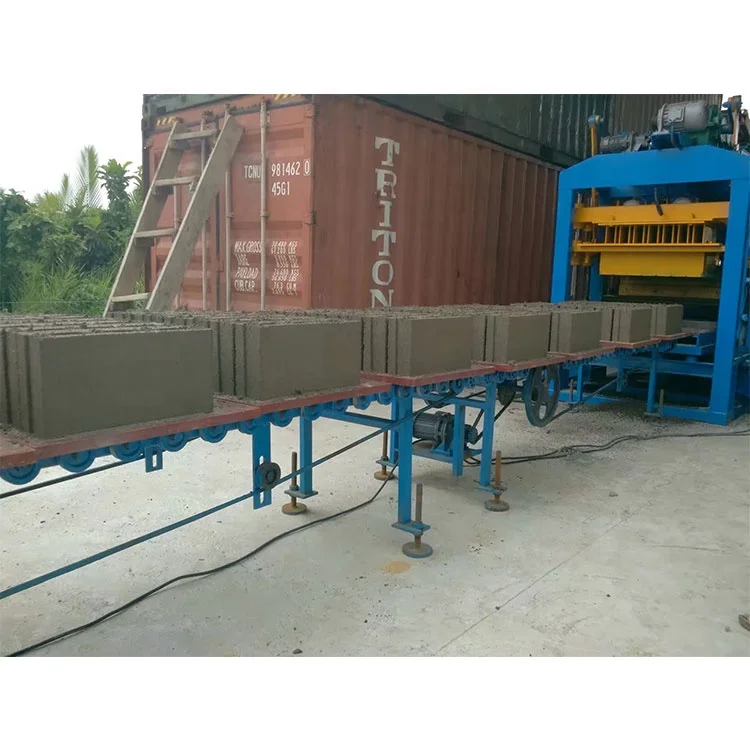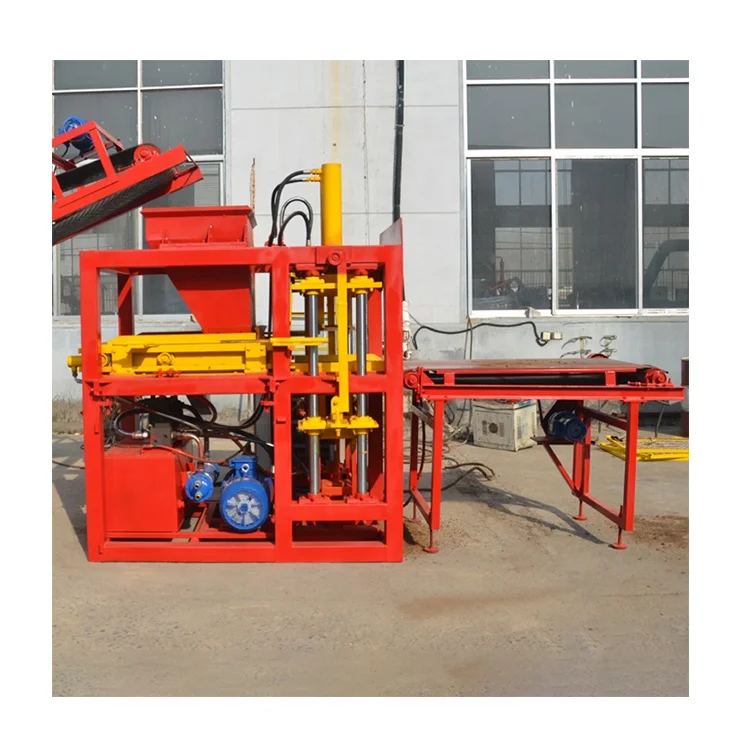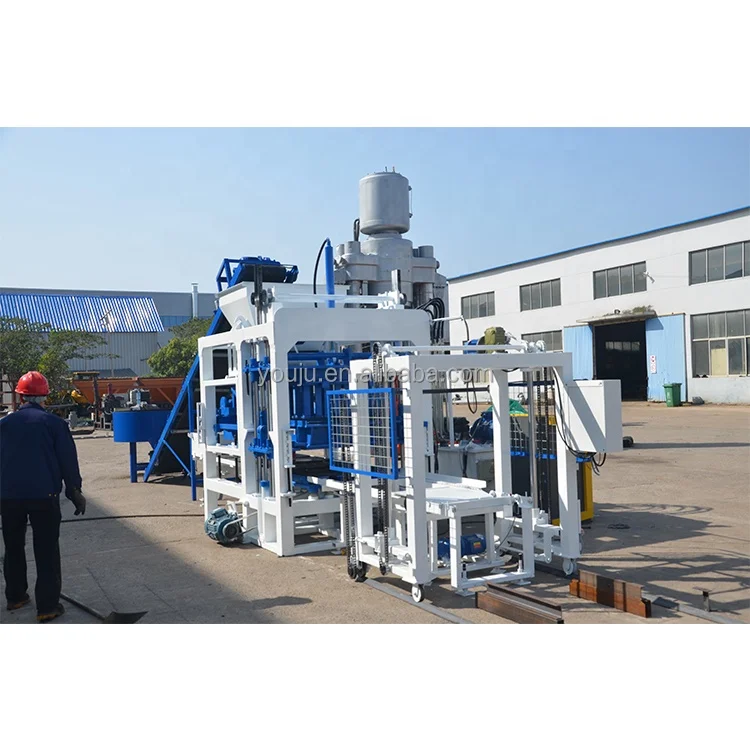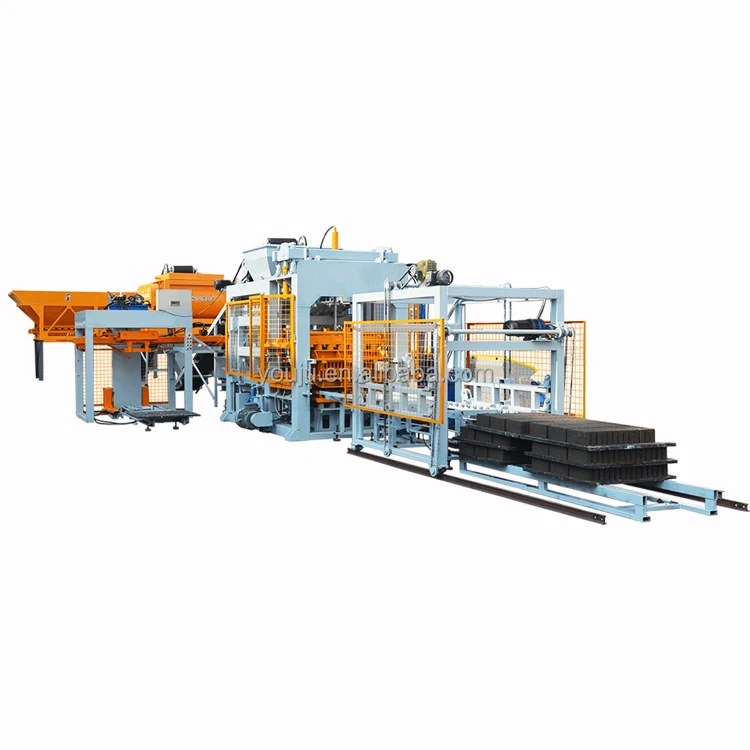


Description
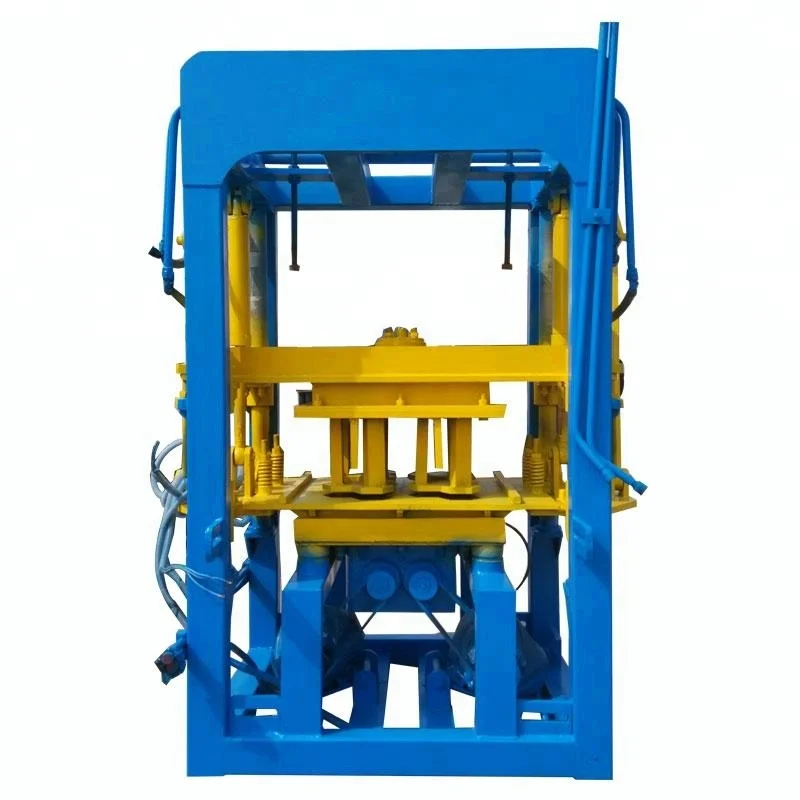
PLC-First Configuration — every QTF3-20 leaves our floor with voltage, frequency, and HMI language locked to the buyer’s site, not left as a factory default.
Technical Specifications
| Parameter | Value |
|---|---|
| Model | QTF3-20 |
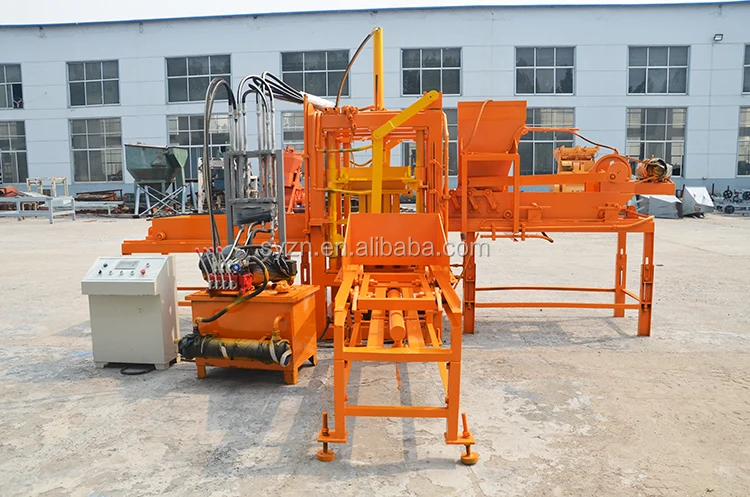
| Product Type | Semi-Automatic Concrete Block Making Machine |
| Hydraulic System | Yes |
| Vibration System | Yes |
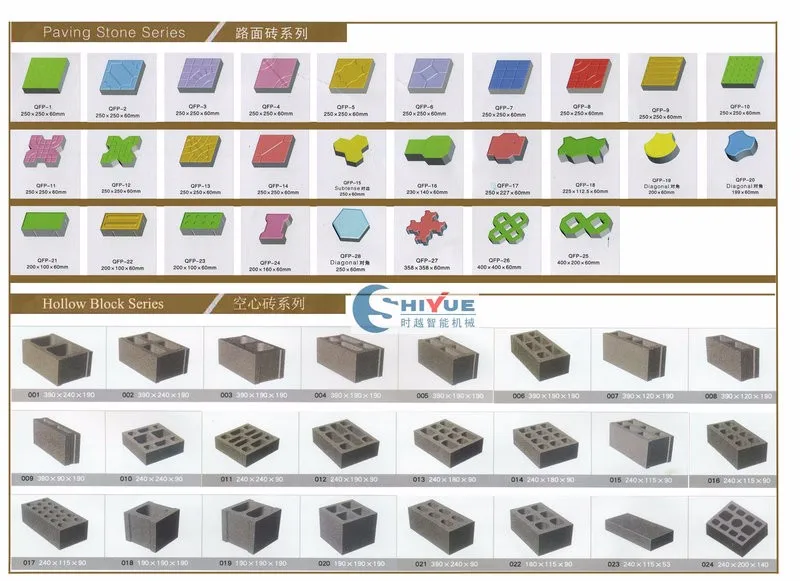
| Output Capacity (Paving Block 200×100×60mm) | 2,700 pcs/hour, 21,600 pcs/8 hours (basis not stated in source) |
| Output Capacity (Hollow Block 400×200×200mm) | 540 pcs/hour, 4,320 pcs/8 hours (basis not stated in source) |
| Output Capacity (Interlocking Brick 225×112.5×60mm) | 1,440 pcs/hour, 11,520 pcs/8 hours (basis not stated in source) |
| Motor Voltage | Customizable to local voltage (basis to be confirmed) |
| Control Interface | PLC with selectable HMI language |
| Warranty | 1 year (except wearing parts) |
| Key Features | Hydraulic press, vibration system, PLC control, semi-automatic operation |
Application Suitability
| Application | Material or Output |
|---|---|
| Concrete paving block production | Crushed stone, cement, sand mix for 200×100×60mm pavers |
| Hollow concrete block production | Aggregate and cement blend for 400×200×200mm hollow blocks |
| Interlocking brick production | Fine aggregate mix for 225×112.5×60mm interlocking bricks |
| Curbstone block production | High-density concrete mix for kerb and curb formats |
What the PLC Screen Language Means for Your First Week of Production
A semi-automatic block machine is only as useful as the operator can read its display.
I started out doing on-site commissioning and later moved into technical support. Years of flying between factories in the Pearl River Delta and buyer sites taught me that control panel misalignment causes more startup delays than mechanical faults. I once shipped a QTF3-20 overseas and found the PLC display was still in Chinese — the operator stared at it for three days before we pushed an English firmware update remotely. An automatic concrete block making machine PLC controlled unit sitting idle because of a language mismatch is a loss no plant owner should absorb [NEED_CITE: HMI language localization standards for exported industrial machinery]. That miss is why voltage, frequency, and HMI language now get confirmed before any machine leaves the factory floor.
How PLC Control Removes Operator Guesswork
On a semi-automatic line, the press cycle depends on the operator timing each pallet feed and mould charge. The PLC on the QTF3-20 takes over the cycle logic — vibration duration, hydraulic pressure hold time, and demould sequence run from stored recipes rather than hand signals. This means the automatic concrete block making machine PLC controlled system delivers the same press cycle whether it is the first block of the morning or the last block before shift change. Batch-to-batch consistency comes from the controller repeating exact parameters, not from one experienced operator remembering the rhythm.
The Upgrade Path from Semi-Automatic to Full Line Automation
Semi-automatic operation means pallet handling and stacking still rely on manual labor, but the press itself runs on programmed logic. The QTF3-20 control architecture supports adding automatic pallet feeding, stacking, and cubing modules as the plant grows. Buyers who start with semi-automatic configuration can introduce automation stations one at a time without replacing the core PLC. This staged approach keeps initial capital lower while preserving the option to reduce labor dependency as production volume justifies the investment [NEED_CITE: automation upgrade compatibility in block making machinery].
Reading the Specs That Actually Shape Block Quality
The hydraulic system and vibration system work together to determine formed block density. Hydraulic pressure compresses the mix from above while vibration settles aggregate particles from below — if either force is mismatched to the buyer’s local aggregate gradation, blocks come out with weak corners or inconsistent weight. The PLC stores vibration duration and pressure hold time per mould format, so switching from hollow blocks to paving blocks means calling up a different recipe, not recalibrating by feel. Motor voltage must match the local grid before the machine ships, because running a 380V motor on a 415V supply or a 220V supply without a transformer causes winding damage within hours. The semi-automatic configuration means pallet feeding is manual, so cycle time in practice depends on how quickly operators move pallets in and out — the quoted output figures assume a rhythm that may not match every crew’s pace.
What Happens When Voltage and Control Language Get Skipped
Buyers who confirm price before confirming electrical specs often discover the motor does not match local supply after the container arrives. Rewinding or replacing a motor on-site adds days of downtime and freight cost for a part that could have been specified correctly at order stage. The same goes for HMI language — a control screen the operator cannot read means every parameter adjustment is a guess, and wrong vibration duration leads to under-compacted blocks that fail compressive strength tests [NEED_CITE: electrical specification verification for exported block machinery]. These are not engineering failures; they are ordering-process failures that surface only after the machine is bolted to the floor.
Why Buyers Specifying Automation Start Here
Block machinery is our single focus, so the QTF3-20 press, mould, pallet, and handling equipment are specified as one matched system rather than assembled from separate suppliers. We set configuration against the buyer’s actual mix design and local aggregate, not a catalogue default. Mould design covers the formats the buyer’s market actually sells, including custom drawings when standard formats do not match local demand. The PLC control language, voltage, and frequency are confirmed during the order stage, not discovered at commissioning. Installation support includes operator training so the crew can run recipes and perform mould changes before the engineer leaves site.
Documentation & Verification
- Machine specification sheet listing confirmed voltage and frequency for your site
- PLC program backup with recipe list for each ordered block format
- Factory test record running your specified mould and mix proportions
- Electrical schematic matching your confirmed voltage and control language
- Operation and maintenance manual in your selected HMI language
- Wear parts and mould list with replacement intervals per component
Installation, Commissioning & Support
- Foundation must support the QTF3-20 hydraulic press vibration load without resonance transfer
- Dedicated circuit matching confirmed motor voltage and frequency before machine arrival
- PLC display language verified during factory test, rechecked at on-site commissioning
- Operator training covers recipe selection, mould change procedure, and fault code reading
- Mould and hydraulic wear parts list provided with recommended first-order quantities
- Daily maintenance checklist tied to vibration system and hydraulic pressure inspection points
What to Include in Your Inquiry
Tell us which block formats your market sells and the daily volume you need to hit, along with your local aggregate type and available mix materials. Confirm your site voltage, frequency, and preferred PLC display language so we can build the electrical specification correctly before production starts. If you already have pallets, forklifts, or curing racks on site, share the dimensions — we will match pallet size and handling equipment to what you already own.
Frequently Asked Questions
Q: How do I confirm the output capacity applies to my block format?
A: Output figures vary by block size and mix design. Ask for a capacity calculation document that states the exact block format assumed for each quoted number. We provide cycle time per format and daily output projections based on your specific mould selection and operating hours, so you can compare realistic production rates against your project requirements.
Q: What PLC language options are available for local operators?
A: The HMI language is configurable before shipment. We confirm your preferred display language during the order stage and verify it during factory testing. If you need a language we have not preloaded, we arrange firmware preparation so the operator sees familiar text from the first power-on at your site.
Q: Can the QTF3-20 be upgraded to full automation later?
A: The PLC architecture supports adding automatic pallet feeding, stacking, and cubing modules as separate stations. You can start with semi-automatic operation and introduce automation modules when production volume justifies the investment, without replacing the core press controller.
Q: How is motor voltage matched to my local electrical supply?
A: We confirm your site voltage and frequency during the inquiry stage and specify the motor accordingly. The electrical schematic and factory test record document the confirmed configuration, so there is no mismatch between the machine and your grid when the container arrives.
Q: What is involved in changing moulds for different block types?
A: Mould change time depends on the format and clamping system. The PLC stores recipes for each mould, so once the physical swap is complete, the operator selects the matching program and the press adjusts vibration duration and pressure hold time automatically for the new format.