Description
Control language matched to your floor — every QTJ4-24 we ship leaves the factory with PLC display text, alarm codes, and HMI menus confirmed in the operator’s language before the crate is closed.
Technical Specifications
| Parameter | Value |
|---|---|
| Model | QTJ4-24 |
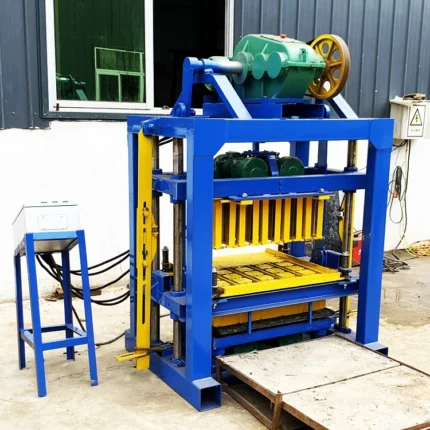
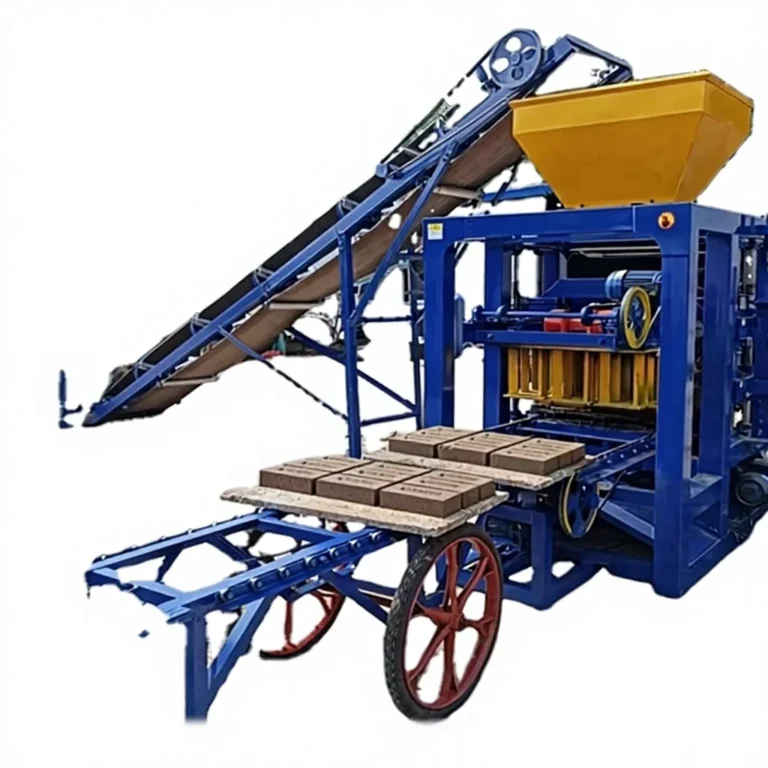
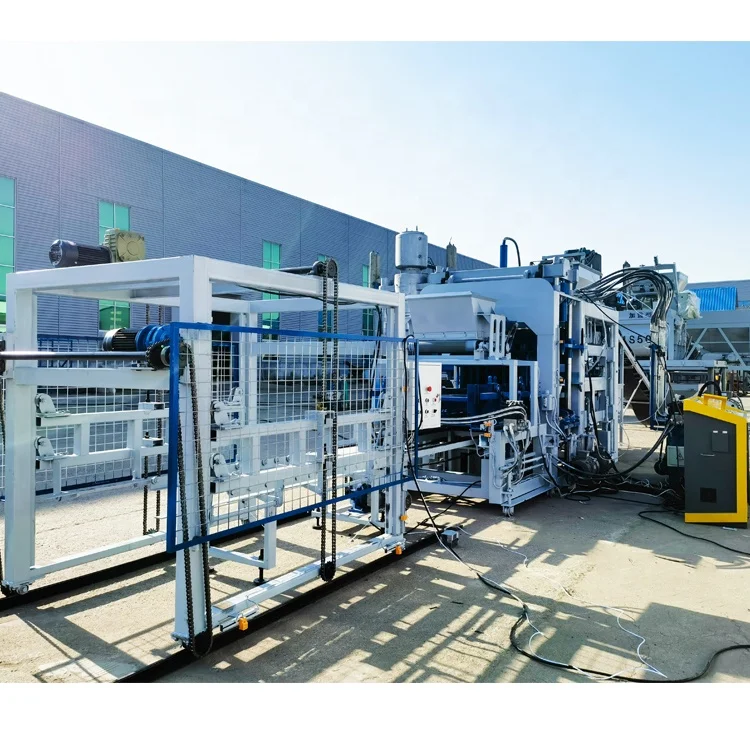
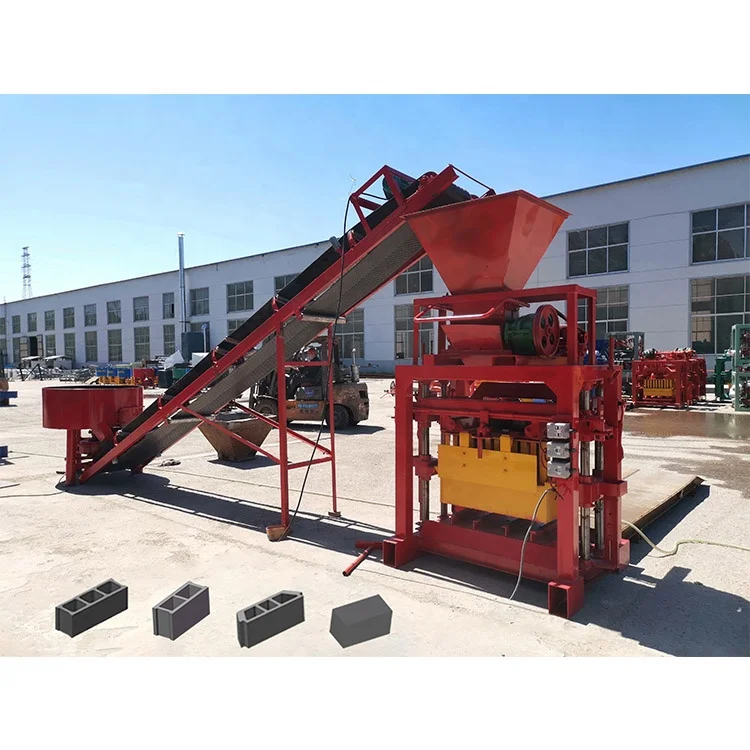
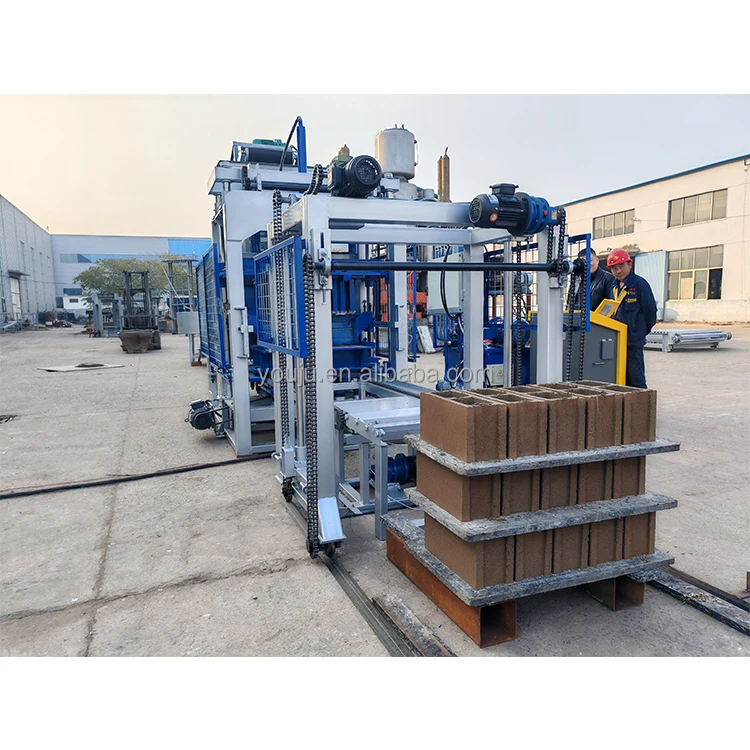
| Product Type | Stationary Concrete Block Making Machine |
| Overall Dimensions (L×W×H) | 3600×1700×2560 mm |
| Pallet Size | 850×450 mm |
| Molding Cycle | 24–26 s |
| Overall Power | 11.95 kW |
| Vibration Force | 45 kN |
| Total Mass | 2 t |
| Molding Method | Mechanical |
| Vibration Configuration | 2×3 kW lower vibrators + 2×1.5 kW upper vibrators |
| Reducer for Mold Lifting | 350-type |
| Material Distribution | Full-automatic spiral |
| Automation Level | Semi-automatic with PLC control options |
| Raw Materials | Cement, sand, stone |
| Warranty | 1 year (excluding spare parts) |
Application Suitability
| Application | Material or Output |
|---|---|
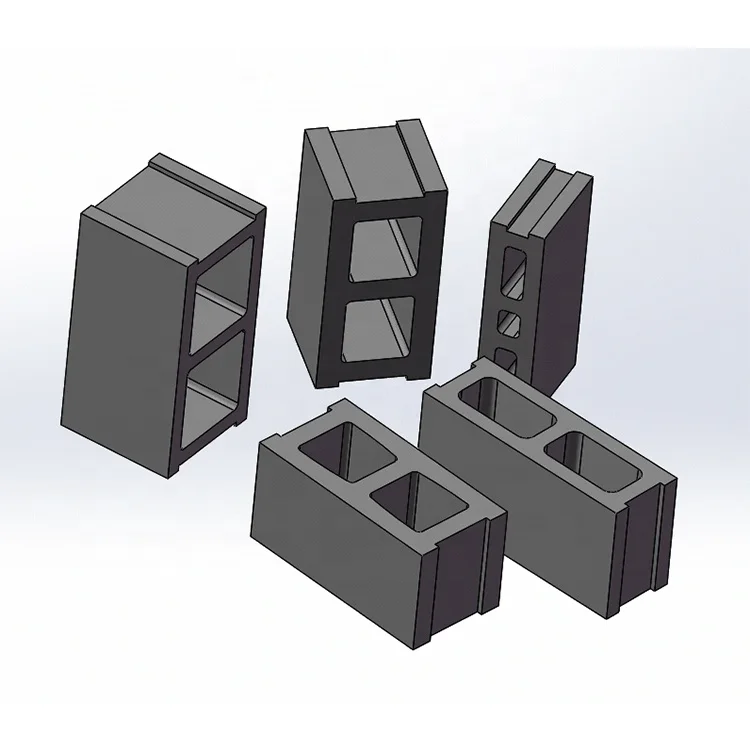
| Hollow block production for masonry walls | Cement, crushed stone, sand |
| Solid brick manufacturing for load-bearing structures | Cement, fine aggregate, stone dust |
| Paving brick production for walkways and yards | Cement, coarse sand, gravel |
| Interlocking brick forming for retaining walls | Cement, laterite, stone powder |
Why the PLC Screen Language Matters More Than the Cycle Time
An automatic concrete block making machine PLC controlled in the wrong language is a manual machine with an expensive screen.
When a plant owner invests in automation, the expectation is that the control system removes guesswork from the operator’s shift. But if the alarm messages display in a language the floor team cannot read, the first fault code becomes a reason to hit the emergency stop rather than a prompt for a simple correction. I have watched semi-automatic lines sit idle for hours because the PLC showed a proximity sensor fault in characters the local electrician did not recognize [NEED_CITE: PLC interface language standards for exported industrial machinery]. The vibration sequence, the spiral feeder timing, the mold lift reducer engagement — all of these depend on the operator trusting what the screen tells them.
What the Control System Actually Governs on This Press
The QTJ4-24 uses its PLC to coordinate the full-automatic spiral material distribution with the dual-level vibration sequence. The upper vibrators at 2×1.5 kW and the lower vibrators at 2×3 kW must fire in a timed overlap so that the concrete mix settles uniformly across the 850×450 mm pallet. An automatic concrete block making machine PLC controlled with proper parameter access lets the operator adjust that overlap when switching from hollow blocks to denser paving bricks.
The Upgrade Path From Semi-Automatic to Full Line Control
This press ships as a semi-automatic unit where the mechanical molding cycle runs at 24–26 seconds, but the pallet handling upstream and the stacking downstream may still involve manual labor. The PLC architecture on the QTJ4-24 allows additional I/O modules to be added later, bringing automatic pallet feeding and stacker control under the same HMI. Plant owners who start with manual pallet movement often return within a year asking for the automatic concrete block making machine PLC controlled expansion, and having the base PLC already on-site with spare module slots avoids a full control cabinet replacement [NEED_CITE: modular PLC expansion in block production lines].
Reading the Vibration and Pressure Numbers Together
The 45 kN vibration force works in combination with the mechanical pressure applied through the mold head. Neither number alone determines block strength. The dual-level vibrator layout — 3 kW units below the pallet and 1.5 kW units in the upper mold box — means the vibration energy reaches both the bottom face and the top face of the block cavity. The 350-type reducer for mold lifting is sized to handle the repeated shock load of the mechanical press cycle without premature gear wear, which matters when the machine runs continuous shifts on abrasive concrete mixes.
The Cost of Skipping the Voltage and Language Confirmation
A control panel wired for a voltage the buyer’s facility does not supply will trip breakers on the first start attempt, and rewiring a PLC cabinet on-site adds days to commissioning. Equally damaging is a control screen that displays cycle parameters correctly but labels them in a language the maintenance team cannot parse during a mid-shift fault. The result is not a machine failure but an operator decision to bypass the automation entirely, running the press on manual overrides and losing the consistency the PLC was meant to deliver [NEED_CITE: commissioning delays caused by unconfirmed electrical specifications].
Why Procurement Through This Channel Works for Automation Buyers
Block machinery is the single focus here, which means the PLC program, the vibration timing, and the spiral feeder logic are developed as one system rather than bolted together from separate control suppliers. Configuration is set against the buyer’s actual mix design and target block format, so the molding cycle parameters loaded at the factory match the product the buyer intends to produce. Mould design covers the formats the buyer’s market sells, and the PLC mold-change recipe function stores those parameters for quick switching. Automation level is selectable, so a buyer can start with semi-automatic pallet handling and upgrade through the same PLC platform. Installation support includes operator training on the specific HMI menus and alarm responses relevant to the buyer’s language and site conditions.
Documentation & Verification
- PLC program backup and HMI parameter list exported to USB before dispatch
- Voltage, frequency, and control language confirmation sheet signed before production
- Electrical schematic showing I/O mapping for future automation module expansion
- Factory test record running the buyer’s specified block format through full cycle
- Operation manual with alarm code table translated into the buyer’s confirmed language
Installation, Commissioning & Support
- Foundation pad must support 2 t static mass plus dynamic vibration load across 3600×1700 mm footprint
- Dedicated power circuit required for 11.95 kW total draw with voltage confirmed at panel
- PLC language and alarm text verified on-site during first power-up before mold installation
- Vibration overlap timing tuned to buyer’s specific cement-to-aggregate ratio during commissioning
- 350-type reducer grease check and vibrator bolt torque inspection scheduled per maintenance manual
What to Share With Your Inquiry
To size the control configuration and automation scope correctly, provide the block formats you intend to produce, the daily output target per format, and the local voltage and frequency at your facility. Confirm the language your operators need for the HMI display and alarm codes. If you plan to add automatic pallet feeding or stacking later, note that intention so the PLC cabinet is built with the necessary expansion capacity from the start.
Frequently Asked Questions
Q: Can the PLC control on the QTJ4-24 be upgraded to full line automation later?
A: Yes. The PLC platform supports additional I/O modules, so automatic pallet feeding, stacking, and cubing can be brought under the same HMI without replacing the base control cabinet. Spare module slots are allocated during initial build when the upgrade path is confirmed at order stage.
Q: How is the vibration cycle adjusted for different block formats?
A: The PLC stores separate recipes for each mold installed. The operator selects the recipe on the HMI, which adjusts the upper and lower vibrator timing overlap and the spiral feeder duration to match the cavity volume and mix density required for that specific format.
Q: What happens if the control language is wrong when the machine arrives?
A: Changing HMI language on-site requires the original program files and sometimes a laptop connection to the PLC. Confirming the display language before production avoids this delay entirely, which is why voltage and language confirmation is a mandatory gate before the machine enters assembly.
Q: How does the semi-automatic cycle differ from full automation on this press?
A: The mechanical molding cycle, vibration sequence, and spiral material feeding run automatically under PLC control in both configurations. The difference is that pallet feeding and product stacking are manual in semi-automatic mode, while full automation adds those stations under the same PLC with additional sensors and drives.
Q: Which spare parts should be stocked for the control system?
A: The recommended spare list includes proximity sensors for mold position, relay modules in the PLC cabinet, and a replacement HMI touch panel. These items are identified in the electrical schematic provided before shipment and can be reordered with standard lead times.