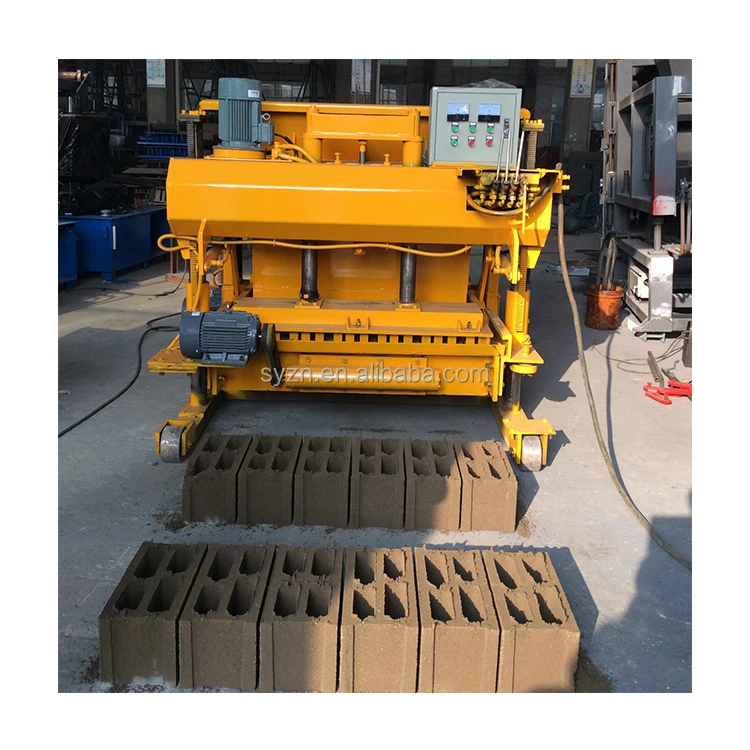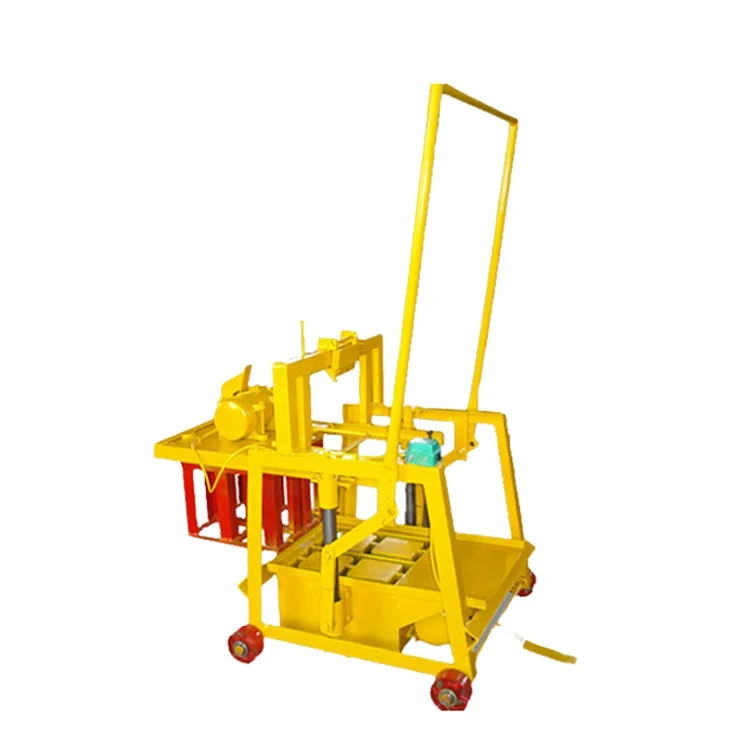
Description
Single-focus machinery engineering — the QMJ2-45 mobile block machine is specified as one matched system where automation level, control language and mould format are confirmed before production begins, not assumed from a catalogue default.
Technical Specifications
| Parameter | Value |
|---|---|
| Model | QMJ2-45 |
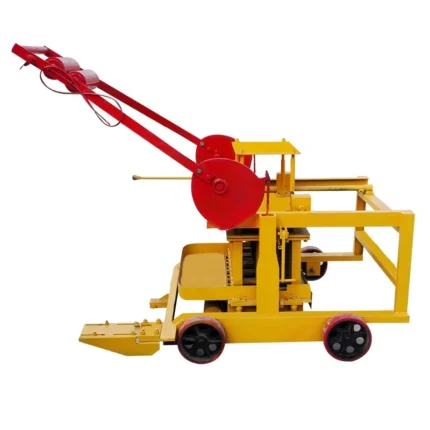
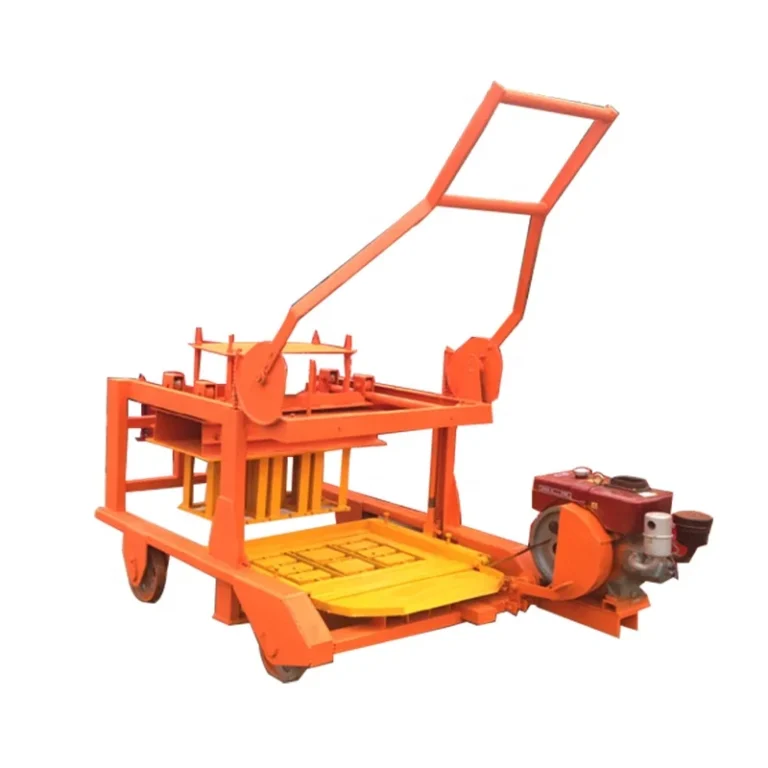
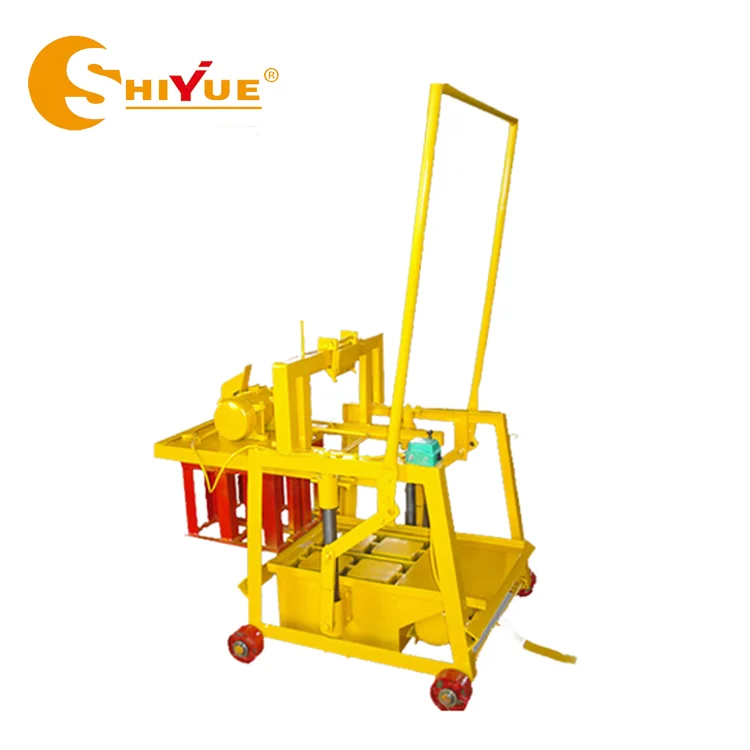
| Product Type | Mobile Concrete Block Making Machine |
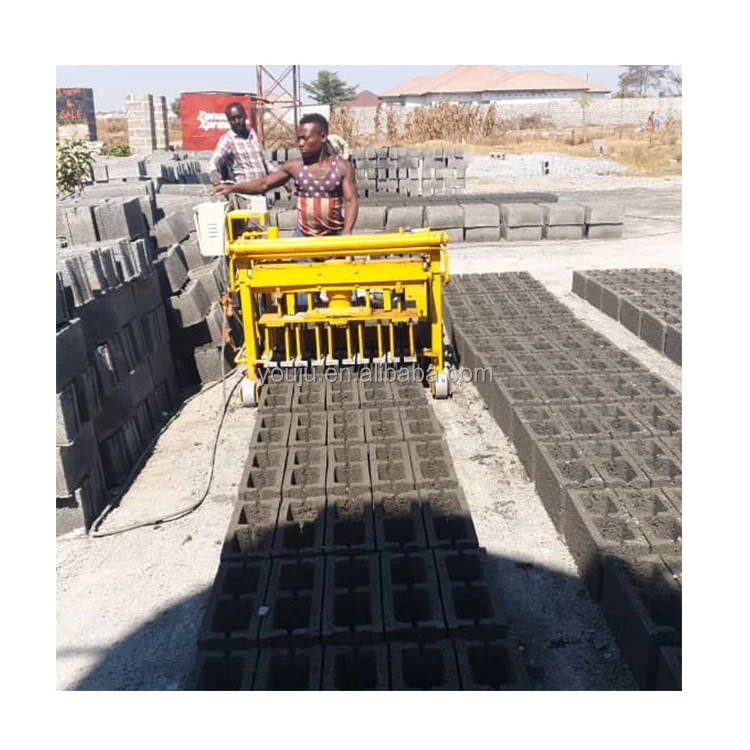
| Machine Type | Mobile / Egg-laying |
| Automation Level | Manual operation, with PLC-controlled automation available as an upgrade path |
| Pallet Requirement | No pallets required for egg-laying operation |
| Power Source | Electric motor (diesel option not required) |
| Labor Requirement | 1 to 3 workers |
| Mould Change | Manual change, supports multiple hollow brick formats |
| Cycle Time | 25–30s (basis not stated in source — confirm specific block format) |
| Output Capacity | 160 pcs/h based on 400×200×200mm hollow brick, 2 pcs/mould |
| Output Capacity | 240 pcs/h based on 400×150×200mm hollow brick, 3 pcs/mould |
| Output Capacity | 320 pcs/h based on 400×100×200mm hollow brick, 4 pcs/mould |
| Daily Output (8hr) | 1280 pcs based on 400×200×200mm hollow brick |
| Daily Output (8hr) | 1920 pcs based on 400×150×200mm hollow brick (source states 4800 — verify against manufacturer catalog) |
| Daily Output (8hr) | 2560 pcs based on 400×100×200mm hollow brick |
| Mobility | Free-moving on site, no fixed plant required |
| Space Requirement | Small footprint, usable in confined areas |
| Control System | Manual operation; PLC control available with selectable display language |
| Voltage & Frequency | Configurable — confirm before order (basis not stated in source) |
| Key Features | No-pallet egg-laying operation, manual mould change, upgrade path to automatic pallet feeding and stacking |
Application Suitability
| Application | Material or Output |
|---|---|
| On-site hollow block production for construction contractors | Crushed stone, sand, cement and water mix — no fixed batching plant required |
| First block plant setups with limited capital | 400×200×200mm, 400×150×200mm and 400×100×200mm hollow brick formats |
| Supplementary mobile capacity for existing concrete product manufacturers | Hollow bricks produced directly on the job site alongside a stationary line |
| Small-scale production in confined or temporary work areas | Egg-laying operation on level concrete floor without pallets or curing racks |
What "320 Pieces per Hour" Actually Means on a PLC Controlled Mobile Block Machine
Every capacity figure on this page is tied to a specific block format — because a number without a format is just marketing.
Buyers regularly receive quotations that quote a single cycle-per-hour number and leave it at that. When the machine arrives and the operator starts running the format the local market actually buys, the real daily output often falls noticeably short of what was expected. I have watched commissioning stall on-site simply because nobody confirmed which block size the capacity claim assumed. With the QMJ2-45, the 320 pcs/h figure applies only to the 400×100×200mm hollow brick at 4 pcs per mould. Switch the mould to the 400×200×200mm format and the same machine produces 160 pcs/h. That is not a fault — it is physics. [NEED_CITE: block format assumptions in capacity quotations across the industry]
Automation That Grows With Your Output Volume
The QMJ2-45 starts as a manual egg-laying unit, which keeps the initial investment low and the site footprint minimal. When your order book grows and daily volume demands consistent output across multiple shifts, the same base machine accepts PLC-controlled pallet feeding and automatic stacking modules. This upgrade path means you are not replacing the press — you are adding intelligence around it. A PLC controlled mobile block machine at this tier removes the operator from pallet handling decisions and gives you batch-to-batch consistency that manual operation simply cannot sustain over a full shift.
Control Language and Voltage: The Two Details That Stall Commissioning
I once spent an entire day on a job site in the Yangtze River Delta region because the control panel on a small mobile unit defaulted to English and the local operators could not read it. We lost a full commissioning day building a Chinese-language interface before production could resume. That mistake stays with me on every shipment. Voltage and frequency must also match the site supply exactly — a 380V/50Hz machine delivered to a 440V/60Hz market will not run, and rewinding a motor on site is not a commissioning plan. Both details are confirmed in writing before the QMJ2-45 enters production. [NEED_CITE: voltage and frequency standards by export market]
Reading the Specs That Actually Matter for Block Quality
The cycle time of 25–30 seconds governs how many moulds the press completes per hour, but that number only holds if vibration force and hydraulic pressure are matched to the buyer’s mix design. A dry mix with coarse local aggregate needs different compaction energy than a wetter mix with fine sand — and the wrong setting produces blocks that crumble at the stacking stage. The manual mould change on the QMJ2-45 supports three standard hollow brick formats, but the time required to swap moulds on site determines whether format flexibility is real or theoretical. Labour requirement of one to three workers assumes egg-laying operation without pallet handling; adding automatic stacking changes that headcount. No-pallet operation suits confined sites where curing rack infrastructure does not exist, but it also means block strength depends entirely on floor condition and mix consistency at the point of laying.
The Hidden Cost of Skipping Configuration Confirmation
When automation level, pallet size and control language are left unspecified at the quotation stage, the consequences arrive at commissioning — not before. Operators stand idle while a panel displays instructions in a language they cannot read. Pallets ordered separately do not match the curing area the buyer already built. A machine configured for a mix the local quarry cannot supply forces a material change that was never budgeted. These are not rare events. They appear repeatedly across sites where the specification conversation stopped at price. [NEED_CITE: common commissioning delays caused by unconfirmed machine configuration]
Why Source the QMJ2-45 Through This Line
Block machinery is the single focus here, so the QMJ2-45 press, its moulds, pallet options and any handling modules are specified as one matched system rather than assembled from separate suppliers. Configuration is set against the buyer’s actual mix design, local aggregate and target block format — not pulled from a catalogue default. Mould design covers the three hollow brick sizes listed, with custom drawings available if the local market demands a format outside that range. The automation level is selectable, so a buyer can commission the QMJ2-45 as a manual egg-laying unit today and add PLC-controlled stacking when volume justifies the investment. Installation and commissioning support includes operator training on the specific control language confirmed before shipment.
Documentation & Verification
- Capacity calculation document stating which hollow brick format each pcs/h figure assumes
- Mould drawing and format list confirming the three hollow brick sizes match your market
- Voltage, frequency and PLC display language confirmation sheet signed before production
- Factory test record run on your specified block format before dispatch
- Hydraulic and electrical schematic matching the as-built configuration
- Operation and maintenance manual in the confirmed control language
Installation, Commissioning & Support
- Level concrete floor required for egg-laying operation — no fixed foundation or plant structure needed
- Power supply must match confirmed voltage and frequency before the QMJ2-45 is energised on site
- Machine ships as a single compact unit suitable for confined site access and quick positioning
- First-run commissioning includes cycle time verification on your target hollow brick format
- Operator training covers mould change procedure, mix consistency checks and daily maintenance points
- Wear parts list and mould spares schedule provided at handover for planned replacements
What to Include With Your Enquiry
To size the QMJ2-45 accurately and confirm the right automation level, share the hollow brick format your market sells most, the daily output you need to hit, and the raw materials available locally including aggregate type and grading. Confirm your site voltage and frequency, the control panel language your operators require, and whether you plan to start with manual egg-laying operation or add pallet feeding and stacking from the outset.
Frequently Asked Questions
Q: How is capacity calculated, and which block format does each pcs/h figure assume?
A: Every output figure for the QMJ2-45 is tied to a specific hollow brick size and mould cavity count. The 160 pcs/h rate assumes the 400×200×200mm format at 2 pcs per mould, while 320 pcs/h applies only to the 400×100×200mm format at 4 pcs per mould. Always confirm which format your quotation references before comparing machines.
Q: What automation level should I start with, and what is the upgrade path?
A: The QMJ2-45 begins as a manual egg-laying machine requiring one to three workers and no pallets. When volume grows, PLC-controlled pallet feeding and automatic stacking modules can be added to the same base unit. The upgrade path is documented at the quotation stage so compatibility is confirmed before the initial order ships.
Q: How are voltage, frequency and PLC display language confirmed before shipment?
A: All three are confirmed in writing before the QMJ2-45 enters production. The buyer states site voltage, frequency and required panel language on the order confirmation. A signed configuration sheet is held on file, and the factory test record reflects those exact settings before dispatch.
Q: How long does a mould change take on site, and is a quick-change system available?
A: Mould change on the QMJ2-45 is manual and supports the three listed hollow brick formats. Actual change duration depends on operator familiarity and site conditions, so it should be verified during commissioning training. A quick-change system can be discussed at the enquiry stage if format switching will be frequent in your production schedule.
Q: What batching accuracy does the PLC system deliver for block consistency?
A: When the PLC-controlled option is selected, the batching system manages raw material proportions to maintain consistent mix quality across shifts. This reduces the block-to-block strength variation that manual batching typically introduces. Exact batching tolerance depends on the specific aggregate and cement mix confirmed during configuration.