Description
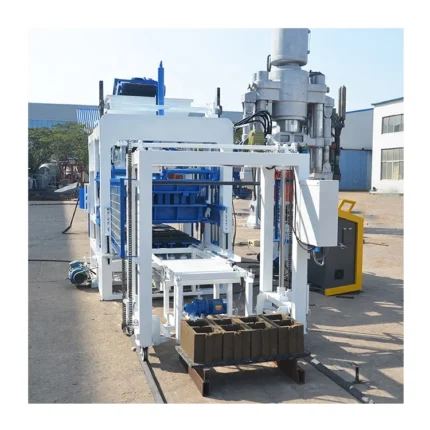
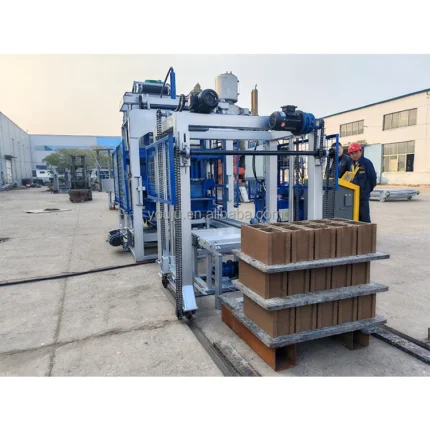
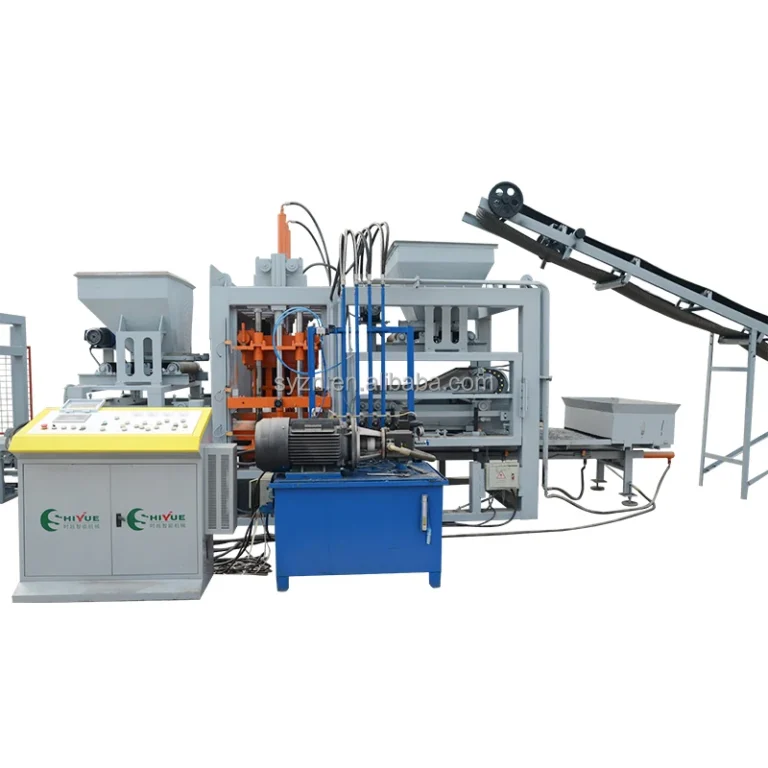
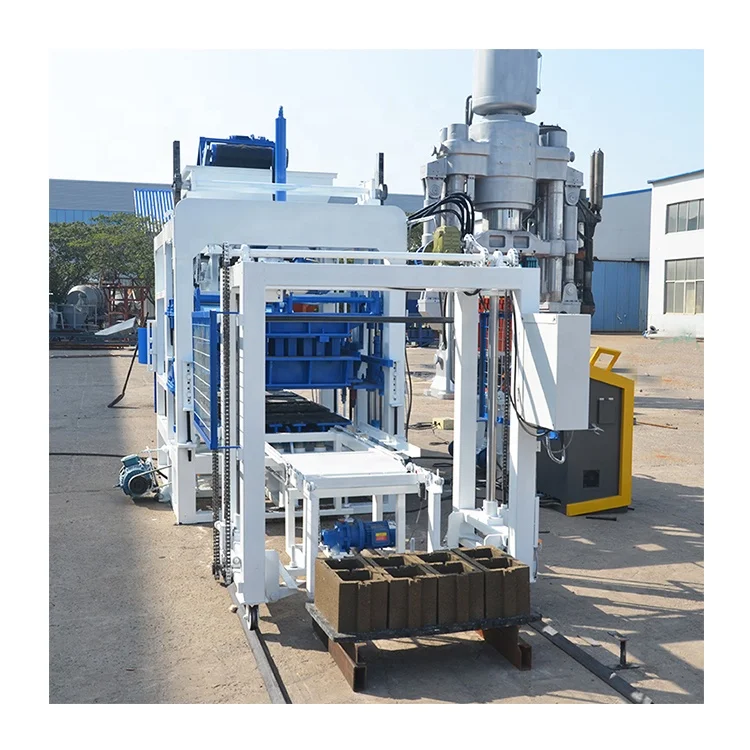
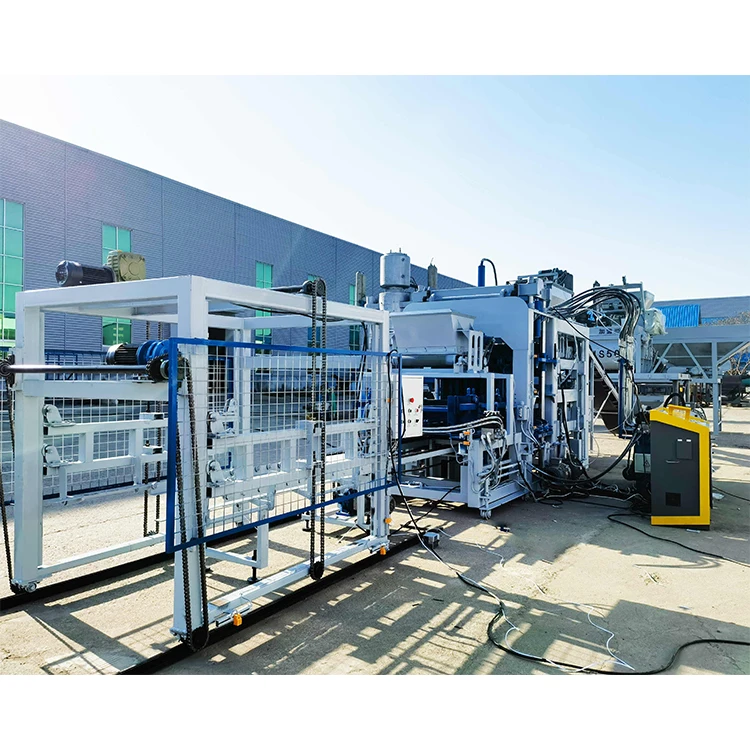
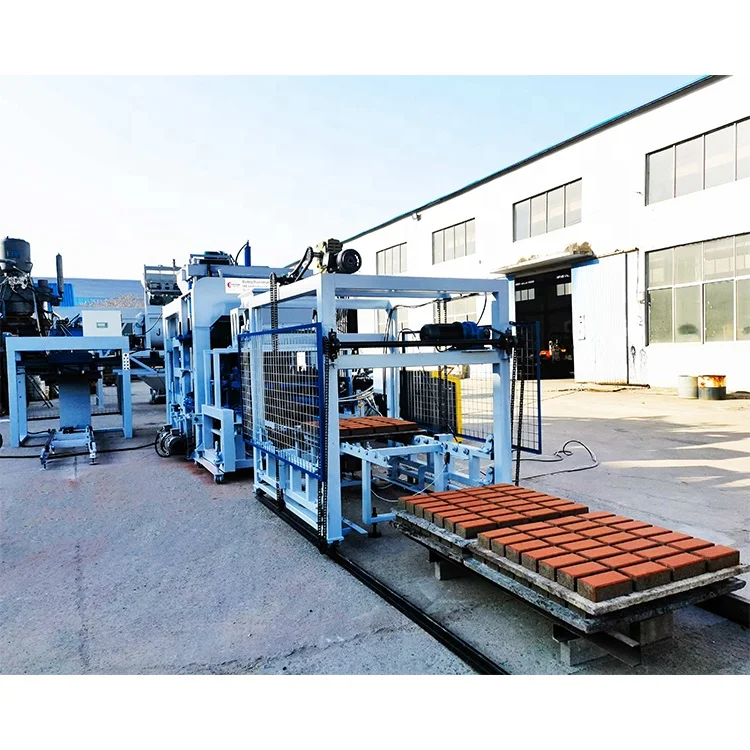
Matched System Integration — The QT8-15 is specified as a complete intelligent production cell where PLC logic, hydraulic demolding and variable-frequency vibration are tuned to one another before the machine leaves the factory, not assembled from mismatched subsystems.
Technical Specifications
| Parameter | Value |
|---|---|
| Model | QT8-15 |
| Product Type | Automatic Hydraulic Concrete Block Making Machine |
| Overall Dimensions (L×W×H) | 8300×1860×3000 mm |
| Rated Pressure | 21 MPa |
| Main Vibration Form | Platform Vibration |
| Vibration Frequency | 2800~4500 r/min |
| Vibration Force | 60 kN |
| Pallet Size | 950×900 mm |
| Molding Cycle | 15-25 s (basis not stated in source — confirm block format / material / thickness) |
| Overall Power | 55.5 kW |
| Total Mass | 9 T |
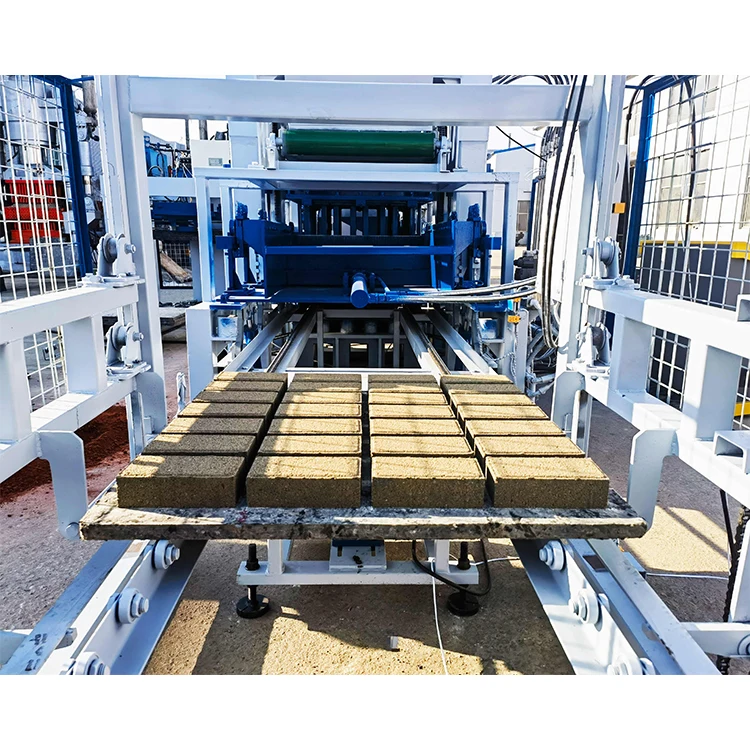
| Demolding Method | Hydraulic |
| Control System | PLC with human-machine interface dialogue system |
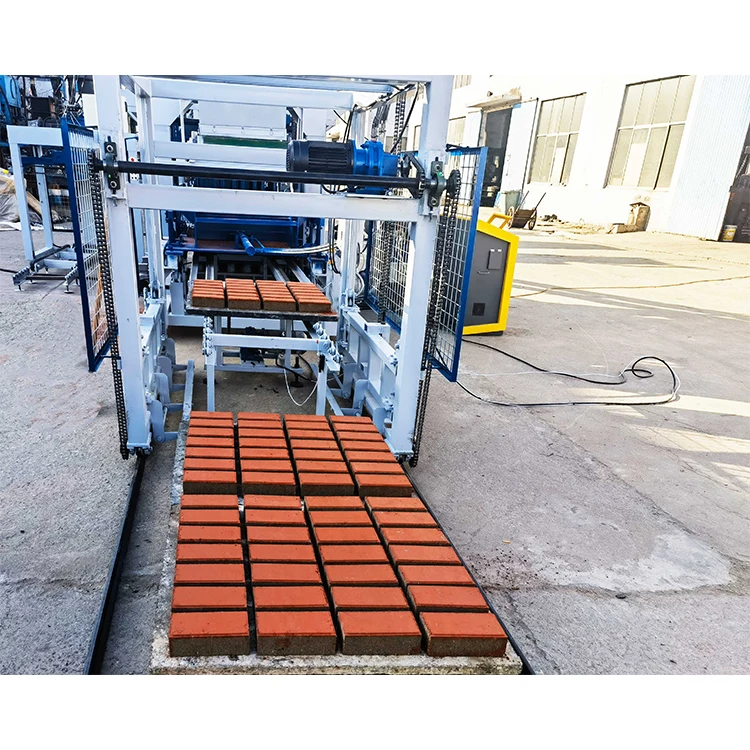
| Automation Level | Fully automatic (automatic raw material feeding and block stacking) |
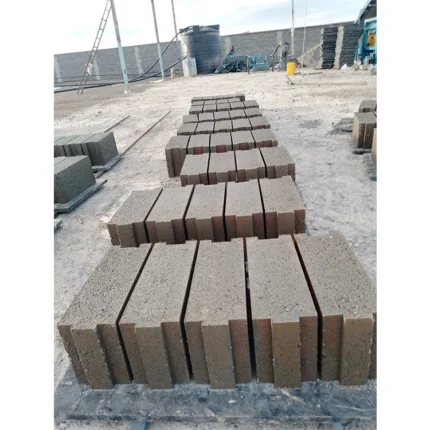
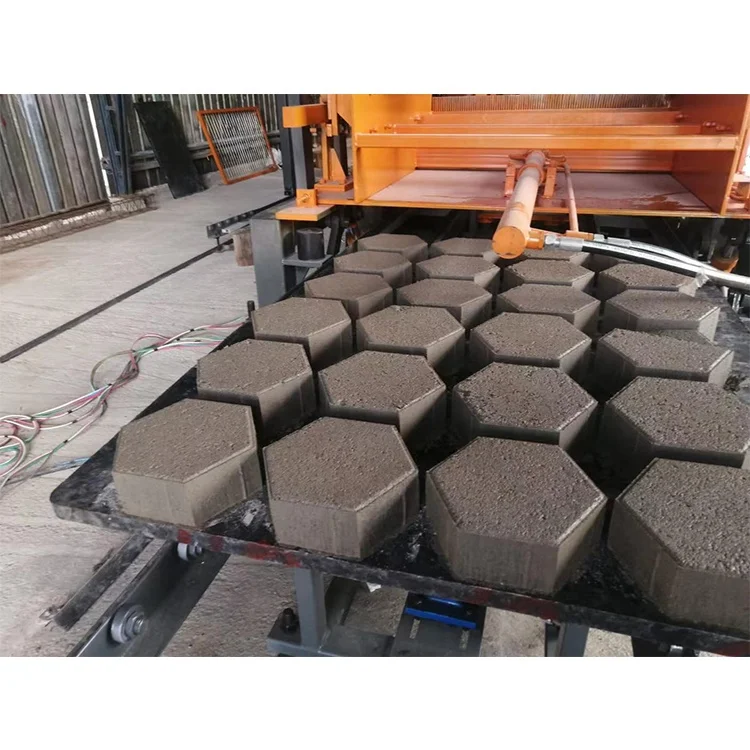
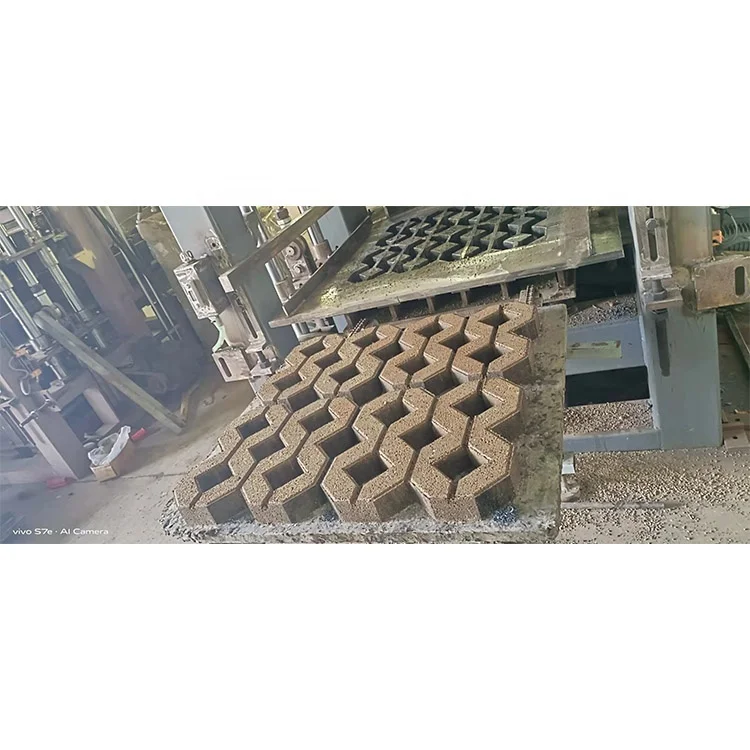
| Applied Products | Concrete blocks, hollow/solid blocks, pavers, interlocking blocks, curbstone, colored pavers |
| Raw Material | Crushed stone, sand, cement, dust, fly ash, gravel, slag |
Application Suitability
| Application | Material or Output |
|---|---|
| Hollow block production for load-bearing walls | Crushed stone, sand, cement, fly ash |
| Solid block manufacturing for structural partitions | Gravel, sand, cement |
| Interlocking paver and colored paver runs | Fine aggregates, cement, pigment additives |
| Curbstone and kerb production for municipal projects | Coarse aggregate, slag, cement |
| Fly ash brick production for lightweight construction | Fly ash, sand, cement, dust |
What "Fully Automatic" Really Means When the PLC Speaks the Wrong Language
Automation only removes the operator from the cycle if the operator can actually read what the screen is telling them.
I have seen a QT8-15 class block line sit idle on a West African site for two days because the PLC touch panel shipped with English labels and the operators only read French. The automatic stacking routine would not launch, the fault log was unreadable, and the whole plant waited while we rewrote HMI strings on site. That delay was not a machine fault; it was a specification failure. When buyers evaluate an automatic QT8-15 block making machine PLC controlled, the control language is as critical as the vibration frequency [NEED_CITE: PLC display language and HMI localization requirements for industrial machinery exports].
How the PLC Removes Manual Intervention from the Press Cycle
The QT8-15 uses a PLC with a human-machine interface dialogue system to manage the entire press sequence, from raw material feeding through vibration compaction to hydraulic demolding and block stacking. The operator selects the block format recipe on the touch panel, and the controller adjusts cycle timing, vibration duration and hydraulic pressure to match. This is what separates a genuinely automated line from a semi-automatic press with a conveyor bolted on.
Where Intelligent Control Delivers Consistency That Manual Operation Cannot
On a manual or semi-automatic line, the operator decides when the mould box is full, when to trigger vibration and when to demold. Every decision introduces variation. The QT8-15’s PLC standardizes these decisions into repeatable recipes. When the local aggregate changes or a new block format is introduced, the adjusted parameters are saved and recalled exactly, so batch-to-batch block strength stays within the target range [NEED_CITE: concrete block compressive strength consistency and process control standards].
Reading the Numbers That Actually Matter
The 21 MPa rated hydraulic pressure and 60 kN vibration force work together to compact the mix into the mould cavity. Hydraulic pressure alone would leave air pockets; vibration alone would not consolidate the full depth. The platform vibration system operating at 2800–4500 r/min is paired with computer-controlled hydraulic flow pressure so that compaction force is applied in a controlled sequence rather than simultaneously, which produces denser blocks with more uniform wall thickness. The 950×900 mm pallet size determines how many blocks are produced per cycle and must match the curing racks and forklifts already on site. Overall power draw of 55.5 kW means the electrical supply must include a dedicated circuit with appropriate breaker sizing, not shared with other heavy loads on the plant floor.
The Hidden Cost of Skipping Configuration Conversations
When voltage, frequency and control language are confirmed verbally but never written into the purchase specification, the machine arrives and commissioning stalls. The electrician finds the motor wired for a different supply standard. The operator stares at an HMI in a language they cannot read. The automatic stacking sequence faults out because the pallet sensor logic was set for a different pallet thickness. None of these are warranty claims; they are specification gaps, and every one of them costs the buyer days of idle plant time and emergency travel for a technician [NEED_CITE: industrial equipment commissioning delays caused by voltage and control mismatches].
Why Sourcing the QT8-15 from a Block-Machinery-Focused Supplier Matters
Block machinery is a single focus here, which means the QT8-15 is specified alongside its moulds, pallets and handling equipment as one matched system rather than sourced from separate vendors and assembled on site. The configuration is set against the buyer’s actual mix design, local aggregate availability and target block format, not a catalogue default that assumes ideal materials. Automation level is selectable, so a buyer can commission the line at semi-automatic and upgrade the stacking and cubing stations later without replacing the press itself.
Documentation & Verification
- Line layout and capacity calculation stating which block format the output figure assumes
- Machine specification sheet with hydraulic and electrical schematic for the QT8-15
- Mould drawing and format list matching the buyer’s target product range
- Voltage, frequency and PLC display language confirmation signed off before production
- Factory test record demonstrating press cycle on the buyer’s specified block format
- Operation and maintenance manual with wear parts and mould replacement list
Installation, Commissioning & Support
- Foundation plan sized for the QT8-15’s 9 T mass and 8300×1860 mm footprint to prevent vibration transmission
- Dedicated 55.5 kW power circuit with correct voltage and frequency confirmed before wiring begins
- Machine arrives in dismantled state for container loading with reassembly supervised on site
- PLC parameter setup and recipe programming for each block format during commissioning
- Operator training on the HMI dialogue system covering recipe selection, fault diagnosis and daily maintenance
- Wear parts list and hydraulic seal kit supplied with initial spare pallets matched to the 950×900 mm size
What We Need to Configure Your Line Correctly
To size the QT8-15 for your plant, we need to know the specific block formats you intend to produce, the daily output target for each format, and the raw materials available locally including aggregate type and grading. Confirm your site’s voltage and frequency standard, the preferred PLC display language, and the pallet handling and curing equipment you already have in place. With this information, the machine and its automation peripherals can be specified as a coherent system before production begins.
Frequently Asked Questions
Q: How is cycle time and daily output verified per block format on the QT8-15?
A: Cycle time varies between 15 and 25 seconds depending on block format, wall thickness and material density. We provide a capacity calculation that states the assumed block format, the per-format cycle time, and the resulting daily output based on operating hours. Request this document before confirming the order so the output figure matches the product you actually sell.
Q: What PLC display languages are available and when must the language be confirmed?
A: The HMI dialogue system supports multiple display languages, and the required language must be confirmed in writing before the machine enters production. Changing the HMI language after the PLC program is loaded requires re-flashing the interface on site, which delays commissioning. Specify the language at the quotation stage, not at shipment.
Q: How does the vibration and hydraulic system adapt to different mix designs?
A: The platform vibration frequency range of 2800–4500 r/min and the 21 MPa hydraulic pressure are adjustable through the PLC recipe system. When the buyer’s local aggregate or cement ratio changes, the vibration duration and hydraulic compaction sequence are re-tuned to maintain block density and strength without requiring mechanical modifications to the press.
Q: What is the upgrade path from semi-automatic to full automation on this platform?
A: The QT8-15 can be commissioned with manual pallet handling and upgraded later with automatic pallet feeding, stacking and cubing stations. The PLC architecture supports these additions without replacing the main controller. Buyers setting up a first plant often start semi-automatic and add automation modules as operator experience and production volume grow.
Q: How does the automatic stacking system integrate with an existing curing area?
A: The stacking routine is programmed to match the curing rack dimensions and the forklift capacity already on site. Pallet size is 950×900 mm, so the stacking pattern, rack spacing and forklift tine width must all accommodate this dimension. Confirm your curing layout before the stacking station is configured to avoid rework after installation.