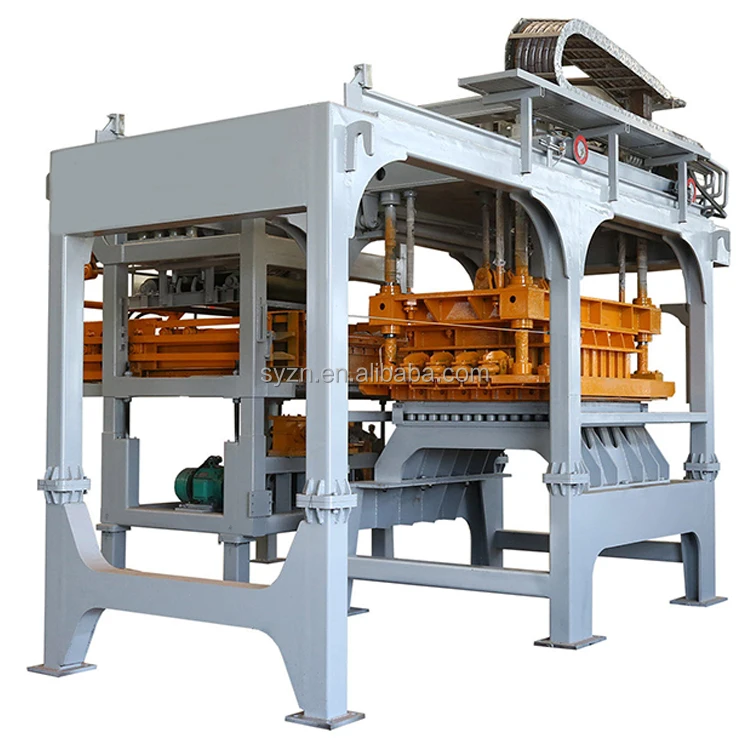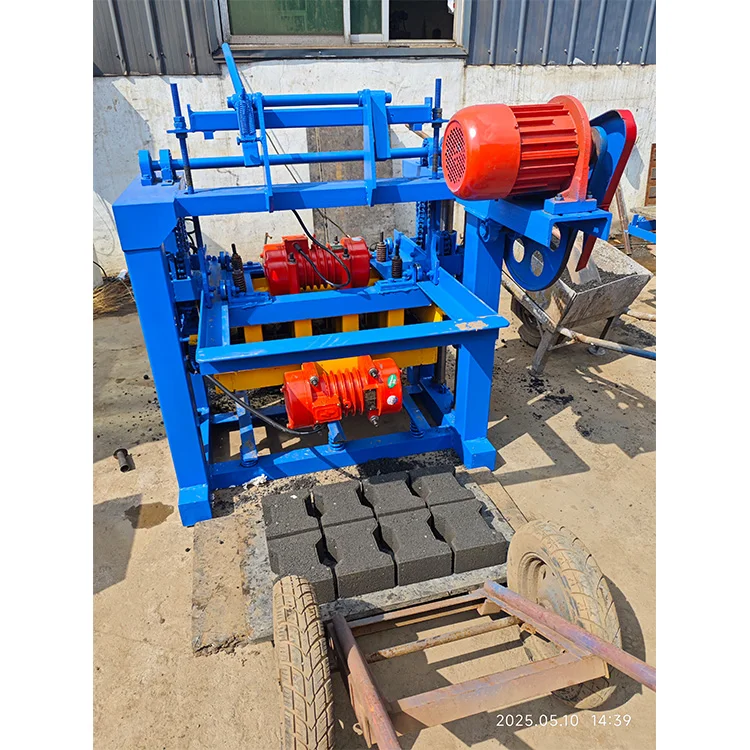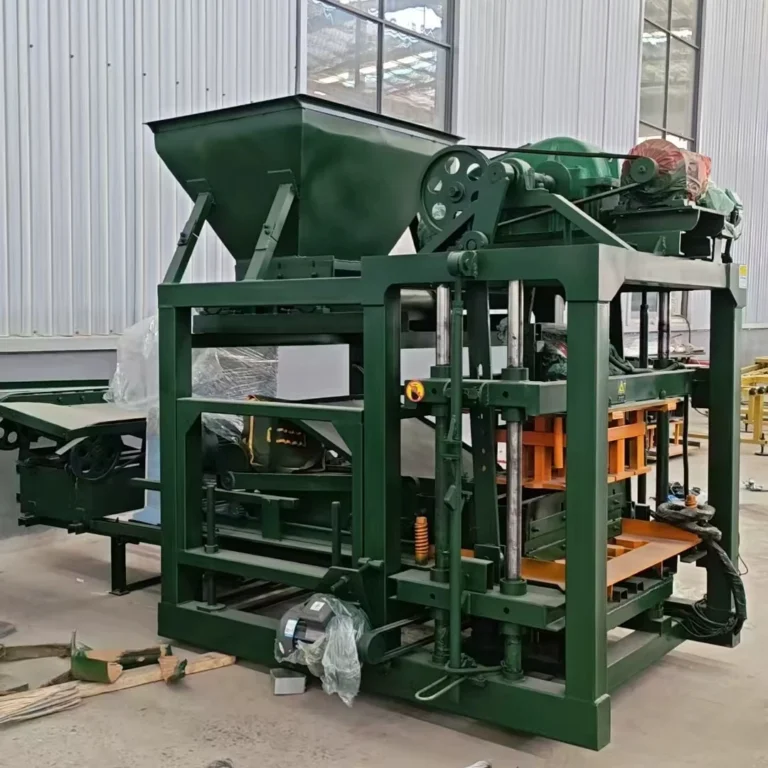
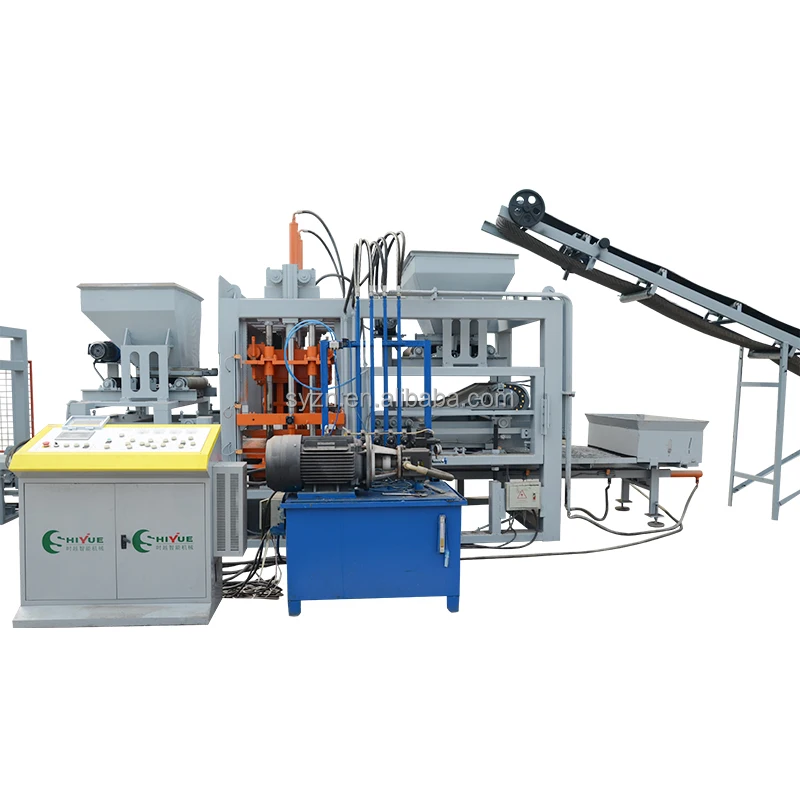


Description
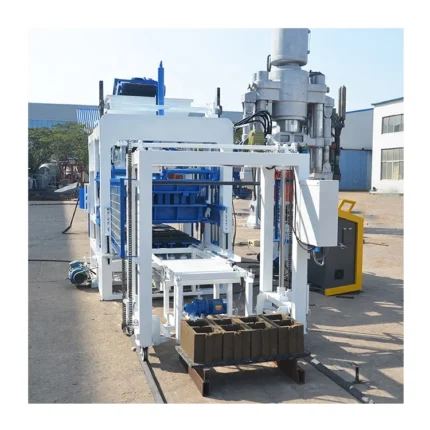
Configured against the buyer’s actual mix design, not a catalogue default — the QT7-15 control program is adjusted after reviewing your local aggregate gradation and target block format, ensuring the vibration profile matches what your plant actually produces every shift.
Technical Specifications
| Parameter | Value |
|---|---|
| Model | QT7-15 |
| Product Type | Automatic PLC Controlled Concrete Block Making Machine |
| Dimension of Host Machine | 3200 × 2300 × 2750 mm |
| Weight of Host Machine | 6 Tons |
| Molding Area | 1150 × 700 mm |
| Workshop Area | 200 ㎡ |
| Host Machine Power | 45 kW |
| Vibration Force | 100 kN |
| Vibration Method | Hydraulic + Platform Vibration |
| Vibration Frequency | 2800–4500 Times/Minute |
| Pallet Size | 1150 × 700 × 25 mm |
| Molding Period | 15 Seconds (basis not stated in source — confirm block format / material / thickness) |
| Control System | Siemens PLC with independently developed control program |
| Motor | Germany SIEMENS brand or CE standard brand |
| Travel Switch | France Schneider brand and Japan Omron |
| Mould Heat Treatment | Carburizing treatment, 54–58 HRC |
| Batching Machine | PLD1200, 4×2.5 m³ storage, ±2% ingredient precision |
| Concrete Mixer | JS500, 500 L discharge, 18.5 kW mixing motor |
| Stacker | SY-4 automatic mobile pallet stacker, 3 kW |
| Voltage | 220/380/415/440V (Customized) |
| Standards | CE |
Application Suitability
| Application | Material or Output |
|---|---|
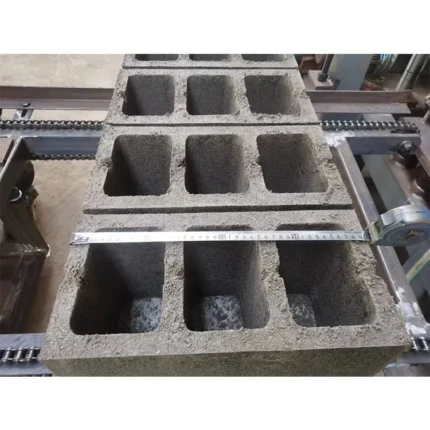
| Concrete hollow block production | Cement, crushed stone, sand, fly ash blends |
| Paver brick manufacturing | Fine aggregate with color oxide (optional color feeding system) |
| Solid block production | High-density crushed stone and cement mixes |
| Interlocking and porous brick formats | Custom mix designs validated by pre-shipment trial |
Why Cycle Time Claims Without a Format Are Meaningless
A supplier quotes 15-second cycles, but the block format behind that number stays in the fine print.
The QT7-15 molding period is listed at 15 seconds, yet that figure means very little unless you know which block size, wall thickness, and mix composition it was measured against. A 400×200×200 mm hollow block compacts faster than a 60 mm interlocking paver with a face-mix layer, and a high-fines aggregate demands a different vibration window than clean crushed granite [NEED_CITE: block format impact on compaction cycle time]. When plant owners compare quotations based on cycles-per-hour alone, real daily output often falls noticeably short once the line is running the buyer’s actual product mix. Asking the supplier to state capacity per specific format, with the pallet loading pattern and block dimensions named, removes that gap between brochure figures and shift-floor reality.
What the PLC Actually Takes Off the Operator’s Hands
On a semi-automatic line, the operator triggers each stage manually — pallet feed, vibration start, head descent, demould, brick receiver transfer. The Siemens PLC in this automatic PLC controlled concrete block making machine sequences those stages into one continuous loop, adjusting dwell times and vibration ramps between formats. The operator’s role shifts from cycle execution to supervisory monitoring, stepping in only when the HMI flags a fault condition.
Consistency Across Batches and Shift Changes
Manual and semi-automatic plants drift. An operator fatigued by mid-shift will shorten a vibration cycle by a second or two, and the blocks pressed during that window leave the press under-compacted. The independently developed control program on the QT7-15 locks cycle parameters — vibration duration, pressure hold, demould speed — so the ten-thousandth block of the day matches the first [NEED_CITE: PLC cycle repeatability in concrete block manufacturing]. When a buyer supplies commercial blocks under a strength specification, that repeatability is what keeps every batch inside the tolerance band without selective sorting downstream.
How Vibration Frequency and Hydraulic Pressure Shape Block Density
The QT7-15 delivers vibration through a combined hydraulic and platform system running between 2800 and 4500 times per minute, paired with a 100 kN vibration force. Higher frequency suits thin-walled hollow blocks where rapid particle rearrangement is needed before the mix stiffens, while lower frequency with longer dwell builds density in thick pavers. The carburizing-treated moulds, hardened to 54–58 HRC, resist the abrasive wear this vibration profile creates over thousands of cycles. Meanwhile, the JS500 mixer discharges a consistent 500-litre batch into the PLD1200 batching system, which holds ingredient precision to ±2%, so the press receives a predictable feed every time rather than a mix that fluctuates with loader-bucket estimates.
The Cost of Skipping the Automation Step
Buyers who size a line around a semi-automatic press to save upfront capital often find that pallet handling after the press becomes the real constraint. Workers carry wet pallets to the curing area by hand, and stacking consistency drops, leading to cracked blocks at the bottom of the rack. The SY-4 automatic mobile pallet stacker on this line removes that manual transfer entirely, moving pallets onto the rack at a pace that matches the press output [NEED_CITE: manual handling losses in block curing yards]. When a plant later tries to retrofit automation onto a semi-automatic press, the integration cost and downtime frequently exceed what a fully configured automatic line would have required from the start.
Why Sourcing the Complete Line From One Builder Matters
Block machinery is our single focus, so the QT7-15 host press, PLD1200 batching machine, JS500 mixer, pallet feeder, brick receiver, hydraulic station, conveyor belt, and hydraulic trolley are specified as one matched system rather than assembled from separate suppliers. Each station’s cycle timing is balanced so the press is never left waiting for a pallet or a concrete batch. The automation level is selectable — a buyer can start with the core press and stacker, then add batching and curing-rack handling later without replacing the PLC platform. Voltage, frequency, and control display language are confirmed before production begins, not discovered during commissioning. Installation includes operator training on the specific formats the buyer’s market demands, and mould and wear parts support continues after the line is running.
Documentation & Verification
- Factory test record run on your target block format and mix design before dispatch
- Line layout drawing showing station spacing against your 200 ㎡ workshop footprint
- Mould drawing and format list with pallet loading pattern for each block type
- Hydraulic and electrical schematic matching the installed valve and wiring configuration
- Voltage, frequency, and PLC display language confirmation sheet signed off pre-production
- Packing photographs and customs documentation support for your port of entry
Installation, Commissioning & Support
- Workshop floor must be level and rated for the 6-ton host machine plus vibration loads
- 45 kW host power requires a dedicated three-phase circuit matching your confirmed voltage
- Machine ships dismantled for container loading; reassembly and alignment on your foundation
- First-run commissioning sets vibration frequency and pressure for your local aggregate
- Operator training covers PLC fault diagnostics, mould change procedure, and daily greasing points
- Wear parts list and mould replacement schedule provided for your production volume
What We Need to Quote Accurately
To size the QT7-15 correctly for your plant, share the specific block formats you intend to produce, your target daily output per format, and a sample of the aggregate you plan to source locally. Let us know your site voltage, frequency, and the language your operators prefer on the PLC display, along with the curing area dimensions and forklift capacity you already have on site.
Frequently Asked Questions
Q: How do I verify the realistic daily output of the QT7-15 for my block format?
A: Request a capacity calculation that names the exact block dimensions, pallet loading pattern, and mix design used for the estimate. A single cycles-per-hour figure without those details does not translate to a dependable shift output. We provide a format-by-format breakdown so you can compare the press capacity against your market demand before committing.
Q: What PLC language options are available for the control interface?
A: The Siemens PLC display language is confirmed during the pre-production review stage. We set the HMI to the language your operators read comfortably, which reduces commissioning delays and prevents misinterpretation of fault codes during routine production. Language changes after installation are possible but require a program reload.
Q: Which stages does the QT7-15 automate and which still need an operator?
A: The press cycle, pallet feeding, brick receiving, and pallet stacking are fully automated under PLC control. Raw material loading into the batching hopper and finished block transport from the curing area to the yard typically remain manual unless the buyer adds upstream and downstream conveyors to the line configuration.
Q: Can I upgrade from semi-automatic to full PLC control later?
A: The control platform supports a staged upgrade path. A buyer can install the QT7-15 with core automation first, then integrate automatic batching, pallet circulation, and cubing in subsequent phases without replacing the PLC hardware, provided the initial electrical panel was specified with expansion I/O capacity.
Q: How does mould change work under PLC control on this machine?
A: The PLC stores cycle parameters for each mould format. When the operator selects the next product on the HMI, the system adjusts vibration duration, pressure hold, and demould speed to match. The physical mould swap still requires manual unbolting, but the control side transitions without reprogramming, cutting format changeover time on the floor.