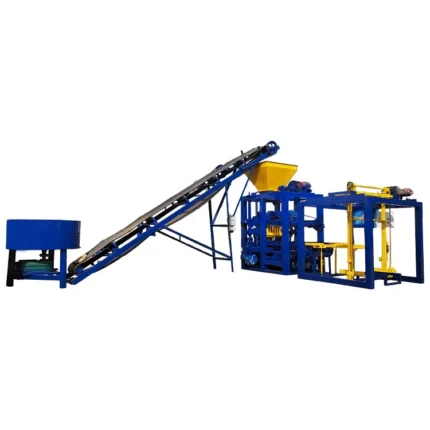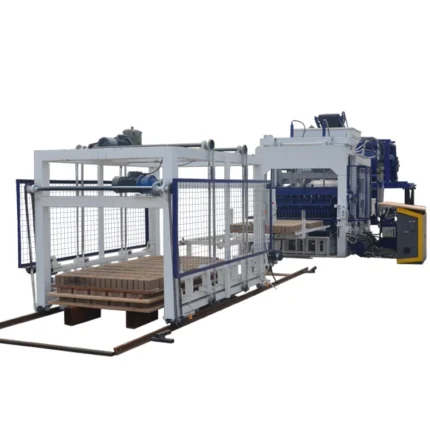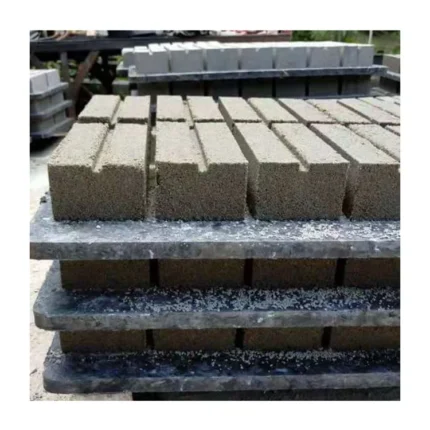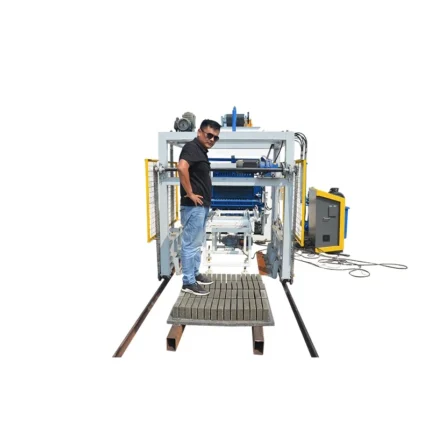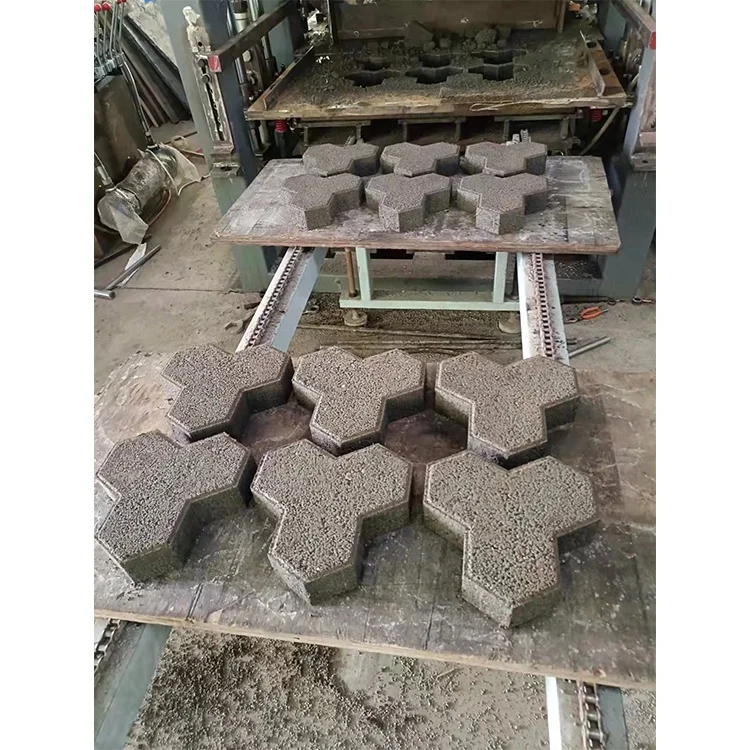
Description
Matched System Engineering — Every PLC logic loop, hydraulic valve timing, and pallet feed sensor on the QT5-15 is tuned as one interdependent unit, not bolted together from separate vendors hoping they communicate.
Technical Specifications
| Parameter | Value |
|---|---|
| Model | QT5-15 |
| Product Type | Automatic Concrete Block Making Machine |
| Overall Dimensions (L×W×H) | 7100×1600×2610 mm |
| Molding Cycle | 15 s (basis not stated in source — confirm block format, material, and thickness) |
| Vibration Frequency | 0–60 Hz |
| Vibration Force (Exciting Power) | 40 kN |
| Rated Power | 33.5 kW |
| Mixer Model | JS500 |
| Pallet Size | 1100×550 mm |
| Total Weight | 5 T |
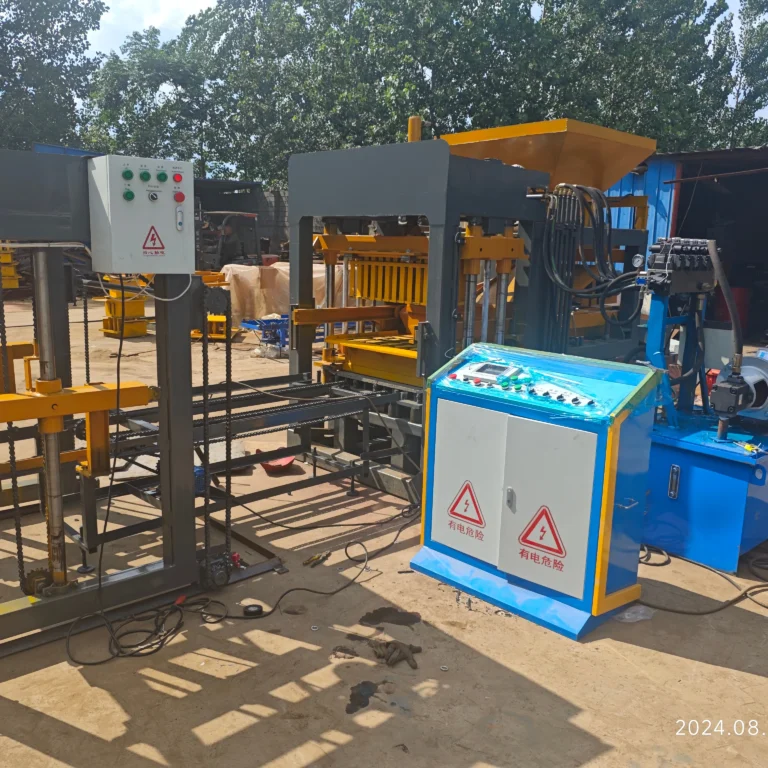
| Control System | PLC control system |
| Hydraulic Station | Included |
| Automation Level | Fully automatic |
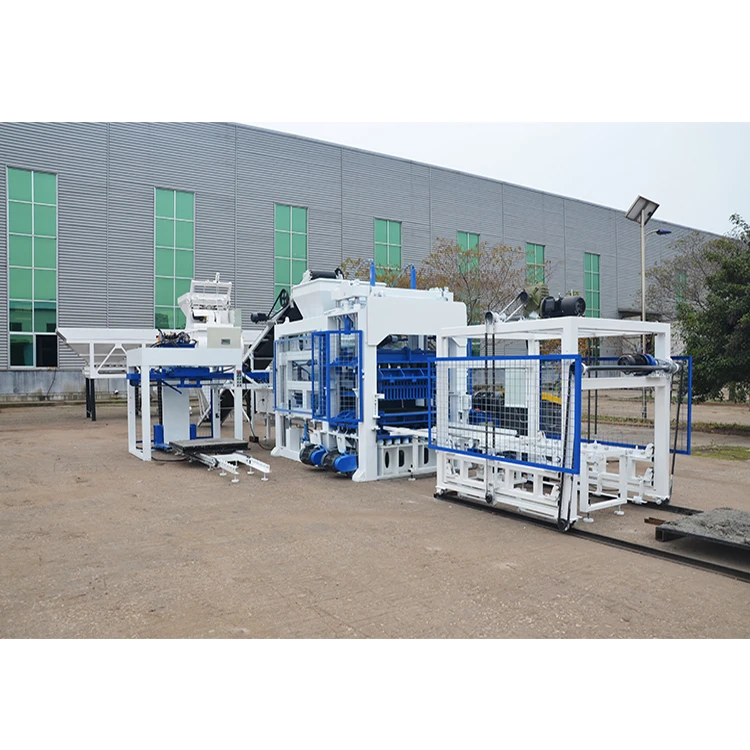
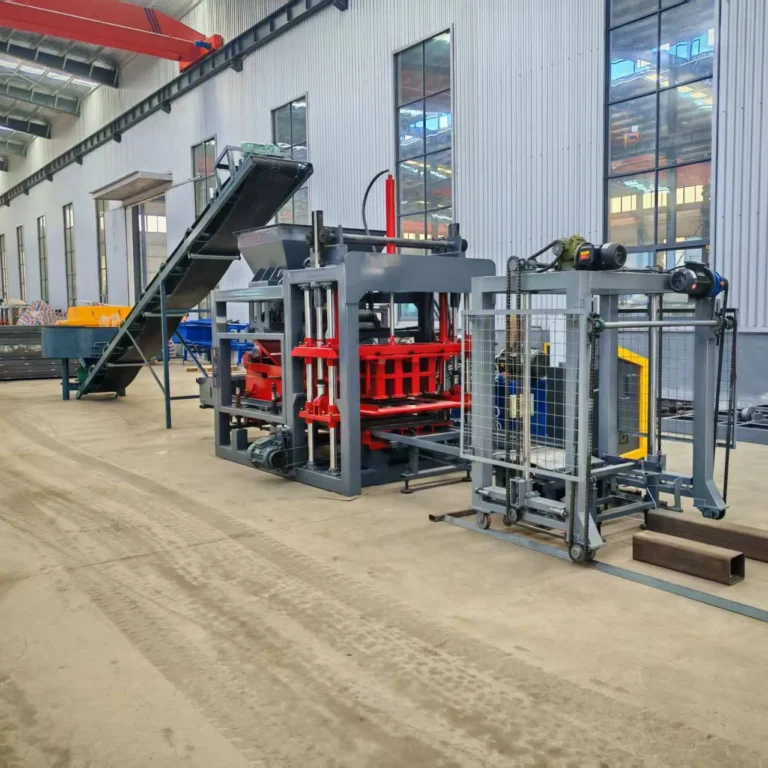
| Included Line Equipment | Block making machine, hydraulic station, PLC control system, pallet feeder, brick conveyor, block sweeper |
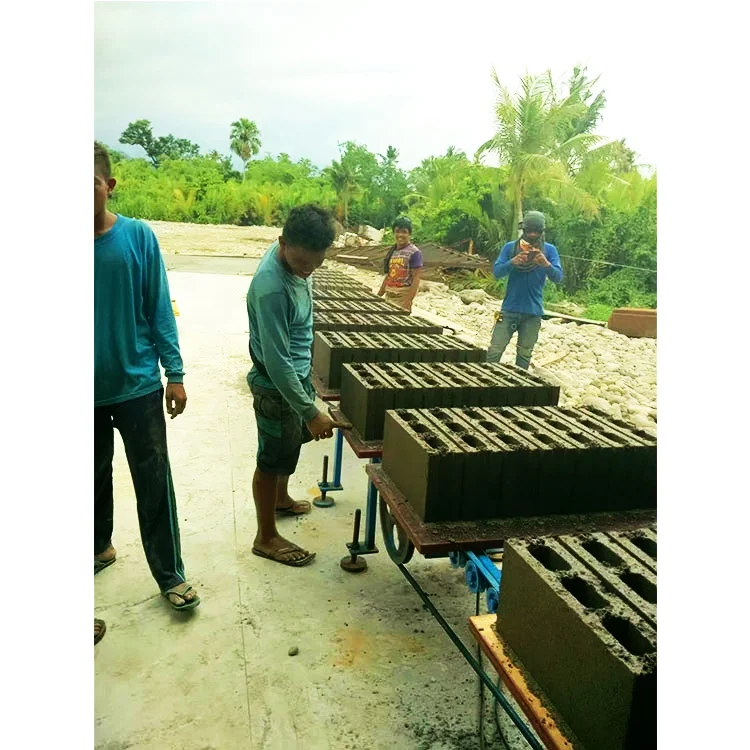
| Applied Products | Paver, solid block, hollow block, curbstone |
| Raw Materials | Crushed stones, sand, cement, dust, fly ash |
Application Suitability
| Application | Material or Output |
|---|---|
| Hollow block production for structural walls | Crushed stone, sand, cement, and fly ash blends at standard moisture |
| Solid brick manufacturing for load-bearing masonry | Dense aggregate mixes requiring full hydraulic compaction |
| Paver production for walkways and driveways | Fine-graded sand and cement with pigment additives |
| Curbstone forming for road and kerb applications | Coarse aggregate blends with high cement content |
Why the Language on Your PLC Screen Matters More Than the Machine Price
A control interface your operator cannot read is not automation — it is an expensive paperweight sitting on the factory floor.
I once stood in front of a control cabinet watching an operator scroll through alarm codes he could not decipher, while the entire block line sat idle. The PLC was functioning perfectly; the problem was that every prompt, every fault message, every parameter label was rendered in a language no one on that shift spoke. Two days of production vanished before a remote language patch could be pushed through. That is the kind of failure no specification sheet ever warns you about, and it happens far more often than buyers expect [NEED_CITE: industrial HMI language requirements across export markets].
The Control Logic That Runs Every Station in Sequence
On this automatic block making machine PLC controlled architecture, the programmable controller does not only govern the press cycle. It sequences the pallet feeder to deliver a fresh board before the mould opens, triggers the brick conveyor to clear finished blocks, and coordinates the block sweeper to clean residual material — all within the same 15-second window. When one station hesitates, the PLC holds the press rather than dumping a half-formed block onto a missing pallet.
What Consistency Actually Means Across a Full Shift
Batch-to-batch uniformity depends on the controller repeating identical timing curves thousands of times without drift. The hydraulic station and the 40 kN vibration force are managed through proportional valves whose opening duration is dictated by the PLC recipe loaded at the start of each run. If your local aggregate shifts from river sand to crushed dust mid-project, the operator adjusts the hold time and pressure curve from the HMI — no rewiring, no external laptop required [NEED_CITE: PLC recipe management in concrete forming equipment].
Reading the Numbers That Actually Shape Your Output
The 40 kN vibration force must be read alongside the hydraulic pressure rating, because vibration alone only settles the mix while hydraulic compression locks the particle structure into its final density. Too little pressure against a stiff, low-slump mix leaves blocks that crumble at the curing rack. The 0–60 Hz vibration frequency range allows the operator to dial down for thin pavers that crack under high-frequency resonance, or push toward the upper range for tall hollow blocks that need deep compaction. The 1100×550 mm pallet size dictates how many cavities a single mould can carry, which in turn defines the realistic pieces-per-cycle figure for each format. The JS500 mixer feeds the press at a rate that must match the molding cycle — if the mixer output falls behind, the PLC pauses the press rather than pressing a starved mould.
The Hidden Cost When Automation Stops at the Press
Buyers who focus only on press automation often discover that manual pallet handling creates a bottleneck that cancels out every cycle-time gain the PLC delivers. Blocks pile up at the conveyor exit because no stacker was specified, pallets are dragged back by hand, and the fully automatic molding cycle is interrupted every few minutes while someone repositions a board. The result is a line that was purchased for consistent output but runs at a fraction of its capability because the upstream and downstream stations were never included in the original scope [NEED_CITE: bottlenecks in partially automated block production lines].
Why Sourcing the QT5-15 Through This Configuration Approach
Block machinery remains the single focus here, so the press, mould, pallet, and handling equipment are specified as one matched system rather than assembled from unrelated suppliers. The configuration is set against your actual mix design and local aggregate, not pulled from a catalogue default that assumes materials you cannot source. Mould design covers the hollow block, solid brick, paver, and curbstone formats your market actually sells, including custom drawings when standard cavity layouts do not fit. Voltage, frequency, and PLC display language are confirmed before production starts, so the machine arrives ready to run rather than waiting for an electrical rework. The automation level is selectable — buyers can begin with the included pallet feeder and conveyor, then add automatic stacking and cubing later without replacing the base press.
Documentation & Verification
- Line layout drawing showing each station footprint and pallet flow path for the QT5-15
- Capacity calculation sheet stating the exact block format and cycle time behind each output figure
- Voltage and frequency confirmation record matching your site supply before production begins
- PLC display language and HMI layout sign-off document before the control cabinet is sealed
- Factory test record showing press cycle, pallet feed timing, and block dimensions from a production run
- Wear parts and mould catalogue with part numbers for your first reorder
Installation, Commissioning & Support
- Foundation plan matching the 7100×1600 mm footprint and dynamic load from 40 kN vibration
- Dedicated 33.5 kW power circuit with confirmed voltage and frequency before the panel is energized
- Pallet feeder alignment verified against the 1100×550 mm pallet stack and forklift approach path
- PLC parameter set loaded with your confirmed language and block recipe during commissioning
- Operator training covering mould change sequence, fault code response, and daily vibration plate inspection
- Spare parts kit including hydraulic seals, vibration springs, and proximity sensors for the pallet feed
Preparing Your Inquiry
Share the exact block formats your market moves and the daily volume each format must hit. Confirm the aggregate types available locally — whether crushed stone, river sand, fly ash, or a blend — along with your site voltage, frequency, and preferred PLC language. If you already operate a mixer or curing area, provide those dimensions so the line layout accounts for existing equipment.
Frequently Asked Questions
Q: How is daily output verified, and which block format does each capacity figure assume?
A: Every output figure in the specification is tied to a specific mould cavity count and block dimension. For the 400×200×200 mm hollow block, five pieces per mould at the stated cycle yields approximately 450 pieces per hour. If your primary product is a different format, the capacity calculation is recalculated for that exact mould so planning reflects what the line will actually produce.
Q: What PLC language and voltage configuration is confirmed before shipment?
A: The display language and HMI layout are agreed in writing during the sales process, and a screenshot sign-off is required before the control cabinet is sealed. Voltage and frequency are confirmed against your site supply so transformers or drives can be fitted at the factory rather than improvised on arrival.
Q: How is hydraulic pressure and vibration force matched to my local aggregate?
A: Your mix design and aggregate sample data are reviewed before configuration. The 40 kN vibration force and hydraulic hold pressure are then set so that a stiff, low-slump mix using crushed stone receives full compaction without cracking thin-walled hollow blocks during demoulding.
Q: What upgrade path exists from the included line to full stacking and cubing?
A: The PLC architecture supports adding automatic stacking and cubing stations later. The base controller already manages pallet feed and conveyor timing, so the upgrade involves adding the mechanical stations and extending the existing program rather than replacing the control system entirely.
Q: Which line stations are included so the press cycle is not bottlenecked?
A: The pallet feeder, brick conveyor, and block sweeper are all included and sequenced by the same PLC. This means a fresh pallet is positioned before each press cycle, finished blocks are cleared immediately, and the mould face is swept clean — keeping the molding cycle uninterrupted.