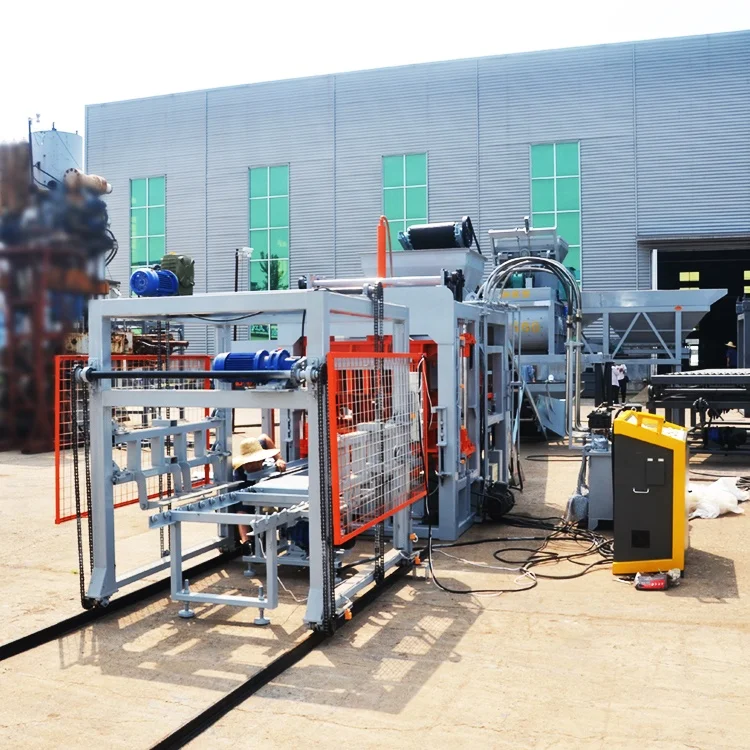
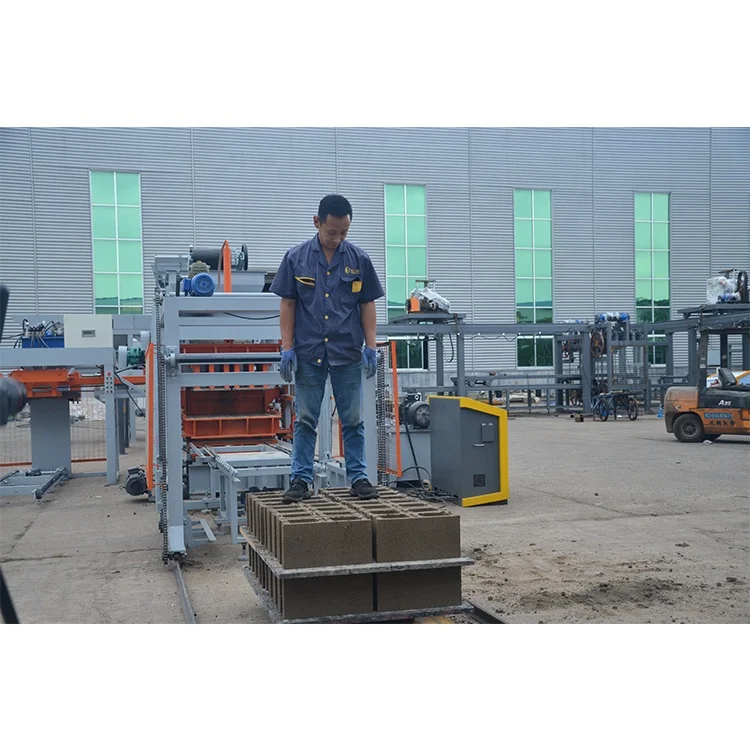
Description
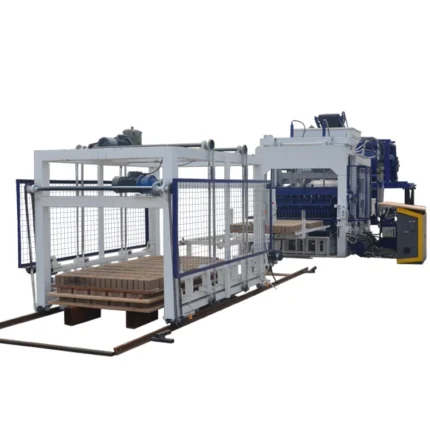
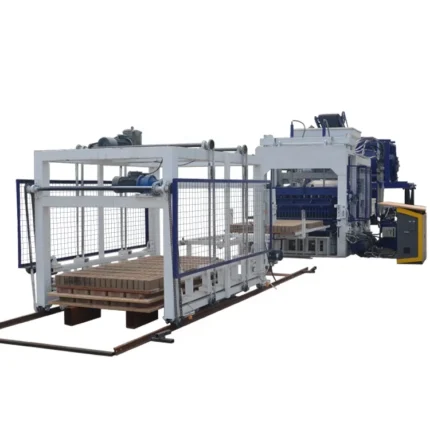
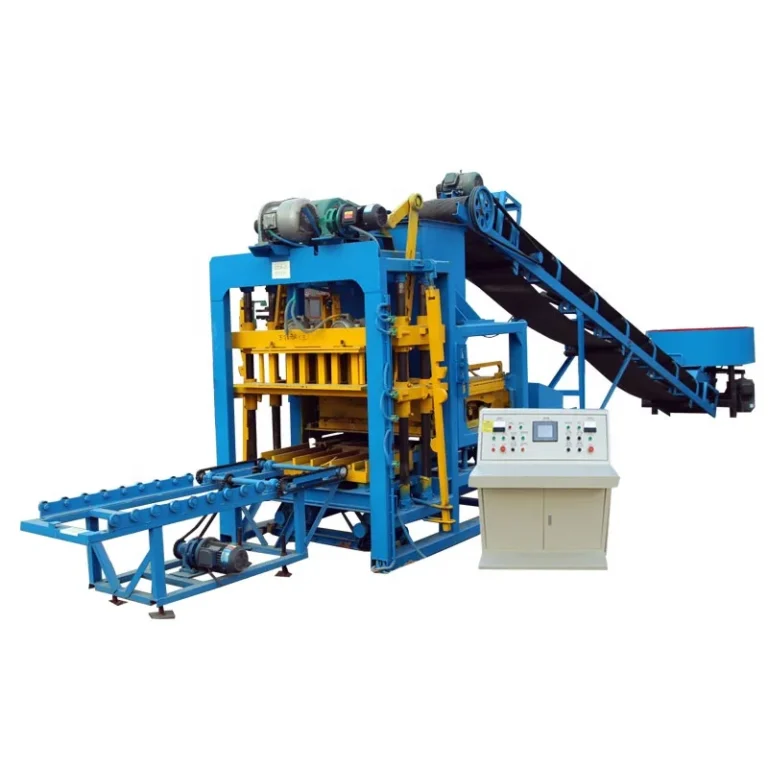
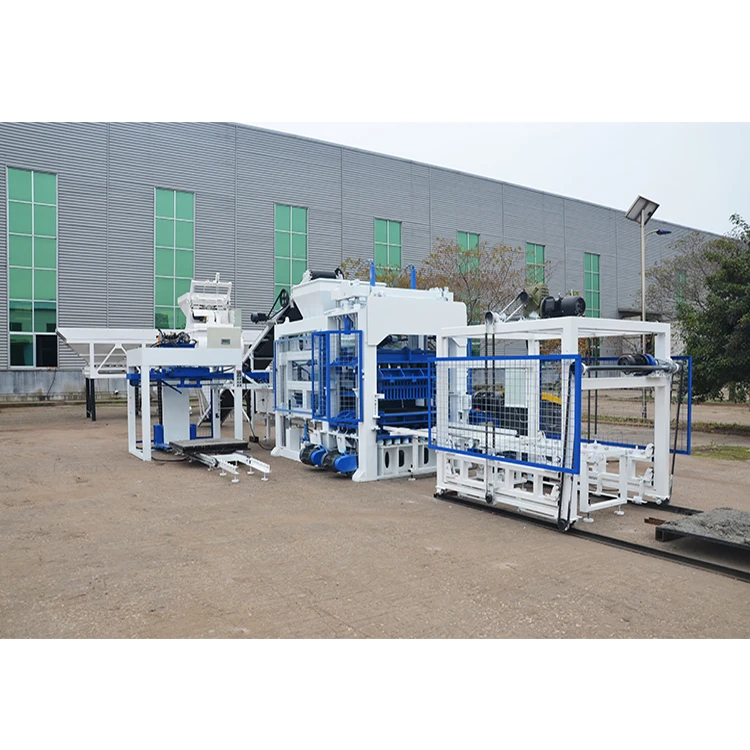
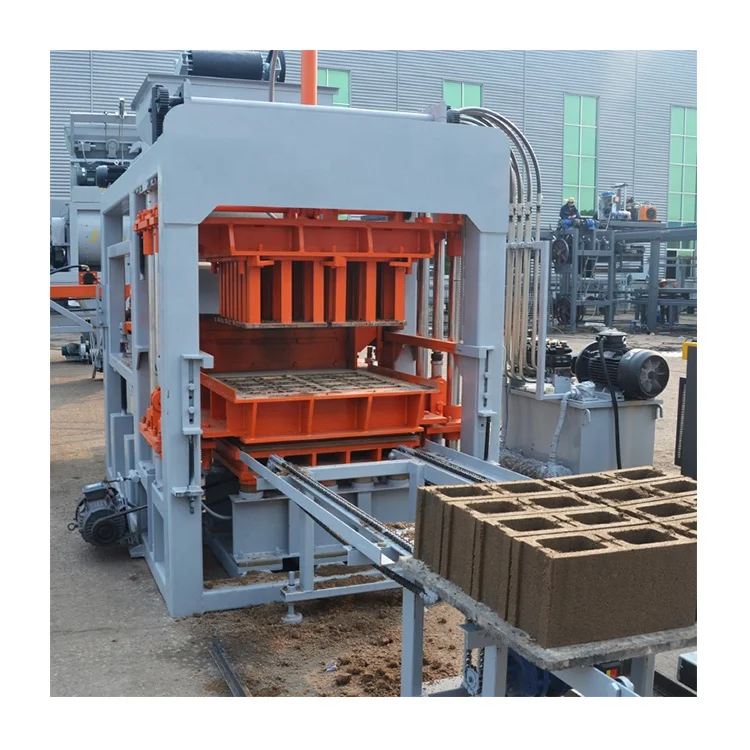
Integrated Automation Configuration — Every PLC parameter, pallet feed timing, and stacking sequence on the QT6-15 is mapped to your block format before the machine leaves our Linyi workshop, so the automation removes variables instead of adding complexity.
Technical Specifications
| Parameter | Value |
|---|---|
| Model | QT6-15 |
| Product Type | Fully Automatic Hydraulic Vibration Block Making Machine |
| Overall Dimensions (L×W×H) | 7400 x 1900 x 2660 mm |
| Molding Cycle | 15–25 s |
| Vibration Frequency | 4600 r/min |
| Exciting Power (Vibration Force) | 40–50 KN |
| Rated Power | 31.25 kW |
| Mixer Model | JQ350 |
| Pallet Size | 850 x 550 x 25 mm |
| Total Weight | 7 T |
| Control System | PLC control system |
| Hydraulic Station | Included (high pressure, stable operation) |
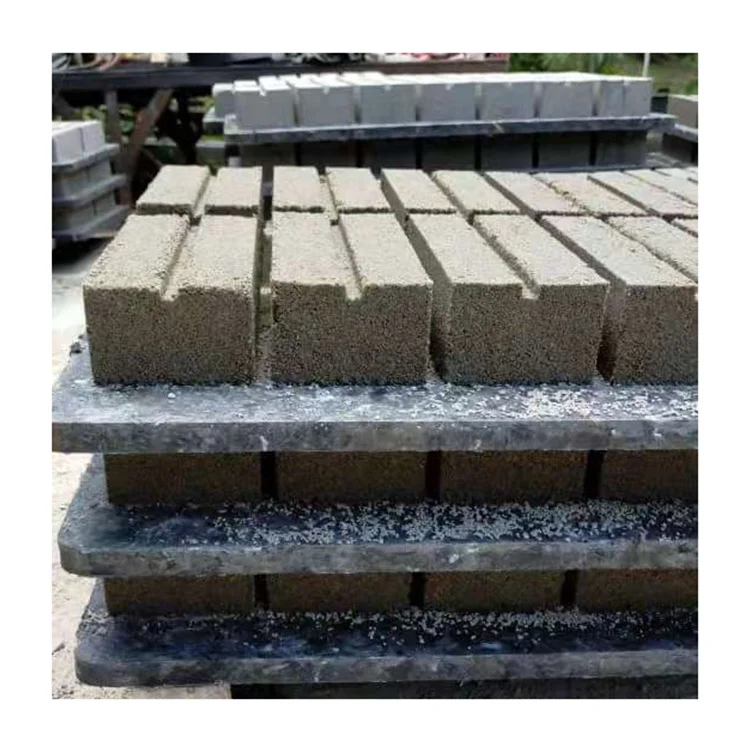
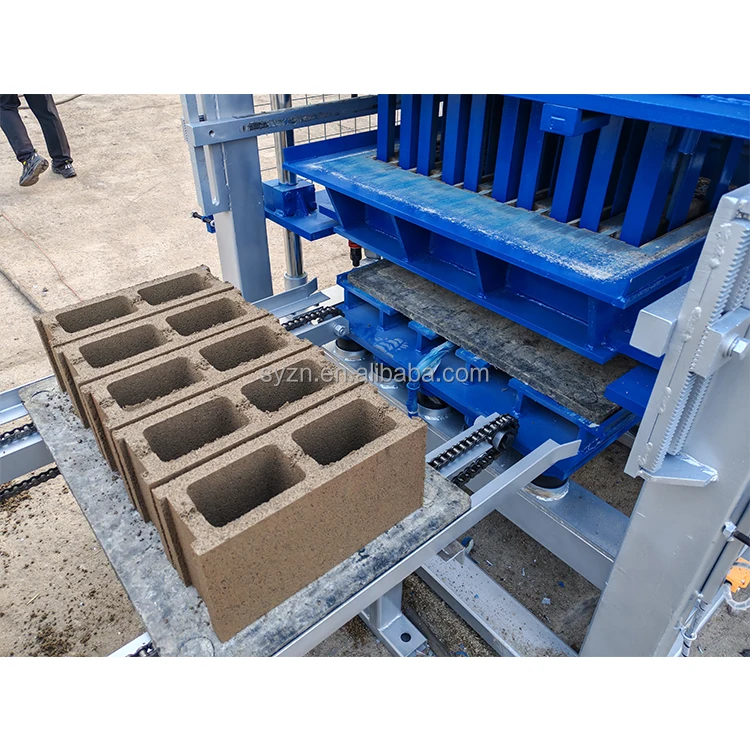
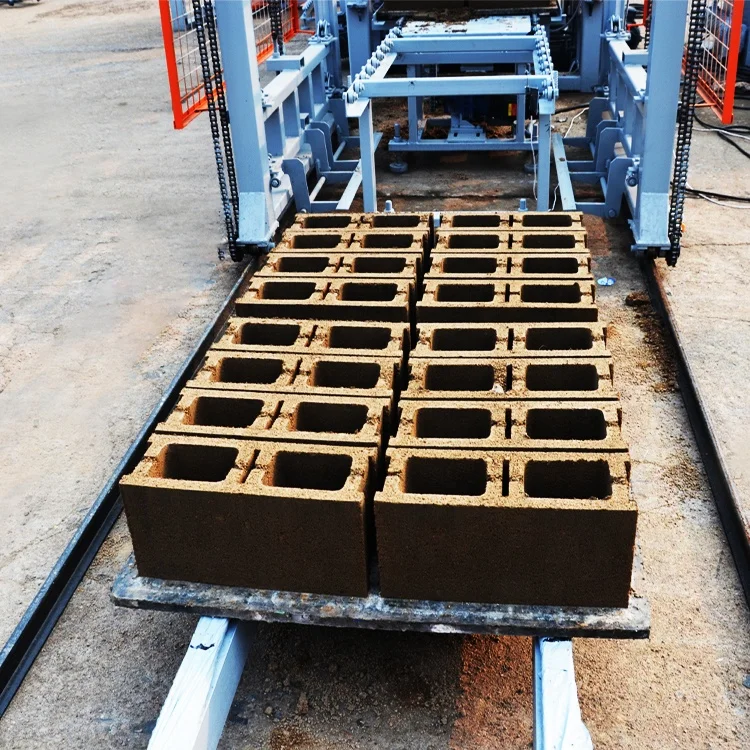
| Output Capacity (Hollow Block 400×200×200mm) | 1200–1680 Pcs/Hr (basis: 15–20s cycle, 6 pcs/mould) |
| Output Capacity (Hollow Block 400×150×200mm) | 1800–2400 Pcs/Hr (basis: 15–20s cycle) |
| Output Capacity (Solid Brick 240×115×53mm) | 3240 Pcs/Hr (basis: 15–20s cycle) |
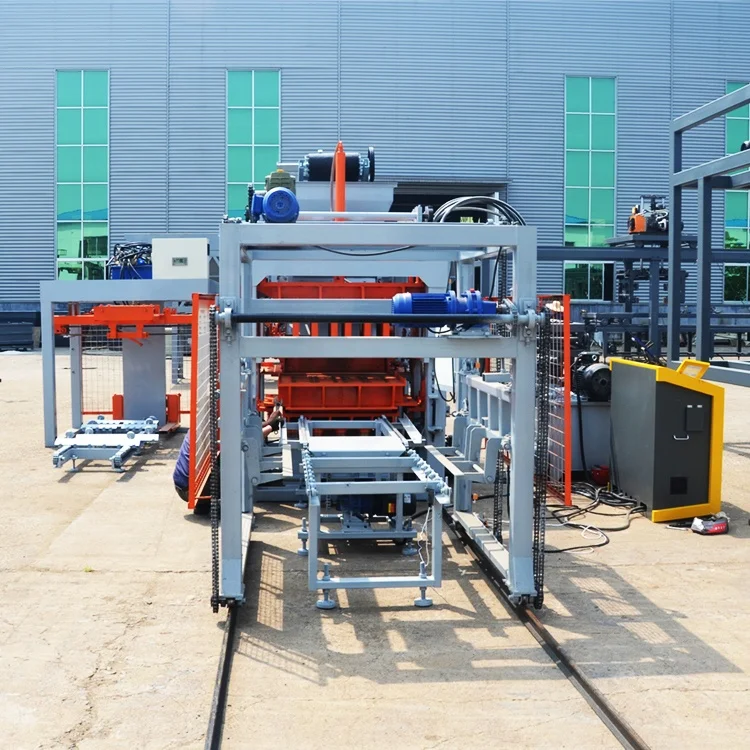
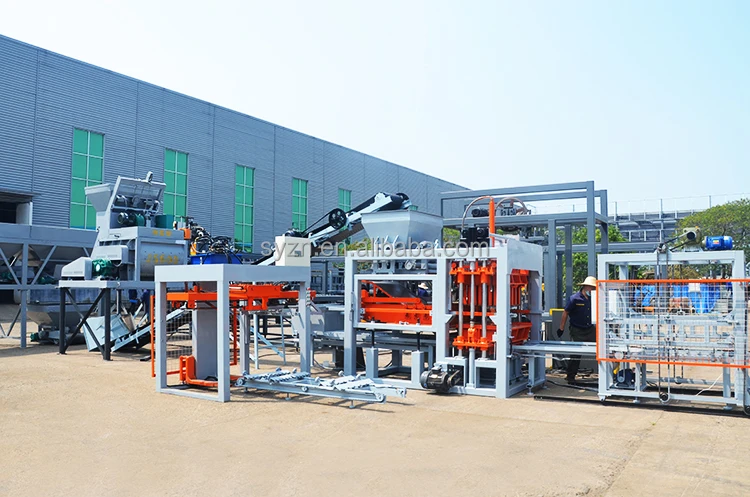
| Included Equipment | Block making machine, hydraulic station, PLC control system, pallet feeder, brick conveyor, block sweeper |
Application Suitability
| Application | Material or Output |
|---|---|
| Hollow Block Production | Crushed stones, sand, cement, fly ash, dust |
| Solid Brick Production | Sand, cement, crushed stones |
| Paver Production | Crushed stones, sand, cement, dust |
| Curbstone Production | Crushed stones, sand, cement |
Why "Fully Automatic" Only Matters When the Control Logic Matches Your Plant
A PLC is only as intelligent as the parameters loaded into it before shipment.
I spent years on the assembly floor before moving into equipment specification, and the most frustrating commissioning delays never come from mechanical faults. They come from a control panel displaying instructions in a language the operators cannot read, or a voltage mismatch that trips the main breaker the moment the hydraulic pump engages. When an automatic QT6-15 block making machine arrives with default factory settings, the automation that was supposed to reduce labor instead creates a bottleneck while someone waits for a translator or a transformer [NEED_CITE: electrical grid compatibility requirements for exported industrial machinery].
Removing Operator Variability from the Pressing Cycle
The primary value of a PLC controlled concrete block machine is consistency. Manual or semi-automatic presses rely on the operator to judge when the mould is full and when to initiate the vibration sequence. The QT6-15 automates the entire molding cycle, locking the vibration duration and hydraulic pressure to the exact values required for your specific mix design. This removes the batch-to-batch density fluctuations that cause weak blocks to fail compression tests at the construction site.
Synchronizing the Material Flow with the Press Speed
Automation extends beyond the press itself. The integrated pallet feeder and brick conveyor ensure that the QT6-15 is never left idle waiting for a pallet to be manually slid into position or for finished blocks to be cleared from the output table. This synchronization is critical because the press is only productive during the actual molding cycle; any time spent waiting for material handling support is lost capacity that no amount of vibration force can recover [NEED_CITE: block production line cycle time synchronization].
Understanding the Relationship Between Vibration Force and Hydraulic Pressure
The QT6-15 generates 40–50 KN of exciting power at a vibration frequency of 4600 r/min. In concrete block production, high-frequency vibration liquefies the mix so it settles into every corner of the mould, while the hydraulic pressure applied simultaneously compacts the material to achieve the target density. If the vibration force is too low for a stiff, low-water mix, the blocks will have honeycomb voids on the face. If the hydraulic pressure is insufficient, the blocks will be dimensionally accurate but lack the compressive strength required for load-bearing walls. The PLC ensures these two forces are applied in the correct sequence and duration for every single cycle, regardless of which operator is on shift. The 850 x 550 mm pallet size must also be verified against your existing curing racks and forklift dimensions, because a mismatch here will force you to manually restack every pallet that comes off the conveyor.
The Hidden Cost of Overlooking Control Language and Voltage
We shipped a fully automatic press to a client in West Africa last year. The machine was mechanically perfect, but the PLC display language had not been confirmed before dispatch. On the first morning of commissioning, the local crew could not navigate the English interface to adjust the cycle parameters. Three days of production were lost while we arranged remote guidance to change the language settings. Since that incident, every QT6-15 we prepare for export goes through a mandatory pre-shipment checklist that verifies PLC display language, voltage, and frequency against the buyer’s confirmed site conditions [NEED_CITE: common commissioning delays in exported block machinery].
Why Specify the Automation Scope Before the Machine Ships
When we configure a QT6-15 for your plant, we treat the machine, mould, pallet, and handling equipment as a single matched system rather than a collection of separate components. The automation level is selectable, meaning you can start with the automatic pallet feeder and conveyor now and add a stacker or cubing system later when your production volume justifies the investment. We provide a capacity calculation sheet that explicitly states the block format and cycle time assumptions behind every output figure, so you know exactly what the machine will produce in your specific format before you sign the order. Mould design is handled against your actual market requirements, including custom drawings if your local market sells a format we do not keep in standard inventory. Every machine undergoes a factory test with your specified mould installed, and we provide the test record before the machine is dismantled for container loading. The documentation package includes hydraulic and electrical schematics so your local maintenance team can source replacement components without waiting for parts to ship from China.
Documentation & Verification
- Line layout drawing showing QT6-15 footprint with pallet feed and conveyor clearances
- Capacity calculation sheet stating output per your confirmed block format and cycle
- PLC display language and voltage/frequency confirmation record signed before dispatch
- Hydraulic and electrical schematics matching the as-built QT6-15 configuration
- Factory test record with your specified mould installed and running
- Operation and maintenance manual with wear parts and mould replacement intervals
Installation, Commissioning & Support
- Foundation must support 7 T static load plus dynamic vibration forces across the 7400 mm frame length
- Dedicated circuit required for 31.25 kW rated power; confirm local voltage and frequency before shipment
- Machine dismantled for container loading; reassembly and leveling handled during on-site commissioning
- PLC parameters loaded and molding cycle tested against your mix design during first production run
- Operator training covers mould changeover, pallet feeder adjustment, and daily maintenance checkpoints
- Wear parts list provided with recommended replacement intervals for hydraulic seals and vibration components
What We Need to Configure Your Machine
To specify the QT6-15 correctly for your operation, we need to know the exact block formats your market sells, the daily volume you plan to run, and the raw materials available locally including aggregate gradation. We also require your site voltage and frequency, the preferred PLC display language, and details of any existing curing racks or forklifts so the pallet size can be matched to your handling equipment.
Frequently Asked Questions
Q: How does the PLC system support parameter adjustments after installation?
A: The PLC stores all molding cycle parameters including vibration duration, hydraulic pressure sequence, and pallet feed timing. Adjustments can be made directly at the control panel to accommodate different block formats or mix designs. The system retains these settings for each mould, so switching between products requires selecting the stored program rather than recalibrating from scratch.
Q: What determines the realistic daily output for my specific block format?
A: Daily output depends on the block format you select, the molding cycle time for that format, and the efficiency of your material feeding and pallet handling upstream. We provide a capacity calculation that states the assumed cycle time and block dimensions, so you can see the output figure for your specific product rather than a generic catalogue number.
Q: Can the automation level be expanded after the initial purchase?
A: The QT6-15 automation is modular. You can start with the automatic pallet feeder and brick conveyor, then add automatic stacking or cubing equipment later as your production volume increases. The PLC and control architecture are designed to accept these additions without requiring a complete system replacement.
Q: How does the machine maintain block strength consistency across different shifts?
A: The PLC locks the vibration frequency at 4600 r/min and the hydraulic pressure sequence to the exact values set during commissioning. Because the system controls the entire molding cycle automatically, block density and dimensions remain consistent regardless of which operator is running the press or what time of day it is.
Q: What is involved in changing moulds between different block formats?
A: Mould changeover on the QT6-15 involves releasing the clamping mechanism, lifting the current mould out with overhead lifting equipment, and securing the replacement mould in position. The PLC then loads the stored cycle parameters for the new format. The time required depends on your crew’s familiarity with the procedure and the lifting equipment available at your site.