Description
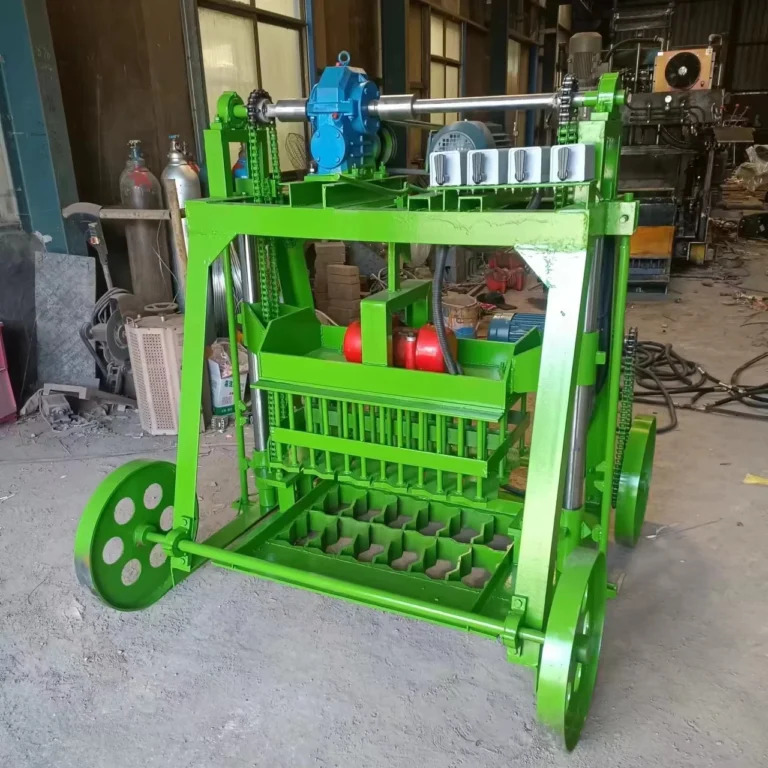
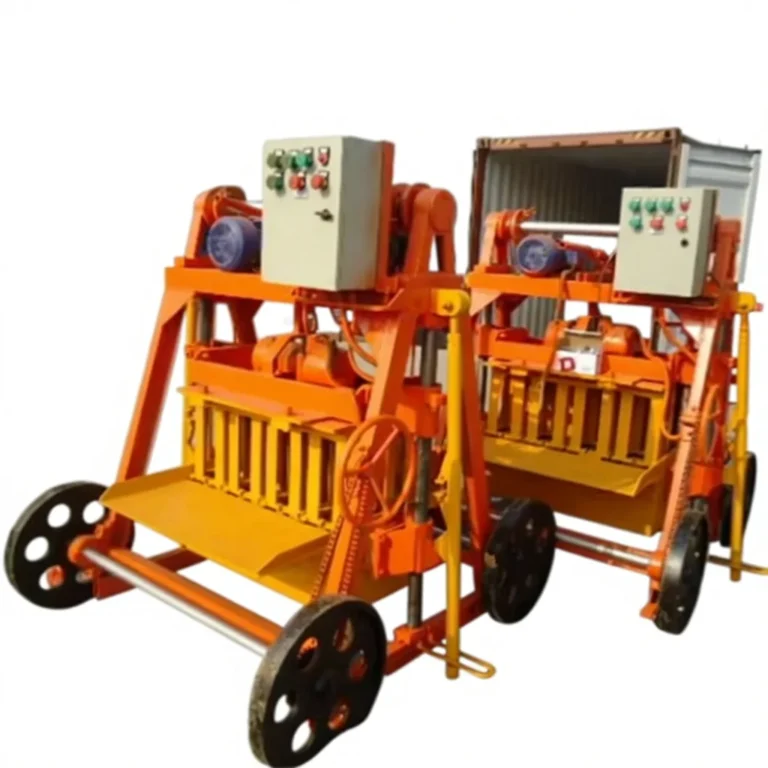
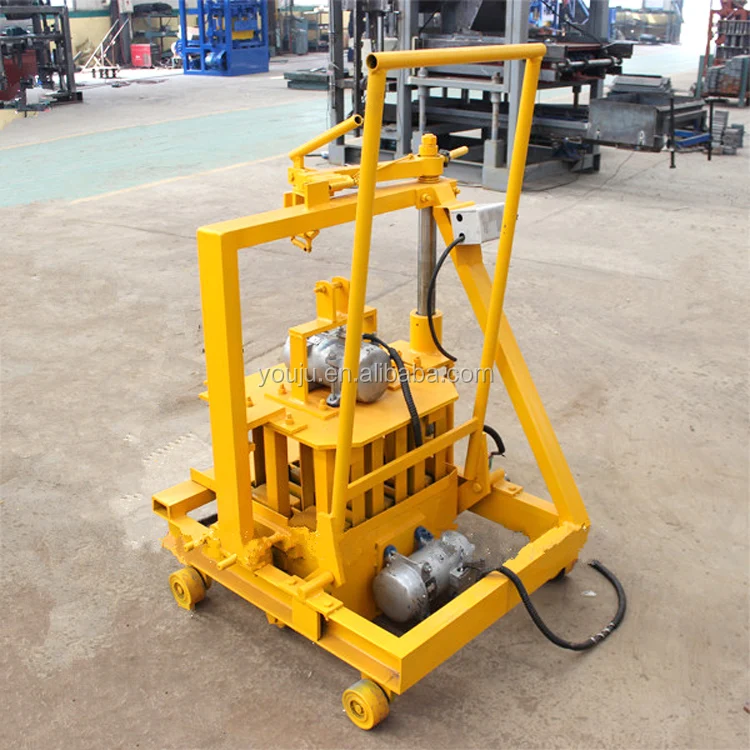
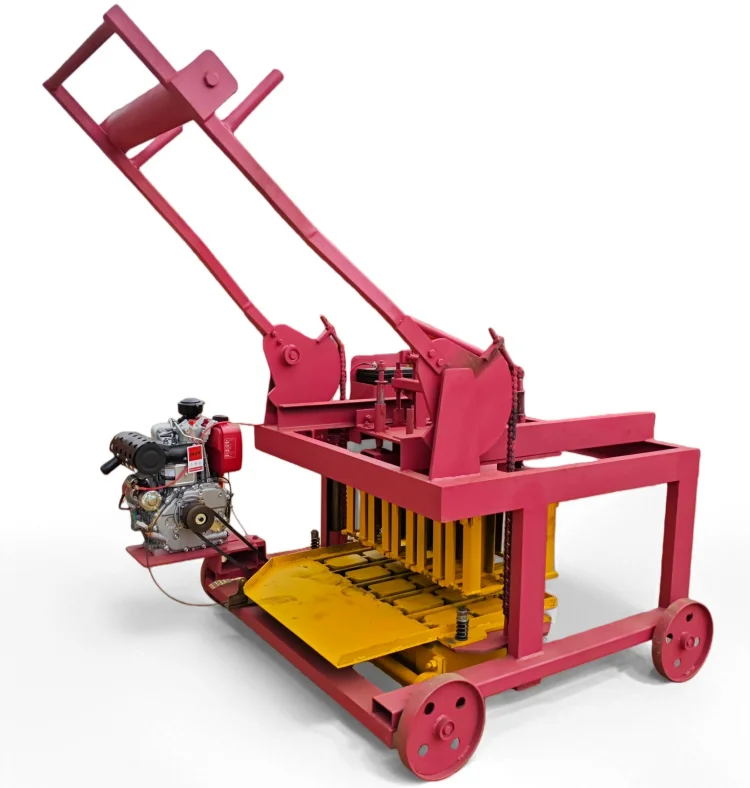
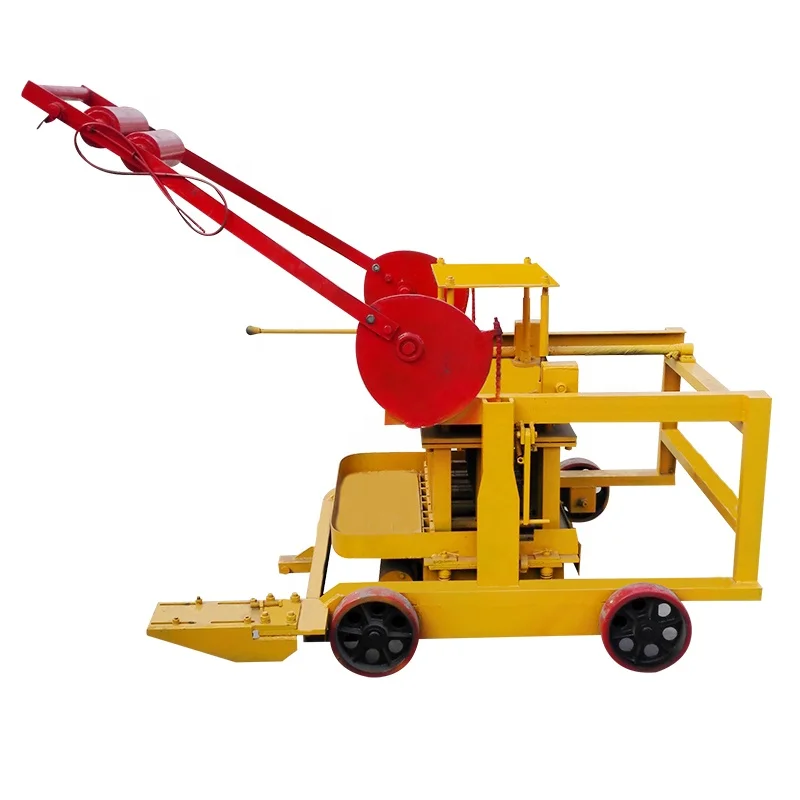
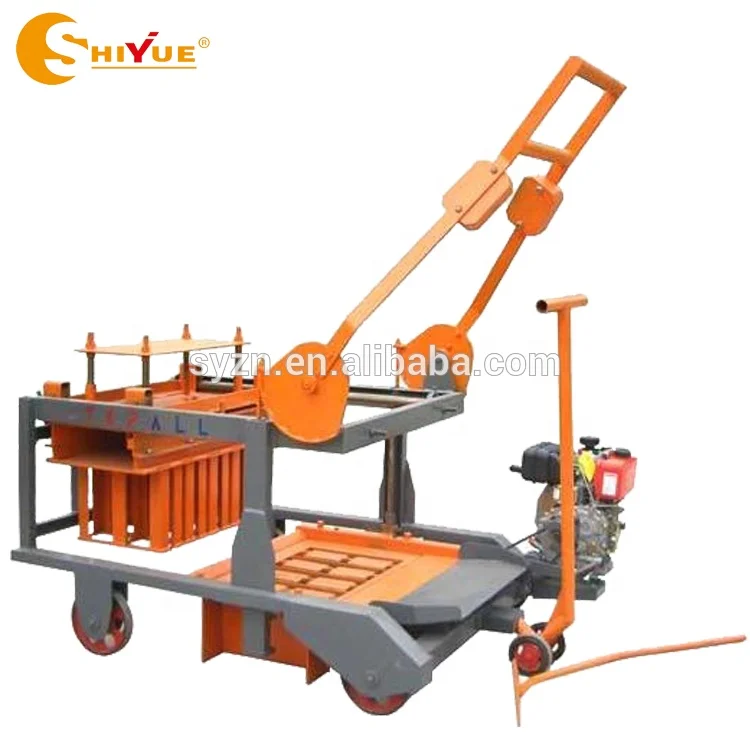
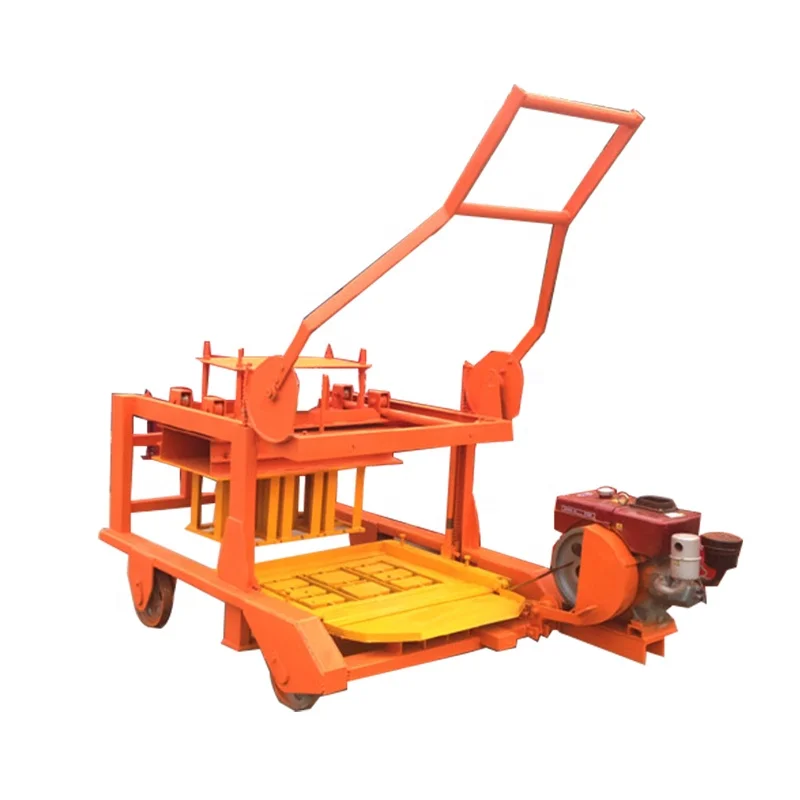
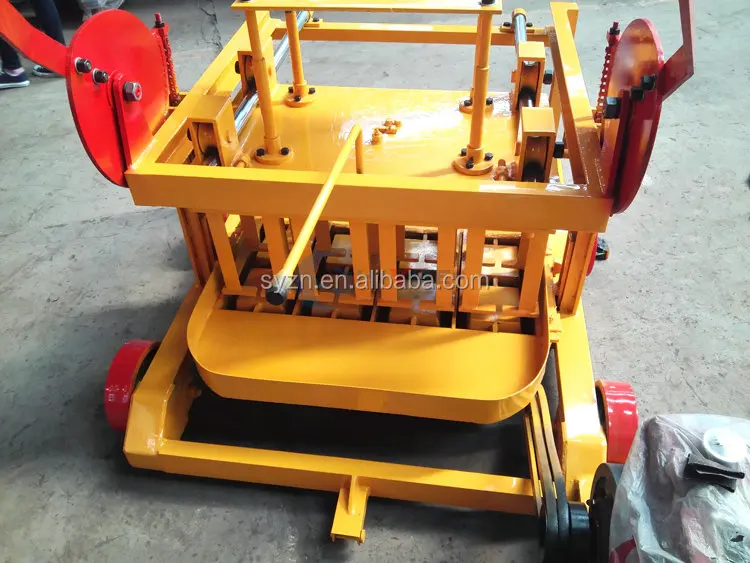
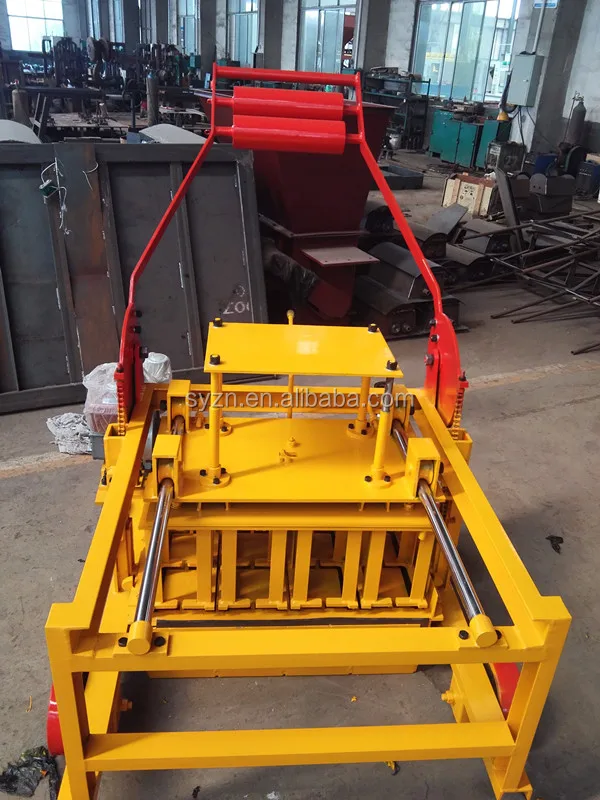
Matched System Focus — block machine, mould, power source and pallet logistics are specified together so the QMR4-45 arrives as a working production unit rather than a disconnected press.
Technical Specifications
| Parameter | Value |
|---|---|
| Model | QMR4-45 |
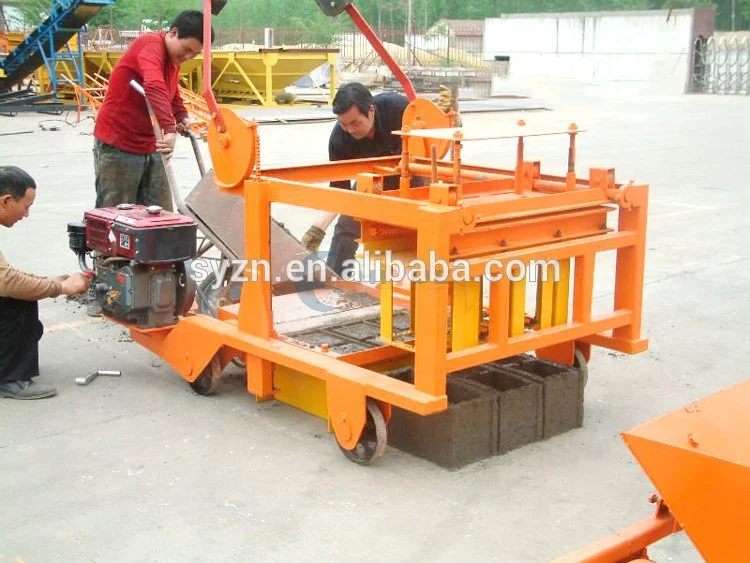
| Product Type | Mobile Concrete Block Making Machine |
| Overall Dimensions (L×W×H) | 1100 × 950 × 2100 mm |
| Net Weight | 810 kg |
| Molding Cycle | 30–45 s |
| Power Source Options | Diesel / Petrol Engine / Electric |
| Output Capacity | 2560 pcs/day (basis not stated in source — confirm block format and material) |
| Pallet Requirement | No pallet required |
| Mould Format Compatibility | Paver brick, hollow block, concrete block, solid brick, fly ash brick |
| Die Actuation | High pressure double crank |
| Control System | Pneumatic and electric operation parts |
| Basic Line Equipment | JZC350 or JQ350 diesel mixer, trolley |
| Automation Level | Manual / semi-automatic operation |
| Structure | Linear type, simple structure |
| Warranty | 1 Year |
Application Suitability
| Application | Material or Output |
|---|---|
| On-site block production for construction contractors | Hollow and solid concrete blocks laid directly on the ground |
| Remote or off-grid housing developments | Paver bricks and concrete blocks using diesel engine power |
| First block plant for entrepreneurs | Fly ash bricks and solid blocks with minimal infrastructure |
| Small-scale concrete product manufacturing | Multiple block formats switched via mould change on one machine |
What "2560 Pieces per Day" Actually Depends On
The daily output figure on any mobile block machine spec sheet is only valid once the block format, wall thickness and mix design are fixed.
I had a buyer call me late one night after his QMR4-45 ran for a full shift and produced barely half the quoted output. The problem was not the machine — it was the local river sand, which carried a high clay content that the standard moulding pressure could not compress properly. A capacity number printed on a brochure means nothing until you run your actual aggregate through it [NEED_CITE: aggregate moisture and clay content effects on block compaction]. Buyers who skip this step end up blaming the equipment when the real gap sits in the material specification.
Power Source Selection and Site Conditions
The QMR4-45 is available with diesel, petrol or electric drive, which matters more than most buyers realise at the inquiry stage. Remote job sites with no grid connection depend entirely on the diesel or petrol option, while established yards with stable three-phase power benefit from the quieter and more consistent electric motor. Choosing the wrong power source means either paying for a generator you did not budget for or running an electric motor that trips under load [NEED_CITE: voltage and frequency standards by export market]. The PLC controlled mobile block machine conversation must start with what power is actually available at the production point.
Mould Change and Format Versatility
Switching between hollow block, solid block and paver brick formats on the QMR4-45 involves a physical mould swap on the double crank die assembly. This is where the automation level matters — the machine operates at manual or semi-automatic level, so mould change time depends on operator familiarity and tool availability. A buyer planning to produce three formats in a single week needs to know the swap procedure before the machine ships, not after it arrives. Mould design must match the block dimensions the local market actually buys, not a default catalogue size.
Reading the Specs That Affect Daily Output
The 30–45 second molding cycle governs how many blocks the automatic mobile block machine can press in a shift, but cycle time varies by block format — a thin paver brick releases faster than a deep hollow block. The high pressure double crank actuation delivers the compaction force, and that force must match the aggregate mix; too little pressure on a coarse mix leaves weak blocks, while excessive pressure on a fine sand mix can crack edges. No pallet requirement means blocks are laid directly on a prepared ground surface, which removes pallet cost but demands a flat, level curing area. The 810 kg net weight keeps the machine mobile on a trolley yet heavy enough to stay stable during vibration. Pneumatic and electric operation parts control the cycle sequence, and the brand of these components should be confirmed before dispatch to ensure replacement availability.
The Hidden Cost of Skipping Configuration Checks
When a mobile block machine arrives with the wrong voltage rating or an unconfirmed PLC display language, commissioning stalls before the first block is pressed. I have seen buyers lose weeks waiting for a transformer or a reprogrammed controller because the electrical specification was assumed rather than verified. Pallet handling is not an issue with the QMR4-45 since it uses no pallets, but the curing area still needs to be sized correctly for daily output — blocks stacked too close together during curing develop uneven strength [NEED_CITE: concrete block curing spacing and strength development]. These are not dramatic failures, but they quietly erode the output the buyer was counting on.
Why Source This Machine Through a Matched-System Approach
Block machinery is our single focus, so the QMR4-45 is never quoted as a standalone press — the mixer, trolley, mould format list and power source are specified as one working line. Configuration is set against the buyer’s actual mix design and local aggregate, not a catalogue default. Mould design covers the formats the buyer’s market sells, including custom drawings when standard sizes do not fit. The automation level is selectable, allowing a buyer to start with manual operation and plan an upgrade path later. Installation support includes operator training on the specific mould set and power configuration that shipped with the machine.
Documentation & Verification
- Factory test record on your confirmed block format before dispatch
- Mould drawing and format list showing cycle time per block type
- Voltage and control language confirmation sheet signed before production
- Operation and maintenance manual covering pneumatic and electric components
- Packing photographs and customs documentation for container loading
Installation, Commissioning & Support
- Ground surface must be level and compacted to support 810 kg machine weight and block curing
- Power source confirmed pre-shipment — diesel fuel supply or electrical circuit matched to motor rating
- Machine arrives assembled on trolley; basic line equipment including mixer positioned alongside
- First commissioning run validates molding cycle against your specific block format and aggregate
- Operator training covers mould change procedure for each block format in your production plan
- Wear parts list provided with recommended replacement intervals for crank and pneumatic components
What to Prepare Before Requesting a Quote
Send the exact block dimensions and wall thickness you plan to produce, along with a sample or description of your local aggregate and sand source. Confirm the available power supply — grid voltage and frequency or diesel preference — and the language required for any control display. If you have an existing curing area, share its dimensions so the no-pallet layout can be planned around it.
Frequently Asked Questions
Q: How do I verify the 2560 pcs/day capacity claim for my block format?
A: The capacity figure must be recalculated against your specific block dimensions, wall thickness and the molding cycle that format requires. Share your target block drawing and local aggregate details so a realistic daily output can be stated per format rather than as a single catalogue number.
Q: Diesel or electric — which power source fits my site?
A: If your production site has stable three-phase grid power, the electric option gives quieter and more consistent operation. For remote or off-grid job sites, the diesel engine ensures production continues without external power infrastructure. Confirm voltage and frequency before the machine enters production.
Q: What automation level does the QMR4-45 offer, and can it be upgraded?
A: The machine operates at manual or semi-automatic level with pneumatic and electric operation parts. Automation upgrades are possible depending on the control system configuration selected at order. Discuss your labour availability and output targets so the right starting level is specified.
Q: How long does a mould change take between block formats?
A: Mould change time depends on operator training and the specific format swap involved. The double crank die assembly must be released and the new mould seated and aligned. Request the documented change procedure for each format in your mould set before the machine ships.
Q: What documentation confirms the machine matches my electrical standards?
A: A voltage and control language confirmation sheet is completed and signed before production begins. This document, along with the factory test record and electrical schematic, ensures the PLC controlled mobile block machine arrives ready for commissioning without electrical modifications on site.