

Description
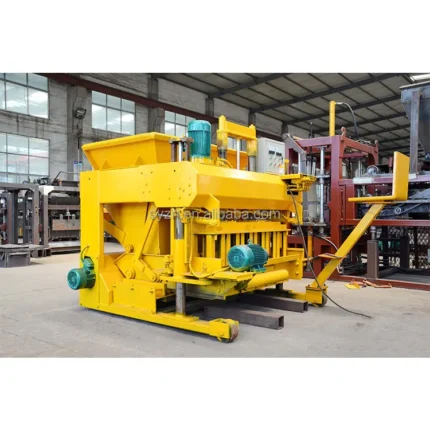
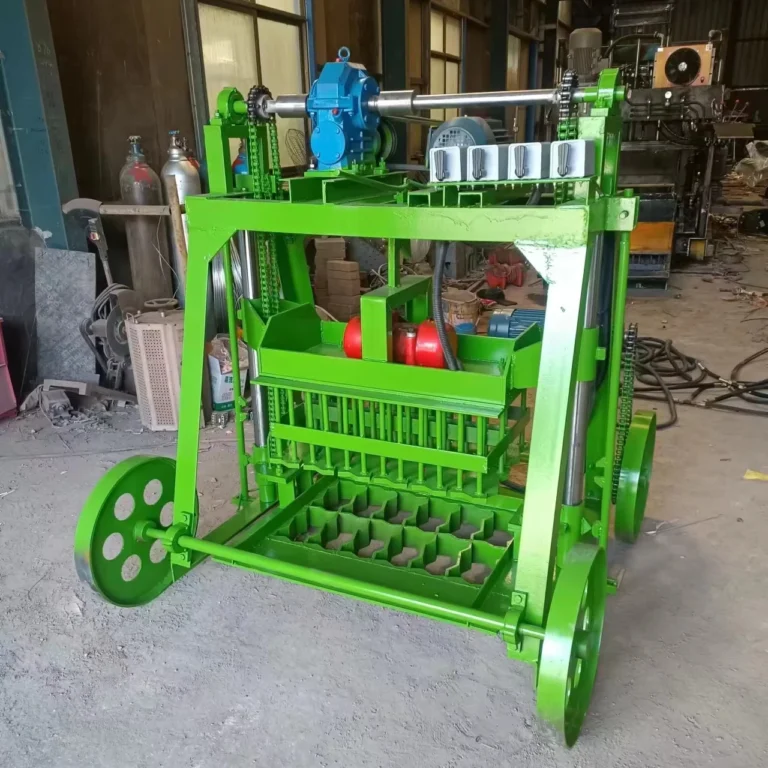
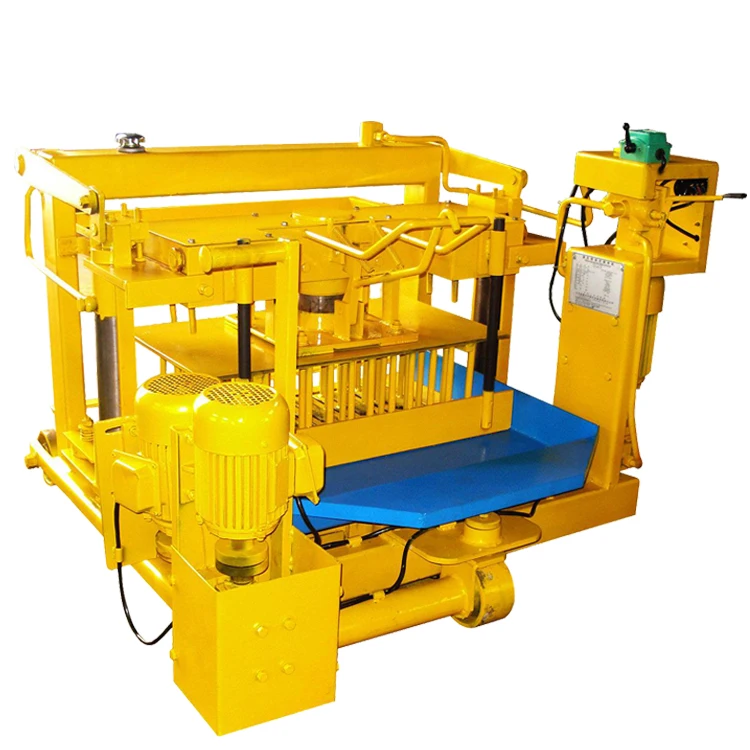
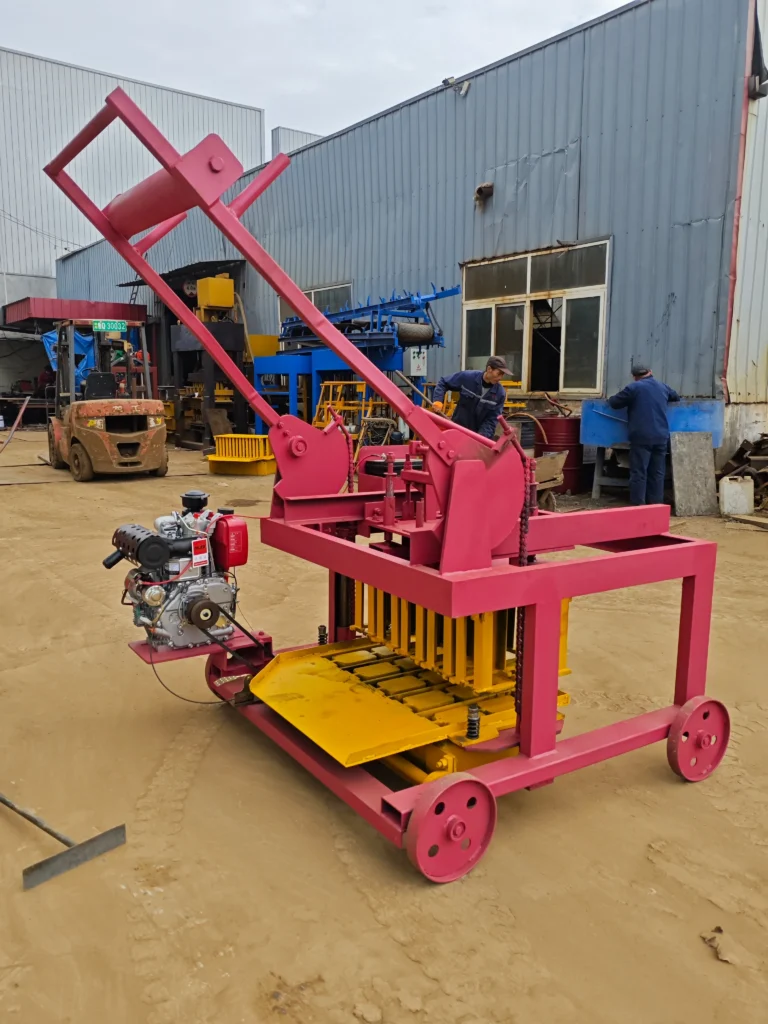
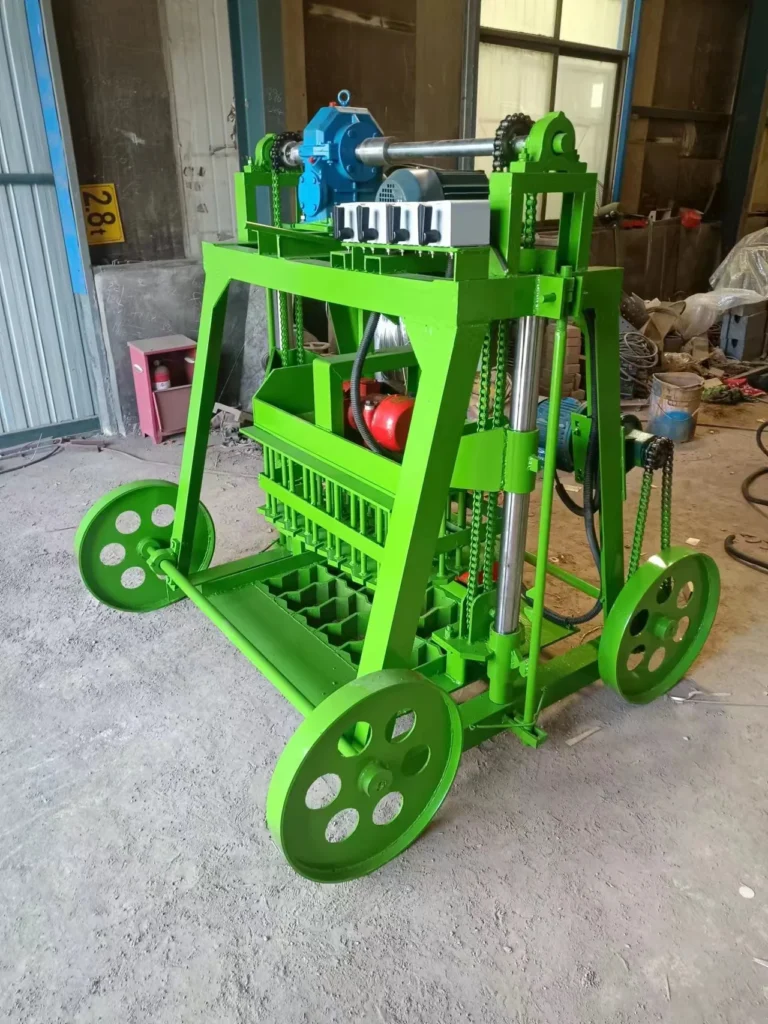
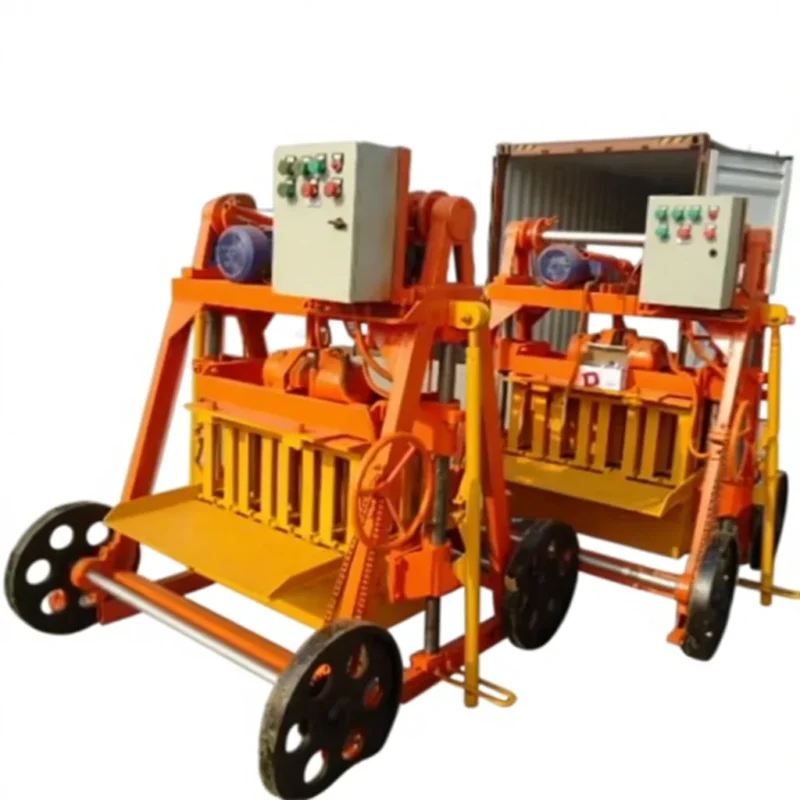
Four-pole guided press — The QMJ4-45 mobile block machine uses a four-pole orientation mechanism with extended bearings to maintain block dimensional consistency across every cycle, eliminating the uneven compaction common in frame-only mobile presses.
Technical Specifications
| Parameter | Value |
|---|---|
| Model | QMJ4-45 |
| Product Type | Mobile Concrete Block Making Machine |
| Rated Power | 7.4 kW |
| Control System | Manual force control with jog control (PLC upgrade available) |
| Molding Cycle | 45 s per cycle |
| Output Capacity | 2400 pcs/8h based on 400×200×200mm hollow block, 4 pcs/mould; 3200 pcs/8h based on 400×150×200mm hollow block, 5 pcs/mould |
| Raw Material | Concrete, sand, cement, fly ash, lime, gypsum |
| Machine Weight | 1 T |
| Overall Dimensions (L×W×H) | 1550×1335×1580 mm |
| Pallet Requirement | No pallets needed (egg-laying / mobile type) |
| Voltage & Frequency | Configured to buyer’s local voltage and frequency |
| Orientation Mechanism | Four-pole guided with extended orientation bearing |
| Mould Format Flexibility | Multi-format via mould change (road blocks, curb stones, hollow bricks, interlocking bricks) |
| Automation Level | Semi-automatic baseline; automatic mobile block machine PLC controlled upgrade path available |
| Electrical & Hydraulic Components | Imported electrical appliances, sealing parts and hydraulic components |
Application Suitability
| Application | Material or Output |
|---|---|
| On-site housing project block production | Hollow blocks from crushed stone, sand and cement directly at the build location |
| Small-scale paver manufacturing | Road pavers and interlocking bricks from concrete and fly ash mixes |
| Kerbstone production for infrastructure | Curb stones from dense aggregate concrete with mould change |
| Entrepreneur first-plant setup | Solid and hollow blocks with minimal fixed infrastructure investment |
| Supplementary format runs | Adding block formats to an existing concrete product range without a second line |
Why "Cycles per Hour" Means Nothing Without the Block Format
Capacity numbers only matter when the block size, mould cavity count and cycle time are stated together.
I have seen mobile block machines quoted at impressive hourly outputs, only for the buyer to discover that the figure assumed the smallest solid brick in the catalogue — not the 400mm hollow block they actually sell. The QMJ4-45 runs a 45-second moulding cycle, and the daily output shifts depending on which format fills the mould: 2400 pieces per eight-hour shift at 400×200×200mm (4 cavities), or 3200 pieces at 400×150×200mm (5 cavities). Without the format stated, any capacity claim is just a number. [NEED_CITE: block format impact on actual daily output in mobile egg-laying machines]
The automatic mobile block machine PLC controlled upgrade path addresses a second hidden gap. Many buyers pay for automation features but never confirm the control language or voltage before shipping, and the machine sits idle until a technician re-flashes the panel on site.
Control Baseline and the Automation Upgrade Path
The QMJ4-45 ships as a semi-automatic unit with manual force control and jog operation, which keeps the initial investment low for contractors who only need intermittent production. When daily volumes grow or consistency requirements tighten, the control layer can transition toward PLC-driven batching and cycle management. This staged approach means the automatic mobile block machine PLC controlled upgrade is not a marketing label — it is a defined migration from relay logic to programmable sequence control.
What the PLC Layer Actually Removes from the Operator
Under jog control, the operator decides when to vibrate, how long to hold pressure, and when to advance. Every decision introduces variation between the first block of the morning and the last block before lunch. Moving to PLC control locks the vibration duration, press-head descent and cycle timing into repeatable sequences, so block density and dimensions stay within tolerance regardless of operator fatigue. For buyers planning a multi-format production schedule, this consistency reduces the reject rate on every mould change. [NEED_CITE: PLC versus manual control impact on block dimensional tolerance]
Reading the Specs That Actually Shape Daily Production
The 7.4 kW rated power is modest, which reflects the mobile design philosophy: this machine runs on standard site power without requiring a dedicated high-capacity transformer. The four-pole guided orientation with extended bearings is the structural element that keeps the press head descending square to the mould — without it, uneven compaction produces blocks that are denser on one side and crumble during handling. The 1550×1335×1580 mm footprint and 1 T weight mean the unit can be moved between production zones on a flatbed or forklift, which is the entire point of an egg-laying design. The pallet-free operation removes the need for a pallet return conveyor, curing racks and a dedicated forklift loop, collapsing the line to a single machine and an open curing area. Mould changes across hollow block, paver and kerbstone formats allow one QMJ4-45 to serve multiple product lines without a second capital purchase.
The Hidden Cost of Skipping the Voltage Conversation
I once configured a mobile block machine for a West African project and left the PLC display in Chinese as factory default. When the machine arrived, the local crew could not read a single menu item, and commissioning stalled for days until we shipped a replacement HMI panel. The lesson applies directly here: voltage, frequency and control display language must be confirmed in writing before the QMJ4-45 enters production. A 380V/50Hz machine wired for a 440V/60Hz site will burn out the motor within the first week. A control panel in the wrong language turns an automatic mobile block machine PLC controlled upgrade into a very expensive paperweight. [NEED_CITE: voltage mismatch failure rates in exported industrial machinery]
The second hidden cost is mix design mismatch. If the machine vibration force and cycle timing are set for a gravel-heavy mix but the buyer’s local aggregate is fine river sand, the blocks will crack during curing. Configuration must start from the buyer’s actual material, not the factory’s default test recipe.
Why Source This Machine Through a Single-Focus Block Line Supplier
Block machinery is our only product category, so the QMJ4-45 is not assembled from generic components and resold — the machine, mould, and handling logic are specified as one system. Every capacity figure we quote states the block format, mould cavity count and cycle time behind it, so buyers can calculate real daily output against their own product mix. The voltage and control language are confirmed before production begins, not after the container is sealed. Mould design covers the formats the buyer’s market actually demands, including custom drawings for non-standard kerbstone or interlocking profiles. And the semi-automatic baseline with a defined automation upgrade path means the investment scales with production growth instead of forcing an all-or-nothing decision at the start.
Documentation & Verification
- Line layout and capacity calculation stating the hollow block format assumed per output figure
- Mould drawing and format list covering hollow, paver and kerbstone profiles before production
- Voltage, frequency and control display language confirmation signed off before assembly
- Hydraulic and electrical schematic matching the as-built QMJ4-45 configuration
- Factory test record on buyer’s specified mix design before dispatch
- Wear parts and mould maintenance list with replacement intervals
Installation, Commissioning & Support
- Flat concrete ground required; the 1550×1335 mm footprint fits standard site conditions without a dedicated foundation
- 7.4 kW rated power needs a dedicated circuit matching confirmed local voltage and frequency
- Ships assembled with jog control panel pre-wired; PLC upgrade components installed on site if ordered
- Commissioning includes first-run cycle timing and vibration duration calibration against buyer’s mix
- Operator training covers mould change procedure, jog sequence and daily bearing inspection
- Wear parts list and hydraulic seal kit supplied with initial shipment for early replacements
Preparing Your Inquiry
To size the QMJ4-45 correctly, share the primary block format you produce and the target daily output so we can match mould cavity count and cycle timing. Confirm your local voltage, frequency and the preferred control panel language to avoid on-site delays. If you plan to start with jog control and migrate to PLC batching later, tell us the timeline so the upgrade path is built into the initial wiring layout.
Frequently Asked Questions
Q: How is the output capacity calculated for each block format?
A: The 2400 pcs/8h figure assumes 400×200×200mm hollow blocks at 4 cavities per mould and a 45-second cycle. The 3200 pcs/8h figure assumes 400×150×200mm blocks at 5 cavities per mould. Every capacity number is tied to a specific format, cavity count and cycle time — no single headline output is quoted.
Q: What automation level is standard, and how does the PLC upgrade work?
A: The QMJ4-45 ships with manual force control and jog operation as the baseline. The automatic mobile block machine PLC controlled upgrade path adds programmable sequence control for vibration timing, press-head descent and cycle repeatability. Migration can happen after initial installation without replacing the main press frame.
Q: How are voltage, frequency and control language confirmed before shipping?
A: We confirm voltage, frequency and control display language in writing during the proposal stage, and these values are locked before production begins. The factory test runs the machine at the buyer’s specified electrical configuration to prevent on-site commissioning delays.
Q: Which block formats can the QMJ4-45 produce on a single unit?
A: The machine supports hollow blocks, solid blocks, road pavers, interlocking bricks and kerbstones through mould changes. The four-pole guided orientation keeps dimensional consistency across formats. Custom mould drawings are available for non-standard profiles based on buyer specifications.
Q: What mix design checks are done before the machine is configured?
A: We review the buyer’s local aggregate type, cement ratio and available raw materials before setting vibration force and cycle parameters. A machine tuned for gravel-heavy mixes will produce weak blocks if the site only has fine sand, so configuration starts from the buyer’s actual material profile.