Description
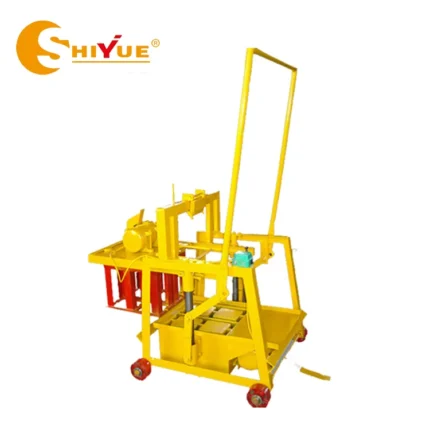
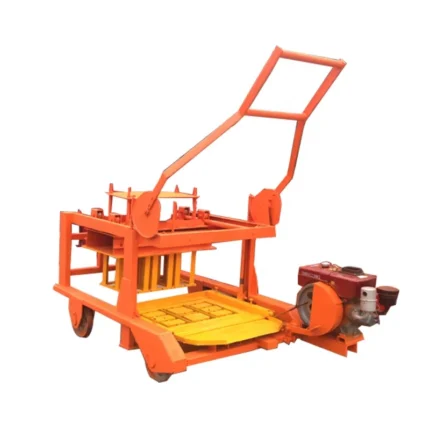
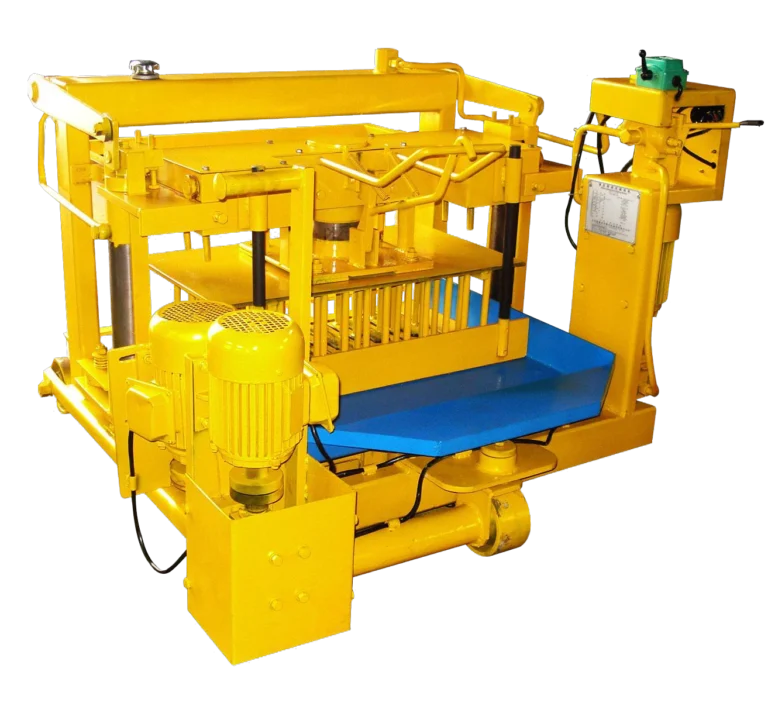
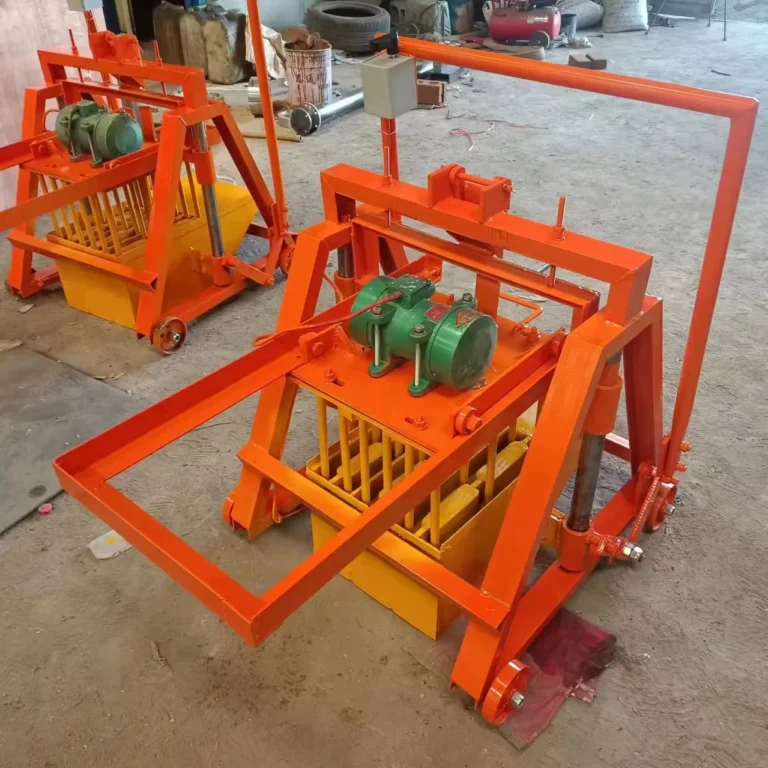
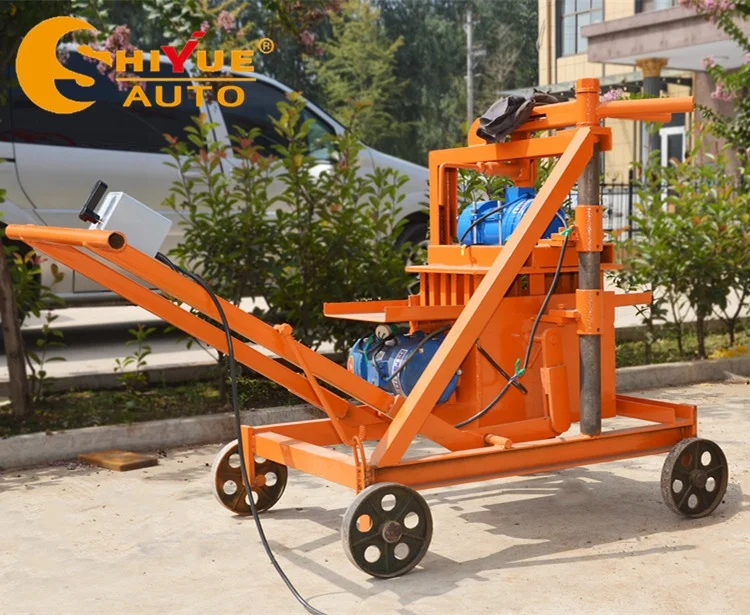
Diesel-Driven Flexibility — the QMJ2-45 mobile block machine eliminates pallet dependency and grid power, letting contractors produce hollow blocks directly on the ground while preserving a clear path toward PLC-controlled automation as volumes grow.
Technical Specifications
| Parameter | Value |
|---|---|
| Model | QMJ2-45 |
| Product Type | Manual Mobile Concrete Block Making Machine |
| Machine Type | Manual mobile (egg-laying) block machine |
| Mould Format Options | Hollow brick |
| Supported Block Sizes | 400×200×200 mm / 400×150×200 mm / 400×100×200 mm |
| Qty per Mould (400×200×200 mm) | 2 pcs |
| Qty per Mould (400×150×200 mm) | 3 pcs |
| Qty per Mould (400×100×200 mm) | 4 pcs |
| Molding Cycle | 25–30 s |
| Output Capacity (400×200×200 mm) | 160 pcs/h based on 400×200×200 mm hollow brick |
| Output Capacity (400×150×200 mm) | 240 pcs/h based on 400×150×200 mm hollow brick |
| Output Capacity (400×100×200 mm) | 320 pcs/h based on 400×100×200 mm hollow brick |
| Pallet Requirement | No pallet required (egg-laying operation) |
| Power Source | Diesel engine (no fixed electrical power required) |
| Labour Requirement | 1–3 workers |
| Automation Level | Manual |
| Control System | Manual operation |
| Key Features | Free-moving mobility, mould change for different hollow brick formats, diesel-driven off-grid capability |
Application Suitability
| Application | Material or Output |
|---|---|
| On-site housing project block production | Hollow concrete blocks from crushed stone, sand, and cement laid directly on compacted ground |
| Remote construction sites without grid power | Diesel-powered hollow brick forming where electrical infrastructure is absent |
| First-stage block enterprise with minimal capital | Small-volume hollow block output for local building material markets |
| Market testing before full-line investment | Short production runs across multiple hollow brick sizes using interchangeable moulds |
What "160 Blocks per Hour" Actually Means on a Jobsite
Every capacity figure here is tied to a specific block dimension and a verified cycle time — not a single headline number.
Buyers often see a mobile block machine advertised with a single output claim, only to discover on arrival that the figure assumed the smallest block in the range. With the QMJ2-45, the automatic mobile block making machine category often blurs this distinction, but the reality is straightforward: at 25–30 seconds per cycle you get 160 pcs/h on 400×200×200 mm hollow bricks, 240 pcs/h on 400×150×200 mm, and 320 pcs/h on 400×100×200 mm. Shift your production to a larger format and daily output drops accordingly. I have watched contractors plan an eight-hour pour around a single capacity number, then scramble when the actual format cut throughput nearly in half [NEED_CITE: capacity calculation transparency in block machinery quotations]. Stating output per format removes that surprise before the machine ships.
From Manual Lever to PLC-Controlled Consistency
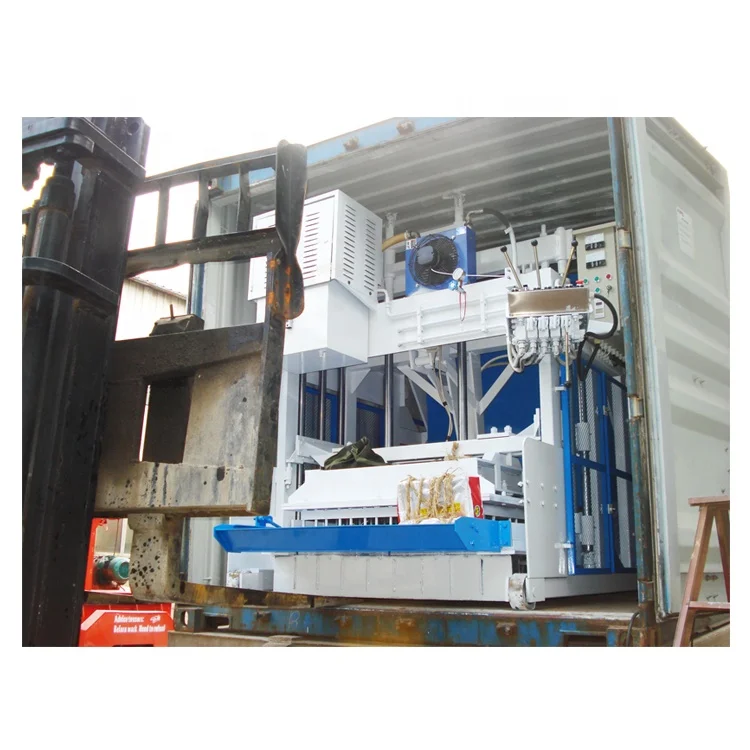
The QMJ2-45 starts as a fully manual, diesel-driven egg-laying machine, but its platform supports a structured automation upgrade path. A PLC controlled mobile block machine configuration can be introduced later to govern batching accuracy, vibration timing, and cycle sequencing — the variables that most affect block-to-block density consistency. Operators who begin with manual lever control learn the relationship between mix moisture, vibration duration, and demoulding quality before automation takes over those decisions.
Automation Additions That Match Production Growth
As daily volume grows, the first logical addition is an automatic batching station with load-cell weighing, removing the guesswork from cement-to-aggregate ratios. Next comes a pallet-return conveyor if the operation migrates from egg-laying to stationary pressing, followed by an automatic stacker that cubes output for forklift transport to the curing area. Each stage can integrate with a central PLC, building toward a fully automatic mobile block making machine system without scrapping the original press. Remote diagnostics modules can also be retrofitted, allowing support engineers to review cycle logs and vibration profiles over a cellular link [NEED_CITE: remote diagnostics integration on mobile block presses].
How Vibration, Cycle Time, and Mix Design Interact
The 25–30 second molding cycle is not an isolated number — it reflects the time needed for manual vibration to consolidate a specific mix into a hollow brick cavity without collapse on demoulding. Vibration force must match the aggregate gradation and cement content available locally; a river sand with high fines content requires a different vibration duration than crushed granite dust. I once spent three days on a West African site adjusting cycle timing because the local sand carried far more silt than the test samples, and blocks were cracking at the web walls. The QMJ2-45’s manual control lets operators extend or shorten vibration within the cycle, but once volumes justify it, a PLC-controlled timer locks that duration to within a second, eliminating shift-to-shift drift. The three mould formats — 2-cavity, 3-cavity, and 4-cavity — also change the vibration load: more cavities mean greater mass to consolidate, so cycle time naturally sits at the upper end of the 25–30 s range for the 400×100×200 mm mould.
The Cost of Skipping the Format Conversation
When a buyer orders a mobile block machine without confirming which hollow brick size dominates their market, the machine often arrives with the wrong mould installed. Swapping moulds in the field is possible on the QMJ2-45, but each change still costs a portion of a shift in alignment, test cycles, and scrap blocks. Worse, if the vibration force was factory-set for a format the buyer never produces, every block runs under- or over-consolidated. I have seen entire container loads of blocks rejected because the producer never matched the machine’s default vibration profile to the format actually in production [NEED_CITE: mould configuration mismatches in mobile block machine exports]. Confirming the primary block size before the machine leaves the factory avoids this entirely.
Why Buyers Source the QMJ2-45 Through This Platform
Block machinery is our single focus, which means the QMJ2-45 is specified alongside its mould, diesel engine, and any future automation components as one matched system rather than a collection of separate purchases. Configuration is set against the buyer’s actual mix design and local aggregate, not a catalogue default. Mould design covers the hollow brick formats the buyer’s market actually sells, with custom drawings available when local standards require non-standard cavity counts or wall thicknesses. The automation upgrade path is documented from day one, so a buyer starting with manual operation knows exactly which PLC-controlled batching, stacking, or remote diagnostics modules will bolt on later. Installation support includes operator training on vibration timing and mix adjustment, plus a wear parts and mould list for the first replacement cycle.
Documentation & Verification
- Line layout showing egg-laying path and curing area spacing per block format
- Machine specification sheet with per-format capacity calculation and cycle assumptions
- Mould drawing confirming cavity count and dimensional tolerances for each hollow brick size
- Diesel engine power curve and fuel consumption record at rated operating load
- Factory test record on buyer’s specified block format before dispatch
- Operation and maintenance manual with vibration adjustment and mould change procedures
Installation, Commissioning & Support
- Compacted ground surface required; no concrete foundation needed for egg-laying operation
- Diesel engine pre-filled and tested; no electrical wiring required at commissioning
- Machine arrives fully assembled with mould installed; only fuel and hydraulic fluid top-up on site
- First-run vibration timing adjusted against buyer’s local aggregate and cement ratio
- Operator training covers manual cycle pacing, mould change sequence, and daily greasing points
- Wear parts list identifies vibration springs, mould liners, and diesel engine consumables for first reorder
What to Include in Your Inquiry
To size the QMJ2-45 correctly and plan any future automation additions, share the primary hollow brick dimensions your market demands, the local aggregate type and typical moisture range, your target daily output and shift pattern, and whether you anticipate migrating to PLC-controlled batching or stacking within the next production phase. If your site lacks grid power today but may gain it later, note that so the diesel-to-electric conversion path can be documented upfront.
Frequently Asked Questions
Q: How is daily output calculated per block format, and what cycle time is assumed?
A: Each output figure is tied to a specific hollow brick size and a 25–30 second molding cycle. For 400×200×200 mm blocks the rate is 160 pcs/h, for 400×150×200 mm it is 240 pcs/h, and for 400×100×200 mm it reaches 320 pcs/h. Multiply the relevant hourly rate by your actual working hours to estimate shift output.
Q: Can this manual machine be upgraded to PLC-controlled operation later?
A: Yes. The QMJ2-45 platform supports adding PLC-controlled batching timers, automatic vibration sequencing, and eventually stacking modules as production volume justifies the investment. The upgrade path is documented at purchase so future components integrate without replacing the base machine.
Q: What mix design and aggregate consistency does the machine require?
A: Uniform block strength depends on consistent aggregate gradation and cement ratio. Local river sand with high fines may require longer vibration within the 25–30 second cycle. We configure vibration timing against your actual material samples before dispatch.
Q: How long does a mould change take, and are custom moulds available?
A: A mould swap on the QMJ2-45 involves unbolting the existing mould, aligning the replacement, and running test cycles — typically consuming a portion of one shift. Custom moulds for non-standard hollow brick dimensions can be produced from buyer-supplied drawings.
Q: What automation additions are available as production volume grows?
A: Options include automatic batching with load-cell weighing, PLC-controlled vibration timers, pallet-return conveyors if migrating to stationary operation, automatic stacking systems, and remote diagnostics modules for off-site cycle monitoring and support.