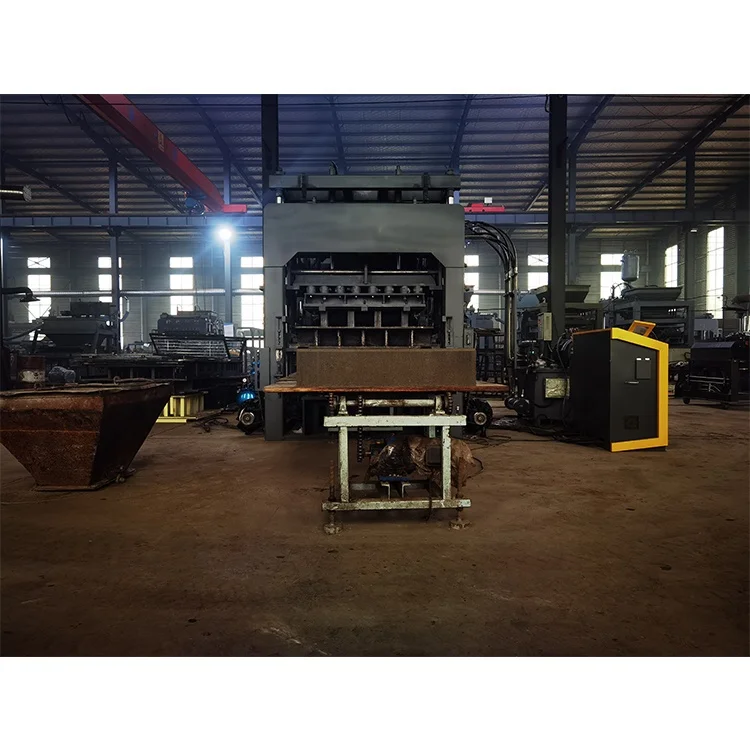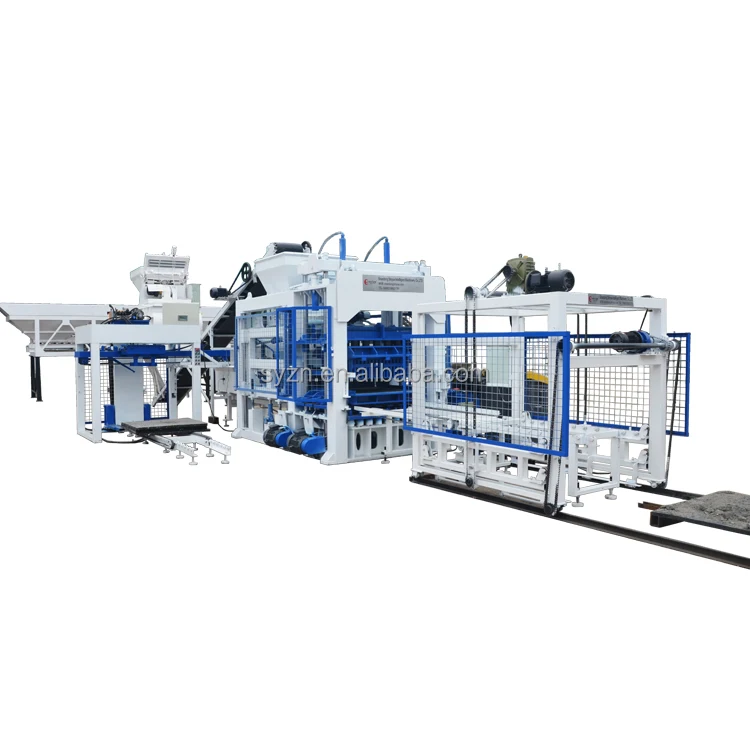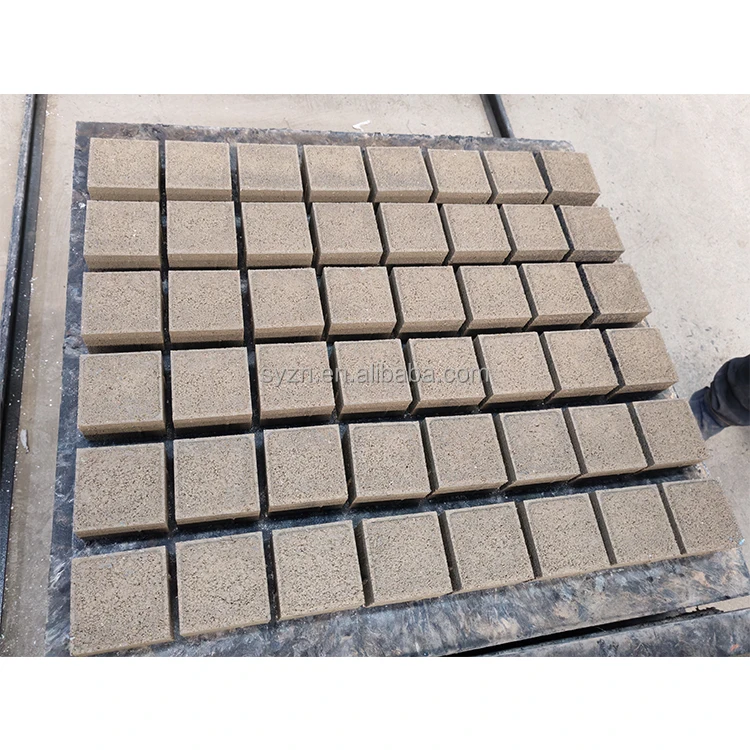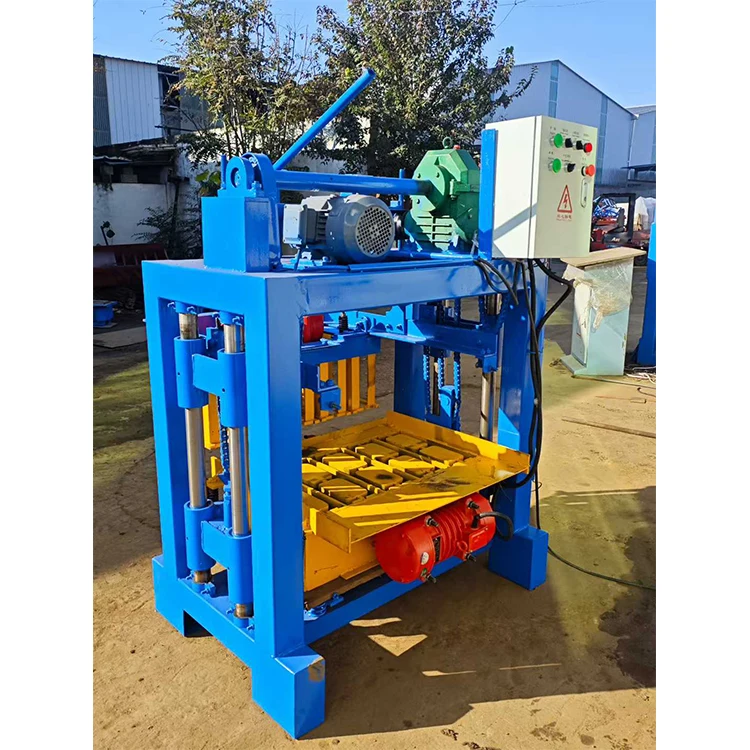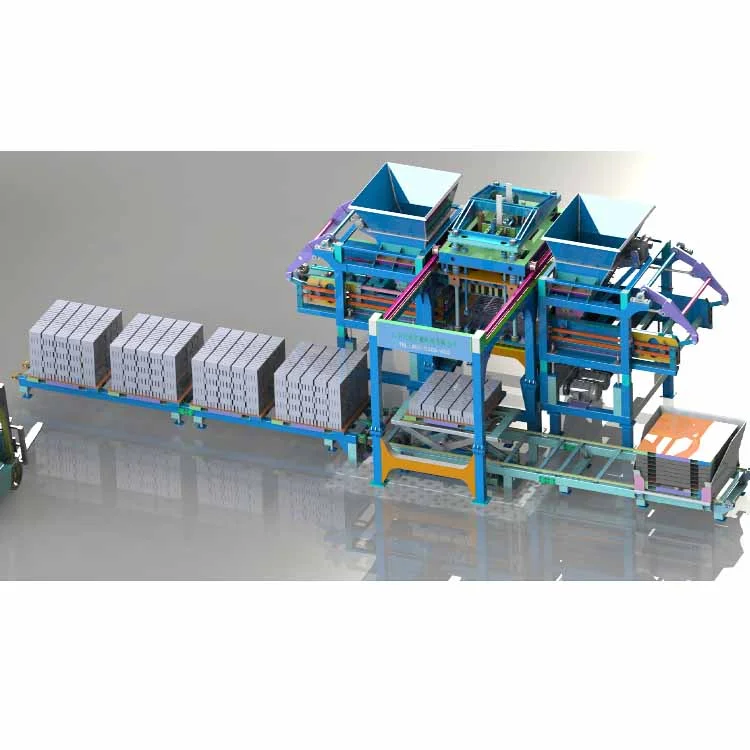
Description
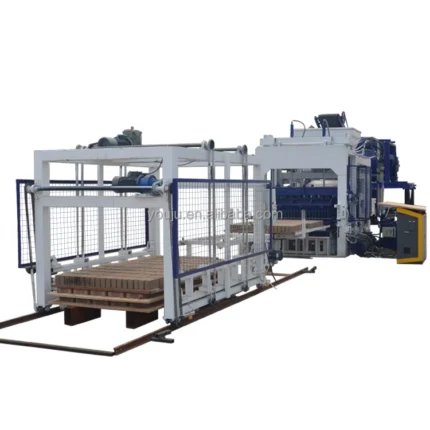
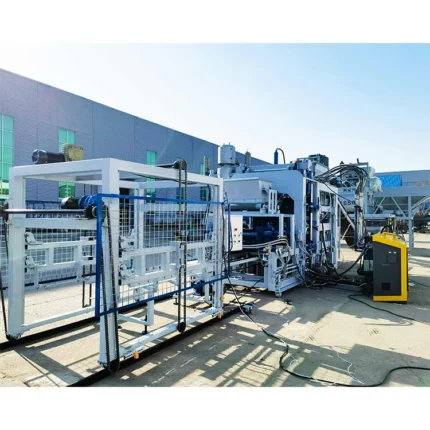
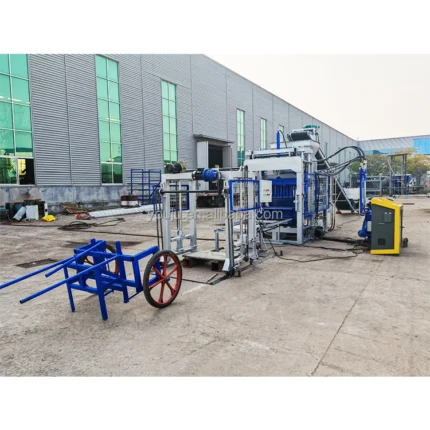
Matched System Integration — every station from material feeding to stacking is specified as one PLC-controlled sequence, eliminating the gaps that appear when lines are assembled from separate suppliers.
Technical Specifications
| Parameter | Value |
|---|---|
| Model | QT18-25 |
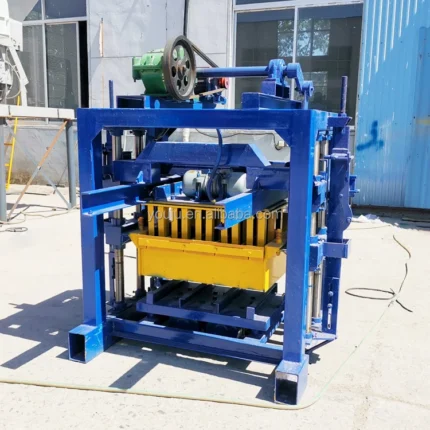
| Product Type | Fully Automatic Hydraulic Pallet-Free Block Making Machine |
| Brick Height | 50–300 mm |
| Stacking Height | 0–1200 mm |
| Main Vibration Form | Platform Vibration |
| Vibration Frequency | 2800–4500 r/min |
| Vibration Power | 60 kW |
| Hydraulic System Power | 59 kW |
| Driving Method | Hydraulic |
| Demolding Method | Vibration and Hydraulic |
| Molding Cycle | 15–25 s (basis: format and mix dependent, to be confirmed) |
| Control System | PLC with person-machine conversation interface |
| Pallet Requirement | Pallet-free (blocks stacked directly after moulding) |
| General Water Consumption | 8 T/Day |
| Factory Area | 2000 m² |
| Applied Products | Concrete blocks, hollow/solid blocks, pavers, interlocking blocks, curbstone, colored pavers |
| Raw Material | Crushed stone, sand, cement, dust, fly ash, gravel, slag |
| Voltage & Frequency | (basis to be confirmed) |
| Hydraulic Pressure Rating | (basis to be confirmed) |
| Vibration Force Rating | (basis to be confirmed) |
| Certification | (basis to be confirmed) |
Application Suitability
| Application | Material or Output |
|---|---|
| Hollow block production | Crushed stone, sand, cement, fly ash |
| Solid block production | Gravel, sand, cement, slag |
| Paving block production | Crushed stone, cement, pigment for colored pavers |
| Interlocking brick production | Sand, cement, fine aggregate |
| Curbstone production | Coarse aggregate, cement, high-density mix |
| Porous and permeable brick | Graded aggregate, cement, controlled water ratio |
What "15–25 Seconds per Cycle" Leaves Out on an Automatic Pallet-Free Block Making Machine PLC Controlled
A cycle time is only real when the block format, mix design and local aggregate are fixed — without those three inputs, the number on the brochure is fiction.
I have watched buyers sign off on a machine quoted at the fastest end of the cycle range, only to find that their local volcanic ash or lightweight aggregate demanded a slower vibration profile and longer press hold. The molding cycle then drifted toward the upper limit or beyond it, and daily output fell well short of the business plan. On the QT18-25, the PLC stores separate recipes for each format, but the recipe must be built around a trial run with your actual material before capacity is committed [NEED_CITE: block density and cycle time correlation with local aggregate grading]. The automatic pallet-free block making machine PLC controlled sequence will hold whatever parameters you load — it cannot compensate for a mix it was never tuned to run.
PLC Recipe Logic and Batch Consistency
The person-machine conversation interface on the QT18-25 stores vibration frequency, hydraulic pressure hold time, and feed volume as discrete recipes, so switching from a 400×200×200 mm hollow block to a paving format is a parameter recall, not a mechanical recalibration. This is where an automatic pallet-free block making machine PLC controlled system separates itself from relay-based panels: every cycle within a recipe repeats the same force and timing profile. Batch-to-batch variation narrows to the tolerance of the raw material feed rather than operator judgment.
Pallet-Free Stacking and Curing Logistics
Stacking blocks directly to 1200 mm after moulding removes the entire pallet loop — no pallet purchase, no pallet return conveyor, no pallet cleaning station. For a plant owner upgrading from semi-automatic operation, this means the curing area needs flat, level flooring that a forklift can collect stacked cubes from. The stacking mechanism indexes each layer, but the floor condition and ambient curing time become the variables you manage instead of pallet inventory [NEED_CITE: pallet-free curing floor flatness tolerance for block stacking stability].
Vibration Force, Hydraulic Pressure, and Block Density
Platform vibration at 2800–4500 r/min combined with 60 kW vibration power compacts the mix from below while hydraulic pressure holds the mould head against the block surface. The two forces must be matched to the aggregate grading and cement ratio — coarse crushed stone needs high-frequency, short-amplitude vibration, whereas fly ash-rich mixes respond to lower frequency with longer hold. The QT18-25 hydraulic system at 59 kW provides the clamping force, but the specific MPa setting must be validated during factory trial with the buyer’s mix before the machine ships.
When the Wrong Configuration Reaches the Site
A machine tuned for standard river sand arrives at a site running manufactured sand with higher fines content. The vibration frequency that produced clean edges in the factory now leaves micro-cracks, and the operator has no stored recipe to fall back on because no trial was run with the actual material. Downtime accumulates while parameters are adjusted by feel, and block rejection rates climb until someone calls the supplier for remote guidance that should have happened before dispatch [NEED_CITE: on-site commissioning delays caused by unconfirmed mix design parameters]. Voltage mismatches compound the problem — if the frequency at the site differs from what the hydraulic pump motor was wound for, vibration force drops and cycle consistency degrades without triggering an alarm.
Why Procurement Here Reduces Configuration Risk
Block machinery is the sole product focus, so the QT18-25 press, mould, stacking system, and PLC logic are specified as one matched package rather than assembled from separate vendors. Configuration starts from the buyer’s actual mix design and target block format, not a catalogue default, which means the vibration frequency and hydraulic pressure ranges are validated before the machine leaves the factory. Mould design covers the formats the buyer’s market actually sells, including custom drawings when standard formats do not match local demand. The automation level is selectable, so a buyer can commission the QT18-25 as a fully automatic line and still retain the option to run individual stations in manual during early operator training. Factory test records are generated with the buyer’s specified block format and mix before dispatch.
Documentation & Verification
- Line layout drawing showing QT18-25 station spacing and stacking zone clearance
- Capacity calculation sheet stating block format assumed per molding cycle figure
- PLC recipe list with vibration and hydraulic parameters for each confirmed mould
- Factory test record on buyer’s mix design and target block format before dispatch
- Hydraulic and electrical schematic matching as-built QT18-25 configuration
- Voltage, frequency, and PLC display language confirmation sheet signed before production
Installation, Commissioning & Support
- Foundation plan specifying load points for QT18-25 platform vibration and hydraulic station
- Dedicated circuit sizing for 60 kW vibration motor and 59 kW hydraulic pump combined draw
- Stacking zone floor flatness tolerance checked before QT18-25 pallet-free system commissioning
- PLC language and recipe parameters loaded and verified against trial block output on site
- Operator training covering recipe recall, mould change procedure, and hydraulic pressure adjustment
- Wear parts list supplied with first replacement set for mould liners and vibration springs
What to Include in Your Inquiry
Provide the specific block formats you plan to produce — hollow, solid, paver, interlocking, or curbstone — along with the dimensions and target daily output for each. Share your local aggregate type, cement grade, and any admixtures in use so the vibration and hydraulic parameters can be matched before the quotation is finalized. Confirm the site voltage, frequency, and preferred PLC display language to avoid commissioning delays once the QT18-25 arrives.
Frequently Asked Questions
Q: How is real daily output calculated per block format on the QT18-25?
A: Daily output is calculated from the molding cycle specific to your confirmed block format and mix design, not from a generic fastest-cycle figure. The quotation includes a capacity sheet stating which block size and mix the calculation assumes, so you can verify against your production targets before committing.
Q: What does the PLC control cover, and can it store multiple block recipes?
A: The PLC with person-machine conversation interface stores vibration frequency, hydraulic hold time, and feed volume as separate recipes for each block format. Operators recall the recipe by product code rather than adjusting parameters manually, keeping cycle-to-cycle consistency across shifts.
Q: How does pallet-free stacking work, and what does the curing area need?
A: The stacking system indexes blocks directly to a maximum height of 1200 mm after moulding, eliminating pallet purchase and return logistics. The curing area requires flat, level flooring that a forklift can access to collect stacked cubes once the blocks reach handling strength.
Q: What voltage, frequency, and PLC language options are available for my market?
A: Voltage and frequency are confirmed during the quotation stage to match your site supply, and the PLC display language is specified before production begins. This prevents motor rewinding or interface translation work after the machine has arrived on site.
Q: What is the path if I start semi-automatic and move to full automation later?
A: The QT18-25 automation level is selectable, meaning individual stations such as pallet feeding or stacking can be added or upgraded as the plant scales. The PLC architecture accommodates additional I/O modules, so the control platform does not need replacement when new stations are integrated.