

Description
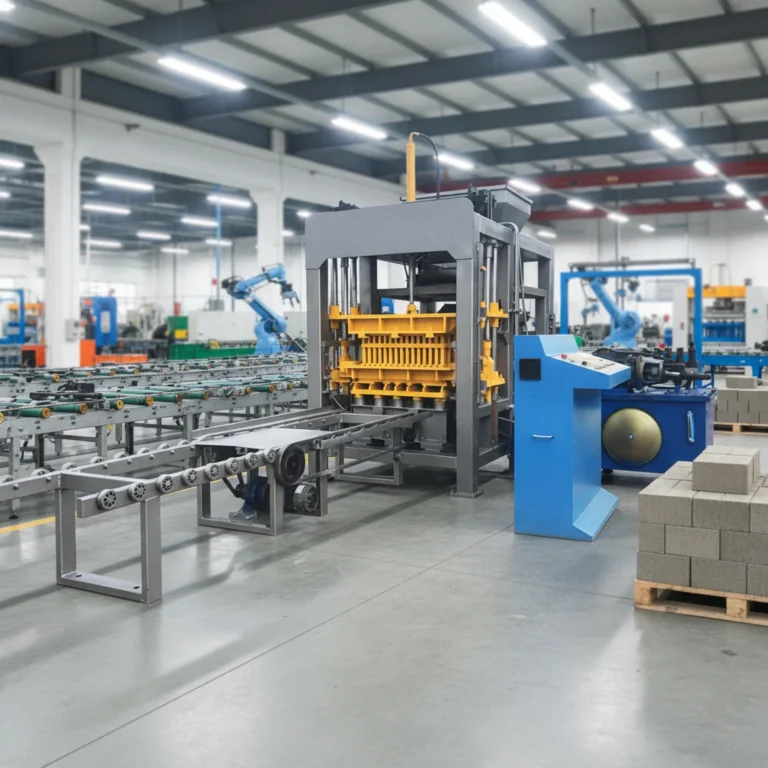
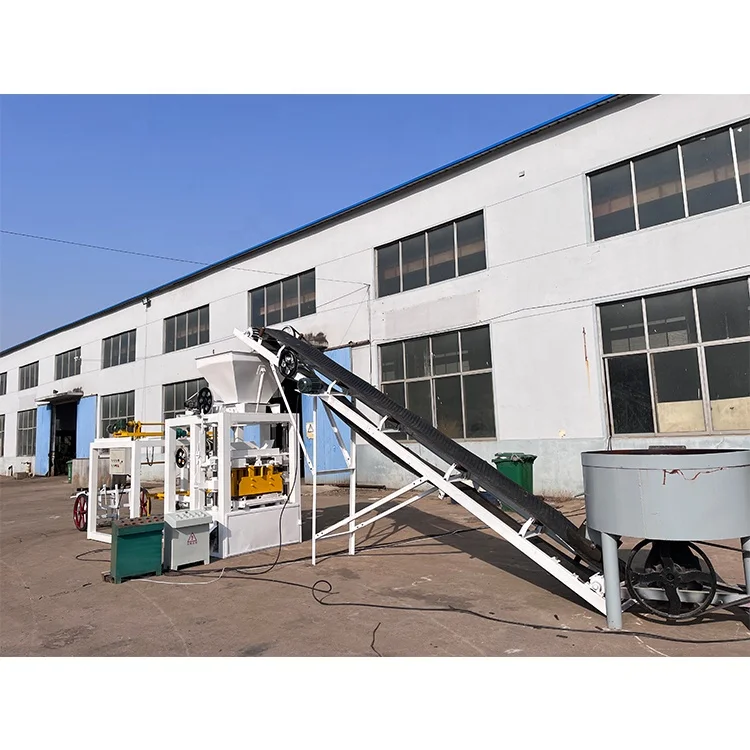
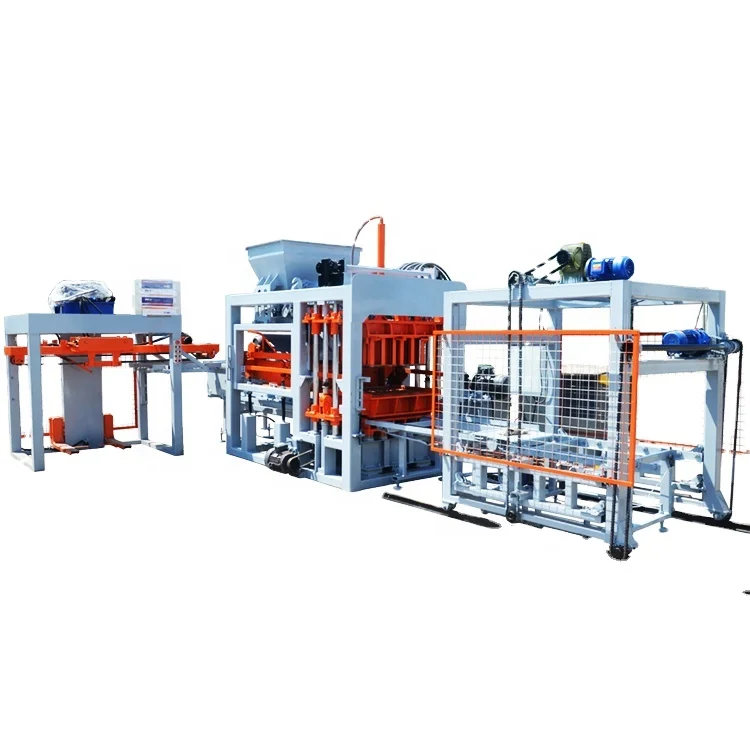
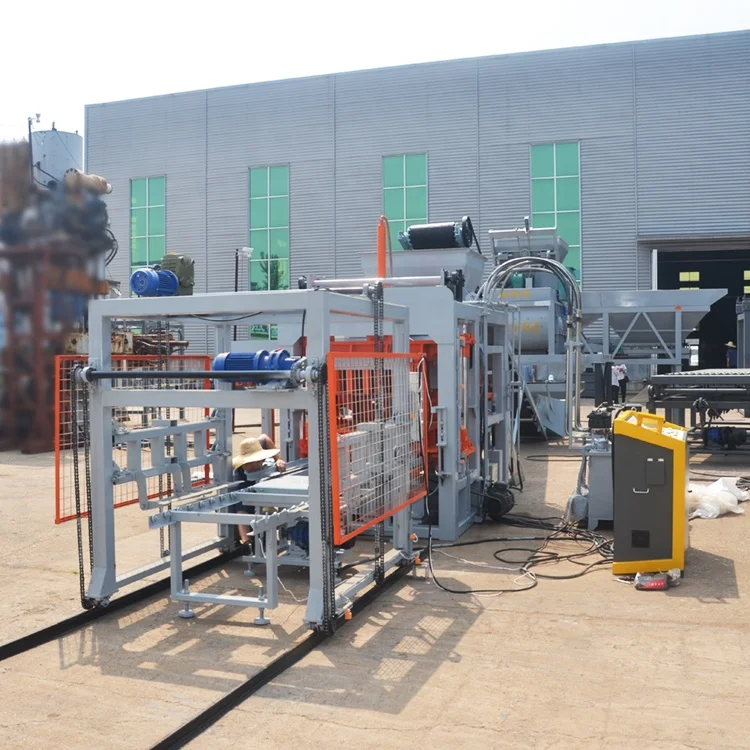
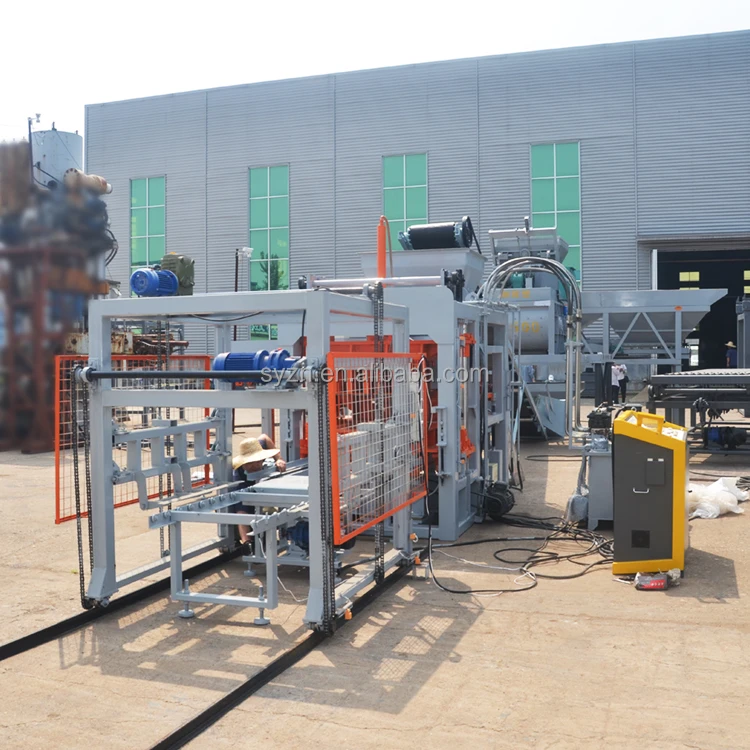
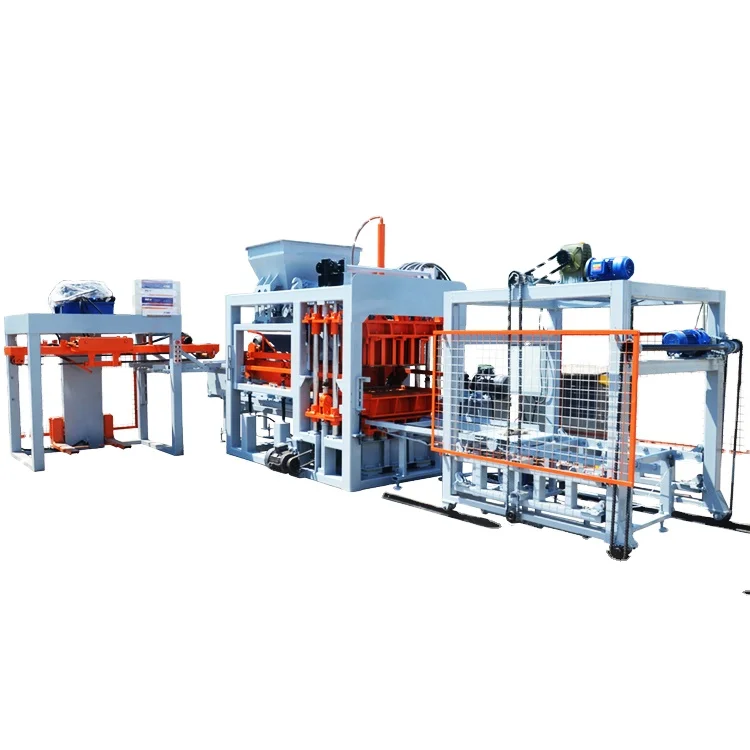
Matched System Integration — QT6-15 pairs PLC-controlled moulding cycles with an independent hydraulic station, so vibration force and demolding pressure stay consistent across every pallet regardless of shift length or operator.
Technical Specifications
| Parameter | Value |
|---|---|
| Model | QT6-15 |
| Product Type | Hydraulic Concrete Block Making Machine |
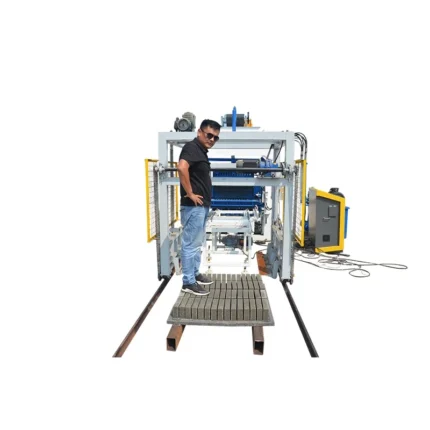
| Overall Dimensions (L×W×H) | 8200×1700×2950 mm |
| Total Mass | 7 T |
| Overall Power | 37 kW |
| Vibration Form | Platform Vibration |
| Vibration Force | 45 kN |
| Vibration Frequency | 0–60 Hz |
| Moulding Mode | Automatic loading, vibration moulding |
| Demolding Method | Hydraulic |
| Pallet Size | 880×850 mm |
| Molding Cycle | 15–20 s (basis not stated in source — confirm block format / material / thickness) |
| Control System | PLC (Programmable Controller) with touch screen HMI |
| Hydraulic System | Independent integrated hydraulic station |
| Compressive Strength of Blocks | >15 MPa |
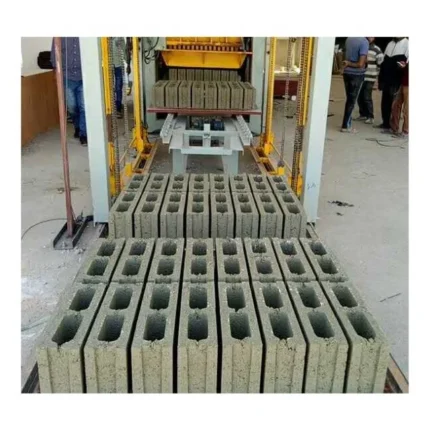
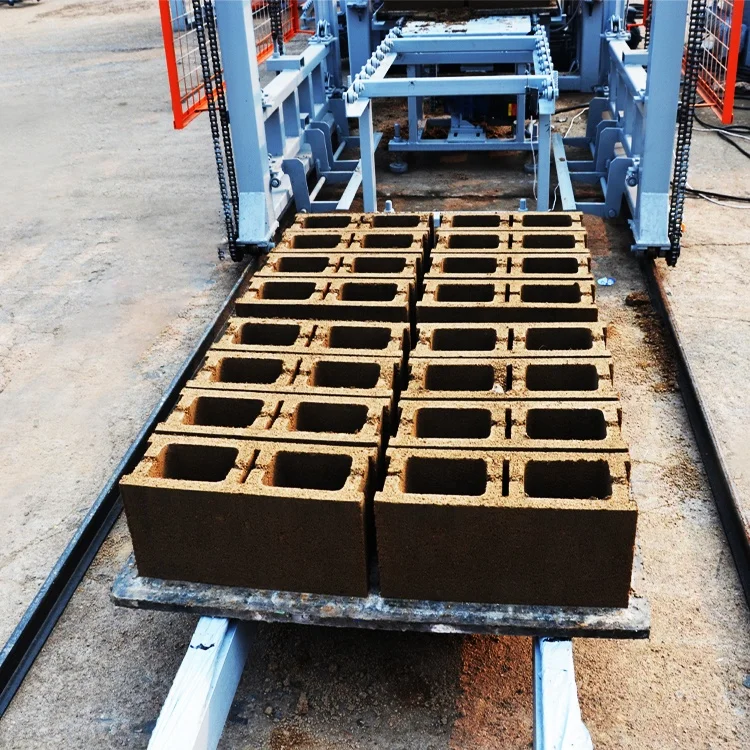
| Output Capacity (Hollow Block 400×200×200 mm) | 1080–1440 pcs/h, 8640–11520 pcs/8hr (6 pcs/mould, 15–20s cycle) |
| Output Capacity (Hollow Block 400×150×200 mm) | 1440–1920 pcs/h, 11520–15360 pcs/8hr (8 pcs/mould, 15–20s cycle) |
| Output Capacity (Solid Brick 240×115×53 mm) | 5760–7680 pcs/h, 46080–61440 pcs/8hr (32 pcs/mould, 15–20s cycle) |
| Output Capacity (Rectangular Paver 200×100×60 mm) | 2160–2880 pcs/h, 17280–23040 pcs/8hr (21 pcs/mould, 20–25s cycle) |
| Output Capacity (Zigzag Paver 225×112.5×60 mm) | 2160–2880 pcs/h, 17280–23040 pcs/8hr (15 pcs/mould, 20–25s cycle) |
| Warranty | 1 year (whole machine, excluding spare parts) |
Application Suitability
| Application | Material or Output |
|---|---|
| Hollow Block Production | Waste ash, slag, and crushed stone aggregates mixed with cement |
| Solid Brick Production | Dense aggregate mixes requiring high vibration force for >15 MPa strength |
| Rectangular and Zigzag Paver Production | Fine aggregate and pigment layers for interlocking pavement formats |
| Multi-cellular Brick Production | Lightweight aggregates utilizing platform vibration for uniform cell structure |
| Construction Contractor On-site Plants | High-volume output using locally sourced materials with reduced cement dosage |
Why the "Cycle Time" Figure Misleads Buyers Until the PLC Takes Over
Real daily output depends on stored parameters, not a stopwatch test at the factory.
I once watched a plant owner manually time the QT6-15 press stroke and calculate his daily revenue, only to realize the operator was adding three seconds to every cycle because the vibration felt "too aggressive." When we locked the settings into the PLC and removed manual override, his output stabilized and block strength variance disappeared. An automatic PLC controlled block machine eliminates this human variability, but only if the buyer understands what the quoted cycle time actually assumes [NEED_CITE: concrete block cycle time variables by aggregate density].
Stored Process Parameters Remove the Guesswork
Every block format requires a different combination of vibration duration, hydraulic pressure, and feed time. The PLC touch screen stores these recipes per mould, meaning a switch from 400×200×200 mm hollow blocks to 200×100×60 mm pavers recalls the exact settings that produced >15 MPa strength during testing. The operator selects the recipe, and the automatic PLC controlled block machine executes it without deviation.
Interlock Logic Prevents Costly Sequence Errors
The safe logic interlock circuit within the PLC monitors sensor positions across the moulding cycle. If a pallet is misaligned or the mould box has not fully descended, the system halts the press stroke rather than allowing a collision that could crack the mould or jam the pallet feeder. This removes the need for an operator to visually confirm every station before initiating the next cycle [NEED_CITE: PLC safety interlock standards for hydraulic press equipment].
What Vibration Force and Hydraulic Pressure Actually Mean for Block Density
The 45 kN vibration force paired with hydraulic demolding determines how tightly the aggregate particles pack during the 15–20 second moulding cycle. Platform vibration transmits energy through the 880×850 mm pallet into the mix, while the hydraulic system applies hold-down pressure to prevent the concrete from bouncing during compaction. If the vibration frequency is set too high for a lightweight aggregate like volcanic scoria, the mix segregates and the block crumbles at the edges. The 0–60 Hz adjustable frequency range allows tuning to the actual material, not a catalogue default. The 37 kW overall power drives both the vibration motors and the independent hydraulic station, which sits separated from the main frame to avoid dust contamination that degrades valve response over time.
The Hidden Cost of Ignoring Control Language and Voltage
A PLC display in a language the local operators cannot read leads to parameter errors that no amount of training can fix. Similarly, running a 380V/50Hz machine on a 440V/60Hz supply without confirming motor winding configuration causes the vibration motors to overheat within the first week. These mismatches are not warranty claims — they are commissioning failures that delay production and erode buyer confidence before the first pallet is even stacked [NEED_CITE: voltage and frequency standards by export market].
Why Sourcing the Press and Control from One Supplier Matters
Block machinery as a single focus means the QT6-15 PLC program is written to match the specific hydraulic valve response and vibration motor characteristics of this press, not adapted from a generic controller. Configuration is set against the buyer’s actual mix design and target block format, not a catalogue default. Mould design and supply for the formats the buyer’s market actually sells, including custom drawings, ensures the stored PLC recipes correspond to real production. Automation level is selectable, so a buyer can start with semi-automatic pallet handling and add automatic stacking and cubing later without replacing the PLC. Installation and commissioning support includes operator training on the touch screen interface, so the team running the machine understands how to recall recipes and read fault codes.
Documentation & Verification
- Line layout showing QT6-15 station spacing and pallet flow path
- PLC parameter sheet listing stored recipes per block format
- Hydraulic and electrical schematic with voltage and frequency confirmed
- Factory test record on buyer’s target block format before dispatch
- Operation manual covering touch screen navigation and fault diagnosis
- Wear parts list with hydraulic seal and vibration motor specifications
Installation, Commissioning & Support
- Foundation must support 7 T mass across 8200×1700 mm footprint with vibration isolation
- Dedicated 37 kW circuit with voltage and frequency confirmed before wiring
- PLC display language set to operator preference during commissioning
- Vibration frequency tuned to buyer’s aggregate sample on first production run
- Hydraulic station oil grade and filter replacement schedule documented
- Touch screen backup procedure for stored mould parameters before power loss
What to Prepare Before Requesting a Quotation
Send the target block format drawings, your local aggregate type and source, the daily output requirement stated per specific block size, and the confirmed voltage and frequency at your plant. Specify which automation stations you need included — pallet feeding, stacking, and cubing are configured separately.
Frequently Asked Questions
Q: How does the PLC verify capacity per block format?
A: The touch screen stores cycle parameters for each mould, and the 15–20 second base cycle varies by block thickness and material. Daily capacity is calculated against the specific format you intend to produce, not a generic headline figure. Request the output table matched to your target block size before confirming the order.
Q: What faults does the diagnosis system detect on-screen?
A: The HMI displays hydraulic pressure deviations, sensor misalignment on the mould box and pallet feeder, and vibration motor overload conditions. Mechanical wear on the mould guides or hydraulic seals requires physical inspection, but the system narrows the search area so maintenance staff avoid guessing which station caused the stoppage.
Q: Can I add automatic stacking and cubing after initial installation?
A: The PLC architecture supports adding pallet return, automatic stacker, and cubing stations as separate upgrades. The existing touch screen program receives a software update to include the new station interlocks, and the wiring extends to the added equipment without replacing the main controller or hydraulic station.
Q: How are stored mould parameters protected during power loss?
A: The PLC retains recipe data in non-volatile memory, so settings survive an unexpected shutdown. A backup procedure on the touch screen allows exporting all stored parameters to a USB drive before planned maintenance or electrical work. Restoration takes minutes once power returns and the system completes its self-check sequence.
Q: What control language and voltage options should I confirm before dispatch?
A: Specify the HMI display language your operators read fluently, and provide the exact voltage and frequency at your facility. Motor winding configuration and PLC power supply are set at the factory based on this confirmation, and changing them on-site requires component swaps that delay commissioning.