


Description
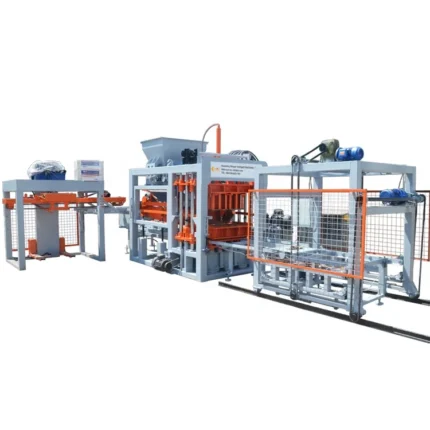
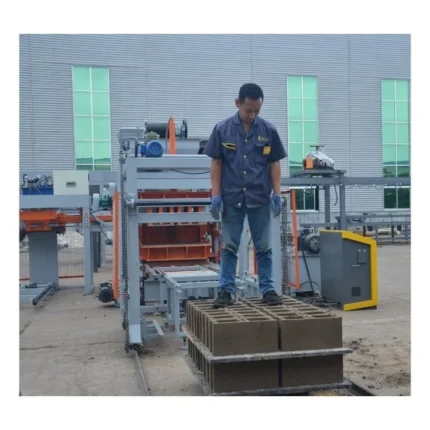
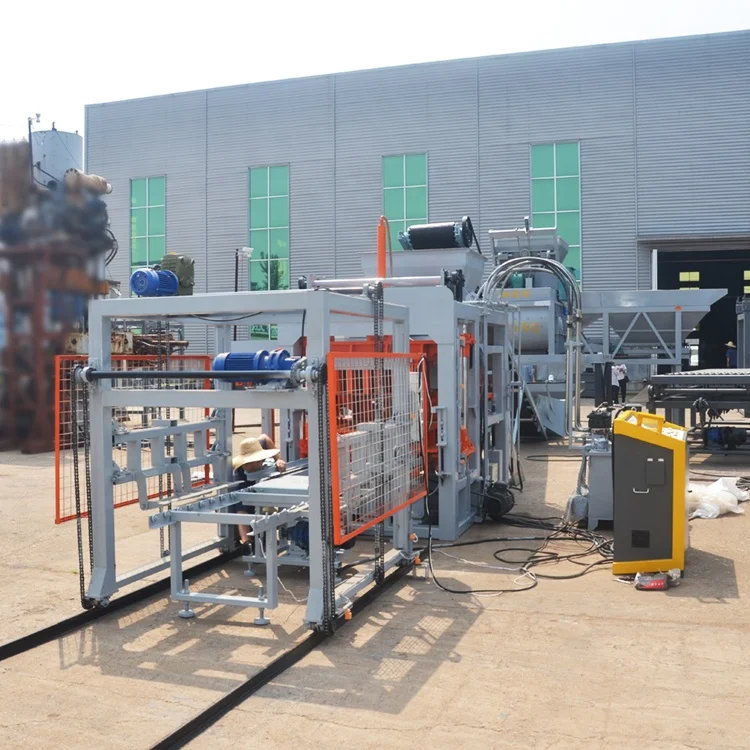
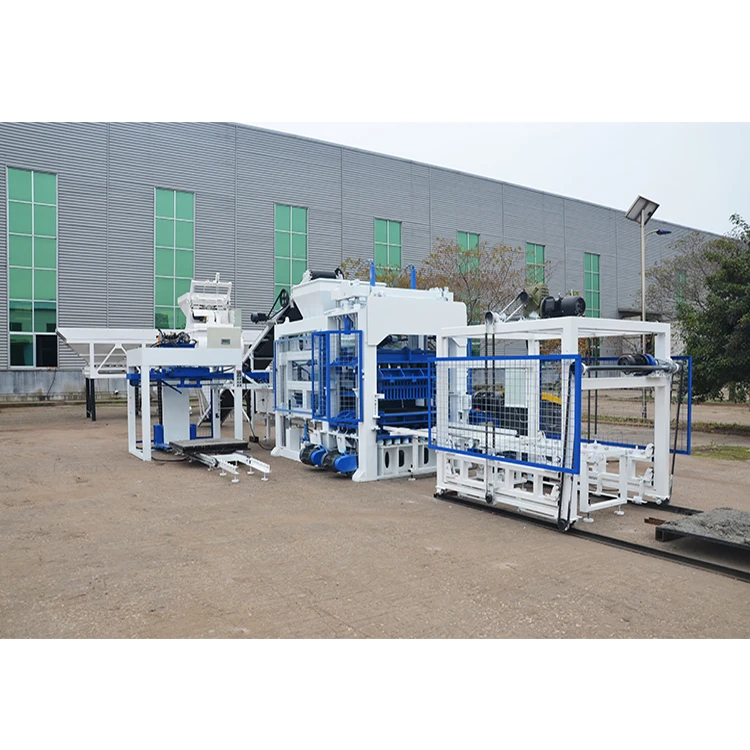
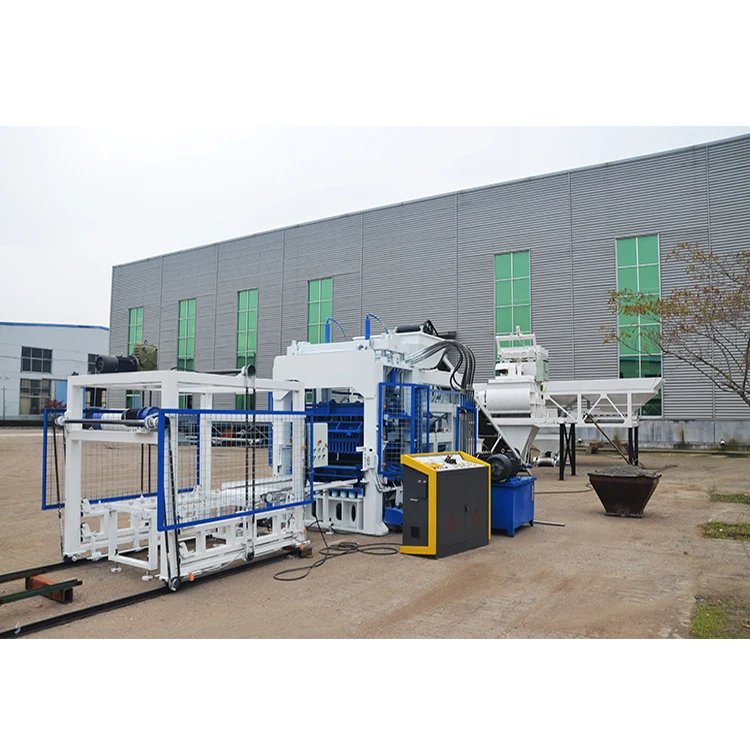
Integrated Automation System — The QT10-15 block making machine is configured as a complete PLC-controlled production cell where press timing, pallet feeding, and material dosing are synchronized to eliminate idle cycles between stations.
Technical Specifications
| Parameter | Value |
|---|---|
| Model | QT10-15 |
| Product Type | Hydraulic Block Making Machine |
| Control System | PLC control cabinet with automatic FM-AM regulation |
| Hydraulic System | Independent integrated hydraulic station |
| Vibration Mode | Vertical station mode resonance |
| Mould Change Mechanism | Quick-replacement carriage system |
| Pallet Feed | Automatic pallet feed machine included |
| Cycle Time | 15–25 seconds depending on block format |
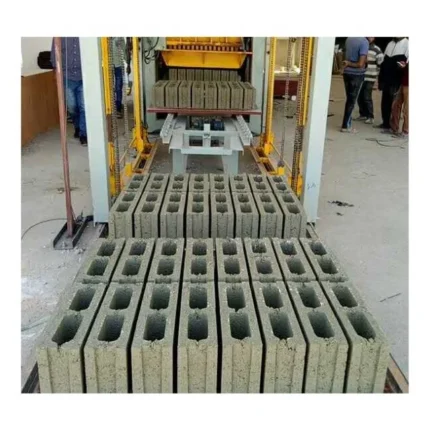
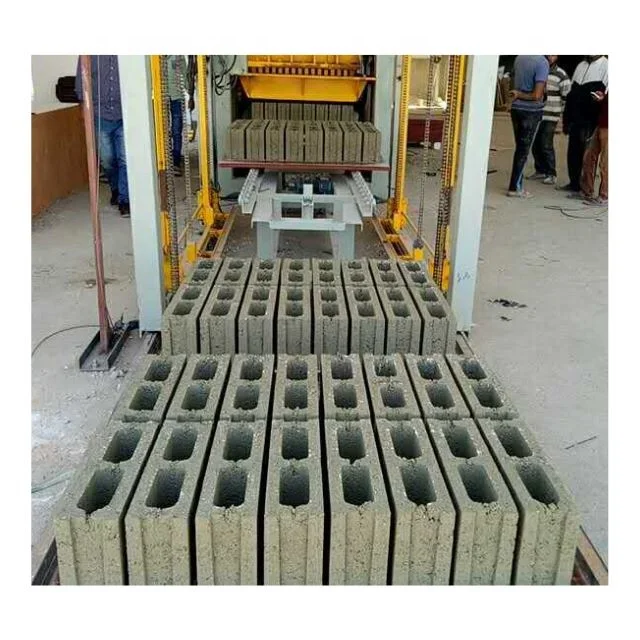
| Output (400×200×200mm hollow block) | 1800–2400 pcs/hour based on 10 pcs/mould, 15–20s cycle |
| Output (400×150×200mm hollow block) | 2160–2880 pcs/hour based on 12 pcs/mould, 15–20s cycle |
| Output (240×115×53mm solid brick) | 8928–11160 pcs/hour based on 62 pcs/mould, 15–20s cycle |
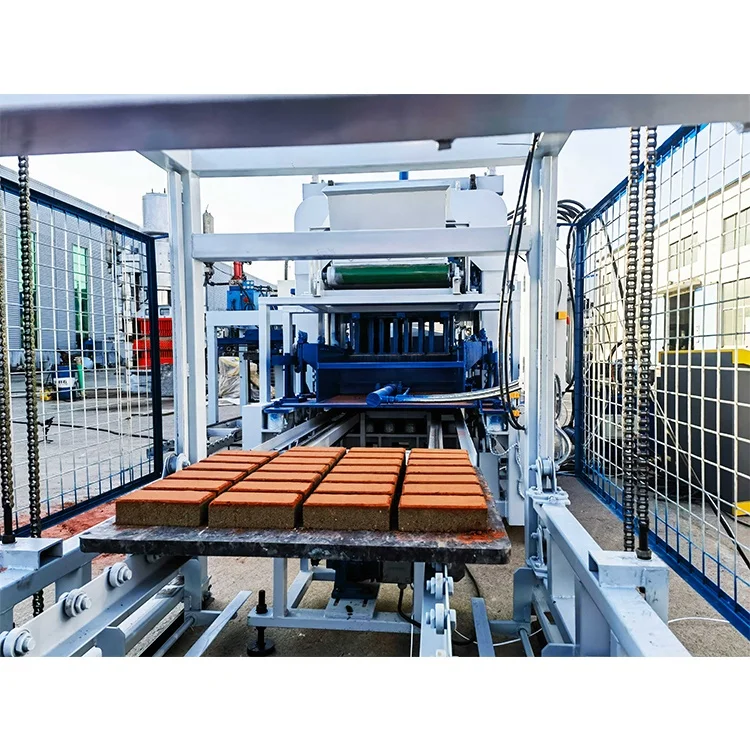
| Output (200×100×60mm paving block) | 5184–6480 pcs/hour based on 27 pcs/mould, 20–25s cycle |
| Output (225×112.5×60mm interlocking brick) | 4032–5040 pcs/hour based on 24 pcs/mould, 20–25s cycle |
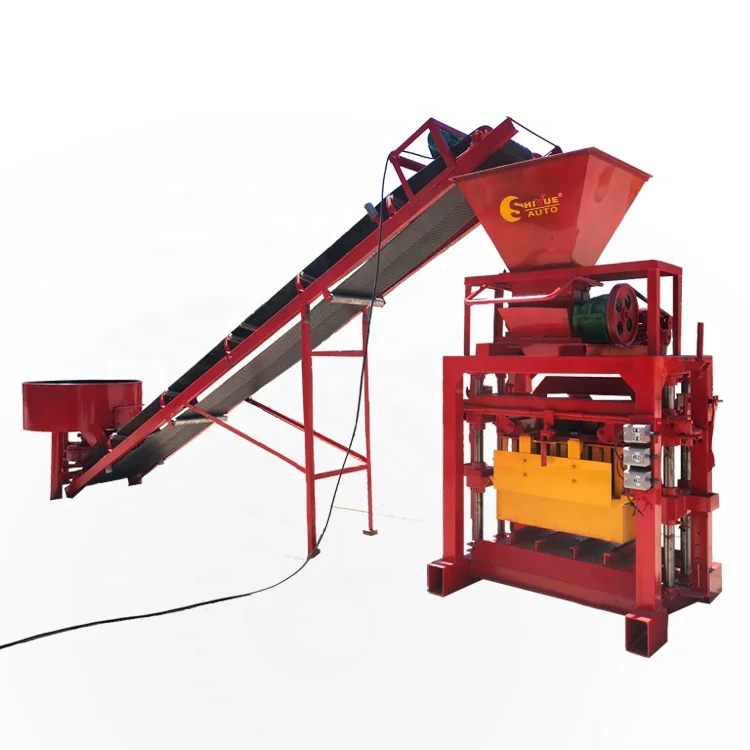
| Automation Level | Automatic (PLC controlled with pallet feed, storage hopper, conveyor, hydraulic unit) |
| Warranty | 1 year for the whole machine (excluding spare parts) |
Application Suitability
| Application | Material or Output |
|---|---|
| Hollow block production | Crushed stone, sand, cement, fly ash aggregates |
| Multicellular brick production | Lightweight aggregate and cement blends |
| Paving block production | High-density concrete mixes with fine aggregate |
| Standard solid brick production | Cement, sand, and crushed stone combinations |
| Interlocking brick production | Stabilized soil-cement or standard concrete mixes |
What "Cycle Time" Actually Means for Your Daily Output
The automatic QT10-15 block making machine PLC controlled cycle rate only matters if every station around the press keeps pace.
Buyers often compare machines on cycles per hour without asking which block format that figure assumes. A 15-second cycle on a hollow block with ten cavities produces a very different daily total than a 25-second cycle on a paving block with twenty-seven cavities. When the quoted capacity ignores this distinction, real output falls far short of expectation once production starts [NEED_CITE: common capacity misrepresentation in block machinery quotations]. The vibration force and hydraulic pressure must also match the buyer’s specific mix design and local aggregate, otherwise block strength becomes inconsistent and rejection rates climb.
How PLC Control Removes Operator Guesswork
The PLC control cabinet on this automatic QT10-15 block making machine PLC controlled manages vibration frequency and amplitude automatically through FM-AM regulation. On manual or semi-automatic lines, operators adjust timing by feel, which introduces variation between shifts and between workers. The PLC stores cycle parameters for each mould format, so switching from hollow blocks to paving blocks loads the correct vibration profile without relying on operator memory. Batch-to-batch consistency improves because the control system holds the same dwell time and pressure sequence regardless of who is running the shift.
Isolating the Hydraulic Station from Vibration Damage
The independent integrated hydraulic station sits apart from the press frame so that vibration energy does not transfer into valves and seals. On machines where the hydraulic unit mounts directly to the vibrating table, hose fittings and directional valves experience accelerated wear, leading to pressure drops mid-shift [NEED_CITE: hydraulic failure modes in vibrating press equipment]. Separating the station extends component life and keeps hydraulic pressure stable throughout a production run, which directly affects block density and compressive strength.
Matching Vibration Force to Your Aggregate
Vertical station mode resonance delivers vibration energy upward through the mould table, compacting the mix from the bottom. The effectiveness of this system depends entirely on whether the vibration frequency matches the particle size and moisture content of the local aggregate. A mix high in fines or clay content absorbs vibration differently than clean washed sand, and the automatic FM-AM function adjusts to maintain compaction force. Without this matching, blocks emerge with uneven density — strong on one side, friable on the other — which shows up only after curing when it is too late to adjust.
The Cost of Underspecifying the Pallet Circuit
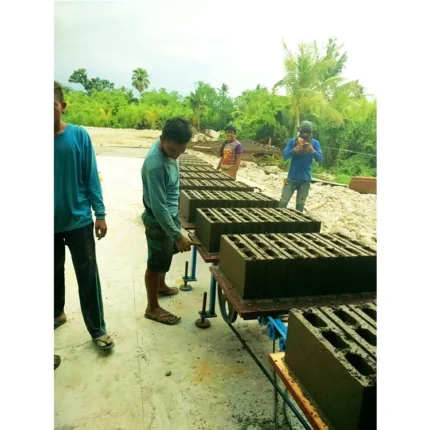
When the pallet feed machine, curing rack handling, and stacking stations are not sized to match the press cycle, the QT10-15 sits idle waiting for an empty pallet to return. This bottleneck is invisible in a quotation that lists only the press output. Buyers who discover the gap after installation end up paying for manual pallet handling or retrofitting conveyors that should have been specified from the start [NEED_CITE: block plant throughput losses from unbalanced line configuration]. The pallet size and material must also align with the curing area dimensions and the forklift capacity already on site.
Why Configuration Starts with Your Material Sample
Block machinery specified as a single focus means the machine, mould, pallet, and handling equipment are matched as one system rather than assembled from separate suppliers. Configuration is set against the buyer’s actual mix design and local aggregate, not a catalogue default. Mould design covers the formats the buyer’s market actually sells, including custom drawings when standard formats do not fit. The automation level is selectable, so a buyer can begin with semi-automatic pallet handling and add automatic stacking later without replacing the press. Installation includes on-site commissioning and operator training so the line runs correctly from the first shift.
Documentation & Verification
- Line layout and capacity calculation stating the exact block format assumed for each output figure
- Machine specification sheet with hydraulic and electrical schematic for the QT10-15 configuration
- Mould drawing and format list confirming cavity count and cycle time per block type
- Voltage, frequency, and PLC display language confirmation recorded before production begins
- Factory test record on the buyer’s target block format before dispatch
- Wear parts and mould list with replacement intervals for long-term maintenance planning
Installation, Commissioning & Support
- Foundation plan specifying load points for the QT10-15 press frame and independent hydraulic station
- Dedicated electrical circuit sized for the PLC control cabinet and hydraulic pump motor
- Machine dismantled for container loading with reassembly sequence documented
- On-site commissioning with cycle parameter tuning for local aggregate and target block format
- Operator training covering PLC format selection, mould change procedure, and daily maintenance checkpoints
- Wear parts list with hydraulic seal and vibration motor replacement intervals
Before You Request a Quote
To configure the QT10-15 correctly, we need your target block formats with dimensions, the daily output you plan to sell, and a sample of your local aggregate so we can test the vibration and pressure match. Confirm your site voltage, frequency, and preferred PLC display language so the control cabinet is built to your market standard. If you already have pallets, curing racks, or forklifts on site, share those dimensions so the pallet feed and handling stations align with what you have.
Frequently Asked Questions
Q: How is the capacity figure verified, and which block format does it assume?
A: Every output figure for the QT10-15 is stated per block format with the mould cavity count and cycle time range clearly listed. For example, hollow block capacity is based on a 400×200×200mm format with ten cavities and a 15–20 second cycle. We provide a written capacity calculation document with your quotation so there is no ambiguity about which product each number refers to.
Q: What automation level does the QT10-15 include, and can I start semi-automatic?
A: The standard configuration includes PLC control, automatic pallet feed, storage hopper, and conveyor as a matched system. Buyers who want to reduce initial investment can start with manual pallet handling and add automatic stacking and cubing later. The PLC architecture supports this upgrade path without requiring a press replacement or major rewiring.
Q: How does the PLC handle language and voltage for different export markets?
A: Voltage, frequency, and PLC display language are confirmed with the buyer before production begins. The control cabinet is then built to match the target market’s electrical standard and operator language preference. This confirmation step prevents commissioning delays that occur when machines arrive with the wrong voltage configuration or an unfamiliar interface language.
Q: What is the mould change time, and how does it affect daily output?
A: The quick-replacement mould carriage allows format changes without dismantling surrounding equipment. The exact changeover time depends on the mould size and operator familiarity, but the system is designed so that switching formats does not consume an entire shift. We state the mould change procedure in the operation manual and cover it during on-site training.
Q: How are pallet feed and stacking configured to match the press cycle?
A: The pallet feed machine, conveyor speed, and stacking station are all timed to the QT10-15 cycle so the press never waits for an empty pallet. During line layout design, we calculate the pallet return loop duration against the press cycle for your chosen block format and adjust conveyor lengths and speeds accordingly to maintain continuous operation.