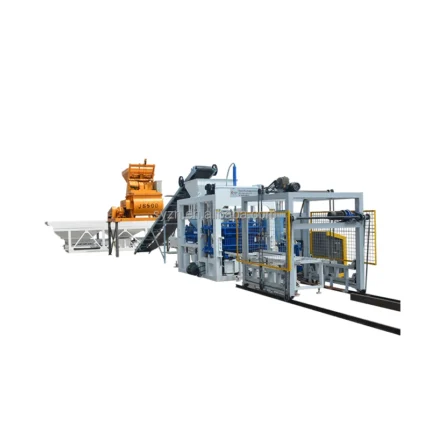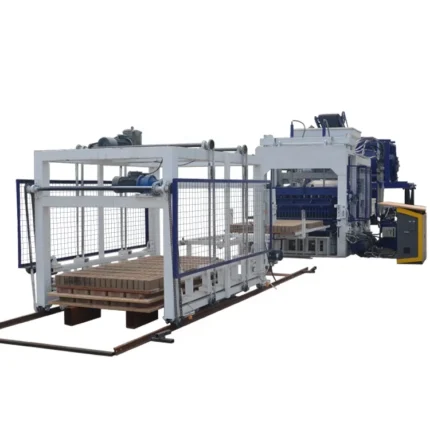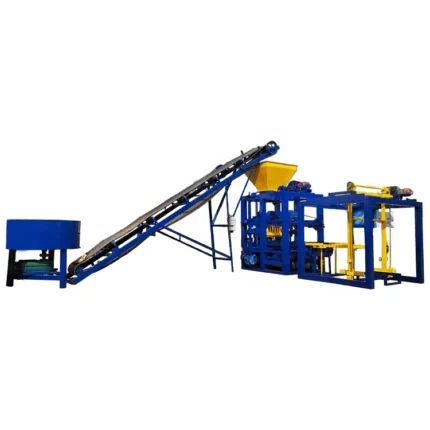
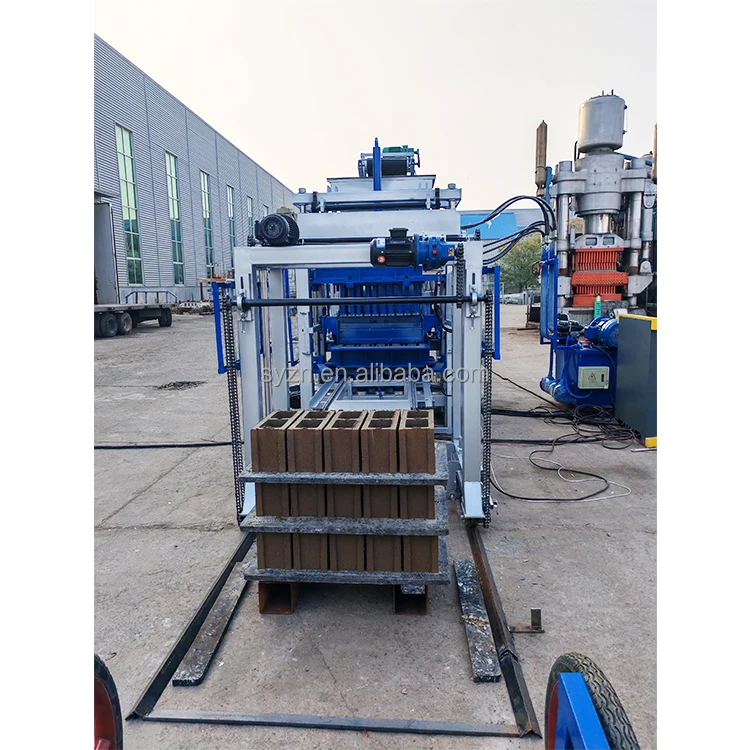
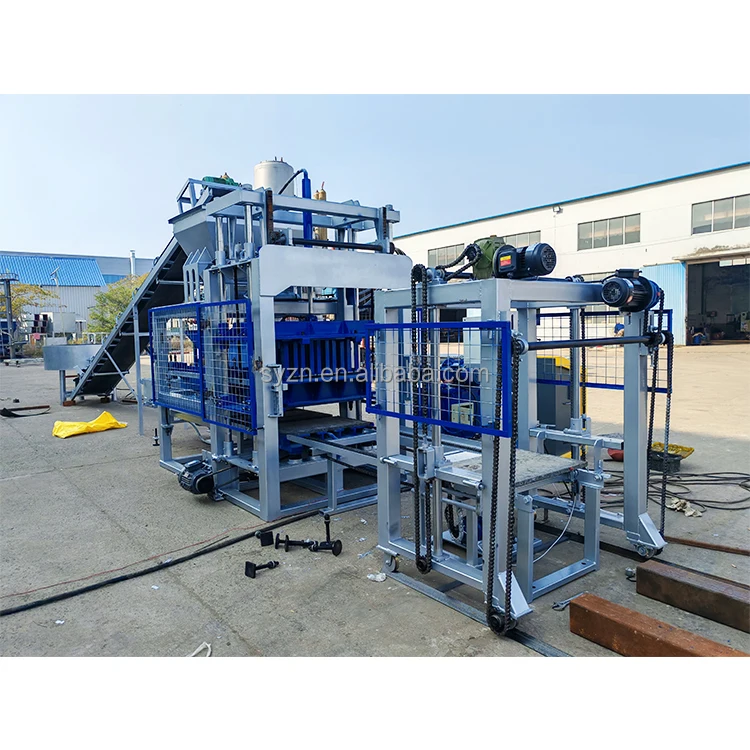
Description
Intelligent control configuration — every PLC language and voltage setting confirmed against the buyer’s site before the QT4-15A leaves the factory, eliminating commissioning delays caused by mismatched control interfaces.
Technical Specifications
| Parameter | Value |
|---|---|
| Model | QT4-15A |
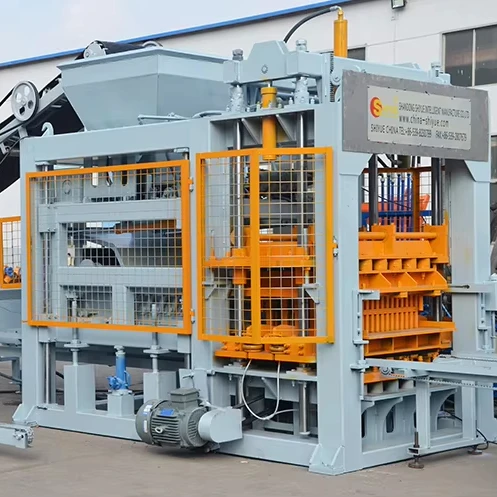
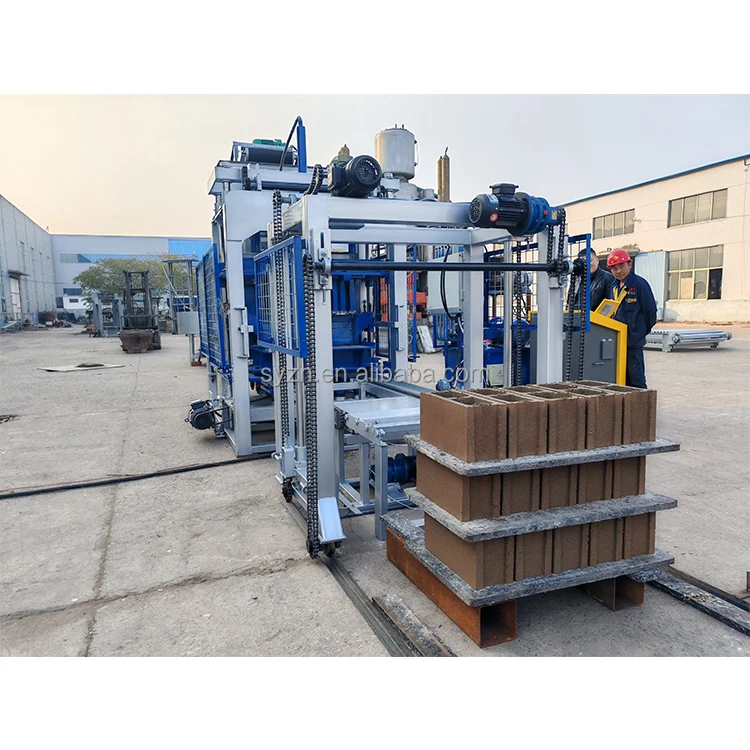
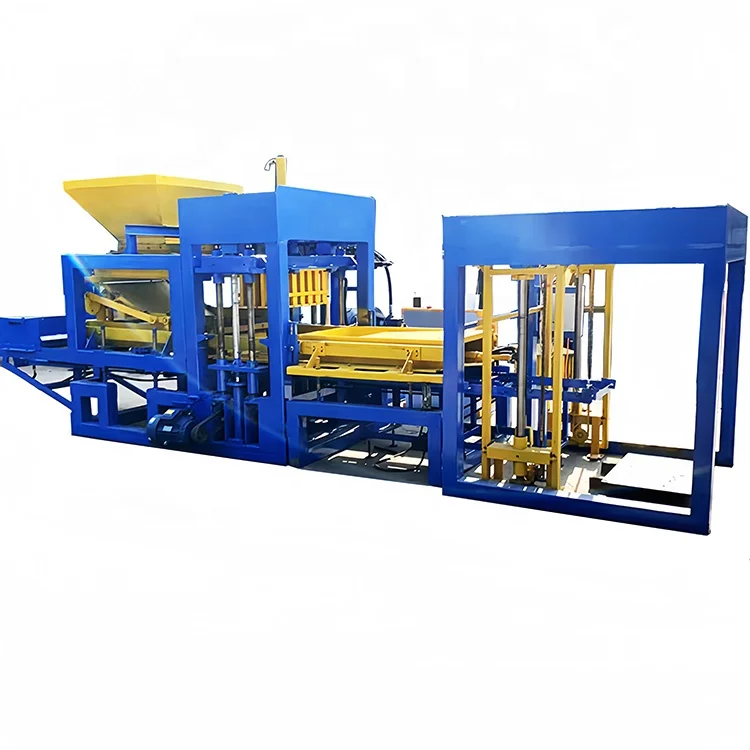
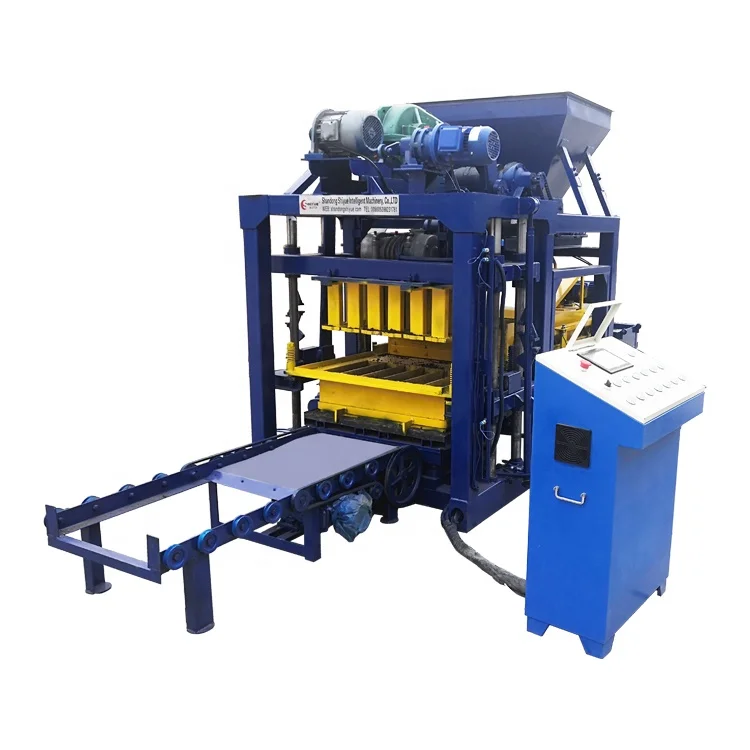
| Product Type | Automatic Concrete Block Making Machine |
| Overall Dimensions (L×W×H) | 4100×1600×2600 mm |
| Rated Pressure | 16–21 MPa |
| Main Vibration Form | Platform Vibration |
| Vibration Frequency | 4200 r/min |
| Vibration Force | 55 kN |
| Pallet Size | 880×550 mm |
| Molding Cycle | 25–30 s (basis not stated in source — confirm block format / material / thickness) |
| Overall Power | 18.45 kW |
| Total Mass | 4 T |
| Demolding Method | Hydraulic |
| Recommended Factory Area | 300 m² |
| Automation Level | Fully automatic |
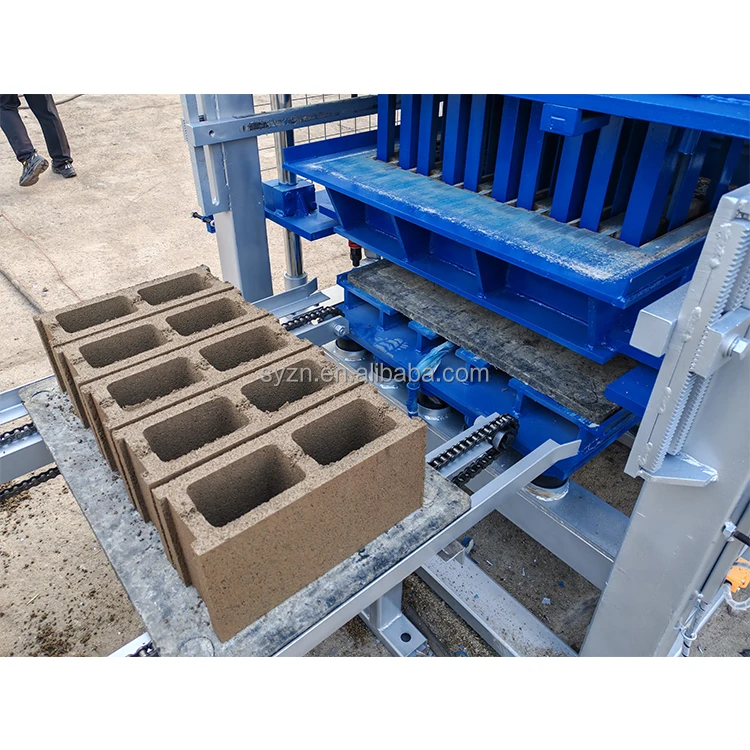
| Applied Products | Concrete blocks, hollow/solid blocks, pavers, interlocking blocks, curbstone, colored pavers |
| Raw Materials | Crushed stone, sand, cement, dust, fly ash, gravel, slag |
| Control System | Configurable (voltage, frequency, and PLC display language to be confirmed per order) |
| Warranty | 1 year (excluding spare parts) |
Application Suitability
| Application | Material or Output |
|---|---|
| Hollow block production for load-bearing walls | Crushed stone, sand, cement, fly ash blends |
| Solid block manufacturing for partition walls | Gravel, sand, cement mixes |
| Paving block and colored paver runs | Fine aggregate with pigment additives |
| Interlocking brick for landscape projects | Sand, cement, slag composites |
| Curbstone and kerb production | Coarse aggregate with high cement content |
What the Quoted Cycle Time Actually Means for Your Shift Output
The automatic block making machine PLC controlled cycle only delivers its rated output when every upstream and downstream station keeps pace with the press.
A molding cycle listed at 25–30 seconds sounds like a straightforward calculation: divide your shift hours by 27 seconds and you have your theoretical block count. But that figure assumes a specific block format, a consistent mix design, and pallets arriving at the press without interruption. When the raw material feeder starves or the pallet return loop falls behind, the press sits idle and the cycle time on paper means nothing [NEED_CITE: concrete block production line cycle time dependencies]. This is where the automatic block making machine PLC controlled logic must coordinate not just the press itself, but every station around it.
How PLC Coordination Keeps the Press Running
The QT4-15A relies on its control system to sequence raw material feeding, vibration, hydraulic pressing, and demolding into a single repeatable cycle. When any step drifts — a pallet arriving late, a mix batch with inconsistent moisture — the PLC adjusts timing or halts the sequence rather than producing substandard blocks. This coordination is what separates an automatic block making machine PLC controlled setup from a semi-automatic line where operators manually trigger each step and introduce variability shift after shift.
The Labour Shift That Automation Actually Removes
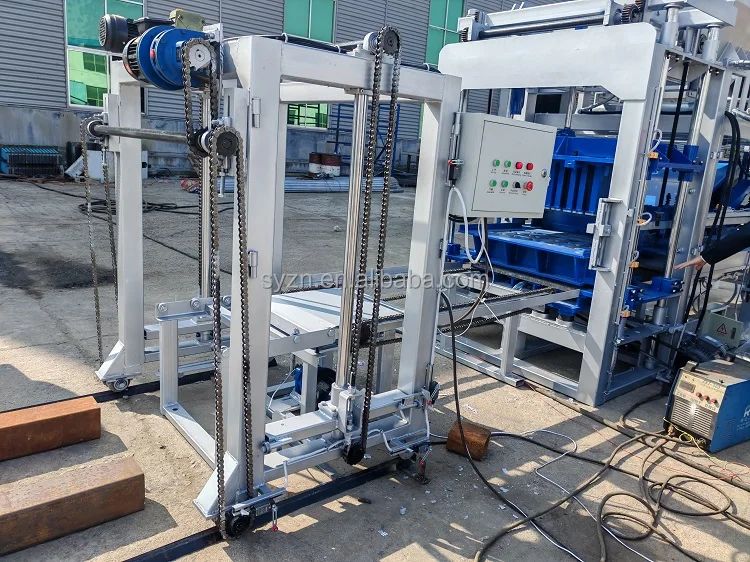
On a semi-automatic line, two or three workers spend their shift moving pallets by hand, watching the press cycle, and stacking wet blocks onto curing racks. The QT4-15A’s automatic configuration integrates pallet feeding and hydraulic demolding so the operator monitors the control panel rather than performing physical handling [NEED_CITE: labour requirements in automatic versus semi-automatic block plants]. The reduction in manual intervention means fewer blocks damaged during extraction and more consistent output across different operators and shifts.
Reading the Specifications That Matter for Automation
Platform vibration at 4200 r/min paired with 55 kN vibration force determines how densely the aggregate compacts inside the mould cavity. Higher compaction density directly translates to block strength, but only if the hydraulic pressure of 16–21 MPa applies sufficient force from above simultaneously. The 880×550 mm pallet size must match the curing rack spacing and forklift tine width already present at the buyer’s facility — ordering a pallet dimension that does not align with existing infrastructure creates bottlenecks the press itself cannot solve. Overall power at 18.45 kW requires a dedicated circuit with correct voltage and frequency, which must be specified before production begins rather than discovered during commissioning.
What Happens When Control Parameters Are Assumed Instead of Confirmed
I once watched an entire commissioning schedule collapse because the PLC display arrived in Chinese while the local operators in West Africa spoke only French and English. The machine sat idle for a full week while the factory prepared and transmitted an English firmware update remotely. That single oversight — failing to confirm the control language in writing before shipment — cost more in delayed production than the language configuration itself would have added to the order. Voltage mismatches cause similar paralysis: a 380V/50Hz machine arriving at a 440V/60Hz site requires transformer upgrades or motor replacement before it can run a single cycle [NEED_CITE: voltage and frequency standards by export market]. The automatic block making machine PLC controlled configuration must be locked down on paper before steel is cut.
Why This Is Where the Line Comes Together
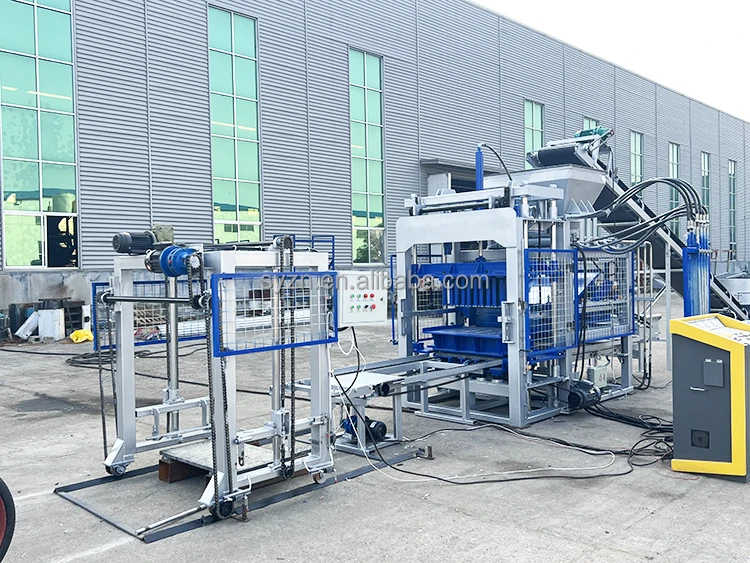
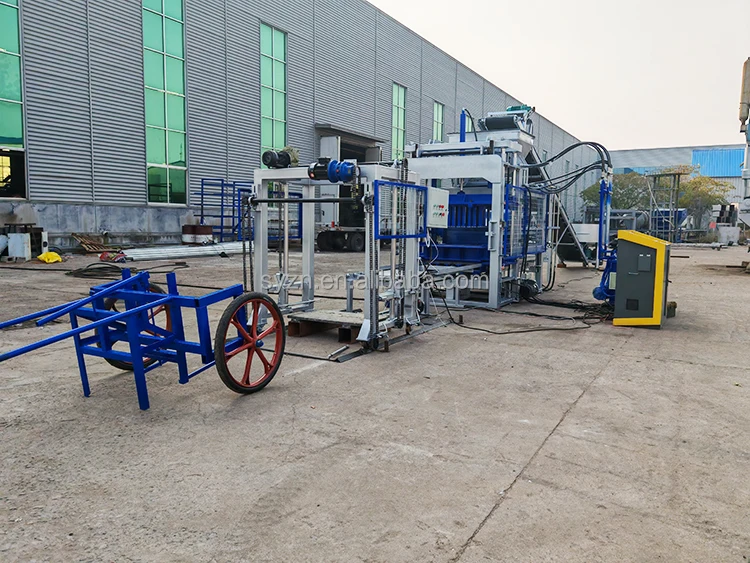
Block machinery remains the sole focus here, meaning the QT4-15A press, its moulds, pallets, and handling equipment are specified as one matched system rather than assembled from disconnected suppliers. The control configuration is set against the buyer’s actual site voltage, local language requirements, and target block format rather than pulled from a default catalogue. Mould design covers the specific formats the buyer’s market demands, with custom drawings available when standard options do not match. Automation level is selectable so a buyer running a semi-automatic operation today can plan a clear upgrade path. Installation support includes operator training focused on the PLC interface so the crew understands cycle logic, not just button sequences.
Documentation & Verification
- Line layout drawing showing how the QT4-15A connects to pallet feed and stacking stations
- Capacity calculation stating which block format the 25–30 s cycle assumes
- PLC display language and voltage confirmation sheet signed before production
- Factory test record documenting actual cycle time per requested block format
- Hydraulic and electrical schematic matching the as-built QT4-15A configuration
- Wear parts and mould list supplied with shipment for first replacement planning
Installation, Commissioning & Support
- Foundation pad sized for the 4100×1600 mm footprint with anchor bolt template provided
- Dedicated electrical circuit matching confirmed voltage and frequency for the 18.45 kW load
- Machine arrives dismantled for container loading with reassembly sequence documented
- Commissioning includes PLC parameter tuning against the buyer’s specific mix and aggregate
- Operator training covers cycle adjustment on the QT4-15A control panel for each block format
- Hydraulic seals and vibration components listed with reorder intervals for continuous production
What to Prepare Before Requesting a Quote
Share your target block formats with dimensions and daily volume so the cycle time can be calculated against your actual product rather than a catalogue default. Confirm the local voltage, frequency, and the language your operators will need on the control display. Provide your curing area layout and forklift specifications so the 880×550 mm pallet size can be validated against your existing equipment.
Frequently Asked Questions
Q: Does the quotation cover pallet feeding, stacking, and curing rack handling?
A: The QT4-15A’s automatic configuration includes pallet feeding and hydraulic demolding within the controlled cycle. Stacking and curing rack handling are separate line stations that must be specified alongside the press. Confirm which downstream stations are included in any quotation so you know whether blocks leave the press handled automatically or still require manual movement to curing areas.
Q: How is the PLC display language and control voltage confirmed before shipment?
A: Language and voltage are documented on a written confirmation sheet signed before production begins. The control panel is then built to that specification and tested at the factory with the confirmed language active. This prevents the situation where a machine arrives on site and the operators cannot read the display or the motor cannot run on local power.
Q: How do I verify the 25–30 second cycle against my block format?
A: Request a factory test record that documents the actual cycle time running your specific block format with a representative mix. The published 25–30 second range is a baseline that shifts depending on block height, wall thickness, and aggregate characteristics. A test run before shipment provides the real number for your capacity planning.
Q: What is the upgrade path from semi-automatic to fully automatic operation?
A: The QT4-15A platform allows starting with manual pallet handling and adding automatic pallet feeding, stacking, and cubing as separate station upgrades later. The PLC architecture supports these additions without replacing the core press. Discuss the intended sequence at the ordering stage so the control system is pre-wired for future station integration.
Q: How does automation level affect labour count and block consistency?
A: Automating pallet handling and demolding removes the two most labour-intensive tasks from each shift and eliminates the variability those manual steps introduce. Blocks extracted hydraulically suffer less edge damage than hand-removed blocks, and PLC-controlled vibration timing produces consistent density across every cycle regardless of which operator is on shift [NEED_CITE: automation impact on concrete block quality consistency].