Description
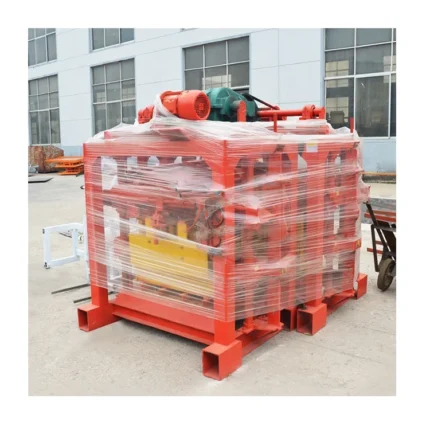
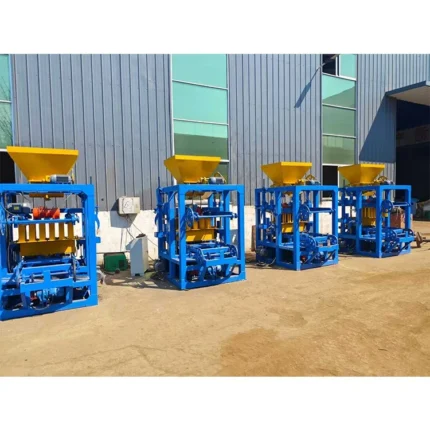
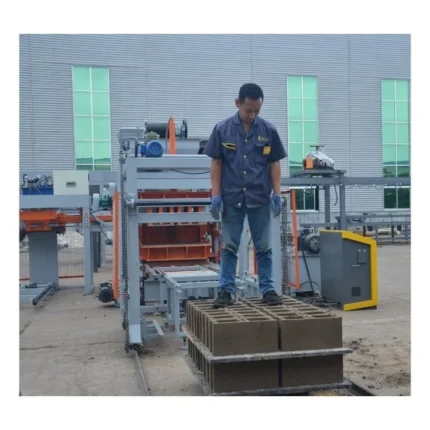
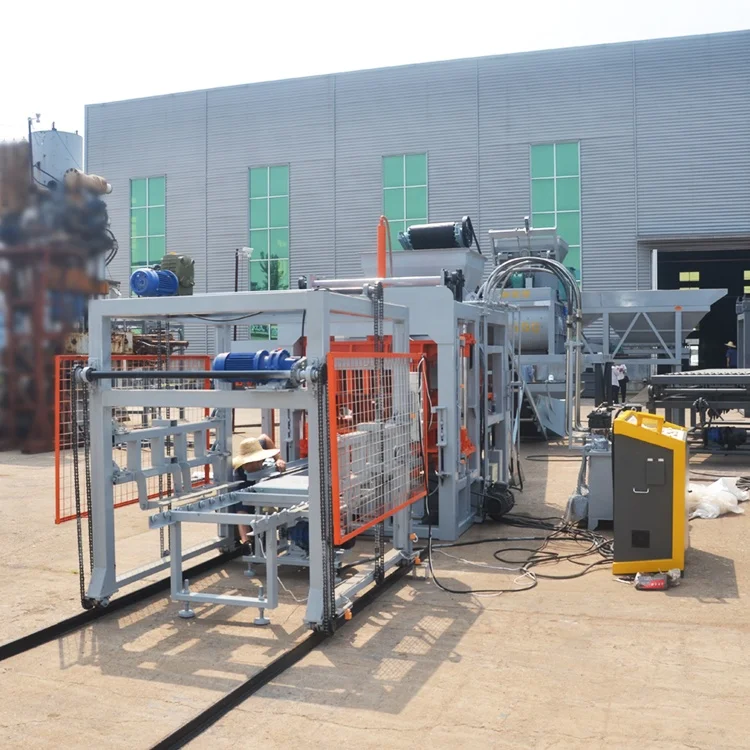
Integrated Line Control — the automatic QT5-15 block making machine PLC controlled system synchronizes press cycling, pallet feeding, and block conveying from a single operator station, removing manual handling from the production loop.
Technical Specifications
| Parameter | Value |
|---|---|
| Model | QT5-15 |
| Product Type | Automatic Concrete Block Making Machine |
| Overall Dimensions (L×W×H) | 7100×1600×2610mm |
| Molding Cycle | 15s |
| Vibration Frequency | 0–60Hz |
| Exciting Force | 40kN |
| Total Power | 33.5kW |
| Mixer Model | JS500 |
| Pallet Size | 1100×550mm |
| Total Weight | 5T |
| Control System | PLC control system |
| Hydraulic Station | Included, high-pressure configuration |
| Included Equipment | Block making machine, hydraulic station, PLC control system, pallet feeder, brick conveyor, block sweeper |
| Free Accessories | Manual hydraulic trolley, spare parts and tools |
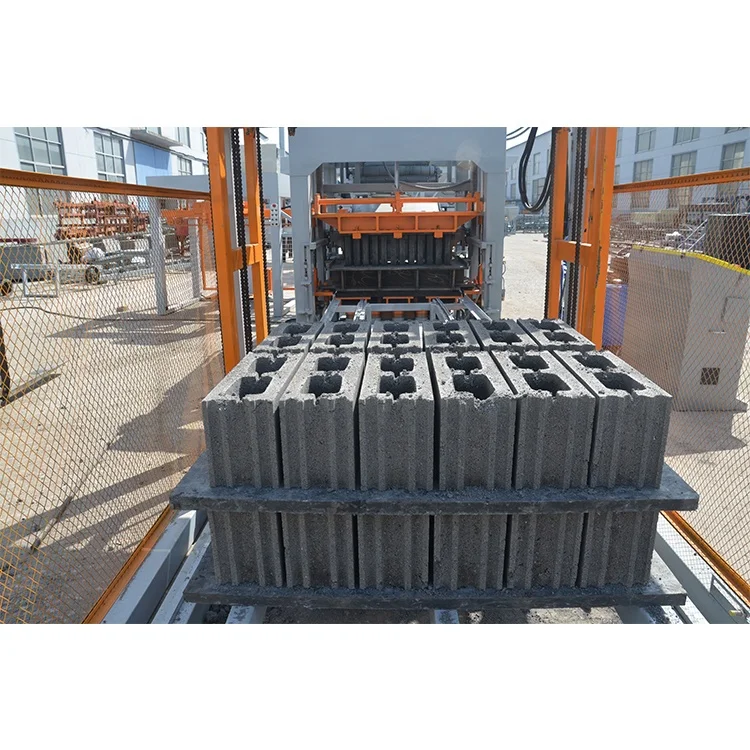
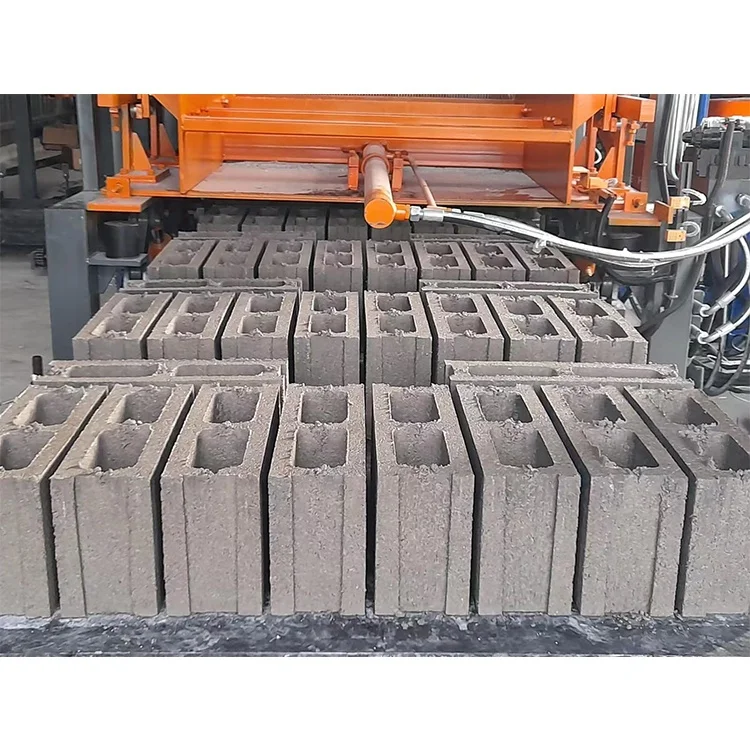
| Output Capacity (400×200×200mm Hollow Block) | 450 pcs/hr, 3600 pcs/8hr |
| Output Capacity (400×150×200mm Hollow Block) | 540 pcs/hr, 4320 pcs/8hr |
| Output Capacity (400×100×200mm Solid Brick) | 720 pcs/hr, 5760 pcs/8hr |
| Voltage & Frequency | Configurable per buyer market (to be confirmed) |
| PLC Language Options | To be confirmed before production |
| Automation Level | Fully automatic with pallet feeder, conveyor, sweeper |
Application Suitability
| Application | Material or Output |
|---|---|
| Hollow block production | Crushed stone, sand, cement, fly ash, industrial dust |
| Solid brick production | Sand, cement, crushed stone aggregates |
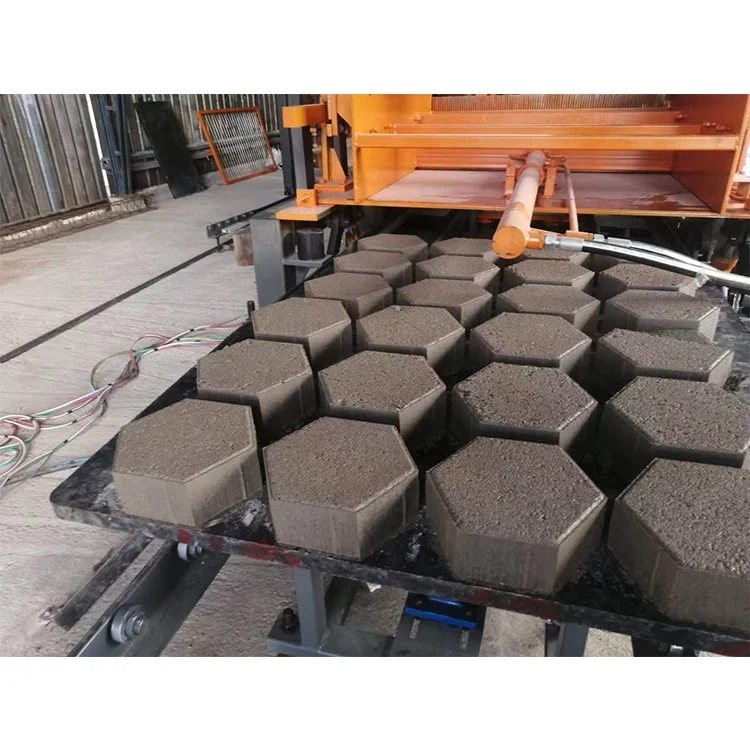
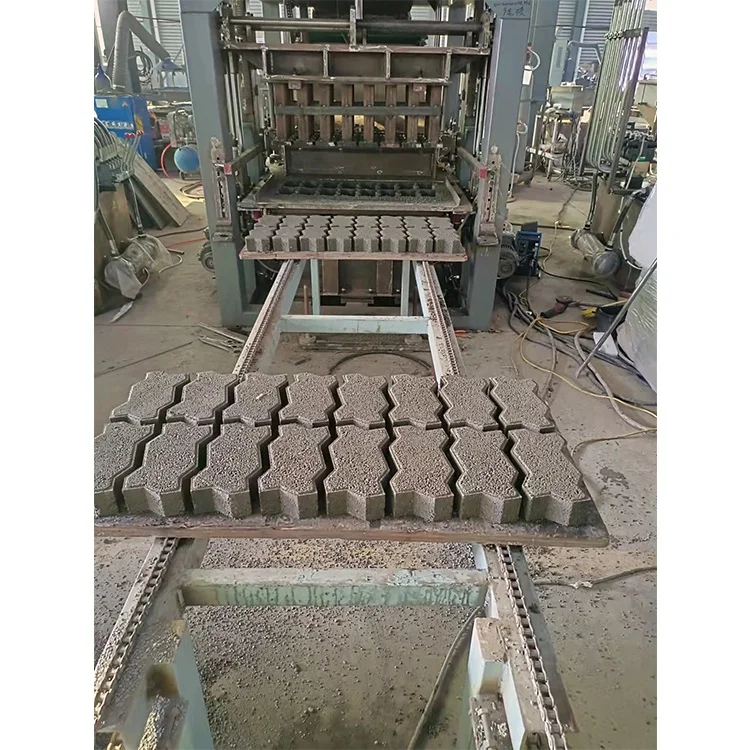
| Paver production | Fine aggregate blends with cement binder |
| Curbstone production | Coarse aggregate mixes with high cement content |
Why "Pieces per Hour" Without a Block Format Is Meaningless
Every capacity figure on this page is tied to a specific block size and mould, because a cycle time only matters once you know what is being pressed.
Most quotations list a single output number derived from the fastest cycle the machine can achieve on the smallest format. A buyer running 400×200×200mm hollow blocks then discovers the real throughput is a fraction of what was quoted, because that larger format demands a longer vibration window and heavier material feed per cycle. I have seen plants miss daily delivery targets within the first week because the capacity assumption was never matched to the format they actually sell [NEED_CITE: block format and cycle time correlation in concrete block production]. The automatic QT5-15 block making machine PLC controlled configuration addresses this by stating output per format: 3,600 pieces per 8-hour shift on 400×200×200mm hollow blocks, 4,320 on 400×150×200mm, and 5,760 on 400×100×200mm solid bricks. These figures let a buyer calculate real daily revenue against confirmed local demand rather than a catalogue best-case scenario.
How PLC Control Removes the Operator from the Cycle
The PLC control system on the QT5-15 manages the full sequence: pallet indexing into the press, material feeding, vibration and hydraulic compression, block ejection onto the conveyor, and sweeper clearing of the pallet return path. The operator monitors the cycle from the panel and intervenes only for mould changes or raw material replenishment. This matters most when a plant runs two or three formats in one shift — the automatic QT5-15 block making machine PLC controlled logic holds cycle timing consistent across formats, so the batch-to-batch density does not drift as it does when a manual operator tries to pace the press by hand.
Matching Vibration Force to Your Local Aggregate
During a commissioning run in Jamaica, a QT-class press running paving blocks showed inconsistent strength readings across the same batch. The local crushed stone had a larger particle size and higher clay content than the standard mix the machine was configured for, so the 40kN exciting force at the default frequency was not consolidating the mix properly. We spent a week adjusting vibration frequency between 0 and 60Hz and re-balancing the hydraulic pressure until the block density stabilized. That experience is why every order now starts with a request for the buyer’s aggregate sample and mix proportions [NEED_CITE: effect of aggregate gradation on concrete block compressive strength]. The adjustable vibration frequency range on the QT5-15 allows this tuning to happen on site without mechanical modification.
What the Numbers on the Spec Sheet Actually Mean for Production
The 15-second molding cycle governs how many presses the machine completes per hour, but the real constraint is often pallet return speed — if the sweeper and conveyor cannot clear a pallet before the next cycle starts, the press waits. The 7100×1600×2610mm footprint includes the press, pallet feeder, and conveyor in one line layout, so cycle time is not lost to manual pallet transfer. The 1100×550mm pallet size determines how many blocks fit per press: five 400×200×200mm hollow blocks or a larger count of smaller solid bricks per cycle, which directly explains why output differs by format. The JS500 mixer feeds the press hopper at a rate matched to the 15-second cycle, preventing material starvation on faster formats. Total power draw of 33.5kW across the press, mixer, conveyor, and hydraulic station indicates the electrical supply requirement a plant must provision before the machine arrives. Hydraulic pressure and the 40kN exciting force work together — pressure compacts the mix while vibration eliminates air voids, and both must be tuned to the same aggregate to achieve target block strength.
The Hidden Cost of Skipping Voltage Confirmation
Plants in regions with 60Hz power supply regularly receive machines wired for 50Hz, and the first sign of trouble is a mixer motor running at the wrong speed, producing inconsistent material feed to the press hopper. By the time the issue is diagnosed, the buyer has already lost commissioning days and sometimes burned out a motor [NEED_CITE: industrial equipment voltage and frequency mismatch consequences in export markets]. Voltage, frequency, and PLC display language are all configurable on the QT5-15, but they must be confirmed in writing before production starts — not discovered when the container is opened on site.
Why Procurement Starts Here
Block machinery is our single focus, so the QT5-15 arrives as a matched system — press, mould, pallet, feeder, conveyor, and sweeper specified together rather than assembled from separate suppliers. Configuration is set against the buyer’s actual mix design and local aggregate, not a catalogue default, which means vibration and hydraulic parameters are pre-tuned before the machine ships. Mould design covers the formats the buyer’s market sells, including custom drawings for non-standard paver or curbstone profiles. The automation level on the QT5-15 is fully automatic with integrated pallet handling, and the manual hydraulic trolley included as a free accessory covers block transport to the curing area without requiring a separate equipment purchase. Factory testing runs the complete cycle on the buyer’s specified format before dispatch, so output figures are verified — not estimated.
Documentation & Verification
- Line layout drawing showing QT5-15 press, pallet feeder, conveyor, and sweeper positions with overall dimensions
- Capacity calculation sheet stating output per block format with the mould and cycle time assumed
- Machine specification sheet including hydraulic pressure rating, vibration force curve, and pallet specification
- Voltage, frequency, and PLC display language confirmation document signed before production
- Factory test record with cycle timing and block sample measurements on buyer’s specified format
- Mould drawing and format list confirming included block profiles and cycle time per format
Installation, Commissioning & Support
- Foundation pad sized to the 7100×1600mm machine footprint with anchor bolt layout provided before pour
- Dedicated 33.5kW electrical circuit with voltage and frequency confirmed to match local supply
- Machine arrives as a fully automatic line — press, hydraulic station, pallet feeder, conveyor, and sweeper reconnect on site
- First-run commissioning includes vibration frequency tuning against buyer’s aggregate sample and mix design
- Operator training covers PLC panel navigation, mould change procedure, and daily maintenance checkpoints
- Wear parts list with hydraulic seals and vibration components identified for first reorder cycle
What We Need from You to Size This Line
Tell us which block formats sell in your market — hollow, solid, paver, or curbstone — and the daily volume you need to deliver. Share your local aggregate type and any existing mix proportions you run, plus the voltage and frequency at your site. If you already have a curing area and forklift, let us know the pallet dimensions they accommodate so the 1100×550mm pallet specification can be verified or adjusted before the automatic QT5-15 block making machine PLC controlled line enters production.
Frequently Asked Questions
Q: How is the output capacity of the QT5-15 calculated, and which block format does each figure assume?
A: Output is stated per format based on the 15-second molding cycle. For 400×200×200mm hollow blocks the rate is 450 pieces per hour, yielding 3,600 in an 8-hour shift. For 400×150×200mm hollow blocks it is 540 per hour (4,320 per shift), and for 400×100×200mm solid bricks it is 720 per hour (5,760 per shift). Each figure assumes continuous operation with the matched JS500 mixer feeding the press without interruption.
Q: What PLC control language and HMI options are available, and is remote diagnostics supported?
A: The PLC display language is configured to the buyer’s preference before production — common options include English, Spanish, French, and Arabic. Language selection is confirmed in writing during the order process so the operator panel is ready at commissioning. Remote diagnostics capability depends on the control package selected and should be discussed during the configuration stage.
Q: How does the automation level of the QT5-15 compare to a semi-automatic upgrade path?
A: The QT5-15 ships as a fully automatic line with pallet feeder, brick conveyor, and block sweeper integrated into the PLC cycle. A semi-automatic setup removes the feeder and conveyor, leaving pallet handling to manual labor. The upgrade path from semi-automatic to fully automatic involves adding those stations and updating the PLC program — a conversion that is mechanically straightforward when the base press is designed for the full configuration from the start.
Q: What voltage and frequency configurations are available, and how is this confirmed before shipment?
A: The QT5-15 is configurable for common industrial voltage and frequency standards across export markets. The buyer provides local supply specifications during the inquiry stage, and a voltage and frequency confirmation document is signed before production begins. This prevents motor and control mismatches that would otherwise delay commissioning after the machine arrives on site.
Q: How is the vibration force and hydraulic pressure matched to the buyer’s local aggregate and mix design?
A: The 40kN exciting force operates across a 0–60Hz adjustable frequency range, and the hydraulic station delivers high-pressure compression. Both are tuned during commissioning against the buyer’s actual aggregate sample and mix proportions. This matching process ensures block density and strength remain consistent, particularly when local stone has larger particle sizes or higher fines content than standard reference mixes.