


Description
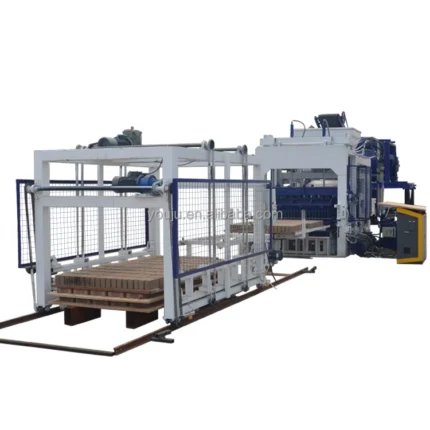
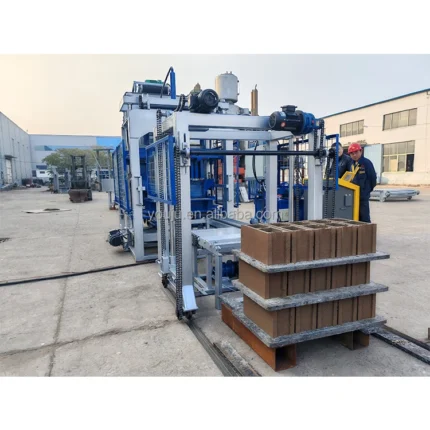
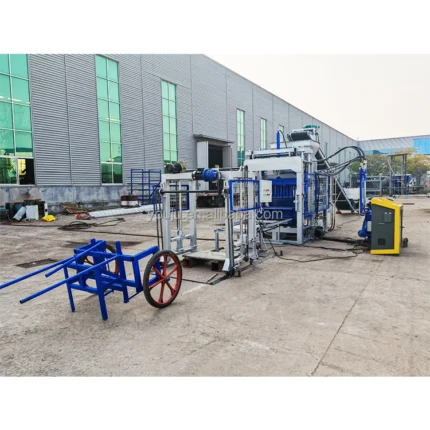
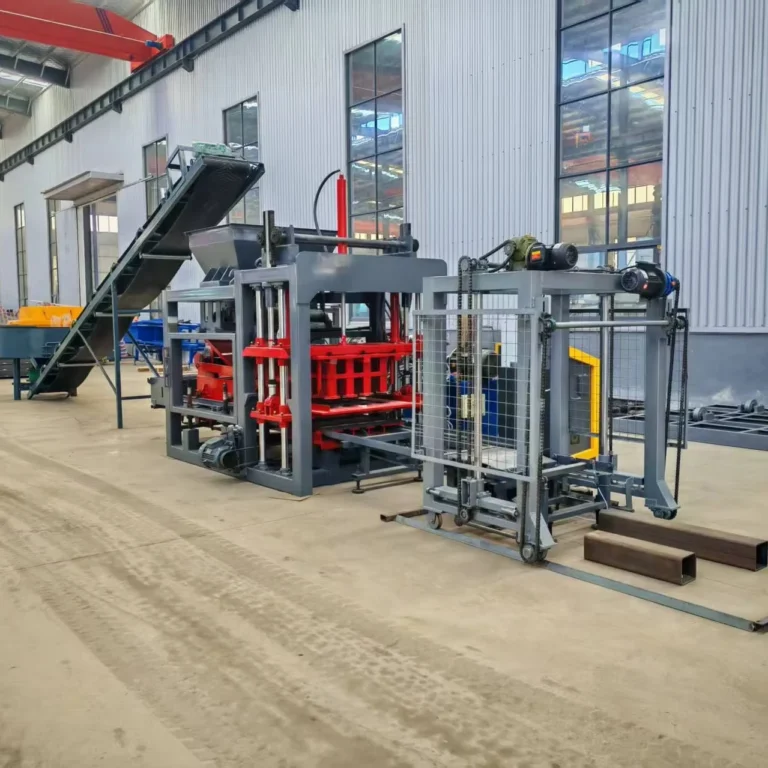
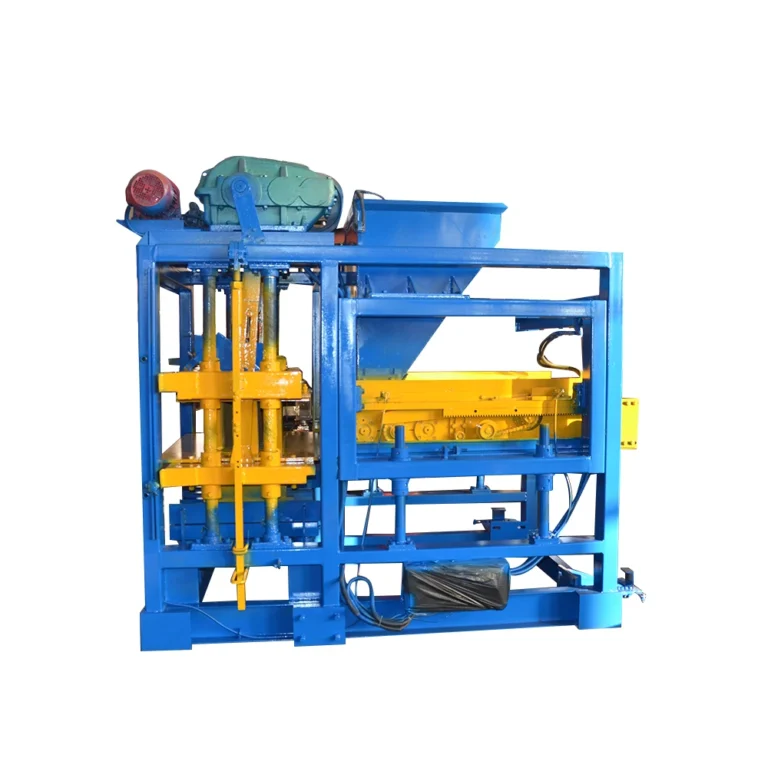
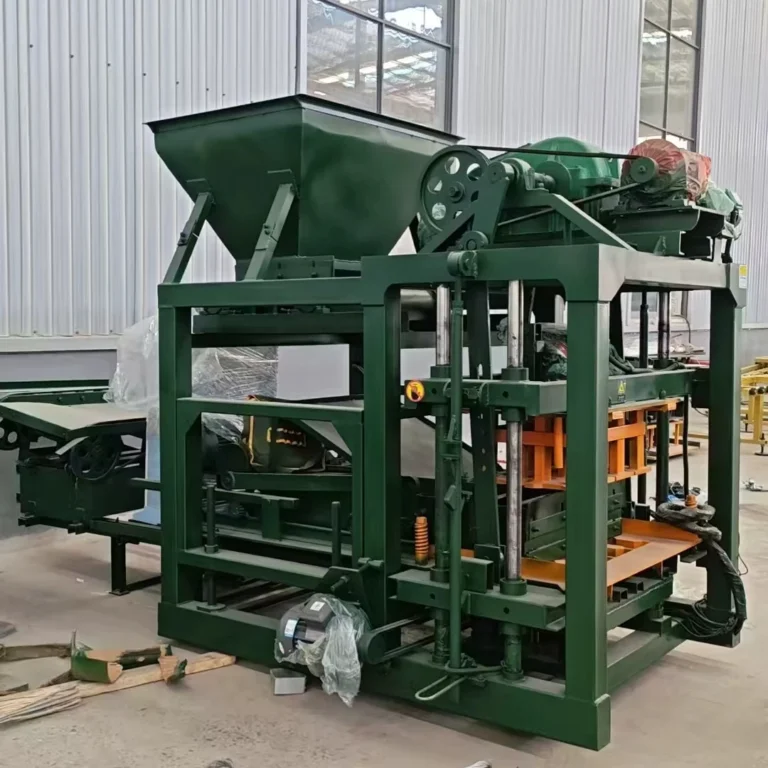
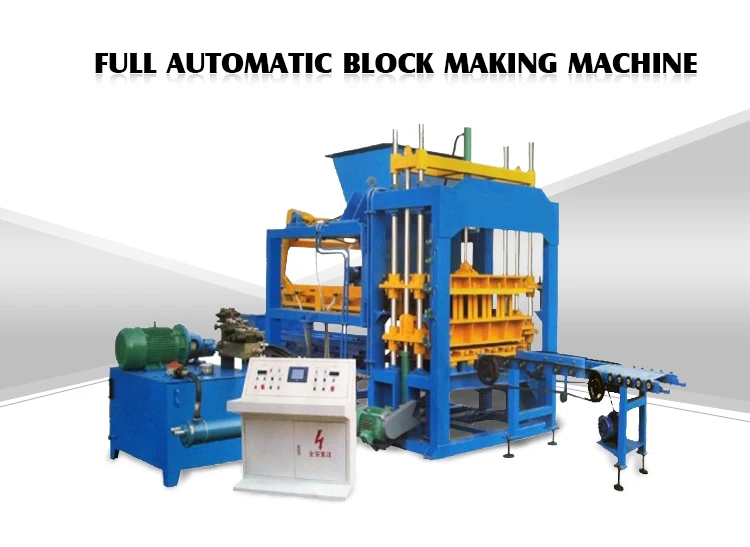
Single-focus block machinery design — the QT5-15 PLC control system manages cycle logic, vibration timing, and hydraulic demolding as one coordinated sequence rather than independent subsystems.
Technical Specifications
| Parameter | Value |
|---|---|
| Model | QT5-15 |
| Product Type | Fully Automatic Hydraulic Cement Brick Machine |
| Overall Dimension | 7400 × 1950 × 2800 mm |
| Rated Pressure | 21 MPa |
| Main Vibration Form | Platform Vibration |
| Vibration Frequency | 2800 – 4500 r/min |
| Pallet Size | 1100 × 550 mm |
| Molding Cycle | 15 – 25 s (basis to be confirmed by block format and material) |
| Overall Power | 26.5 kW |
| Demolding Method | Hydraulic |
| Control System | PLC Engine Control System |
| Theoretical Capacity (Hollow brick 400×200×200 mm) | 5 pcs/mold, cycle 16–20 s, 1800 pcs/hour |
| Theoretical Capacity (Hollow block 400×150×200 mm) | 6 pcs/mold, cycle 15–20 s, 1300 pcs/hour |
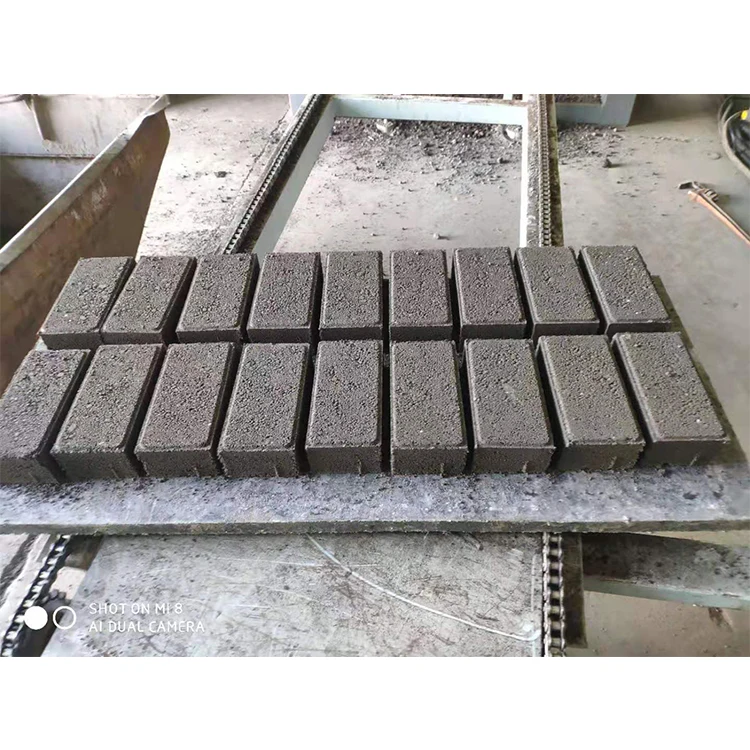
| Theoretical Capacity (S paver 225×112.5×60 mm) | 16 pcs/mold, cycle 15–17 s, 3700 pcs/hour |
| Assembly State | Stationary |
| Raw Materials | Crushed stone, sand, cement, dust, fly ash, gravel, slag |
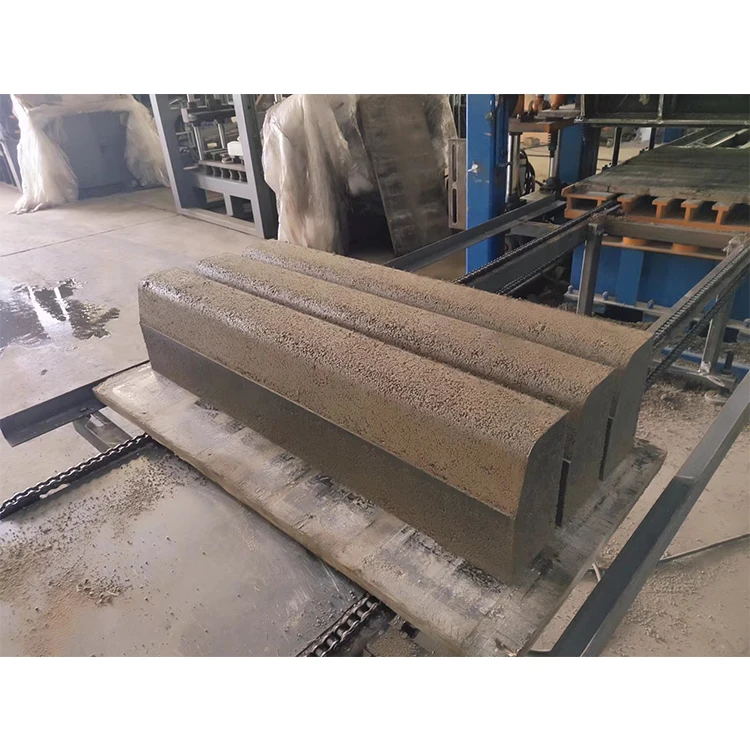
| Applied Products | Concrete blocks, hollow/solid blocks, pavers, interlocking blocks, curbstone, colored pavers |
| Warranty | One year (one set of spare parts included with shipment) |
Application Suitability
| Application | Material or Output |
|---|---|
| Hollow block production for commercial and residential walls | Crushed stone, sand, cement, fly ash blends |
| Solid block manufacturing for load-bearing structures | Gravel, sand, cement with high hydraulic pressure |
| Interlocking paver production for driveways and walkways | Fine aggregate, cement, pigment for colored faces |
| Curbstone and kerb production for road and pavement edges | Coarse aggregate, cement, slag-based mixes |
| On-site block production for housing and development projects | Locally sourced sand, gravel, and cement |
What the PLC Actually Controls — and What It Cannot Fix
Automation handles cycle timing, but vibration and pressure must still match your local material.
Many plant owners assume that switching to a PLC-controlled machine eliminates output inconsistency overnight. The reality on site is different. When the vibration frequency and hydraulic pressure are set to default catalogue values, blocks made from local red soil or high-fines aggregate come out weaker than expected. I spent three days on a site in West Africa re-tuning parameters because the standard settings simply did not work with the customer’s material blend [NEED_CITE: impact of aggregate gradation on block compressive strength]. The automatic QT5-15 block machine PLC controlled system manages the sequence, but the physical parameters feeding that sequence still require proper commissioning against your actual mix design.
How the PLC Coordinates Each Production Cycle
The PLC engine control system sequences raw material feeding, vibration onset and duration, hydraulic pressure application, and demolding into one continuous loop. When a cycle completes, the system triggers pallet ejection and advances the next pallet into position. This removes the timing variability that occurs when operators manually control each step. The automatic QT5-15 block machine PLC controlled logic also logs fault codes when a sensor detects a pallet misalignment or a hydraulic pressure drop, alerting the operator before a full batch is lost.
Remote Diagnostics and Upgrade Path from Semi-Automatic
For plants currently running semi-automatic lines, the transition involves more than swapping the control panel. The PLC integrates with automatic pallet feeding and stacking modules so the press is never left idle waiting for manual pallet handling. Remote diagnostic capability allows parameter adjustments and fault review without a technician on site, which matters when your nearest specialist is a flight away [NEED_CITE: remote PLC diagnostics adoption in emerging-market block plants]. The system supports language configuration on the HMI display, confirmed before shipment so operators are not reading error messages in an unfamiliar script on day one.
Reading the Specs That Actually Determine Daily Output
The 21 MPa rated pressure works together with the platform vibration at 2800–4500 r/min to compact the mix into the mould cavity. Higher vibration frequency is not always better — fine aggregates need lower frequency with longer duration, while coarse gravel requires higher frequency to settle densely. The 1100 × 550 mm pallet size determines how many blocks fit per cycle and must align with your existing curing racks and forklift capacity. The 15–25 second molding cycle range reflects different block formats: a 400 × 200 × 200 mm hollow brick at 5 pcs per mold runs at a different cycle than a paver mold with 16 pcs per cycle. Understanding this relationship prevents the common mistake of sizing your plant around a single capacity number that does not apply to the format you actually sell [NEED_CITE: cycle time variation across block formats in hydraulic press operations].
When Automation Hides a Deeper Configuration Problem
A PLC can execute a perfect cycle, but if the machine was configured for a mix you cannot source locally, the consistency it delivers is consistently wrong. Pallet handling and stacking left out of the original quotation mean your output still piles up on the floor waiting for manual labor. I have seen plants where the mould change was supposed to take minutes but required tools and adjustments that consumed an entire shift — effectively cancelling the format flexibility the buyer paid for [NEED_CITE: hidden cost of incompatible mould change systems in block production]. Voltage and frequency confirmed too late delay commissioning by weeks, leaving a new machine sitting in a crate while a project deadline passes.
Why This Machine Is Specified as a System
The QT5-15 is not sold as a standalone press. Machine, mould, pallet, and handling equipment are specified as one matched system, so cycle times across stations align and the press is never waiting on upstream or downstream delays. Configuration is set against the buyer’s actual mix design and target block format, not pulled from a catalogue default. Mould design covers the formats the buyer’s market actually sells, with custom drawings available when standard options do not match. The automation level is selectable — a buyer can start with semi-automatic pallet handling and upgrade to full stacking and cubing as production volume justifies it. Installation includes on-site commissioning and operator training so the PLC parameters are tuned before the first production run.
Documentation & Verification
- Line layout with capacity calculation per block format, not a single generic figure
- PLC display language and voltage confirmation documented before production begins
- Hydraulic and electrical schematic provided for local maintenance team reference
- Mould drawing and format list matching the pallet size and block dimensions specified
- Factory test record on your mix design before dispatch from the workshop
Installation, Commissioning & Support
- Foundation must support the 7400 × 1950 mm footprint and dynamic vibration loads
- Dedicated power circuit rated for 26.5 kW overall power at confirmed voltage and frequency
- Machine arrives in dismantled state with assembly guided by hydraulic and electrical schematics
- PLC parameters tuned on site against local aggregate during commissioning and first production runs
- Operator training covers HMI navigation, fault code response, and mould change procedure
- Wear parts list and one set of spare parts shipped with the machine for first replacement cycle
What We Need to Size Your Line Correctly
Tell us which block formats your market buys and the daily volume you need for each. Share your local raw material source — the type of sand, aggregate, or industrial by-product you plan to use — so vibration and pressure settings start from a realistic baseline. Confirm your site voltage, frequency, and preferred PLC display language so commissioning is not delayed after arrival.
Frequently Asked Questions
Q: How is the QT5-15 capacity verified, and what block format is each output figure based on?
A: Every capacity figure we quote states the exact block format, mold cavity count, and cycle time it assumes. For example, 1800 pieces per hour is based on 400×200×200 mm hollow bricks at 5 pcs per mold with a 16–20 second cycle. If your primary product is a different format, we recalculate against that specific mold and provide a revised daily output estimate before you commit.
Q: What PLC language and voltage options are confirmed before the machine ships?
A: We confirm HMI display language, operating voltage, and frequency during the order stage — not after the machine arrives. This avoids the situation where operators cannot read fault codes or the electrical panel does not match local supply standards. The confirmation is documented in writing and included in the shipment documentation package.
Q: Can I start semi-automatic and upgrade to full automation later?
A: Yes. The QT5-15 platform supports starting with manual or semi-automatic pallet handling and adding automatic pallet feeding, stacking, and cubing modules as production volume grows. The PLC architecture accommodates these additions without replacing the core control system, so the upgrade path does not require a new machine.
Q: How are vibration frequency and hydraulic pressure matched to my local material?
A: Before final configuration, we review your local aggregate type, gradation, and cement ratio. Vibration frequency within the 2800–4500 r/min range and hydraulic pressure are then set to suit that specific mix. Fine materials like fly ash blends need different settings than coarse gravel, and getting this right at commissioning prevents weak blocks and inconsistent density.