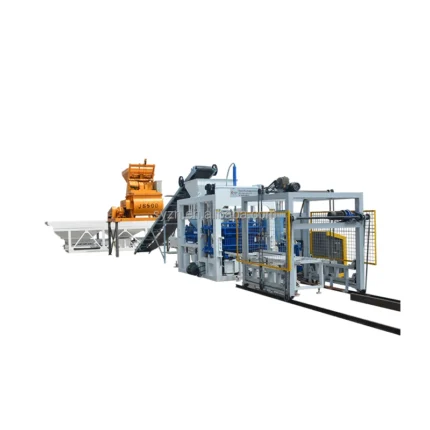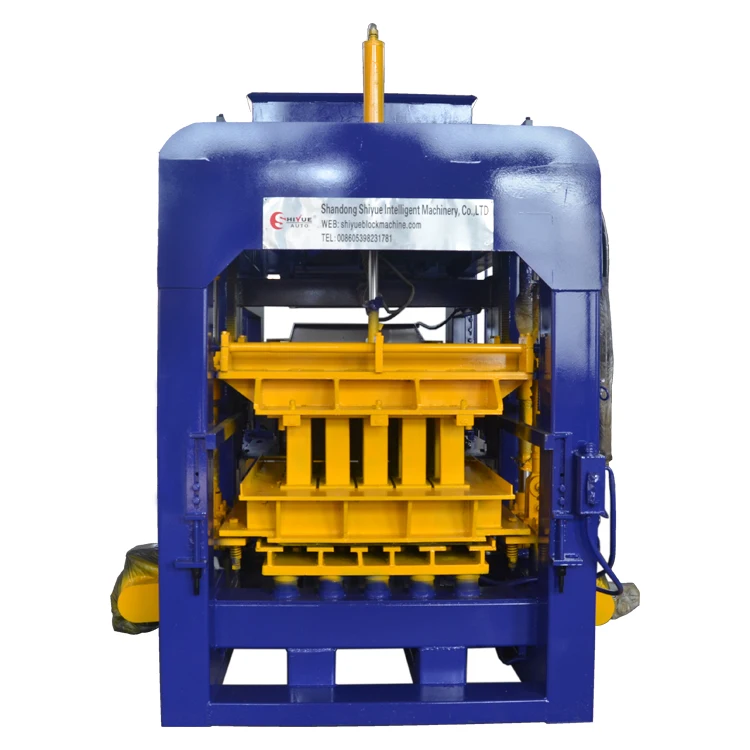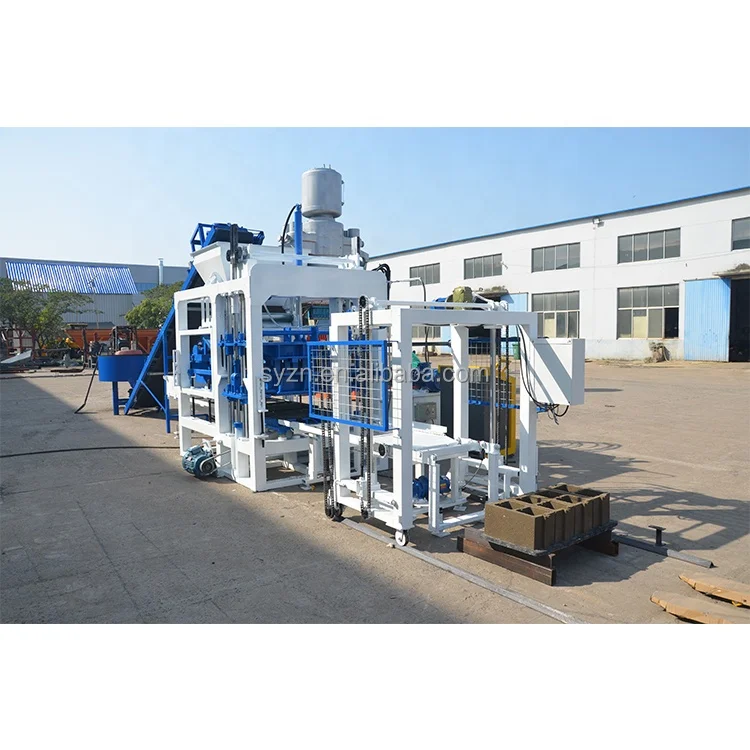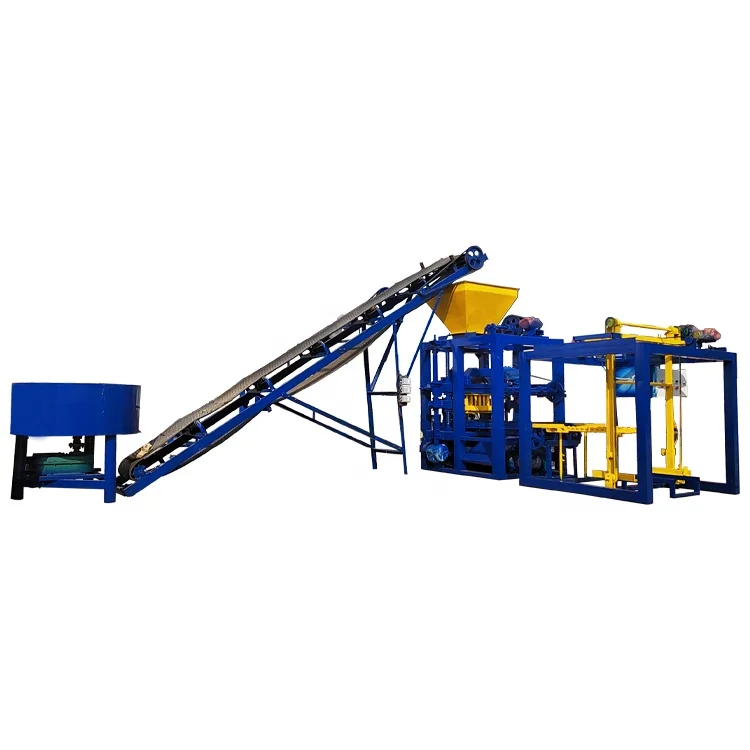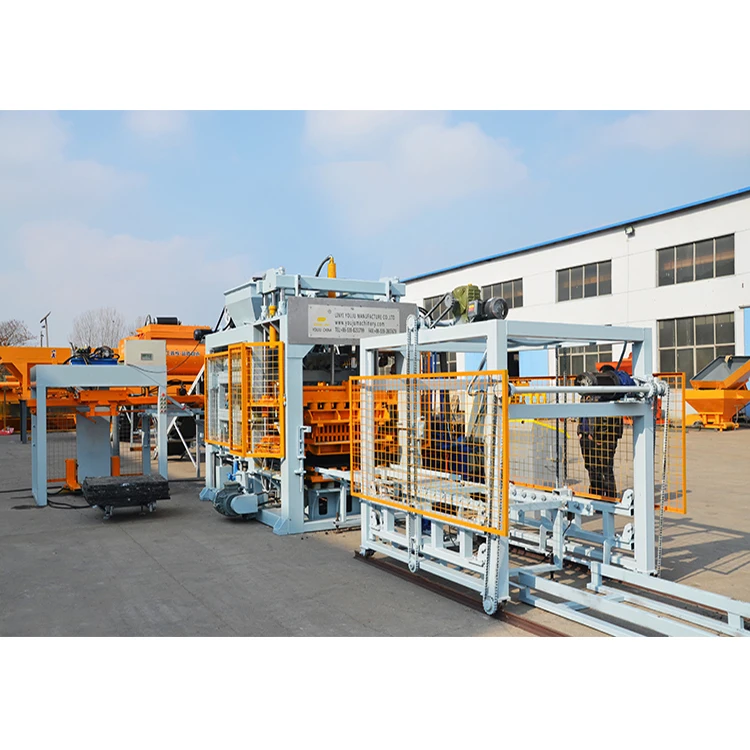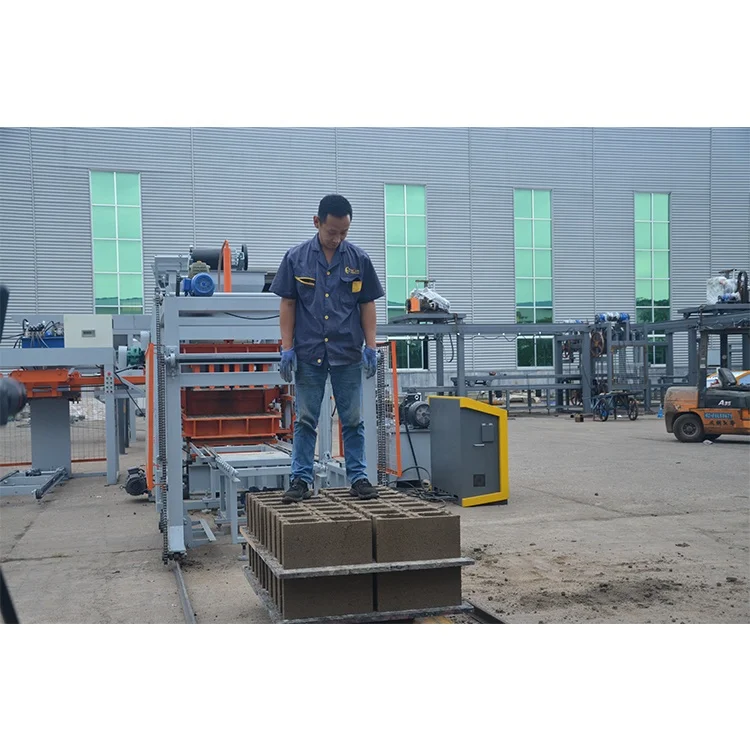
Description
Integrated System Matching — the QT6-15 is specified as a complete pressing, pallet, and control unit rather than a standalone press, so PLC logic, hydraulic station, and vibration platform are tuned together before it reaches your floor.
Technical Specifications
| Parameter | Value |
|---|---|
| Model | QT6-15 |
| Product Type | Automatic Hydraulic Block Making Machine |
| Overall Dimensions (L×W×H) | 8200 × 1700 × 2950 mm |
| Total Mass | 7 T |
| Overall Power | 37 kW |
| Vibration Form | Platform Vibration |
| Vibration Frequency Range | 0–60 Hz |
| Vibration Force | 45 kN |
| Moulding Mode | Automatic loading, vibration moulding |
| Demolding Method | Hydraulic |
| Pallet Size | 880 × 850 mm |
| Molding Cycle | 15–20 s (basis not stated in source — confirm block format and mix) |
| Control System | PLC with touch-screen HMI, fault diagnosis, action interlock logic |
| Hydraulic System | Independent integrated hydraulic station |
| Compressive Strength of Blocks | ≥15 MPa |
| Recommended Factory Area | 1200 m² |
| Output: Hollow Block 400×200×200 mm | 8,640–11,520 pcs / 8 hr (6 pcs/mould, 15–20 s cycle) |
| Output: Hollow Block 400×150×200 mm | 11,520–15,360 pcs / 8 hr (8 pcs/mould, 15–20 s cycle) |
| Output: Solid Brick 240×115×53 mm | 46,080–61,440 pcs / 8 hr (32 pcs/mould, 15–20 s cycle) |
| Output: Rectangular Paver 200×100×60 mm | 17,280–23,040 pcs / 8 hr (21 pcs/mould, 20–25 s cycle) |
| Output: Zigzag Paver 225×112.5×60 mm | 17,280–23,040 pcs / 8 hr (15 pcs/mould, 20–25 s cycle) |
| Automation Level | High — PLC controlled, automatic process, fault diagnosis |
| Voltage & Frequency | Configurable to buyer’s site supply (confirm before production) |
| PLC Display Language | Configurable (confirm before shipment) |
| Standards | CE declaration where applicable |
| Warranty | 1 year (excluding spare parts) |
Application Suitability
| Application | Material or Output |
|---|---|
| Hollow block production for masonry walls | Waste ash, slag, and cement-based mixes on 880×850 mm pallets |
| Solid brick production for load-bearing structures | Cement-aggregate blends requiring ≥15 MPa compressive strength |
| Rectangular and zigzag paver production | High-density concrete mixes for pedestrian and vehicular paving |
| Interlocking brick production | Custom mould formats matched to local market demand |
Why the Control Language Must Be Locked Before the Crate Is Sealed
An automatic PLC controlled block making machine is only as automatic as the operator’s ability to read its screen.
I spent most of a commissioning week in West Africa standing in front of a touch-screen HMI that displayed fault codes in a language the local team could not read. The PLC was doing its job perfectly — diagnosing interlock violations, flagging sensor faults — but every alarm required a phone call to interpret. The automatic PLC controlled block making machine sat idle while we arranged translation. That delay was entirely preventable with a single confirmation step before the machine left the factory floor. Voltage mismatches and unconfirmed display languages remain the most common reasons an intelligent press fails to run on day one [NEED_CITE: common commissioning delays in export machinery].
How the PLC Removes Guesswork From Every Shift
The QT6-15 stores process parameters — vibration frequency, hydraulic pressure, cycle timing — per block format directly in the PLC. When an operator switches from hollow blocks to pavers, the touch-screen HMI recalls the stored recipe rather than relying on manual dial-in. This is the core advantage of an automatic PLC controlled block making machine: the settings that produced consistent blocks on Monday morning are the same settings running Friday afternoon, regardless of who is at the controls.
Fault Diagnosis That Catches Problems Before the Pallet Does
The built-in fault diagnosis system monitors interlock logic across the moulding sequence. If a pallet is misaligned or a hydraulic pressure threshold is not met, the PLC halts the cycle and displays the specific fault rather than allowing a defective block to continue down the line. On sites where I have worked, this interlock logic has prevented entire batches of undersized or poorly compacted blocks from reaching the curing area, which is where the cost of a bad batch truly multiplies.
Reading the Specifications That Actually Determine Block Quality
The 45 kN vibration force and 0–60 Hz adjustable frequency work together with the independent hydraulic station to compact the mix inside the mould cavity. Platform vibration transmits energy through the pallet into the material, and the frequency must match the aggregate size and mix stiffness — a coarser mix needs lower frequency and longer vibration, while a finer sand-cement mix responds to higher frequency. The independent hydraulic station is physically separated from the main vibration frame, which prevents dust and vibration from degrading valve seals and pressure consistency over extended production runs. A pallet size of 880 × 850 mm defines the mould footprint and must align with the curing racks and forklifts already on site [NEED_CITE: pallet sizing and curing area logistics in block plants].
The Cost of Configuring Automation Without Confirming the Details
A buyer who specifies an intelligent control system but leaves the PLC language, voltage, or frequency unconfirmed will find that the automation they paid for cannot function until those parameters are corrected on site. The touch-screen HMI becomes a barrier instead of an aid, and the fault diagnosis system generates alerts that no one can act on. I have seen commissioning schedules stretch by days because a single electrical parameter was assumed rather than confirmed in writing before production began [NEED_CITE: electrical specification verification in international machinery trade].
Why Buyers Source This Machine Here
Block machinery is the single focus of this operation, so the QT6-15 is not assembled from unrelated supplier components — the press, mould, pallet, and PLC are specified as one matched system. Configuration is set against your actual mix design and target block format rather than a catalogue default, which means the vibration and hydraulic parameters arrive tuned for your local aggregate. Mould design covers the formats your market actually sells, with custom drawings available when standard formats do not match. The automation level is selectable, allowing a buyer to start with the PLC-controlled press and add automatic stacking or cubing later. Installation support includes on-site commissioning with operator training so your team can run the fault diagnosis and recipe recall functions independently.
Documentation & Verification
- Machine specification sheet confirming PLC language, voltage, and frequency before dispatch
- Capacity calculation sheet stating the exact block format, cycle time, and pallet size assumed
- Hydraulic and electrical schematics matching the as-built configuration
- Factory test record on your target block format before shipment
- Operation and maintenance manual covering fault diagnosis codes and interlock logic
- Mould drawing and format list with changeover procedure
Installation, Commissioning & Support
- 1200 m² recommended factory area with level concrete floor rated for 7 T static load
- 37 kW total power requiring a dedicated three-phase circuit at confirmed voltage and frequency
- Machine ships dismantled for container loading and reassembled on your foundation
- PLC language and HMI display confirmed in writing before production begins
- On-site commissioning includes PLC recipe setup for each target block format
- Operator training covers fault diagnosis response and mould change procedure
What to Prepare Before Requesting a Quote
Send the exact block formats you intend to produce, including dimensions and target compressive strength, along with your local aggregate type and cement source. Confirm the voltage, frequency, and PLC display language required at your site. Provide the dimensions of your curing area and the pallet handling equipment you already operate so the 880 × 850 mm pallet configuration can be verified against your existing layout.
Frequently Asked Questions
Q: How does the PLC store and recall process parameters for different block formats?
A: The QT6-15 PLC saves vibration frequency, hydraulic pressure, and cycle timing for each mould format. When the operator selects a format on the touch-screen HMI, the system loads the stored recipe automatically, eliminating manual parameter entry between production runs.
Q: What does the fault diagnosis system detect, and how does it alert the operator?
A: The system monitors interlock logic across pallet positioning, hydraulic pressure thresholds, and mould alignment. When a fault is detected, the PLC halts the cycle and displays the specific error on the HMI screen in the confirmed language, preventing defective output from continuing.
Q: Can the automation level be upgraded later?
A: The QT6-15 PLC architecture supports integration with automatic pallet feeding, stacking, and cubing systems added after initial installation. The control system can be expanded to manage these additional stations without replacing the core press controller.
Q: How are vibration frequency and hydraulic pressure matched to my local aggregate?
A: Before production, the configuration is set based on your specific mix design and aggregate characteristics. The 0–60 Hz vibration range and 45 kN force are adjusted so that compaction energy matches your material stiffness and target block density.
Q: What PLC display languages are available, and how is language confirmed before shipment?
A: The HMI supports multiple display languages configurable during production. Language is confirmed in writing during the sales process and verified during factory testing, so the operator interface arrives ready to use on day one.