

Description
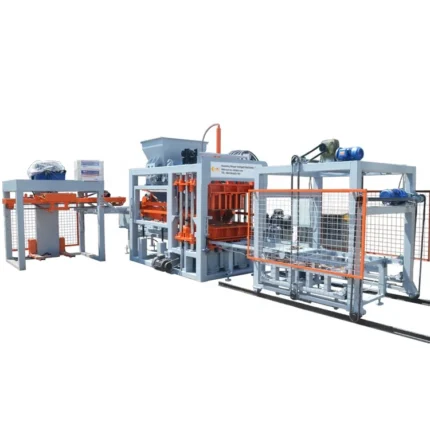
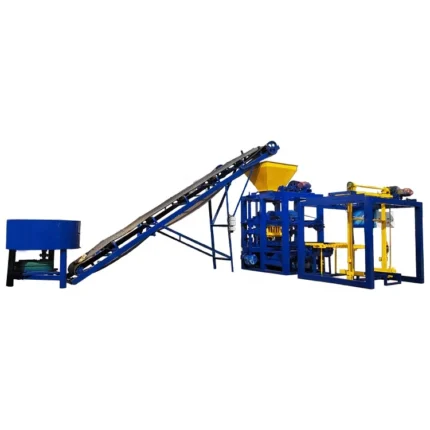
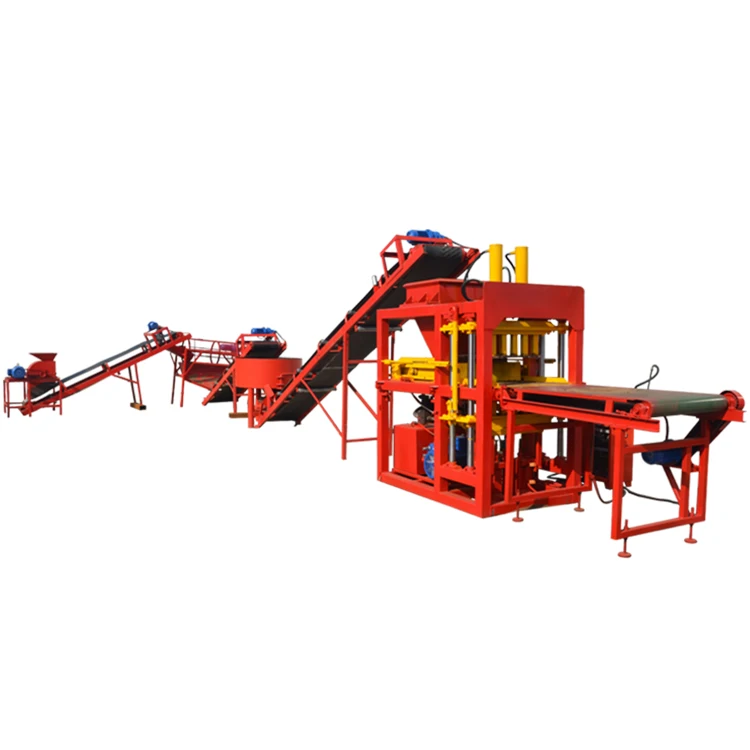
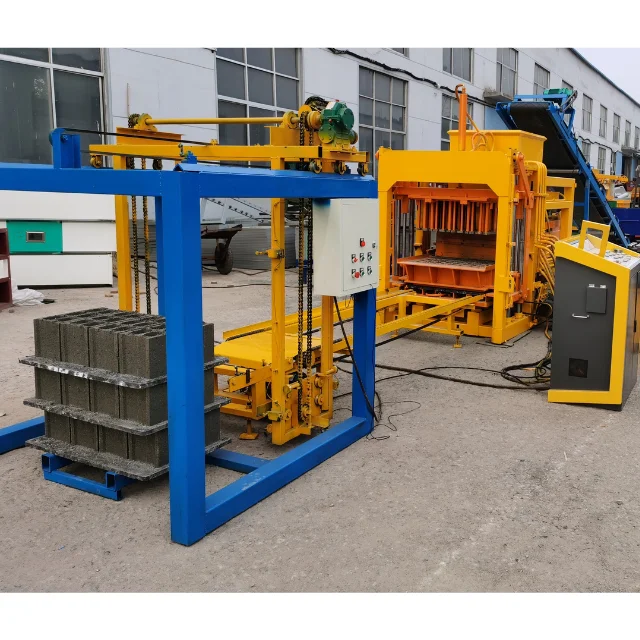
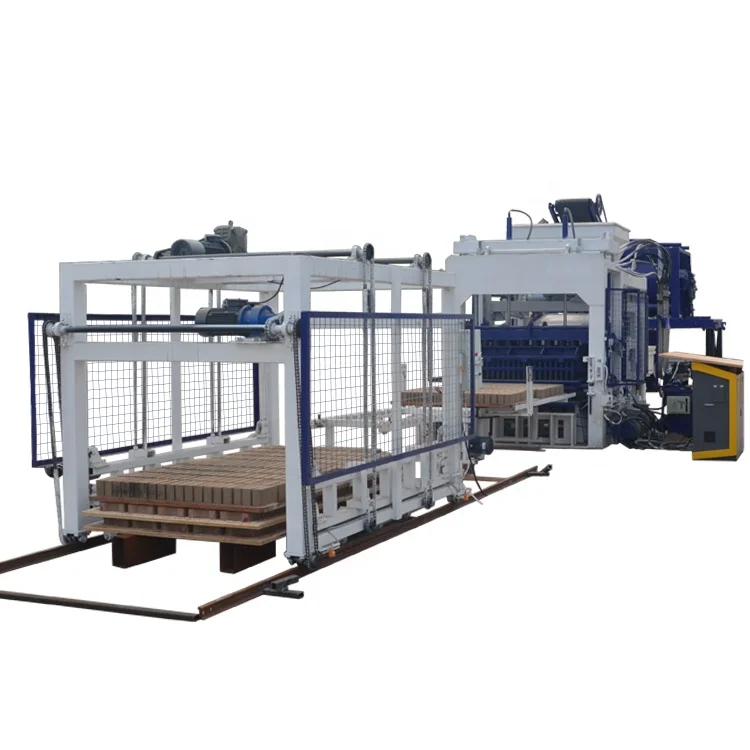
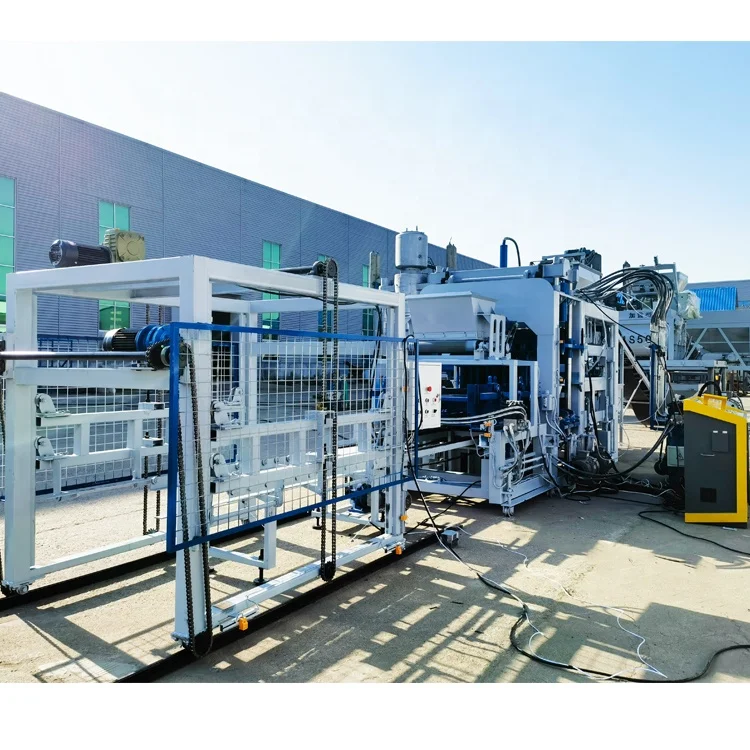
Matched System Configuration — The QT8-15 automatic hydraulic concrete block making machine is specified as a complete coordinated line, ensuring the PLC control, hydraulic station, pallet feeder, and block conveyor operate in sync without upstream or downstream bottlenecks.
Technical Specifications
| Parameter | Value |
|---|---|
| Model | QT8-15 |
| Product Type | Automatic Hydraulic Concrete Block Making Machine |
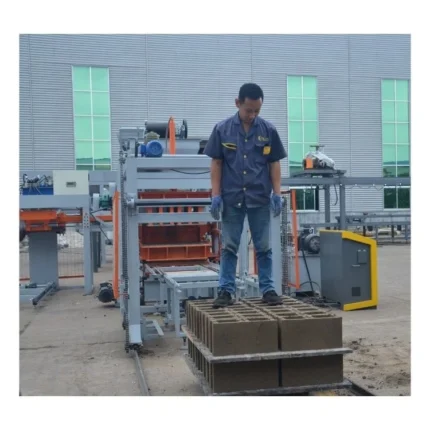
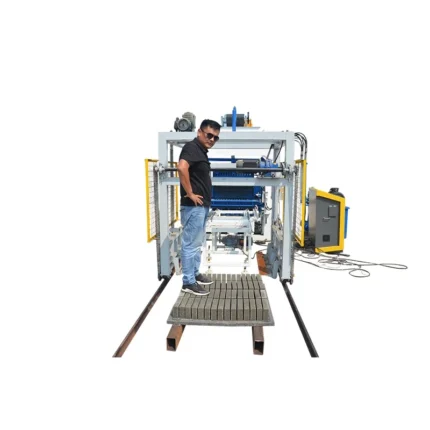
| Overall Dimensions (L×W×H) | 8300×1860×3000 mm |
| Molding Cycle | 15-20s (basis not stated in source — confirm block format / material / thickness) |
| Vibration Force | 55 kN |
| Rated Power | 37.2 kW |
| Mixer Model | JS750 |
| Pallet Size | 1020×900 mm |
| Net Weight | 8 T |
| Control System | PLC control system |
| Applied Products | Paver, solid block, hollow block, curbstone |
| Automation Level | Automatic (hydraulic station, pallet feeder, material feeder, block conveyor) |
| Hydraulic System | High-pressure hydraulic station |
Application Suitability
| Application | Material or Output |
|---|---|
| Hollow Block Production | Crushed stones, sand, cement, fly ash |
| Paving Block Manufacturing | High-density concrete mixes for heavy-duty surfaces |
| Solid Block & Curbstone | Standard concrete aggregates for structural and infrastructure use |
| Building Material Plants | Automated production lines requiring consistent batch-to-batch quality |
What "15-20s Molding Cycle" Leaves Out
The quoted cycle time is a mechanical baseline, not a guaranteed daily output.
Many buyers look at the QT8-15 automatic hydraulic block making machine PLC controlled and see a fast cycle, but forget that the total time includes material feeding, vibration, hydraulic pressing, and pallet movement. If the local aggregate requires a longer vibration phase to achieve the necessary density, or if the pallet feeder cannot keep up with the press, the actual output will differ significantly from the theoretical maximum [NEED_CITE: concrete block production cycle time variables].
Coordinated PLC Logic for Consistent Cycles
The PLC control system manages the entire sequence from material feeding to block conveying. In my experience with similar hydraulic stations, the ability to fine-tune the delay between the vibration start and the hydraulic pressure application is what separates a standard block from a high-strength paver. This machine allows for that level of programmatic adjustment, ensuring the 55 kN vibration force is used effectively across different formats.
The Automation Upgrade Path
Starting with the base automatic configuration—which includes the pallet feeder and block conveyor—allows a plant to reduce manual handling immediately. The system is designed so that additional modules like automatic stacking or cubing can be integrated later. This is essential for buyers who want to manage initial investment while keeping the door open for future expansion of the plant’s automation level [NEED_CITE: automation integration in block manufacturing].
Engineering the Hydraulic and Vibration Match
The 55 kN vibration force must be precisely matched with the hydraulic pressure to compact the mix design properly. If the pressure is too high relative to the vibration, the concrete can become "locked" and fail to fill the mould corners, especially on complex curbstone shapes. Conversely, insufficient pressure leads to low-density blocks that crack during curing. The QT8-15 provides a high-pressure station that, when correctly calibrated to the JS750 mixer’s output, ensures structural integrity. Furthermore, the 1020×900 mm pallet size is a standard that must be verified against the buyer’s existing curing racks and forklift dimensions to prevent logistical issues on the factory floor.
The Cost of Mismatched Plant Utilities
One of the most common reasons for commissioning delays is the failure to confirm the PLC display language and the exact voltage/frequency of the target site. A machine wired for a 50Hz environment running on 60Hz power will see its hydraulic pump and vibration motors operating at different RPMs, fundamentally altering the molding cycle and potentially damaging the equipment [NEED_CITE: industrial voltage and frequency compatibility].
Sourcing Based on Technical Alignment
We focus on block machinery as a single discipline, meaning the QT8-15 is not an assembled collection of parts but a matched system. We configure the machine against your actual mix design and local aggregate rather than a catalogue default. Our documentation includes specific mould drawings and a format list that reflects the products your market actually sells. We also provide a clear upgrade path from semi-automatic to fully automatic operation, ensuring your equipment remains relevant as your production needs grow.
Documentation & Verification
- Line layout and capacity calculation stating the specific block format assumed for the cycle time.
- Hydraulic and electrical schematics for integration with existing plant utilities and maintenance.
- Mould drawing and format list detailing dimensions for hollow, solid, paver, and curbstone.
- Voltage, frequency, and PLC display language confirmation sheet signed before production.
- Factory test record using a simulated mix design to verify cycle coordination.
Installation, Commissioning & Support
- Foundation requirements for the 8300×1860×3000 mm footprint and 8 T operating weight.
- Electrical setup for the 37.2 kW rated power, including dedicated circuit breakers for the hydraulic station.
- Calibration of the JS750 mixer discharge timing with the QT8-15 material feeder to prevent overflow.
- On-site training for PLC parameter adjustment to match local aggregate moisture content.
- Wear parts list focusing on hydraulic seals and vibration motor mounts for first-year maintenance.
- Mould change procedure guidance to minimize downtime during format switches.
Project Configuration Inquiry
To provide an accurate proposal for the QT8-15, we require details on your target block formats and the specific local raw materials you intend to use. Please share your site’s voltage specifications and the dimensions of your existing curing area to ensure the 1020×900 mm pallets are compatible with your logistics.
Frequently Asked Questions
Q: How is the 15-20s molding cycle verified per block format?
A: The 15-20s range is a mechanical baseline. We verify the actual cycle time for each format—such as a 400×200×200mm hollow block versus a thinner paver—during the factory test. This ensures the PLC program is adjusted for the specific material feeding and vibration duration required to achieve the target strength for your specific product range.
Q: What automation modules can be added after initial installation?
A: The QT8-15 base line includes the pallet feeder and block conveyor. You can later add an automatic stacker or a cubing system to the end of the line. The PLC architecture is designed to accept these additional I/O modules without requiring a full replacement of the primary control unit, protecting your initial investment.
Q: How are voltage and PLC language confirmed for the target market?
A: Before production begins, we issue a technical confirmation sheet that locks in the voltage, frequency, and the required language for the HMI display. This prevents the common issue of machines arriving on-site with incompatible electrical components or interfaces that local operators cannot read, ensuring a smooth commissioning process.
Q: What is the mould change procedure and how long does it take?
A: The QT8-15 uses a standardized mould mounting system. While the exact time depends on the operator’s familiarity and the complexity of the specific mould, the design allows for format switching within a single shift. We provide detailed mechanical drawings and training to ensure your team can perform these changes safely and efficiently.
Q: Which spare parts and hydraulic wear items are included?
A: The initial shipment includes a wear parts kit focused on high-stress components like hydraulic seals, proximity sensors, and vibration motor mounts. We provide a comprehensive reorder list with lead times, ensuring you can maintain the 37.2 kW system and hydraulic station without extended downtime during the first year of operation.