

Description
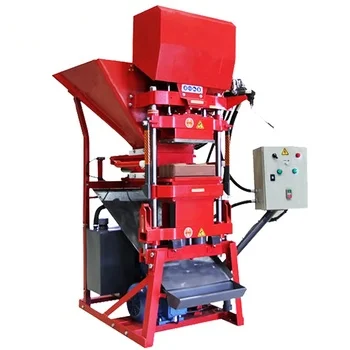
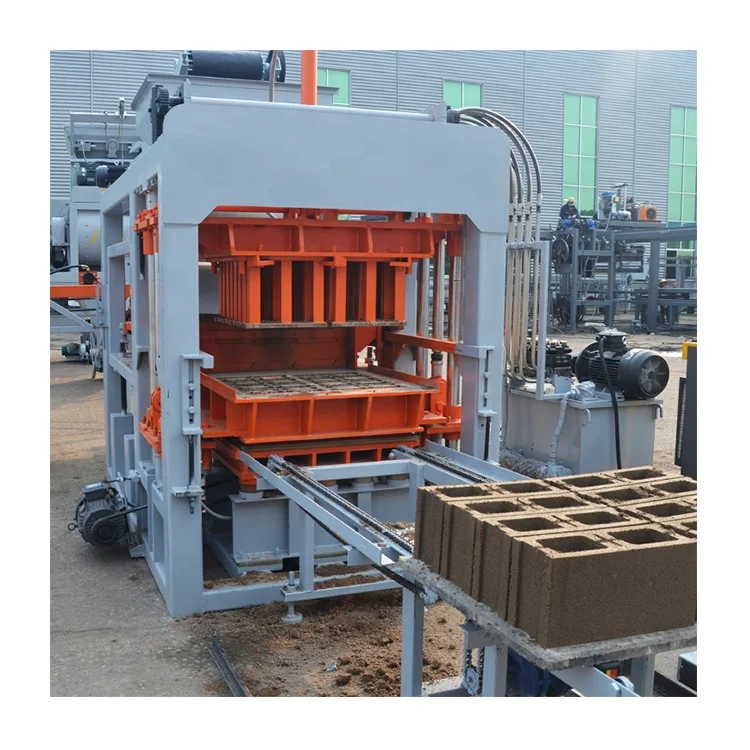
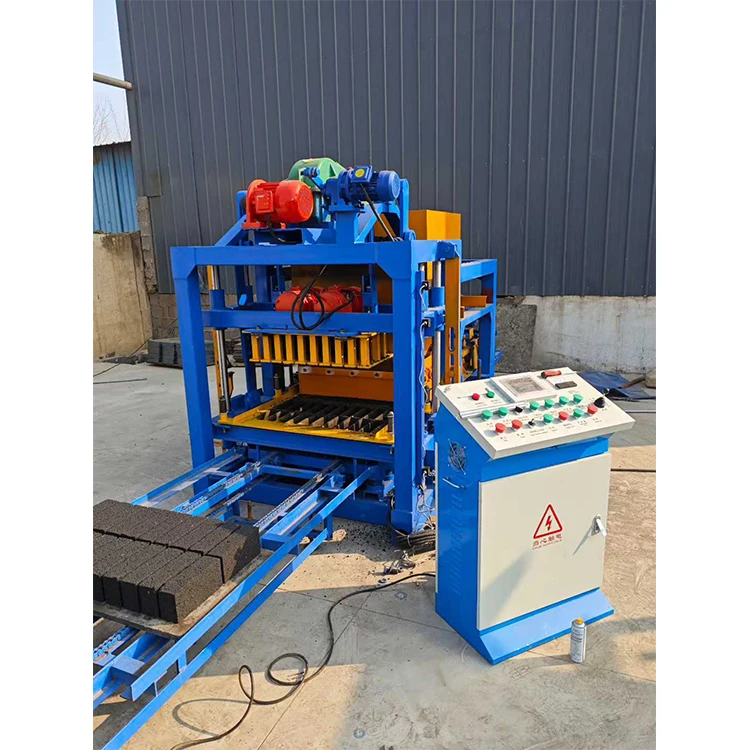
Automation that fits your plant — the QTJ4-25 is configured against your actual mix design, local aggregate, and target block format before shipment, so the PLC controlled automatic concrete block making machine arrives ready to run your specific product range without on-site guesswork.
Technical Specifications
| Parameter | Value |
|---|---|
| Model | QTJ4-25 |
| Product Type | Automatic Concrete Block Making Machine |
| Machine Power | 16.58 kW |
| Molding Cycle | 25 seconds (basis to be confirmed per block format) |
| Capacity | 4600 pcs/8hours (basis not stated in source — confirm block format, material, thickness) |
| Machine Weight | 5000 KGS |
| Overall Size | 6400×1500×2700 mm |
| Raw Materials | Concrete, sand, cement, fly ash, crushed stone, lime, water |
| Pallet Size | 850×480 mm |
| Voltage | Configurable to local voltage and frequency (confirm before production) |
| Control System | PLC controlled fully automatic |
| Vibration System | Vibration motor with large vibration box |
| Automation Level | Automatic pallet feeding, automatic material feeding and scraping, automatic block stacker |
| Motor Brand | Siemens motor |
| Frame Construction | Thick steel construction |
| Warranty | One year with free parts supply |
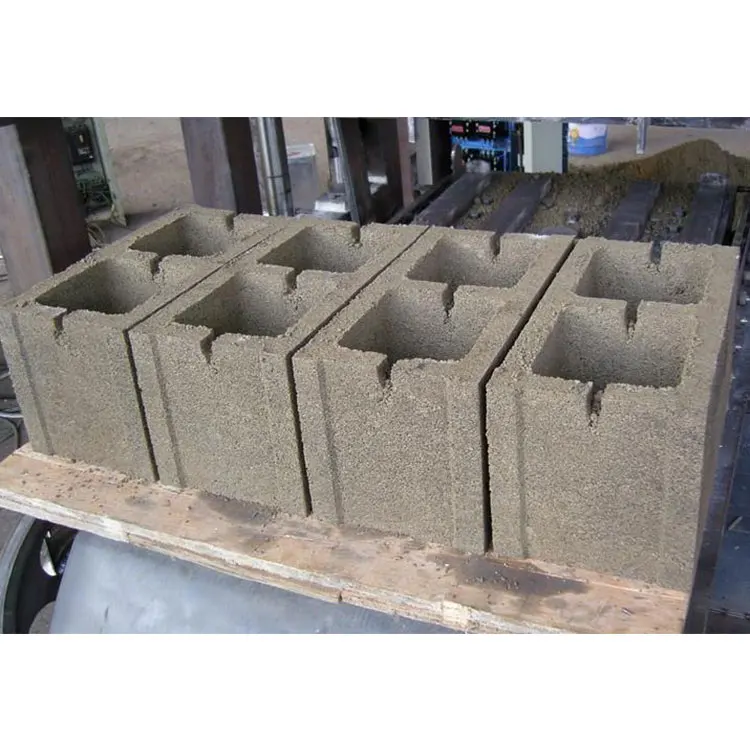
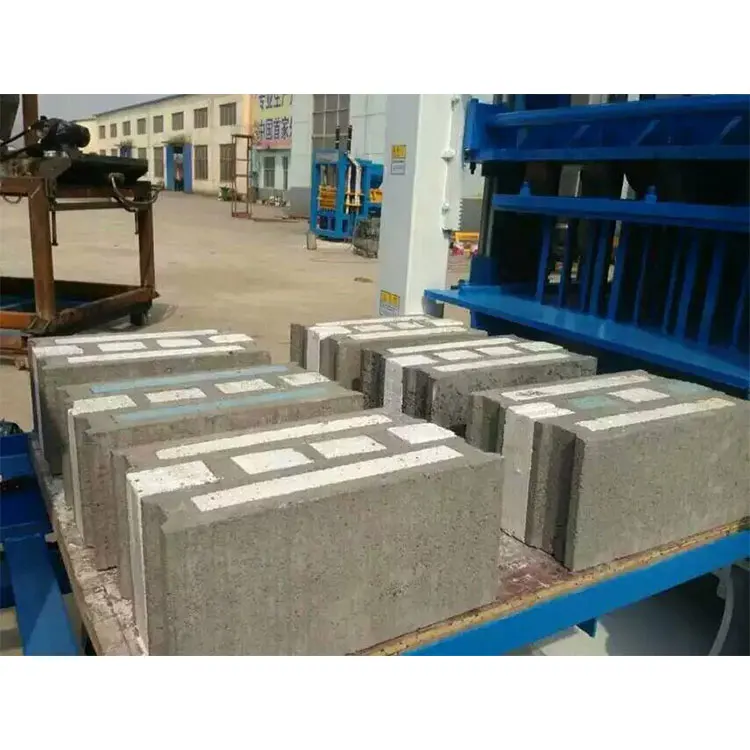
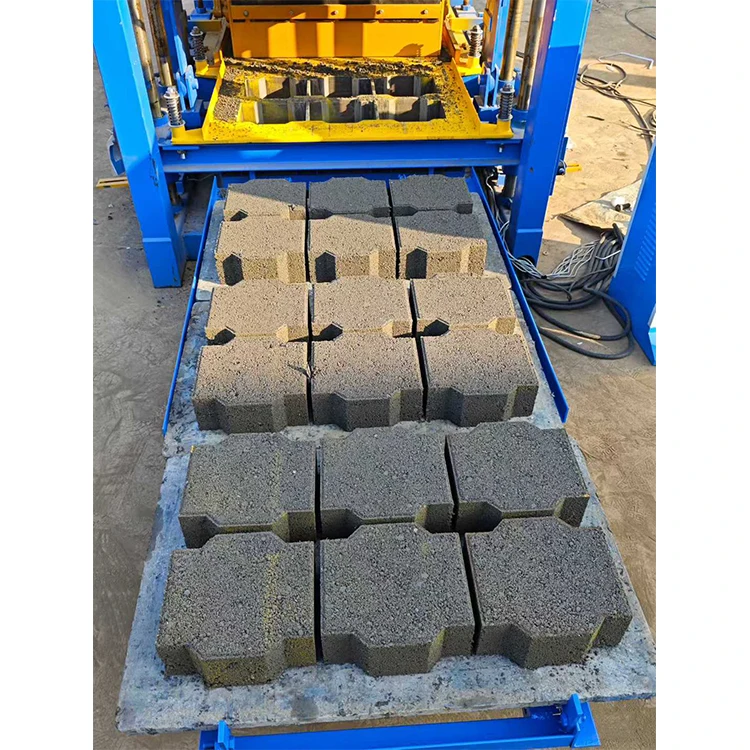
| Block Formats | Hollow blocks, solid blocks/bricks, paver stone bricks |
| Key Features | Fully automatic cycle from pallet feed to stacking, PLC interface language configurable |
Application Suitability
| Application | Material or Output |
|---|---|
| Hollow block production for masonry walls | Crushed stone, sand, cement mixes on 850×480 mm pallets |
| Solid brick manufacturing for load-bearing structures | Fly ash, cement, and lime blends |
| Paver stone production for walkways and driveways | High-density concrete with fine aggregate |
| Medium-scale factory mass production | Continuous 8-hour shifts with automatic pallet circulation |
| Format expansion for existing product lines | Mould swaps between hollow, solid, and paver profiles |
What the Automation Claim Actually Means on the Floor
The PLC controlled automatic concrete block making machine removes the operator from the pallet feed, material dosing, scraping, and stacking sequence — but only if every station is timed to the press cycle.
I remember a plant in Southeast Asia where the automatic stacker was three seconds slower than the press cycle. The press sat idle every fourth cycle waiting for the stacker to clear. The buyer paid for full automation but was effectively running at semi-automatic throughput. That mismatch between station speeds is something a catalogue spec sheet will never show you. The QTJ4-25 line is specified so pallet feeding, material delivery, and stacking all resolve within the 25-second molding window, keeping the press occupied rather than waiting. [NEED_CITE: station synchronization in block production lines]
Control Language and the Three-Day Delay
A few years ago I shipped a block machine to the Middle East. The PLC interface defaulted to Chinese characters. The on-site engineer stared at the screen and could not navigate the menu. Commissioning stalled for three full days while we pushed a language patch remotely. Since that job, I confirm the PLC display language with every buyer before the control panel leaves the factory. The QTJ4-25 PLC is loaded with your specified language — Arabic, Spanish, French, Russian, or English — so the first power-on is also the first productive shift.
Automatic Stacking That Fits Your Curing Yard
The block stacker on the QTJ4-25 places finished blocks onto racks in a pattern that matches your pallet size. This matters because your curing area and your forklift forks are built around a specific pallet dimension — in this case 850×480 mm. If the stacker outputs a bundle that is too wide for your existing racking, your crew ends up re-stacking by hand, which defeats the automation investment entirely. The stacking geometry is confirmed during the proposal stage so the cubes that leave the press match the slots in your curing racks [NEED_CITE: pallet and racking compatibility in block plant layout].
How Pressure, Vibration, and Mix Design Intersect
The QTJ4-25 pairs a vibration motor with a large vibration box, which distributes compaction force across the full 850×480 mm mould cavity. Vibration alone does not guarantee block density — the raw material mix must allow particle rearrangement under that specific vibration amplitude. A fly-ash-heavy mix responds differently than a crushed-stone-dominant mix. The 16.58 kW total machine power must deliver both vibration energy and hydraulic clamping simultaneously without voltage sag. When the machine is configured for your local aggregate before dispatch, the vibration profile and cycle duration are matched to produce consistent density across every block in the batch. Siemens motors provide stable torque delivery through thousands of daily cycles. [NEED_CITE: vibration compaction theory for concrete block production]
The Cost of Skipping the Voltage Conversation
I have seen buyers receive machines wired for 380V/50Hz when their facility runs on 440V/60Hz. The motors overheat within the first week. The PLC throws fault codes that the local electrician cannot diagnose. Rewinding motors and replacing control boards on site is far more disruptive than a ten-minute voltage confirmation call before production begins. The QTJ4-25 electrical system is built to your exact voltage and frequency once you confirm them, and the wiring diagram in the documentation package matches what arrives on the container [NEED_CITE: voltage and frequency standards by export market].
Why Buyers Specify Here
The QTJ4-25 is treated as one matched system — press, moulds, pallets, and handling equipment are specified together rather than sourced from separate vendors. The machine configuration starts from your local raw material samples and target block format, not a catalogue default. Automation level is selectable, so you can begin with automatic pallet feeding and stacking now and add cubing or remote diagnostics later. Installation includes operator training on your specific PLC interface. Mould design covers the formats your market actually sells, with custom drawings available when standard moulds do not match your product range.
Documentation & Verification
- Factory test record showing actual cycle time per block format on your pallet size
- PLC language confirmation signed off before control panel assembly
- Line layout drawing with capacity calculation stating the exact block format assumed
- Hydraulic and electrical schematic matching your confirmed voltage and frequency
- Mould drawing and format list for every block type included in your order
- Operation and maintenance manual with wear parts and mould replacement schedule
Installation, Commissioning & Support
- Foundation plan sized to the 5000 KGS machine weight and vibration load at full stroke
- Dedicated power circuit for the 16.58 kW total draw with voltage verified before connection
- Machine shipped in container-load sections with reassembly sequence documented
- First-run parameter setting on your local aggregate mix during on-site commissioning
- Operator training on the PLC interface in your confirmed display language
- Wear parts list covering vibration box components, hydraulic seals, and mould liners
Starting the Conversation
Before I can size the right configuration, I need to know which block format you sell the most of and what daily volume your market absorbs. Send a sample or lab report of your local aggregate — sand source, crushed stone grading, cement type — so I can match the vibration profile and cycle timing. Tell me your facility voltage and frequency, and which language your operators need on the PLC screen. If you already have curing racks and forklifts, share the pallet dimension they are built around so the stacker output matches your existing layout.
Frequently Asked Questions
Q: How is the 4600 pieces per 8 hours figure verified for my block format?
A: That capacity figure appears in the general specification without a stated block format. Before quotation, we run a capacity calculation that names the exact block type, mix design, and mould used. The factory test record then confirms the real cycle time and output for your specific product, so the number you plan against is tied to your actual production target.
Q: What PLC language and voltage will be set before the machine ships?
A: We confirm your facility voltage, frequency, and preferred PLC display language during the proposal stage. The control panel is programmed and wired accordingly before assembly. The electrical schematic in your documentation package reflects the exact configuration that arrives on site, preventing commissioning delays caused by language or voltage mismatches.
Q: How does the automatic stacker work with my current curing racks?
A: The stacker is configured around the 850×480 mm pallet size. During the proposal, we review your curing rack dimensions and forklift specifications so the stacked bundles fit directly into your existing layout. If your racking requires a different stacking pattern, the PLC program is adjusted before shipment to match.
Q: How long does a mould change take between hollow block and paver formats?
A: Mould change duration depends on the operator familiarity and whether quick-release hardware is specified. During commissioning and training, your team practices the swap procedure on the formats included in your order. The mould drawing package shows every bolt point and alignment pin so changeover follows a repeatable sequence.
Q: Can I add more automation stages to the line later?
A: The QTJ4-25 automation is modular. You can start with automatic pallet feeding, material dosing, and stacking, then integrate additional stations such as automatic cubing or remote diagnostic modules as your production volume grows. The PLC platform supports these additions without replacing the existing control hardware.