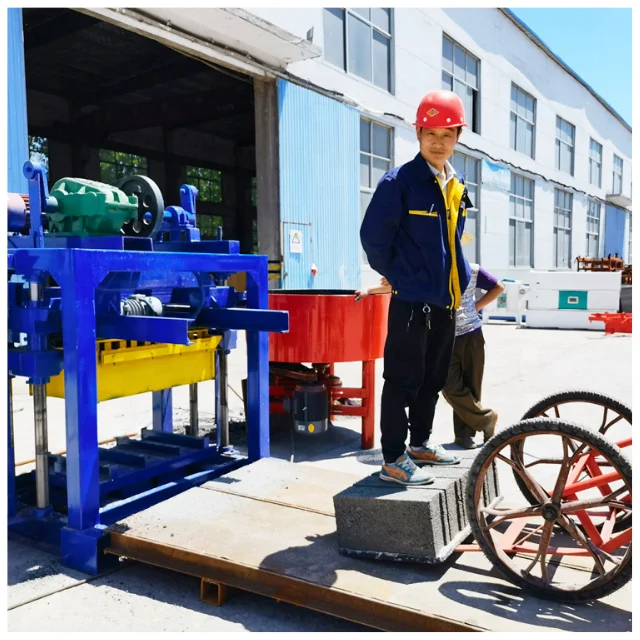
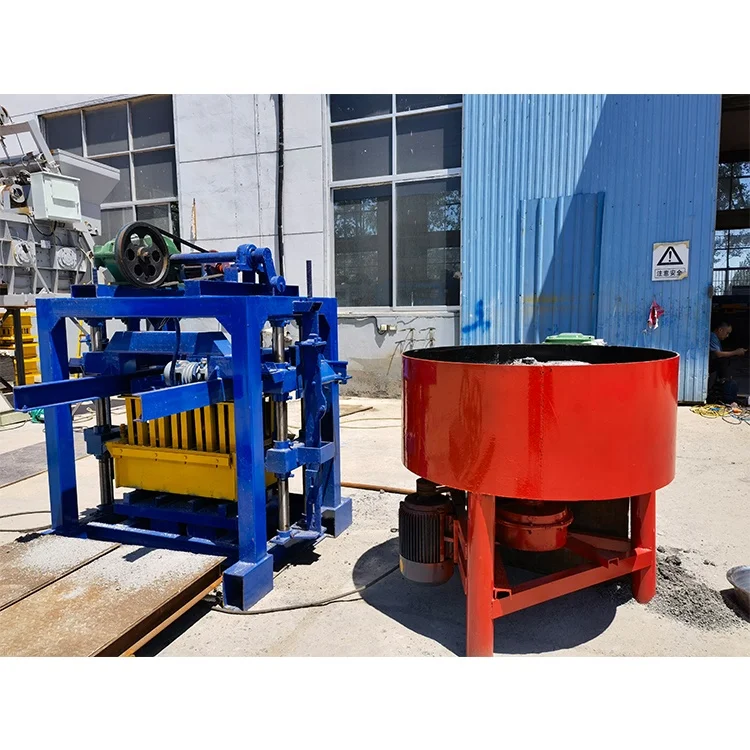
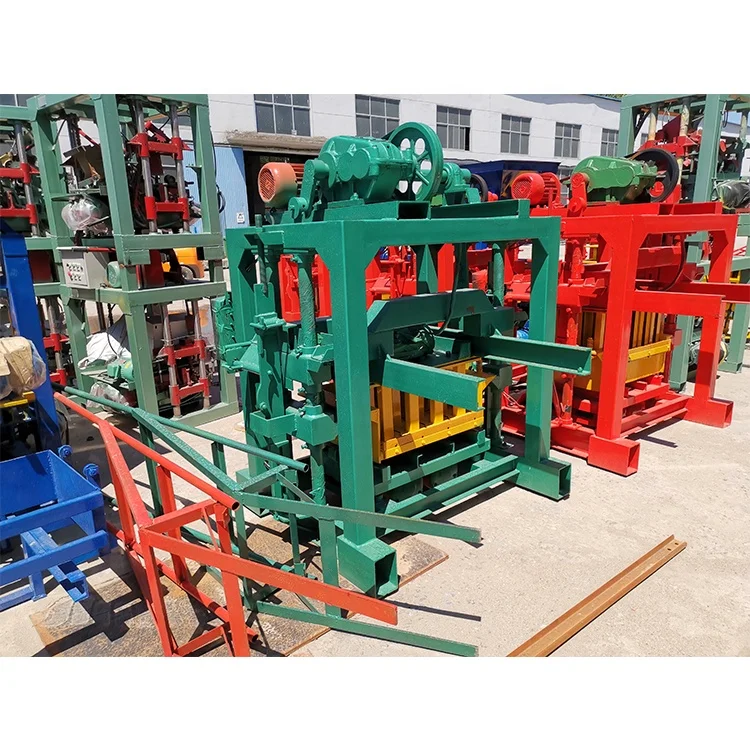
Description
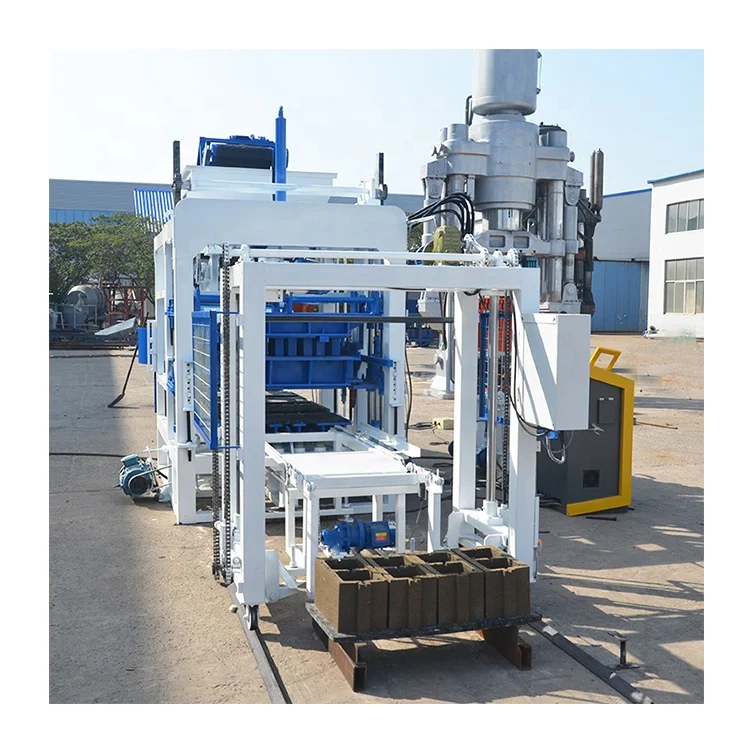
Upgrade-Ready Control — the QTJ4-40 ships as a matched semi-automatic line with PLC language and voltage confirmed before production, so commissioning is never delayed by a display the operator cannot read.
Technical Specifications
| Parameter | Value |
|---|---|
| Model | QTJ4-40 |
| Product Type | Semi-Automatic Concrete Block Making Machine |
| Rated Power | 10.4 kW |
| Molding Cycle | 40 s |
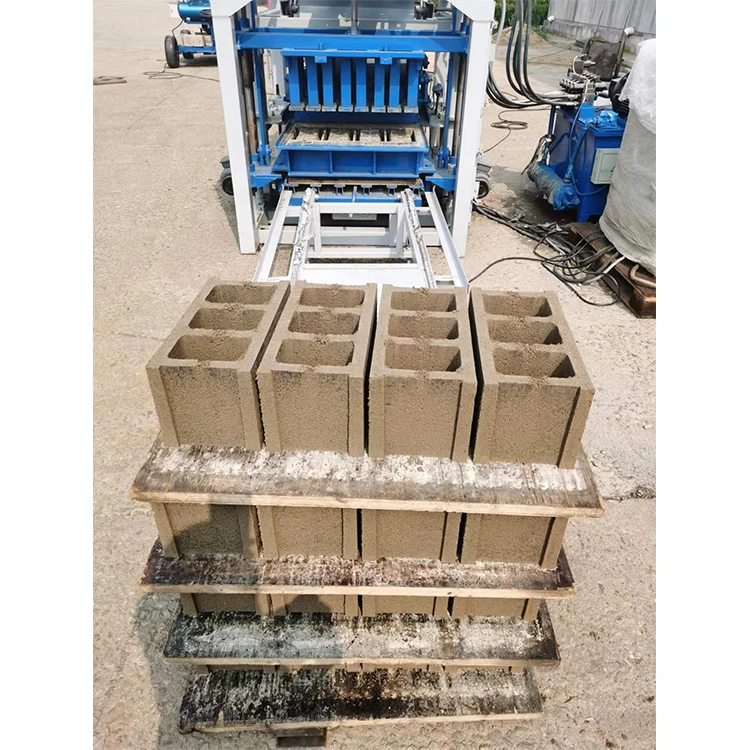
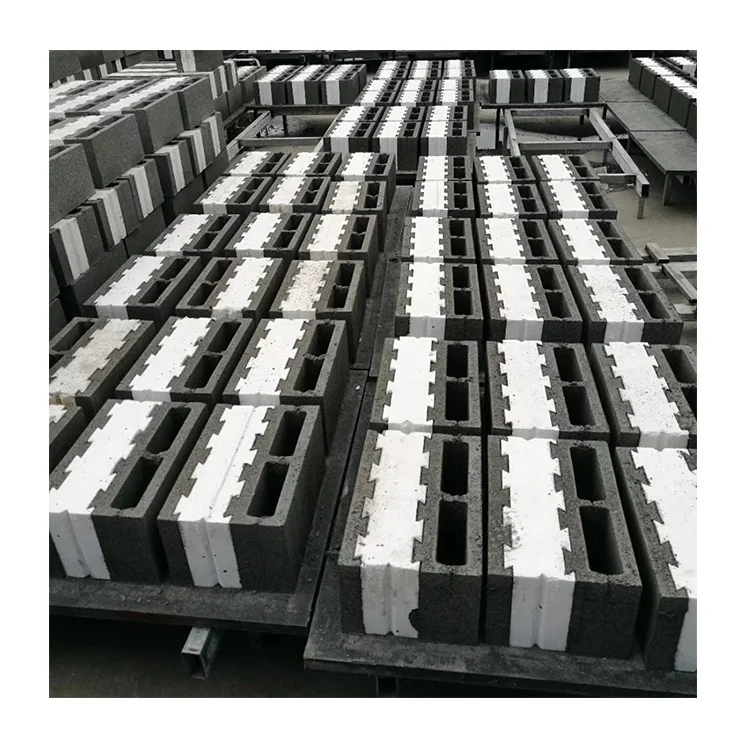
| Theoretical Productivity (400×200×200 mm hollow block) | 4 pcs/mould, 360 pcs/h, 2800 pcs/day |
| Theoretical Productivity (400×150×200 mm hollow block) | 5 pcs/mould, 450 pcs/h, 3600 pcs/day |
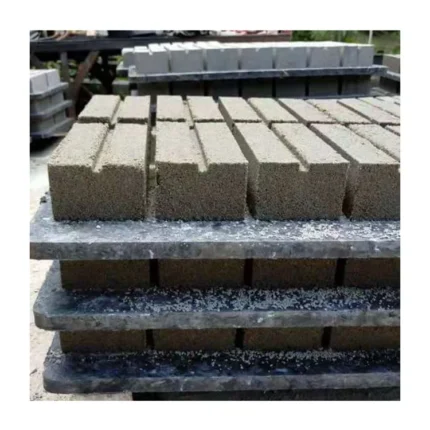
| Theoretical Productivity (225×112.5×60 mm solid brick) | 9 pcs/mould, 800 pcs/h, 6400 pcs/day |
| Vibration System | Bed mould vertical vibration + upper mould compression vibration |
| Pallet Size | 850 × 450 mm |
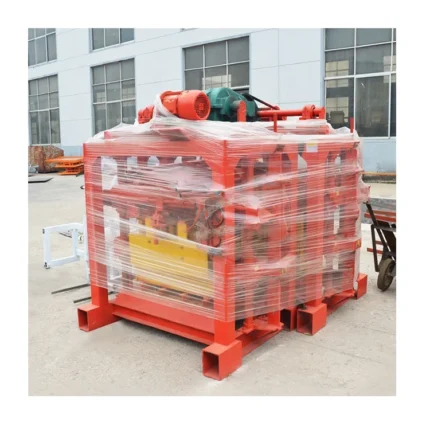
| Overall Dimensions (L×W×H) | 1350 × 1460 × 1800 mm |
| Net Weight | 1 T |
| Voltage | Configurable to buyer’s local supply (value to be confirmed) |
| Control System | Selectable: relay panel or PLC with language confirmation |
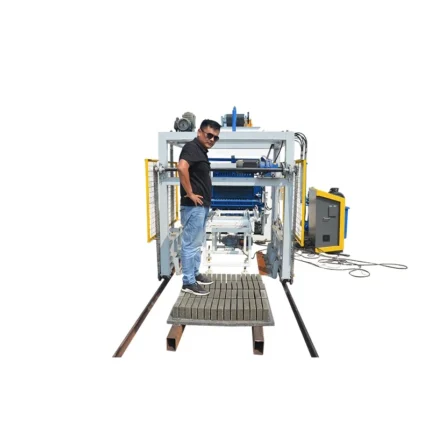
| Automation Level | Semi-automatic (top die push-pull, automatic scraper, manual pallet handling) |
| Raw Materials | Concrete, sand, cement, fly ash, lime, gypsum |
Application Suitability
| Application | Material or Output |
|---|---|
| Small to medium hollow block plants | Crushed stone, sand, and cement producing 400×200×200 mm blocks |
| On-site contractor block production | Local aggregate and cement for building wall hollow blocks |
| First plant startups | Solid bricks and pavers from fly ash, lime, and gypsum mixes |
| Format expansion for existing plants | Smaller format solid bricks alongside a main high-capacity press |
Why the Control Language Question Must Come Before the Price
A PLC screen in the wrong language turns a two-day commissioning into a week-long standstill.
I learned this the hard way when a QTJ4-40 semi-automatic block machine arrived at an Indonesian site with the HMI defaulting to Chinese characters the local operators could not read. The line sat idle until someone flew out to reflash the firmware. Since then, every control panel we ship has its display language, button legends, and alarm messages confirmed in writing against the buyer’s site crew before the machine leaves the factory floor [NEED_CITE: PLC display language standards for exported industrial equipment].
Matching the Press to the Operator, Not the Catalogue
The QTJ4-40 automatic block machine concept starts from the operator’s daily reality. Semi-automatic operation here means the top die push-pull and scraper run on their own cycle, while pallet feeding and stacking remain manual. That split keeps capital outlay low for a first plant, yet the frame and wiring loom are routed so a PLC cabinet and automatic stacker can be bolted on later without rewiring the press.
Dual Vibration for Consistent Density Across Formats
Uniform block strength depends on vibration reaching every corner of the mould cavity. The QTJ4-40 PLC controlled semi-automatic block machine pairs bed mould vertical vibration with upper mould compression vibration. The two forces compact the mix from both directions, so a 400×200×200 mm hollow block and a 225×112.5×60 mm solid brick both reach target density within the same 40-second cycle [NEED_CITE: vibration compaction principles for concrete block making].
Reading the Capacity Table Honestly
Capacity numbers only mean something when tied to a specific block format and cycle time. The theoretical output of 2800 pieces per day applies to 400×200×200 mm hollow blocks at 4 pieces per mould and a 40-second cycle. Switch to 400×150×200 mm hollow blocks at 5 pieces per mould and the figure shifts to 3600 pieces per day. For 225×112.5×60 mm solid bricks at 9 pieces per mould, the daily theoretical maximum reaches 6400 pieces. None of these figures account for pallet change time, mix preparation delays, or shift breaks, so treat them as ceiling values for line planning rather than guaranteed throughput.
What Happens When Pallet Size and Curing Area Mismatch
A pallet dimension decided without checking the buyer’s existing curing racks and forklift forks leads to costly workarounds on arrival. The standard 850 × 450 mm pallet fits common rack spacing, but if the buyer’s curing yard was built around a different size, every pallet has to be re-stacked by hand before it enters the rack. Confirming pallet size against the curing area during the quotation stage removes this bottleneck [NEED_CITE: pallet dimension standards in concrete block curing yards].
Why Buy the QTJ4-40 from This Line
Block machinery is the single focus here, so the QTJ4-40 is quoted as a matched system — press, mould, pallet, and handling — rather than assembled from separate suppliers. The machine is configured against the buyer’s actual mix design and local aggregate, not a catalogue default. Voltage, frequency, and control language are locked in writing before production starts. Moulds are designed for the formats the buyer’s market actually sells, including custom drawings. Factory test records, operation manuals, and wear parts lists ship with every unit so the first replacement order is never a guessing game.
Documentation & Verification
- Line layout and capacity calculation sheet stating output per block format for the QTJ4-40
- Mould drawing and format list provided with the quotation package
- Voltage, frequency, and PLC display language confirmed in writing before production
- Factory test record on buyer’s specified block format included in shipment documents
- Operation and maintenance manual with wear parts list and hydraulic schematic
Installation, Commissioning & Support
- Foundation plan matched to the 1350 × 1460 × 1800 mm footprint and 1 T operating weight
- Dedicated circuit sizing for the 10.4 kW rated power confirmed against local supply
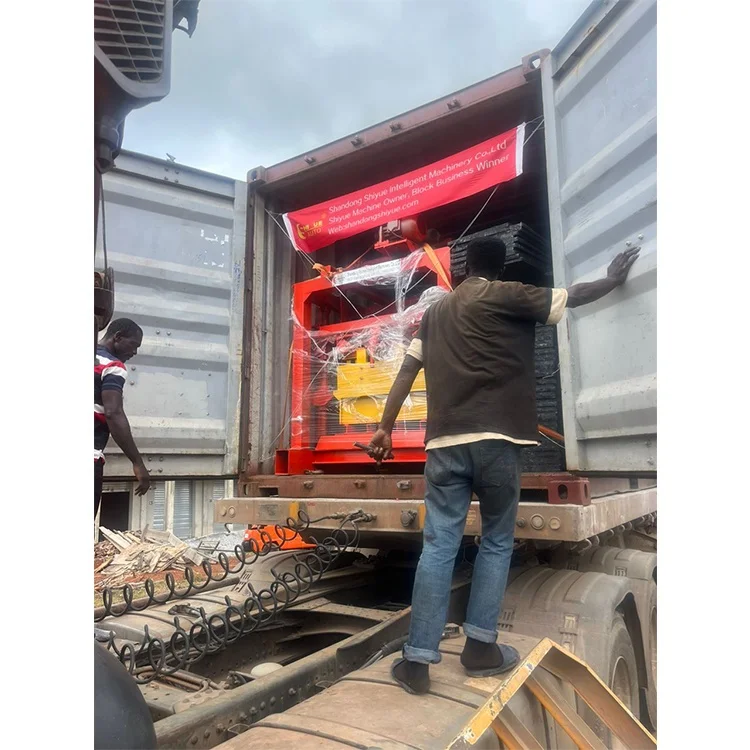
- Machine shipped in single-unit form to match container loading and site access
- On-site commissioning includes cycle timing verification on buyer’s block format
- Operator training covers mould change procedure and daily vibration system checks
- Wear parts list identifies hydraulic seals and vibration springs for first reorder
Starting the Conversation on the QTJ4-40
To size the automatic QTJ4-40 block machine correctly, share the block formats your market sells, the daily volume you need per format, and the raw materials available locally. Confirm your site voltage, frequency, and the language your operators read on a control screen. If you already have curing racks and forklifts, send the pallet dimensions they accept so the 850 × 450 mm default can be verified or adjusted before production begins.
Frequently Asked Questions
Q: How is daily output verified for the QTJ4-40, and what does each capacity figure assume?
A: Every output figure is tied to a specific mould and the 40-second cycle. For example, 2800 pieces per day assumes 400×200×200 mm hollow blocks at 4 per mould. Switch to a different format and the number changes. We provide a capacity calculation sheet per format so you can plan shifts realistically.
Q: What automation level is included, and can the QTJ4-40 be upgraded to full PLC control later?
A: The standard package is semi-automatic with top die push-pull and automatic scraper, while pallet handling remains manual. The frame and wiring are routed so a PLC cabinet and automatic stacker can be added later without rewiring the press, letting you scale control as demand grows.
Q: How are voltage, frequency, and control panel language confirmed before the QTJ4-40 is built?
A: We send a written confirmation sheet listing voltage, frequency, and HMI display language for your signature before production starts. This prevents the situation where a machine arrives with a screen the operators cannot read and commissioning stalls.
Q: How is the machine configured to match my local raw material and aggregate?
A: During the quotation stage, we collect your mix design and local aggregate samples. Vibration force and cycle timing are then set against that specific mix so block strength meets your market standard without forcing you to import materials the machine was originally tuned for.
Q: What mould formats are available, and how long does a mould change take?
A: Moulds cover hollow blocks, solid bricks, and pavers in the sizes your market demands, and custom drawings are accepted. Mould change time depends on the format and operator familiarity; we include the change procedure in the operator training so your crew can practice before the first production shift.