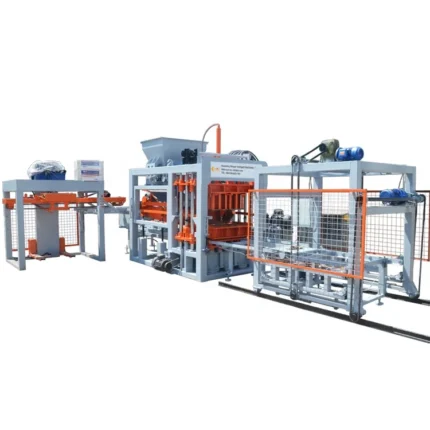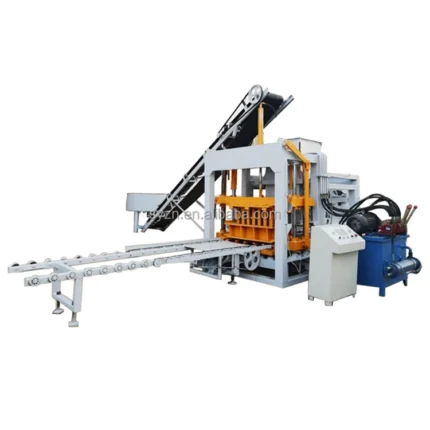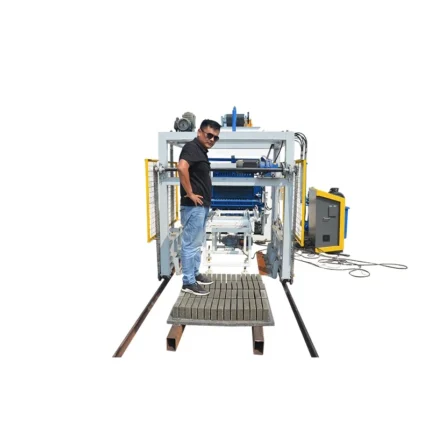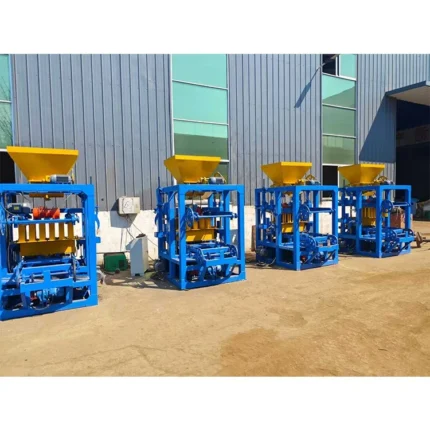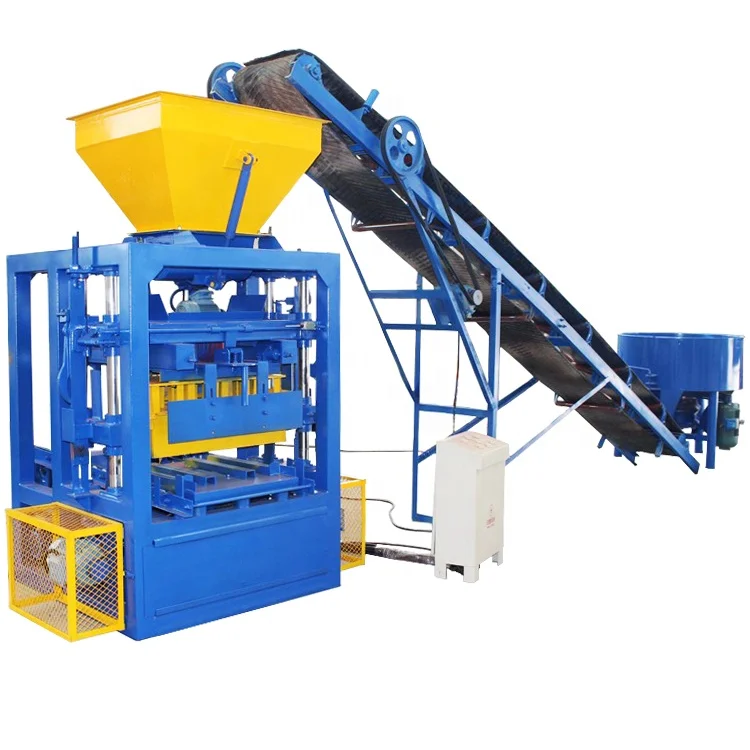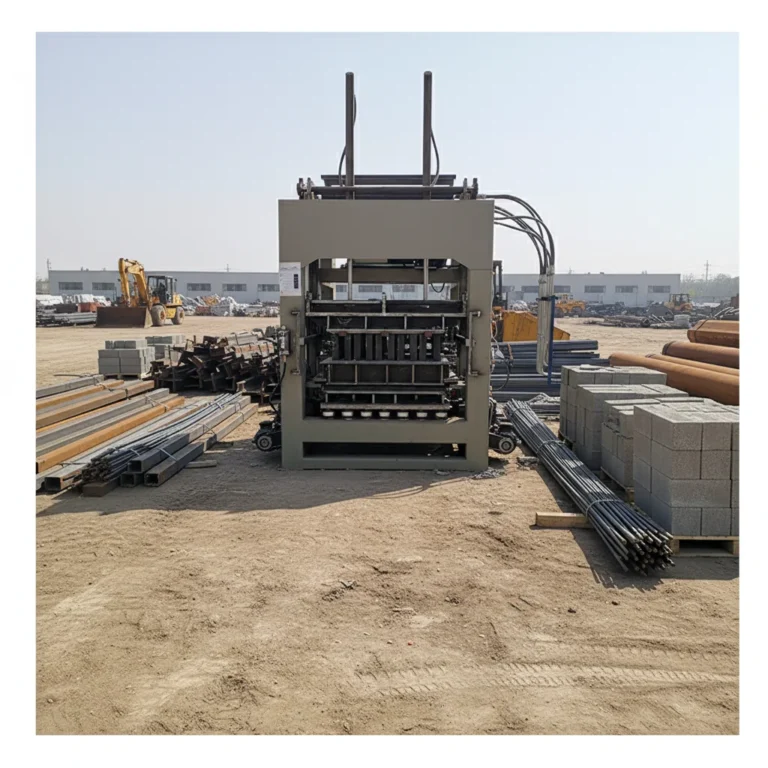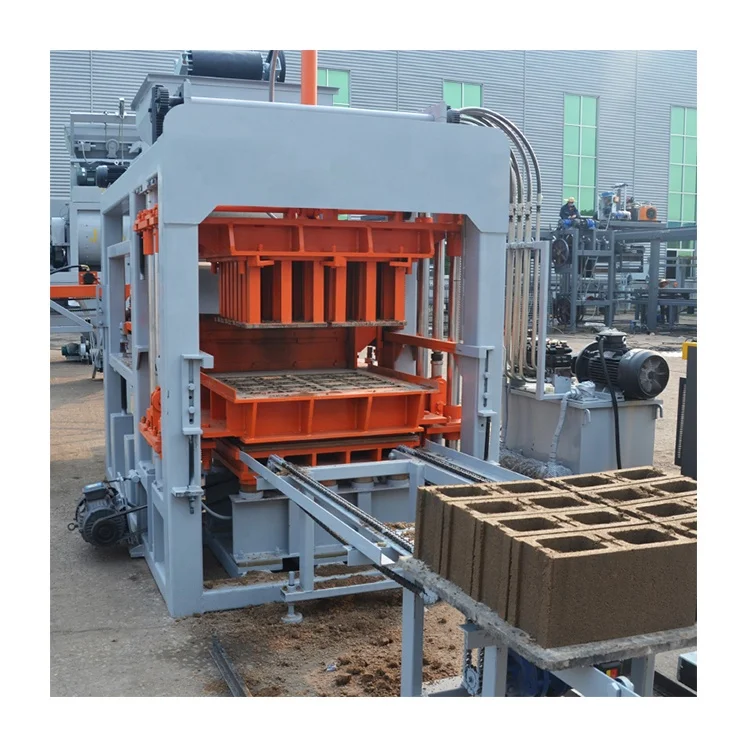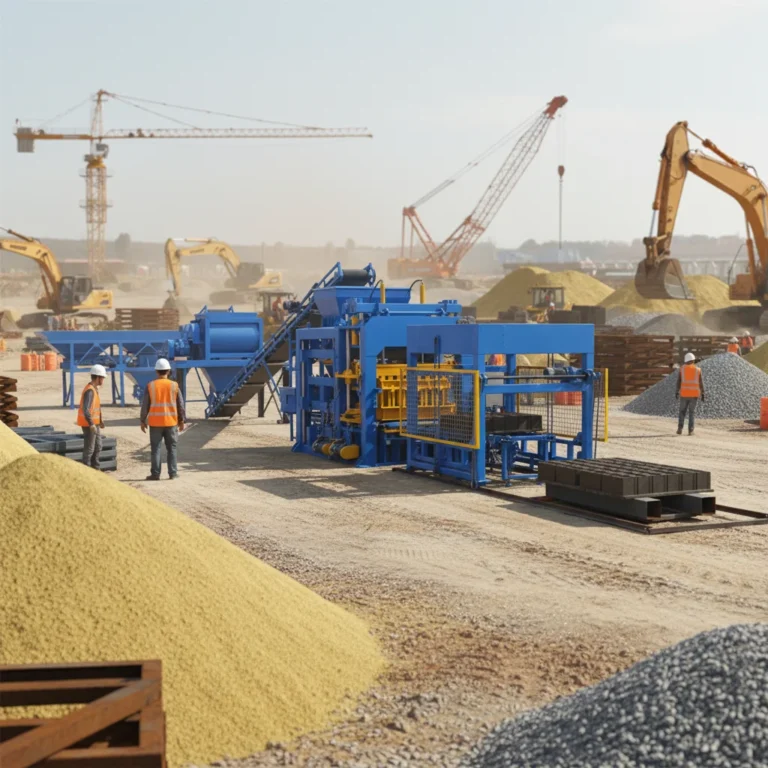
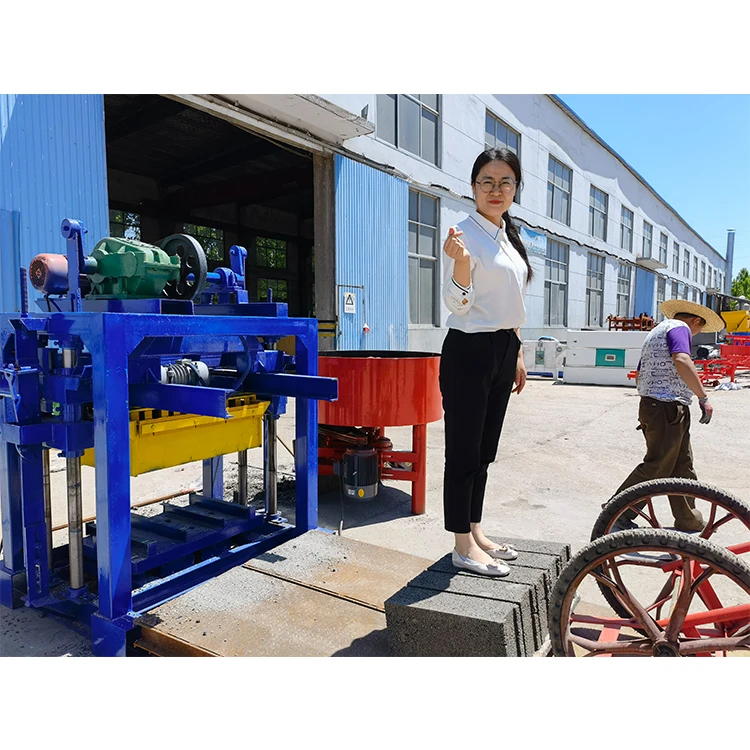
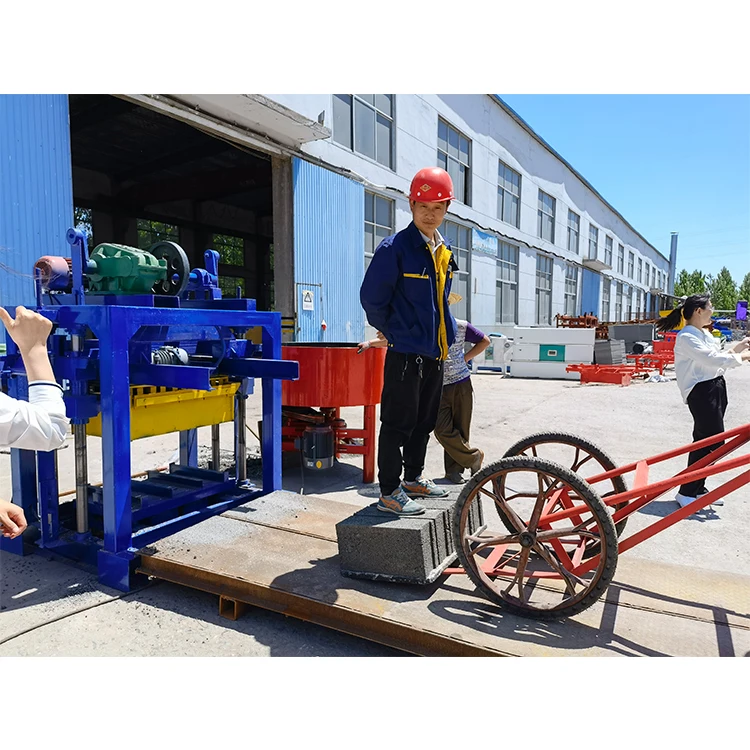
Description
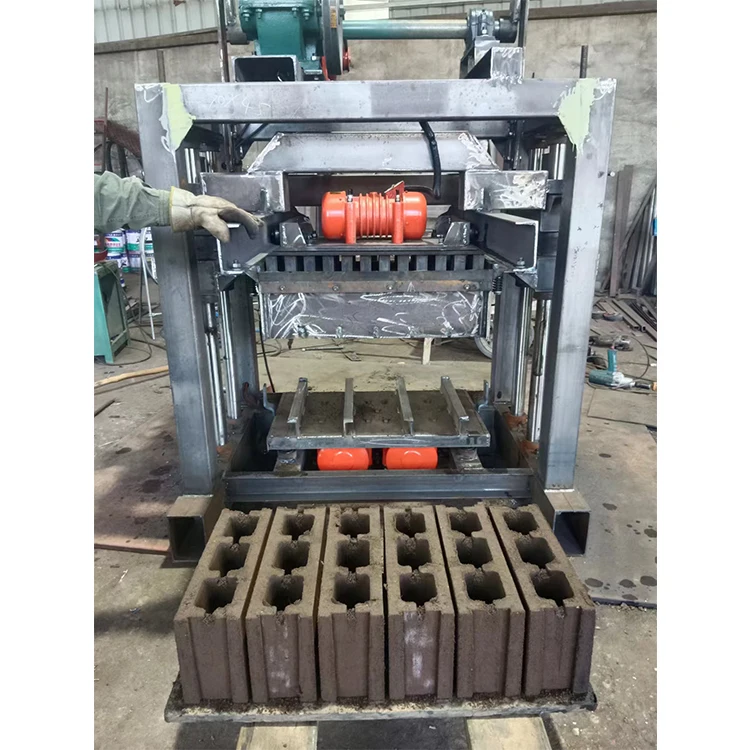
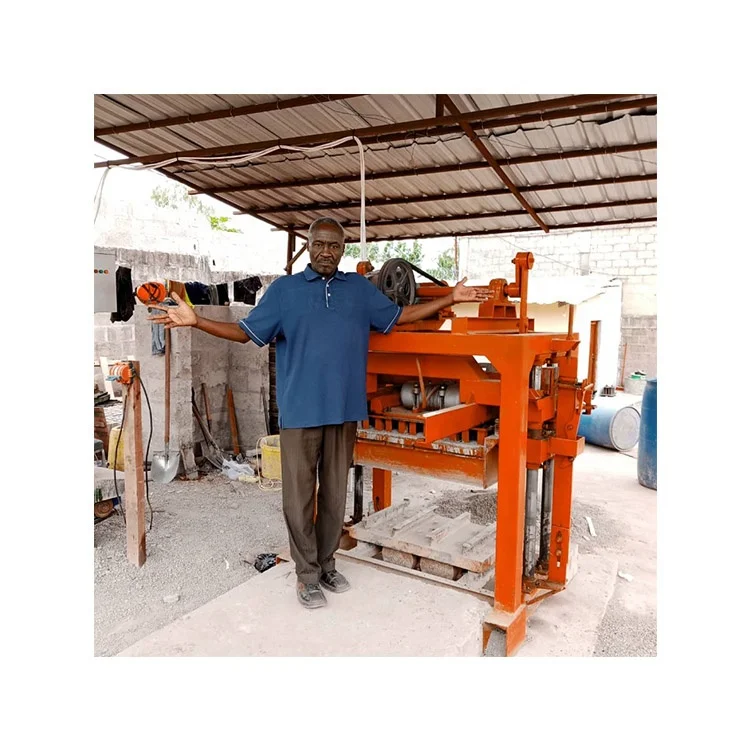
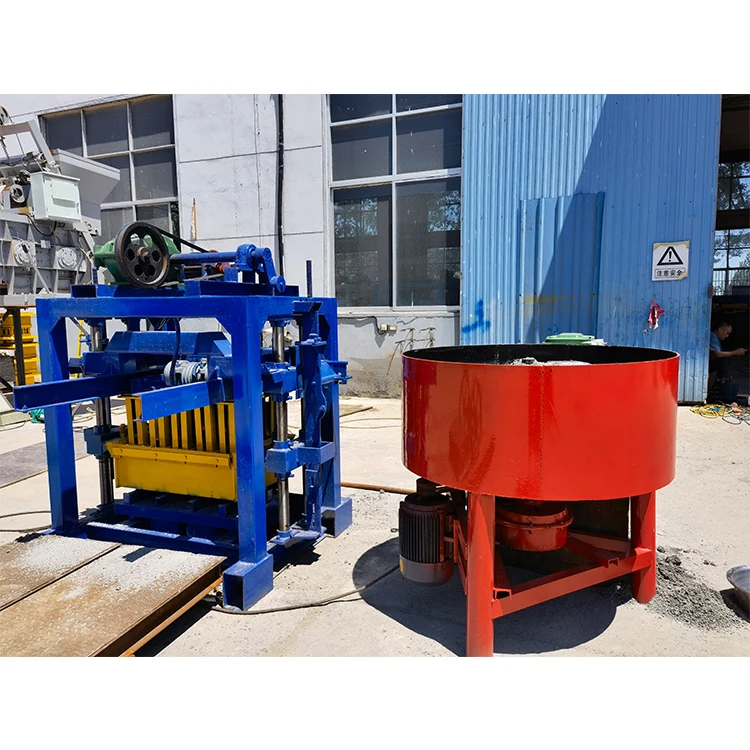
Control Logic First — We specify the QTJ4-40 semi-automatic block machine against your actual target block format, local voltage, and operator language before production begins, so commissioning is not delayed by default settings.
Technical Specifications
| Parameter | Value |
|---|---|
| Model | QTJ4-40 |
| Product Type | Semi-Automatic Concrete Block Making Machine |
| Machine Power | 10.4 kW |
| Molding Cycle | 40 s |
| Theoretical Productivity (400×200×200 mm hollow block) | 4 pcs/mould, 360 pcs/hour, 2800 pcs/day |
| Theoretical Productivity (400×150×200 mm hollow block) | 5 pcs/mould, 450 pcs/hour, 3600 pcs/day |
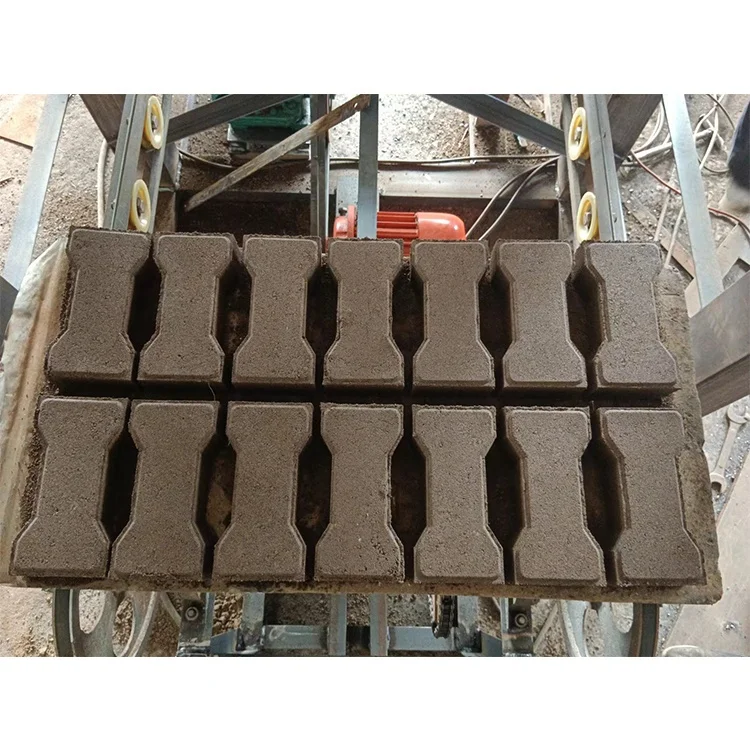
| Theoretical Productivity (225×112.5×60 mm solid brick) | 9 pcs/mould, 800 pcs/hour, 6400 pcs/day |
| Pallet Size | 850×450 mm |
| Overall Dimensions (L×W×H) | 1350×1460×1800 mm |
| Machine Weight | 1 T |
| Raw Material Compatibility | Concrete, sand, cement, fly ash, lime, gypsum |
| Control System | Semi-automatic operation with top die push-pull and automatic scraper |
| Vibration System | Bed mould vertical vibration + upper mould compression vibration |
| Voltage | Configurable to buyer’s local voltage and frequency (to be confirmed before production) |
| Automation Level | Semi-automatic, with selectable upgrade path |
| Standards | CE (specific certification for this model to be confirmed) |
Application Suitability
| Application | Material or Output |
|---|---|
| Small to medium-scale block plants | Hollow blocks and solid bricks from crushed stone, sand, and cement |
| On-site production for contractors | Interlocking and solid blocks using locally available aggregate |
| First block line for entrepreneurs | Paving blocks and kerbstones from fly ash, lime, and gypsum blends |
| Format expansion for existing plants | Additional hollow or solid formats without replacing the press |
What Semi-Automatic Actually Controls on the automatic QTJ4-40 block machine PLC controlled upgrade path
The machine locks the vibration and compression sequence, leaving only pallet handling and material feeding to the operator.
In workshops where block strength drifts from morning to afternoon, the cause is rarely the mix itself. It is the operator deciding how long to vibrate or how hard to press based on fatigue or habit. The QTJ4-40 removes that judgment call by fixing the cycle into a 40-second sequence with dual vibration. I have seen plants in Dhaka and Nairobi lose an entire day’s output to inconsistent block density simply because the vibration duration was never standardized across shifts [NEED_CITE: common causes of block strength inconsistency in semi-automatic operations]. The upgrade path from this tier toward full PLC control exists precisely to close the remaining manual gaps as volume demands grow.
Top Die Push-Pull and Automatic Scraper Precision
Every molding cycle begins with the top die engaging the mould cavity through a push-pull mechanism, while the automatic scraper levels the raw material fill to a consistent depth. This means the squeeze head meets the material at the same position each time, regardless of operator experience. On manual machines, uneven fill depth is the primary reason blocks crack or vary in weight. The automatic QTJ4-40 block machine PLC controlled upgrade path starts here — by mechanizing the step most prone to human variation, it establishes a baseline that full automation can later build upon.
Dual Vibration for Density Consistency
The bed mould delivers vertical vibration to settle the concrete mix into the cavity, while the upper mould applies compression vibration simultaneously. This dual action forces aggregate particles into a tight matrix, producing blocks with uniform density from the first cycle of the shift to the last. When a buyer later adds automatic pallet feeding and stacking, the press section is already delivering consistent output, so the upgrade improves throughput without introducing new quality variables. The vibration parameters are matched to the buyer’s specific mix design and local aggregate characteristics during configuration [NEED_CITE: vibration force and hydraulic pressure matching to aggregate type].
Reading the Specs That Matter at This Tier
The 10.4 kW machine power drives both the vibration motors and the top die mechanism. At 850×450 mm, the pallet size determines how many blocks are produced per cycle and must align with the buyer’s existing curing racks and forklift capacity — a mismatch here means blocks stacked by hand or curing areas reconfigured after arrival. The 40-second molding cycle holds across hollow and solid formats, but daily output depends entirely on which block format is loaded; a 400×200×200 mm hollow block yields 2800 pieces per day while a 225×112.5×60 mm solid brick yields 6400 pieces per day. Voltage and frequency are not defaults on this machine; they are confirmed before production to match the buyer’s local grid. The semi-automatic control system governs the press cycle, while pallet movement and material feeding remain manual — understanding this boundary is what separates a realistic production plan from a disappointing one.
The Hidden Cost of Skipping Configuration Steps
When voltage and PLC display language are treated as afterthoughts, the machine arrives and refuses to communicate with the operator. I once spent two days remotely switching a control interface from Chinese to English for a plant in Bangladesh while finished blocks sat uncured on the floor. When pallet size is chosen without checking the curing area, forklifts cannot reach the racks and blocks are moved by hand, doubling labor. When the mould format is selected from a catalogue without verifying local aggregate availability, the buyer is forced into a costly material substitution before the first production run [NEED_CITE: commissioning delays caused by unconfirmed control language and voltage].
Why Procurement at This Tier Works
Block machinery is our single focus, so the QTJ4-40 press, mould, pallet, and handling equipment are specified as one matched system rather than assembled from separate suppliers. We configure the machine against the buyer’s actual mix design and target block format, not a catalogue default. Mould design and supply cover the formats the buyer’s market sells, including custom drawings for non-standard dimensions. The automation level is selectable — a buyer can start with semi-automatic operation and add pallet feeding, stacking, or cubing stations as volume justifies the investment. Installation and commissioning support includes operator training on the specific control interface language confirmed before shipment. Factory test records show cycle time and block output measured against the buyer’s chosen format before the machine leaves the workshop.
Documentation & Verification
- Machine specification sheet listing confirmed voltage, frequency, and control display language
- Mould drawing and format list showing cycle time and output per selected block dimension
- Factory test record measuring output against the buyer’s target block format before dispatch
- Pallet specification confirming 850×450 mm dimensions and material grade
- Wear parts and mould list with part numbers for first replacement ordering
- CE declaration documentation where applicable to the buyer’s import market
Installation, Commissioning & Support
- 10.4 kW power supply requires a dedicated circuit with confirmed voltage and frequency matching the machine configuration
- 1350×1460×1800 mm footprint requires a level concrete pad with drainage for vibration stability
- Machine arrives fully assembled; pallet handling and material feeding stations positioned during on-site commissioning
- Control display language verified against operator capability during first power-on and parameter setting
- Operator training covers 40-second cycle sequence, mould change procedure, and vibration adjustment
- Wear parts list provided with hydraulic seal and vibration motor service intervals for first-year maintenance
What We Need From Your Inquiry
To configure the QTJ4-40 correctly, provide your target block format with dimensions, your daily output requirement, and the raw materials available at your site including aggregate type and cement grade. Confirm your local voltage and frequency, the control display language your operators require, and whether your existing curing area and forklift are compatible with 850×450 mm pallets. Let us know your current automation level and which stations — pallet feeding, stacking, or cubing — you may want to add later.
Frequently Asked Questions
Q: What does semi-automatic actually control on the QTJ4-40, and which steps still need manual input?
A: The semi-automatic system controls the top die push-pull action, automatic scraper fill leveling, and the dual vibration sequence within the 40-second cycle. Manual steps include pallet loading and removal, raw material feeding into the hopper, and finished block transfer to the curing area. This split is intentional — it locks the quality-critical steps while keeping initial investment lower.
Q: How is cycle consistency maintained when switching between block formats?
A: The 40-second cycle holds across all mould formats because the vibration duration and compression force are set at the machine level, not adjusted per mould. When you change from a 400×200×200 mm hollow block to a 225×112.5×60 mm solid brick, the mould swaps but the press cycle parameters remain fixed, preserving density consistency.
Q: What is the automation upgrade path from this machine?
A: The upgrade path adds standalone stations to the existing press: automatic pallet feeding replaces manual pallet loading, automatic stacking collects finished blocks from the conveyor, and cubing arranges stacked blocks for curing rack transport. Each station can be added independently as production volume justifies the investment, without replacing the QTJ4-40 itself.
Q: How are voltage, frequency, and control language confirmed before the machine ships?
A: These three parameters are confirmed during the quotation and production stages, not assumed. The buyer provides local voltage and frequency, and the operator’s required display language. A written confirmation is issued before production begins, and the factory test record verifies the machine runs at the specified electrical configuration with the correct language on screen.
Q: What diagnostics are available at the semi-automatic tier versus after upgrading?
A: At the semi-automatic tier, the control system monitors cycle completion and vibration operation, alerting the operator to basic faults. When upgraded to full PLC control, additional capabilities include batch counting, remote diagnostics access, and detailed fault logging with timestamps. The upgrade path preserves the existing press hardware while adding the intelligent control layer.